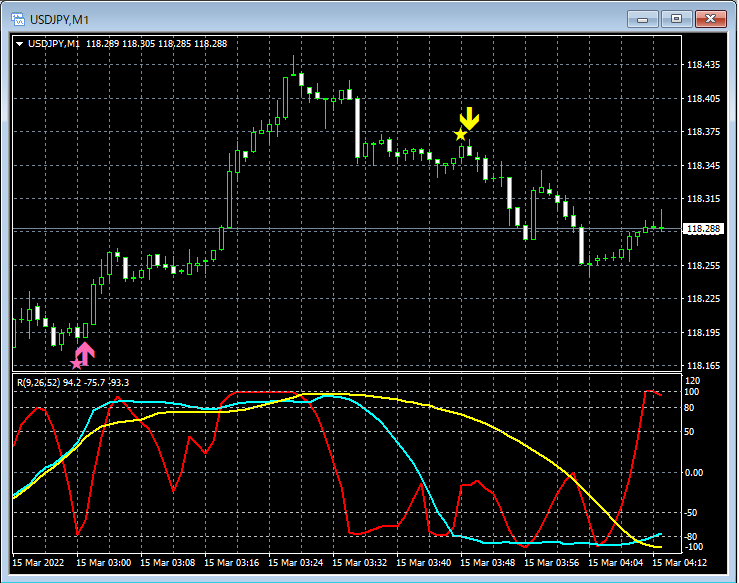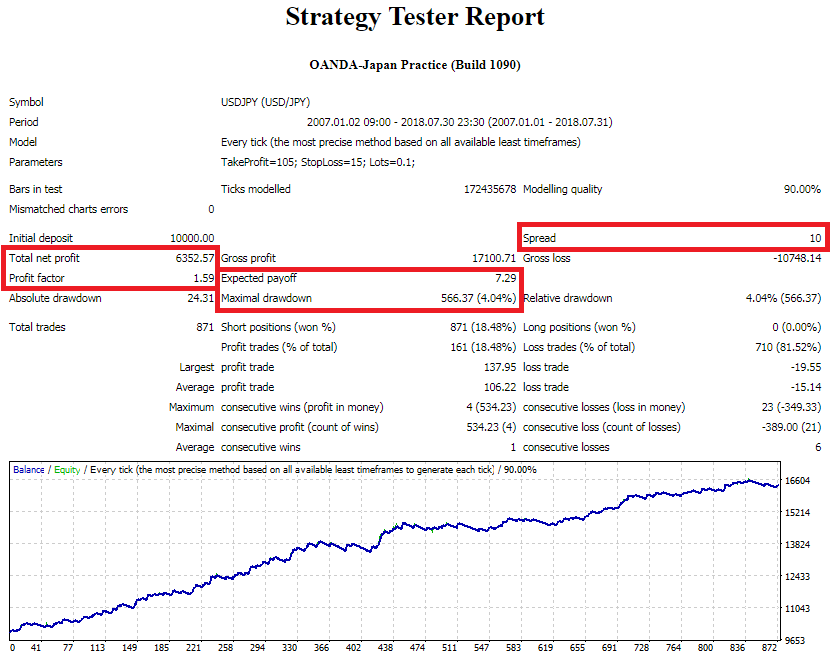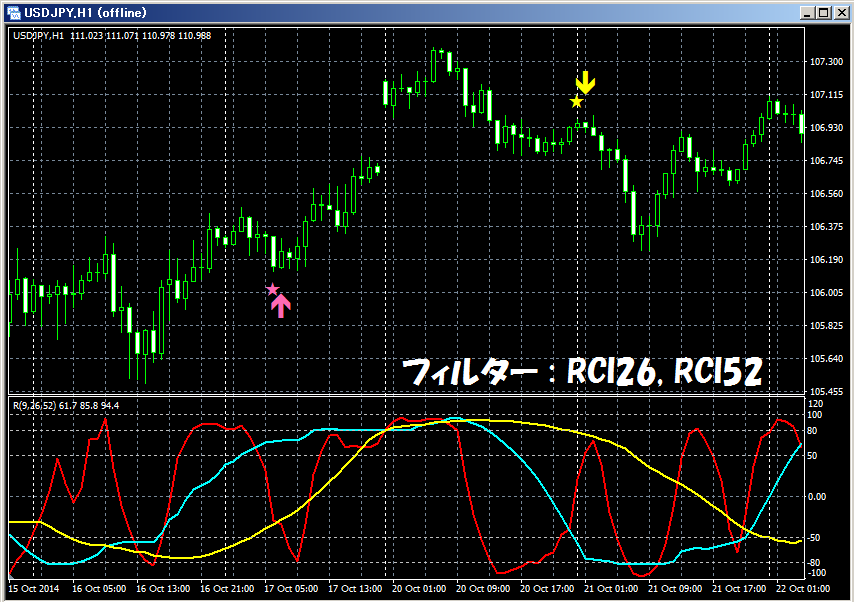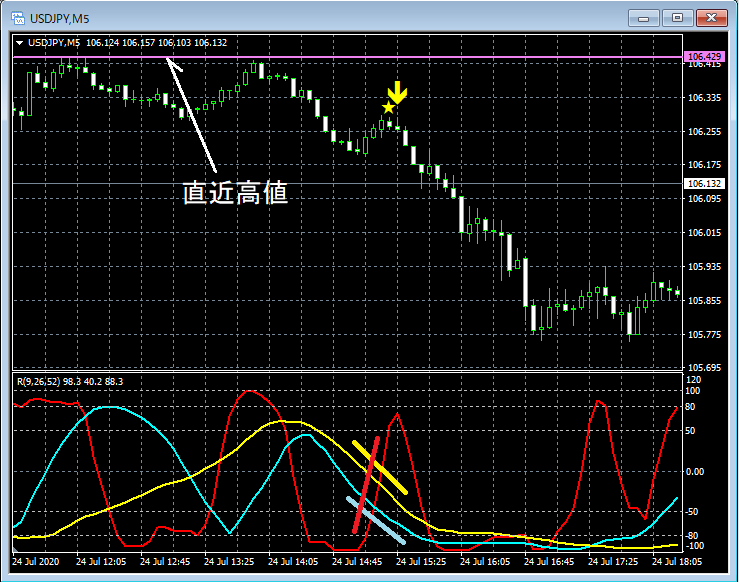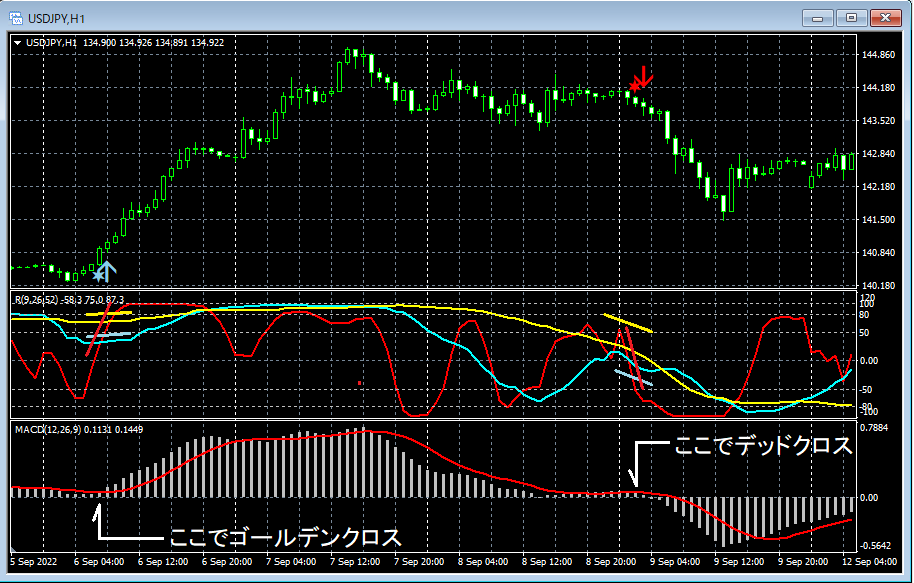

“ master RCI!! ” Signals of the wrapped foot and return high and mBDSR (RCI two-bar filter)
【Mastering RCI!! Trend Reversal, Buy on Dips, Sell on Rallies】
Indicator【BODSOR・mBDSR】that shines in combination with RCI
and techniques, case studies (PDF) ★GogoJungle AWARD2020 winner★
https://www.gogojungle.co.jp/tools/indicators/11836
GBP/JPY 30-minute chart
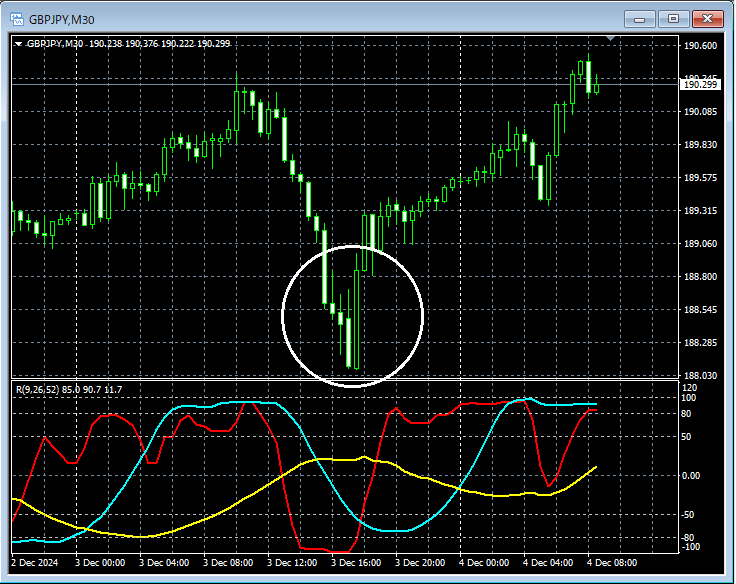
Looking at the area circled in white on the 30-minute chart above, it suggests a potential trend reversalEngulfingis appearing. It might be reasonable to consider a dip-buy on a lower time frame.
GBP/JPY 15-minute chart
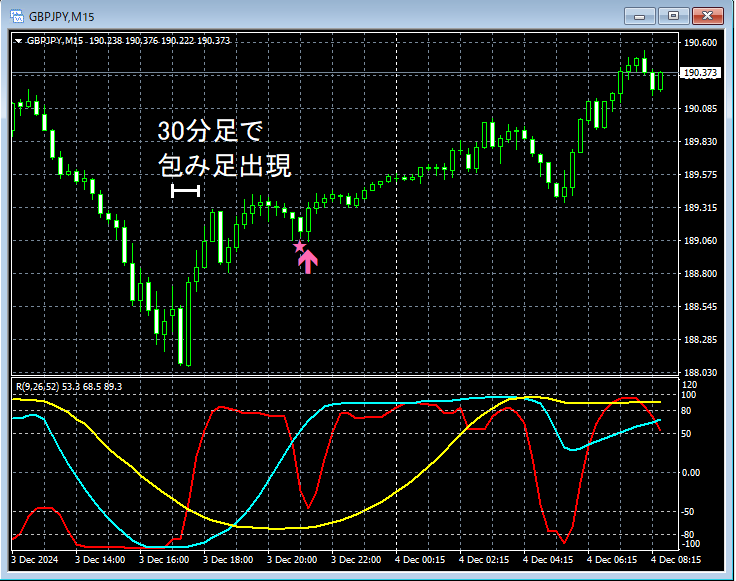
In the upper 15-minute chart, there is a rebound. And on the 30-minute chartEngulfingappears. AndmBDSR (Filter: RCI26 and RCI52) Dip-Buy Signallights up, and the price rises firmly.
GBP/JPY 5-minute chart
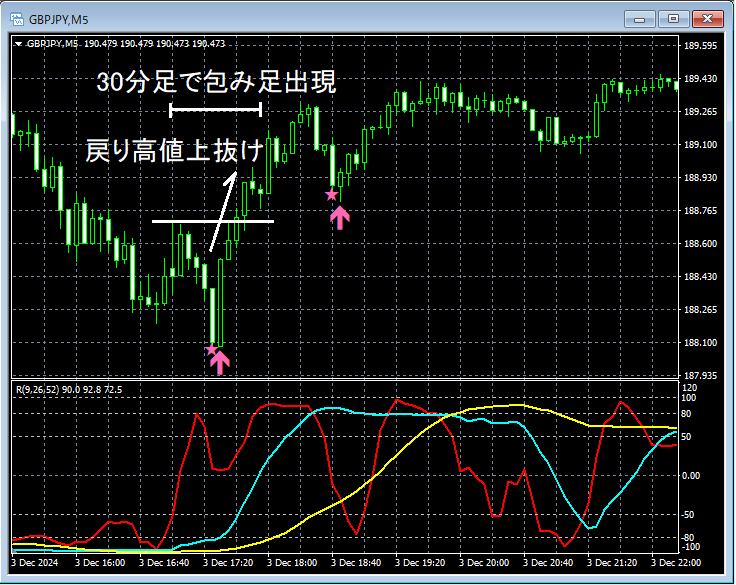
On the upper 5-minute chart, first,mBDSR (Filter: RCI26 and RCI52) Dip-Buy Signallights up and hits a rebound. ThenBreaks Above the Return Highand on the 30-minute chartEngulfingappears. After that, once againmBDSR (Filter: RCI26 and RCI52) Dip-Buy Signallights up and the price rises firmly.
From this example,a trading method focusing on Engulfing patterns and return highs (Dow Theory)andthe signals of mBDSRshow a strong compatibility.
※Please note that in the charts introduced in this article, for convenience of explanation, circles, lines, and rectangles may have been added.
Indicator that shines when combined with RCI【BODSOR・mBDSR】
and techniques, case studies (PDF) ★GogoJungle AWARD2020 winner★
https://www.gogojungle.co.jp/tools/indicators/11836
The PDF file includes 358 items (over 1,400 pages, over 470,000 characters in total).
Most of them are abouta case where multiple lower-timeframe conditions are logically linked to the higher timeframe using the three RCI lines, and eventually waiting for the dip-buy or rally-sell timing (i.e., the mBDSR signals) on the lower timeframes.
Additionally,many focus on catching convergence points where multiple entry reasons align.
Also included is a method for exploring upside and downside targets using the three RCI lines.
In the PDF explanations,there are more than 1,350 chartsused.

Indicator【BODSOR・mBDSR】that shines in combination with RCI
and techniques, case studies (PDF) ★GogoJungle AWARD2020 winner★
https://www.gogojungle.co.jp/tools/indicators/11836
GBP/JPY 30-minute chart
Looking at the area circled in white on the 30-minute chart above, it suggests a potential trend reversalEngulfingis appearing. It might be reasonable to consider a dip-buy on a lower time frame.
GBP/JPY 15-minute chart
In the upper 15-minute chart, there is a rebound. And on the 30-minute chartEngulfingappears. AndmBDSR (Filter: RCI26 and RCI52) Dip-Buy Signallights up, and the price rises firmly.
GBP/JPY 5-minute chart
On the upper 5-minute chart, first,mBDSR (Filter: RCI26 and RCI52) Dip-Buy Signallights up and hits a rebound. ThenBreaks Above the Return Highand on the 30-minute chartEngulfingappears. After that, once againmBDSR (Filter: RCI26 and RCI52) Dip-Buy Signallights up and the price rises firmly.
From this example,a trading method focusing on Engulfing patterns and return highs (Dow Theory)andthe signals of mBDSRshow a strong compatibility.
※Please note that in the charts introduced in this article, for convenience of explanation, circles, lines, and rectangles may have been added.
Indicator that shines when combined with RCI【BODSOR・mBDSR】
and techniques, case studies (PDF) ★GogoJungle AWARD2020 winner★
https://www.gogojungle.co.jp/tools/indicators/11836
The PDF file includes 358 items (over 1,400 pages, over 470,000 characters in total).
Most of them are abouta case where multiple lower-timeframe conditions are logically linked to the higher timeframe using the three RCI lines, and eventually waiting for the dip-buy or rally-sell timing (i.e., the mBDSR signals) on the lower timeframes.
Additionally,many focus on catching convergence points where multiple entry reasons align.
Also included is a method for exploring upside and downside targets using the three RCI lines.
In the PDF explanations,there are more than 1,350 chartsused.
× ![]()