
Elliott Wave and Fibonacci Expansion and three-line RCI and Double Top and mBDSR signals - from yesterday's chart -
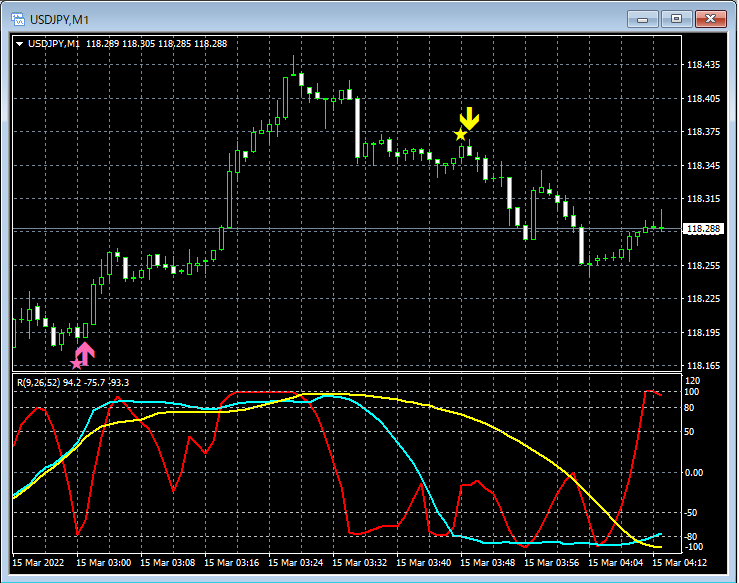
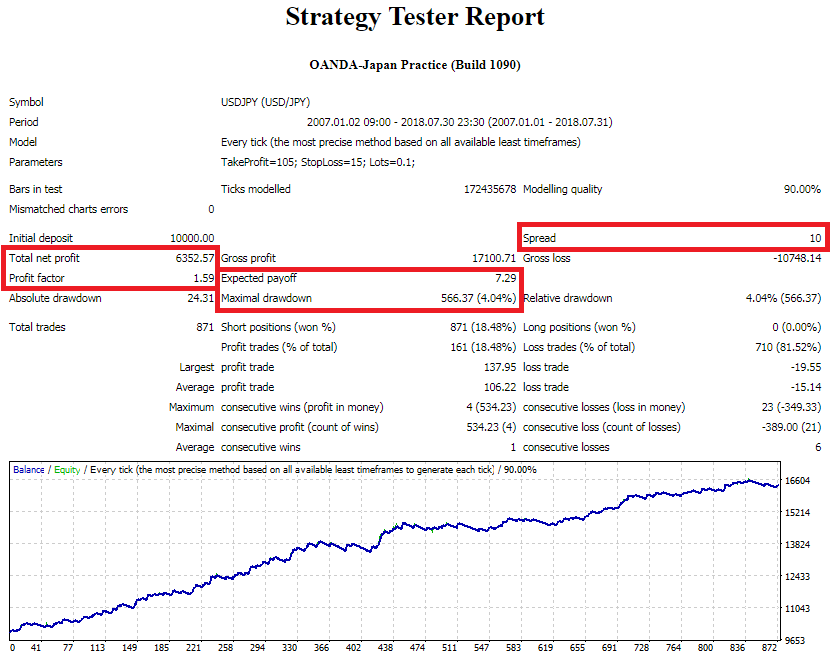
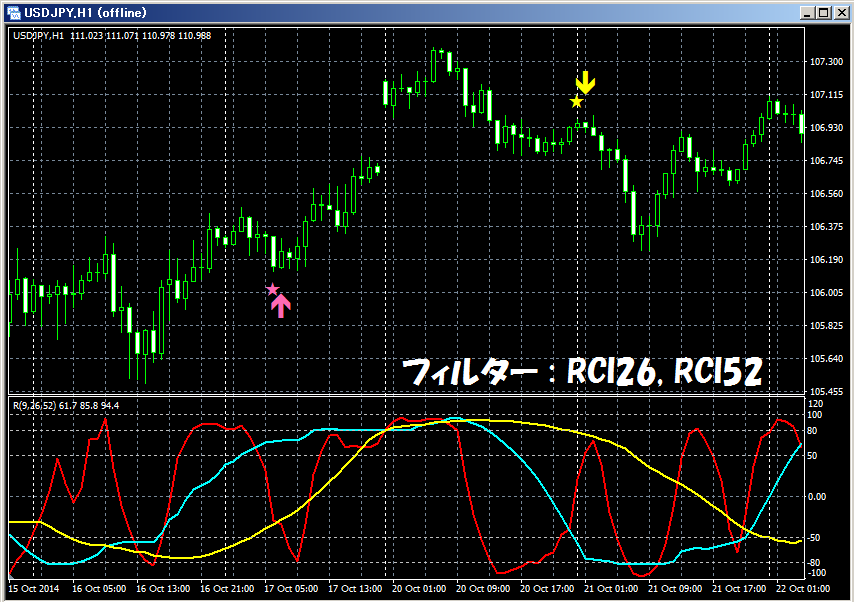
An indicator that captures “tops and bottoms and reversals” in combination with RCI【mBDSR】
Methods, case studies (PDF) ★GogoJungle AWARD2020 winner★
https://www.gogojungle.co.jp/tools/indicators/11836
The above products include 301 PDFs. For the list of these PDFs’ titles, please refer to the article below.
About the 301 PDF files included with 【BODSOR・mBDSR】
https://www.gogojungle.co.jp/finance/navi/articles/34271
AUDNZD 4-hour chart
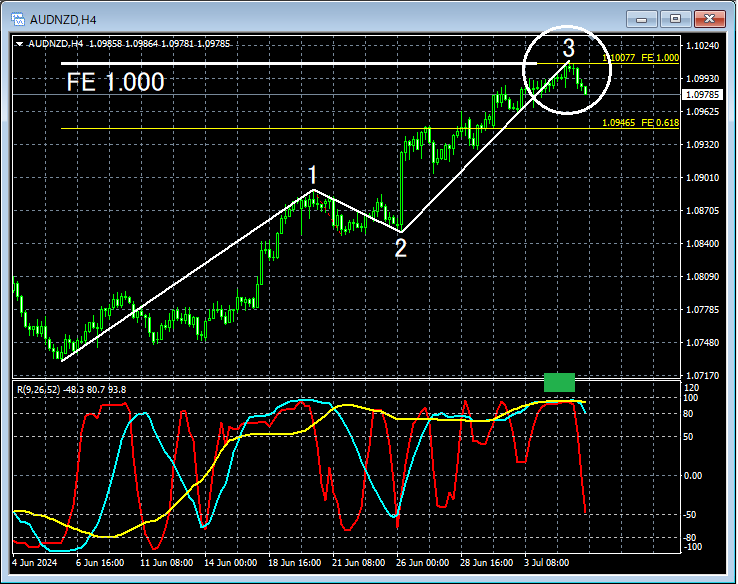
In the 4-hour chart above,Fibonacci extensionapplied around the circled area shows thatthe Fibonacci extension 1.000is approaching a turning point. Also,RCI three-lineis rising toward what is commonly calledRCI triple topup to the area of the green square, suggesting a slight pullback may not be surprising. We will monitor the chart for signs of a decline on lower timeframes.
AUDNZD 30-minute chart
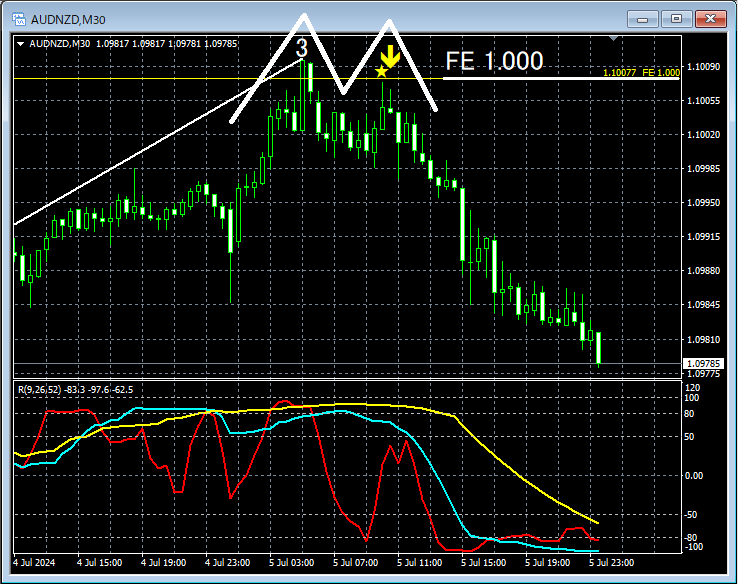
Watching the chart on the 30-minute timeframe above,mBDSR (Filter: RCI26 and RCI52) sell-back signallights up, and subsequently price declines steadily. As a result,the timing of the decline on the right peak of the double bottomis effectively captured bythe mBDSR signal.
From this example,a trading method that focuses on Elliott Wave, Fibonacci extension, the three-line RCI, and double tops, andthecompatibility with mBDSR signalsis evident.
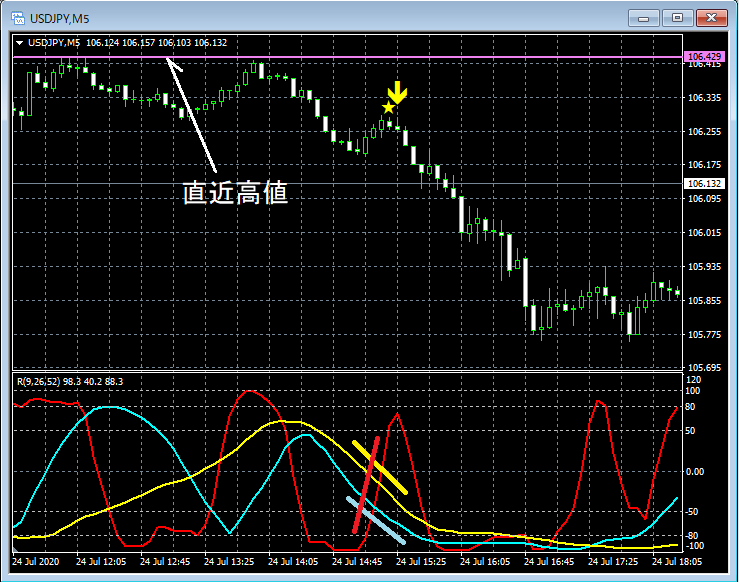
Additionally, in this example, by placing the stop-loss slightly above the left peak of the double top (recent high), one can achievehigh risk-reward trades.
The indicator 【BODSOR・mBDSR】 that shines in combination with RCI
Methods, case studies (PDF) ★GogoJungle AWARD2020 winner★
https://www.gogojungle.co.jp/tools/indicators/11836
The PDFs include 301 files (over 1,000 pages, over 350,000 characters in total).
Many of these consist of a compilation of examples that link higher and lower timeframes logically using the RCI three-line method, then sequentially consider the state of multiple lower timeframes, ultimately waiting for pullbacks or rebounds on the lower timeframes (i.e., mBDSR signals).Additionally,
.
In the explanations,are used.

Methods, case studies (PDF) ★GogoJungle AWARD2020 winner★
https://www.gogojungle.co.jp/tools/indicators/11836
The above products include 301 PDFs. For the list of these PDFs’ titles, please refer to the article below.
About the 301 PDF files included with 【BODSOR・mBDSR】
https://www.gogojungle.co.jp/finance/navi/articles/34271
AUDNZD 4-hour chart
In the 4-hour chart above,Fibonacci extensionapplied around the circled area shows thatthe Fibonacci extension 1.000is approaching a turning point. Also,RCI three-lineis rising toward what is commonly calledRCI triple topup to the area of the green square, suggesting a slight pullback may not be surprising. We will monitor the chart for signs of a decline on lower timeframes.
AUDNZD 30-minute chart
Watching the chart on the 30-minute timeframe above,mBDSR (Filter: RCI26 and RCI52) sell-back signallights up, and subsequently price declines steadily. As a result,the timing of the decline on the right peak of the double bottomis effectively captured bythe mBDSR signal.
From this example,a trading method that focuses on Elliott Wave, Fibonacci extension, the three-line RCI, and double tops, andthecompatibility with mBDSR signalsis evident.
Additionally, in this example, by placing the stop-loss slightly above the left peak of the double top (recent high), one can achievehigh risk-reward trades.
The indicator 【BODSOR・mBDSR】 that shines in combination with RCI
Methods, case studies (PDF) ★GogoJungle AWARD2020 winner★
https://www.gogojungle.co.jp/tools/indicators/11836
The PDFs include 301 files (over 1,000 pages, over 350,000 characters in total).
Many of these consist of a compilation of examples that link higher and lower timeframes logically using the RCI three-line method, then sequentially consider the state of multiple lower timeframes, ultimately waiting for pullbacks or rebounds on the lower timeframes (i.e., mBDSR signals).Additionally,
.
In the explanations,are used.
× ![]()