EA Craftsman’s EA Course [024] Can people who can’t win with discretionary trading start winning with semi-automatic trading? Is it dangerous?
0
Definition of Semi-Automated Trading
In discretionary trading, there are various approaches such as trading on raw charts like mine, or trading by relying on signals and indicators. In any case, the final decisions on where to enter and where to exit are made by oneself.On the other hand, in semi-automated trading, everyday trading is entrusted to the EA, so basically you leave it completely alone.
Entries and exits are done automatically, so you never have to make judgments yourself.
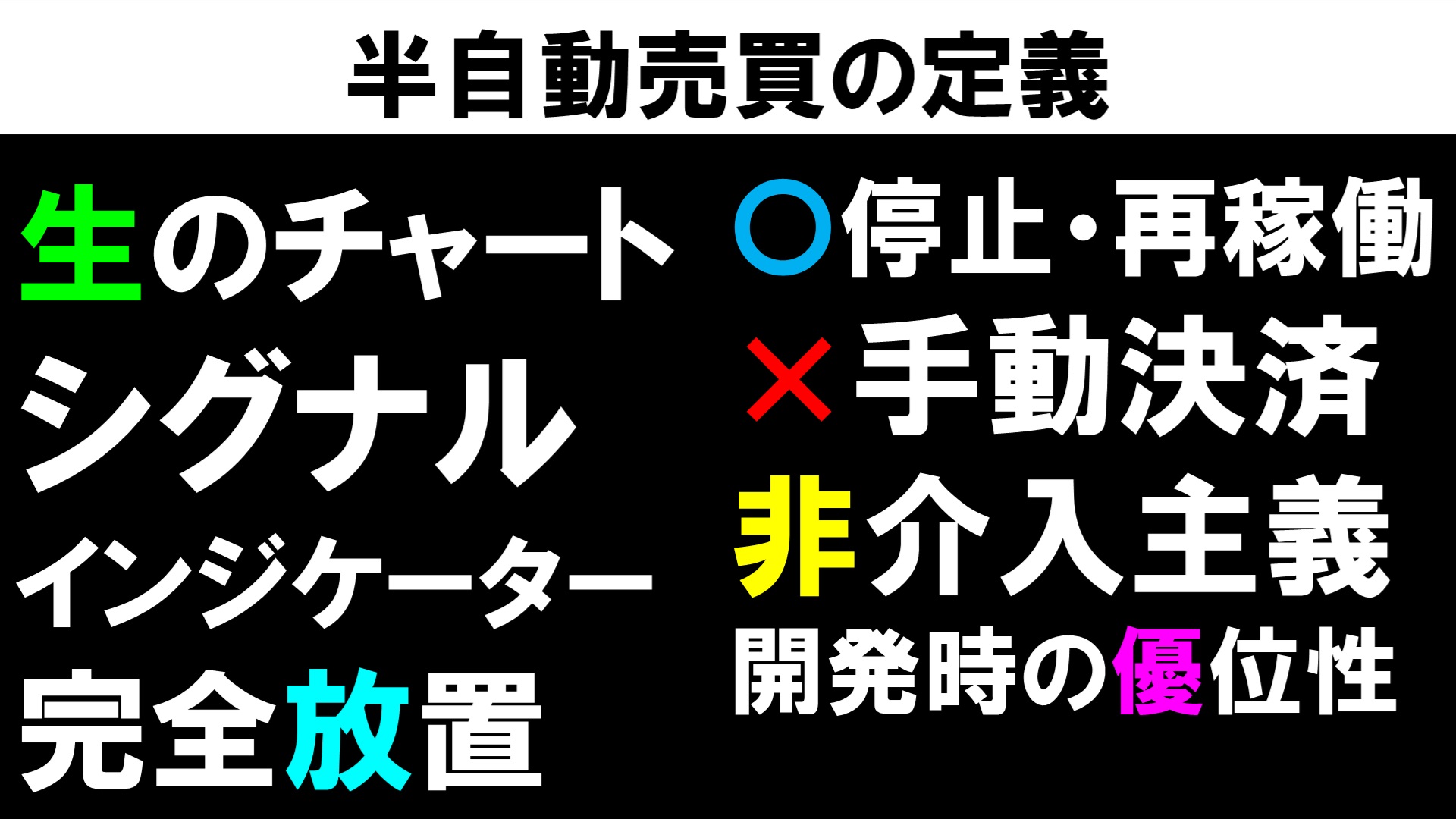
Before getting to the main topic, in the EA craftsman’s EA course, when we say semi-automated trading, it simply refers to stopping or restarting the program.
It does not include manually closing positions held by automated trading programs.
If you were to close manually, it would be when you decide to stop the program and close all held positions.
In daily EA operation, it is not recommended for humans to intervene in settlements, etc., in this course.
Because if you do such things, the edge discovered during the development of automated trading will not be realized.
Trading with discretion while automated trading is running.
This leads, for example, to risk diversification as discussed in the 22nd lesson, so it is a recommended trading style.
However, this does not mean poking at things with discretion while the automatic trading program is running...
...it means running automated trading as an automatic system and, on a separate account, performing discretionary trading.
Skills Required for Semi-Automatic Trading
Regarding how to do semi-automatic trading, it has been explained in lessons such as the 6th lesson, but once you understand that, you will notice that the skills required differ from discretionary trading.Of course, basic environmental awareness skills are necessary, but more than that, the skill required for semi-automatic trading lies in comparing and cross-checking the results of backtests and real trades to pause or restart.
Therefore, there are cases where you couldn’t achieve results with discretionary trading but can ride the wave well and earn relatively steadily with semi-automatic trading.
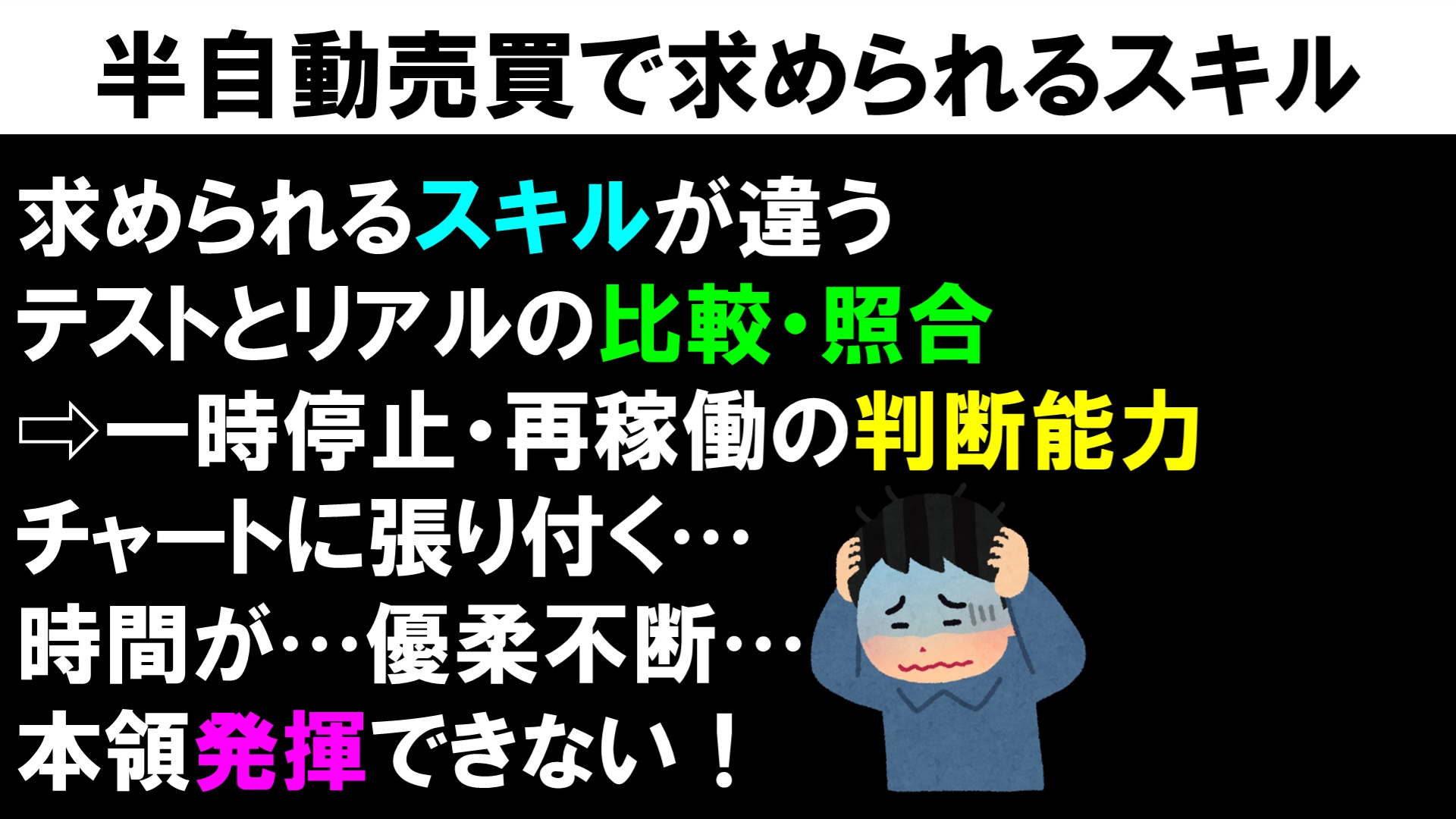
Everyone has strengths and weaknesses, but for example, you may have started FX but find it hard to stare at charts or monitor them, or you may not be able to carve out time to trade, or you may hesitate at every entry or exit due to indecision...
Because of these, your trading style may become inconsistent and you may fail to produce results as a trader.
Stressing yourself by continuing something you’re not good at or not being able to set aside time to focus on trading can put a heavier mental burden than you realize and adversely affect performance.
In short, mental load gets in the way of your true potential.
The more you are such a trader, the more valuable it is to try semi-automatic trading.
If you can’t win with discretionary trading… is it okay?
Should you try semi-automatic trading if you can’t win with discretion? Isn’t it dangerous?You might think so, but even discretionary trading can become dangerous if you misjudge position sizing.
The same goes for automated trading; whether it becomes dangerous depends on position sizing and capital management, not the trading style.
Discretion isn’t safe and semi-automatic trading isn’t inherently dangerous...
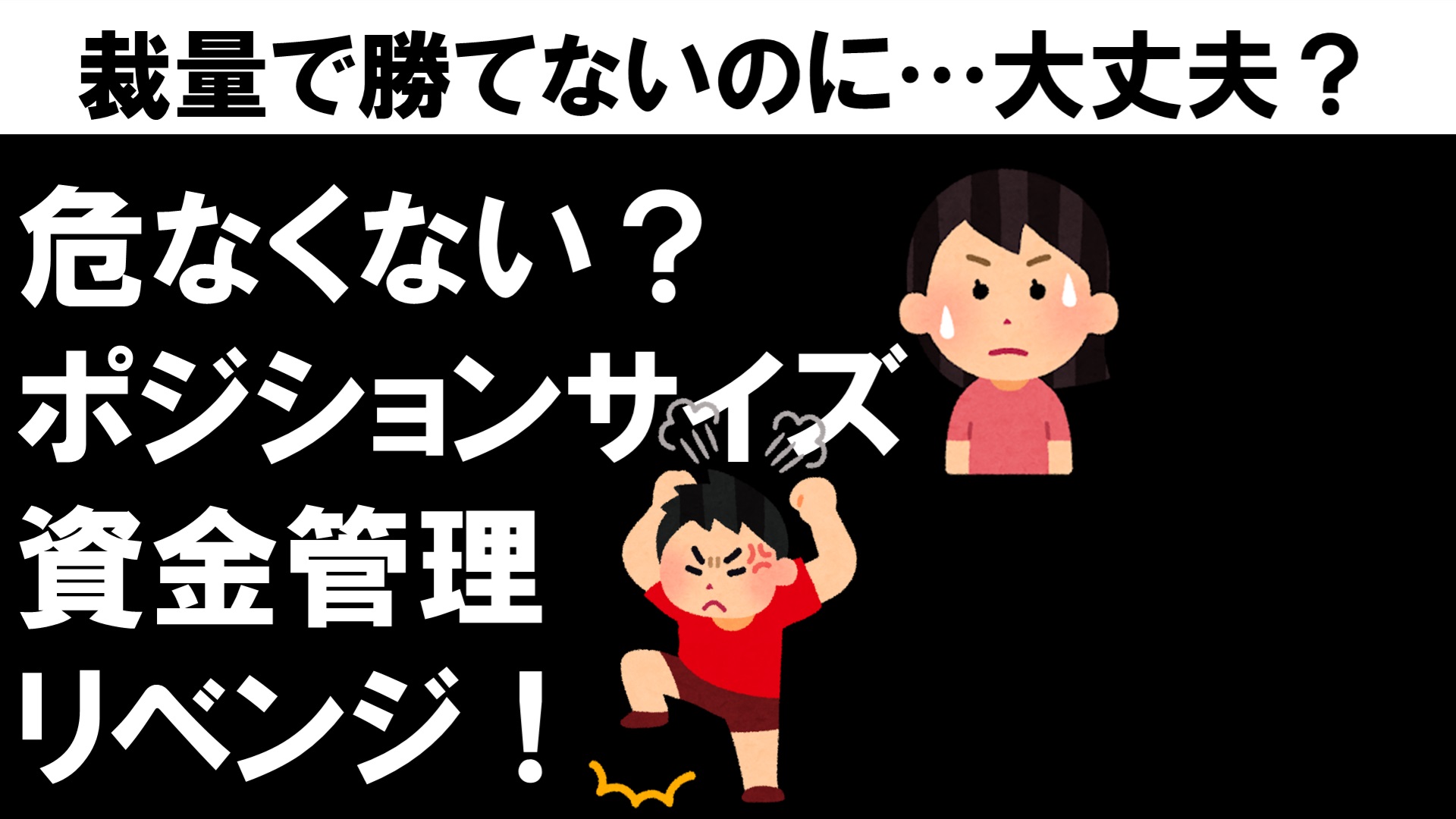
Rather, discretionary trading can be riskier because you may find yourself making reckless trades in the name of revenge when you lose, which is dangerous.
On the other hand, automated trading allows you to predict outcomes and risk with tests such as backtests and forward tests, making it safer than discretionary trading.
Can people who can’t win with discretionary trading start winning with semi-automatic trading?
The answer is Yes. It is possible.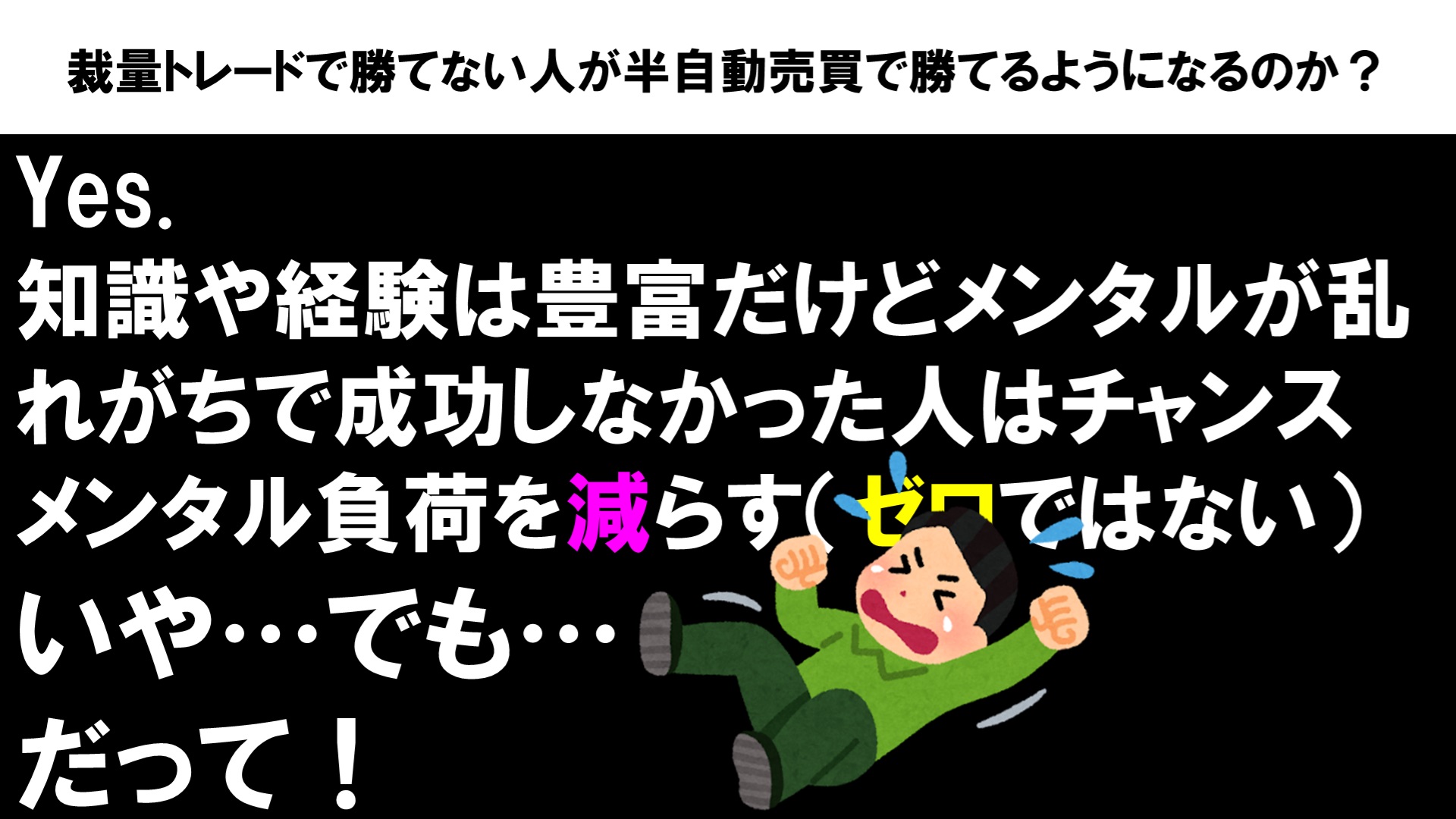
Especially for people whose mental state tends to become unsettled due to what I mentioned earlier, automated trading can work well.
It may make you think, “What was all the trouble for until now…?”
But… since automated trading also causes funds to go up and down, doesn’t the mental load stay the same?
Some may think so, but it is true that you can reduce it. As I always say, it’s not zero-sum or zero-one.
If discretionary trading hurts, doing day trading will expose you to daily stress, right?
Even in swing trading, you may worry about open positions or check your phone frequently to avoid missing entry opportunities...
You might wonder if the opportunity hasn’t come yet...
and feel frustrated.
With automated trading, you can reduce these stresses. Still...
No, because you’re concerned about the results of automated trading and can’t sleep!
If that’s the case, you’re not cut out for FX to begin with, so let’s stop (laugh).
As mentioned earlier, it’s not zero-one but a matter of degree.
Which approach reduces your stress more?
If discretionary trading isn’t producing results, consider the option of automated trading as a proposal.
■ My Developed EA Concept and Operating Policy
EA Craftsman’s EA (Three Arrows) is here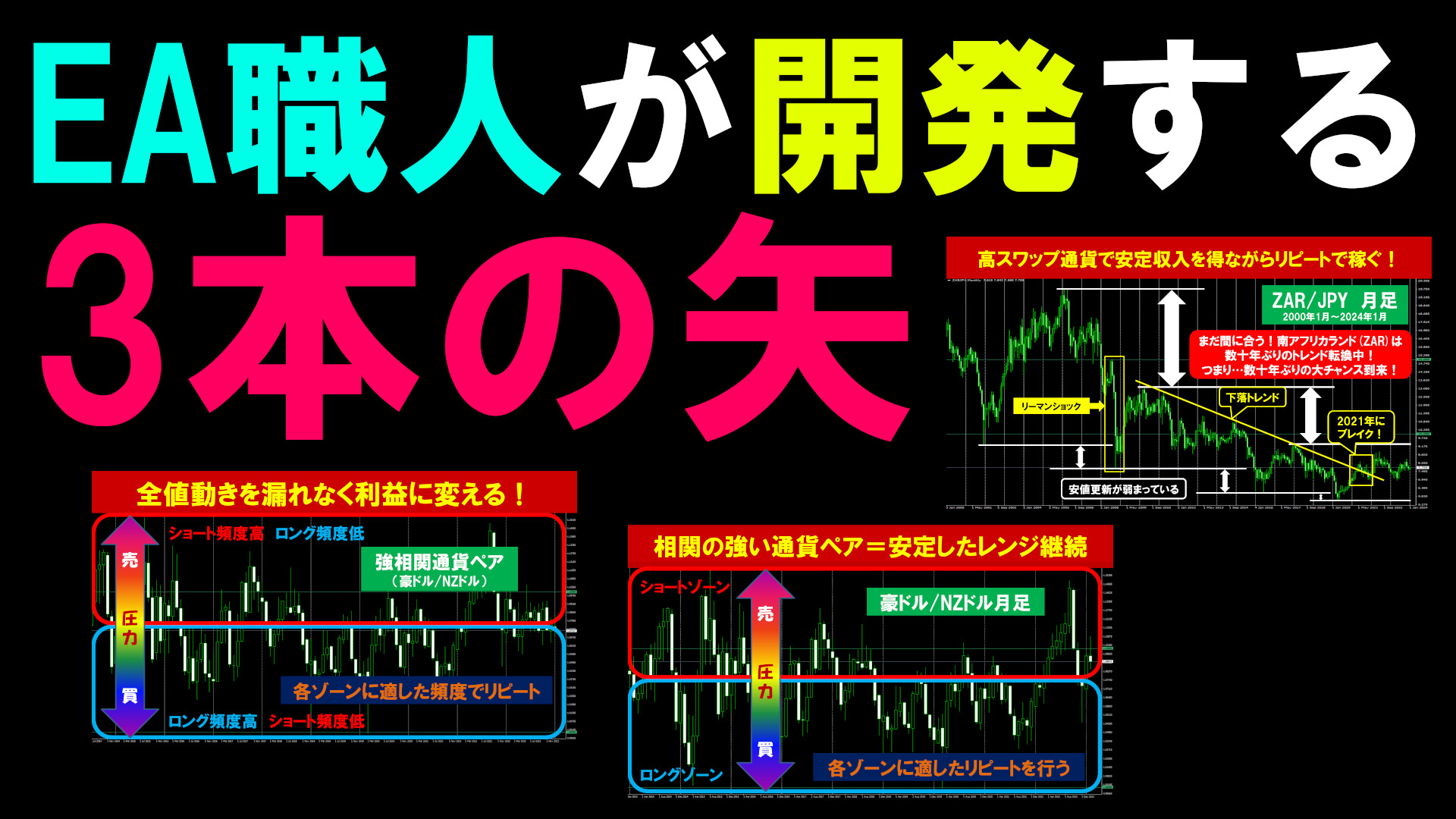
× ![]()