EA Craftsman’s EA Course 【002】 Are More Trades Better for Excellence? About Trade Frequency
0
Purpose of Trading
There are various indicators that traders pay attention to, such as win rate and annual or monthly returns, but among them, one indicator that beginners particularly notice is the number of trades.For total beginners who have just started scalping or day trading in FX, the top indicator they concern themselves with in ranking is win rate, followed by monthly returns, and then the number of trades comes a bit after that.
One of the most common questions I have received over many years of teaching FX is…
“How many opportunities are there in a day?”
questions about the frequency of trading like this.
If you properly conduct a survey targeting beginners, you might find that the frequency of trades is valued more than win rate, monthly returns, or how much you can earn.
Trading as the goal rather than earning money… this suggests a high possibility of gambling addiction.
JITTERIN'JINN Gift (1993)
If not, they might be a complete beginner who just wants to try lots of things quickly after learning FX.I understood how FX works. I studied taxes. I even considered tax-saving measures. I even thought about forming a paper company in the Cayman Islands someday.

I deposited money quickly with a securities company and just went long or short somehow.
At first it went well. I didn’t know how to lose anything.
But… strangely, I gradually started losing. Why!?
The thing FX gave me—uselessly increased tax knowledge—♪
Eyes Beheld, Scales Off
At this point, most people begin reading trading books. Now it might be YouTube, where they learn about the existence of stop-loss…So that it was like: “So this is it! Trading is about making a profit overall while you win and lose along the way!”
And the scales fall from their eyes. These scales differ from person to person; some people may never shed them in their lifetime.
Now, once you learn stop-loss, you start paying attention to win rate, R-multiples, and profit factor, etc.
You also learn the ideology of risk-reward being favorable, such as risk small, reward large.
To make money with short-term trading… to accumulate profits… at a point where you have an edge… it’s crucial to repeatedly take only trades with a positive expected value!
The result of a single trade is not what matters!
Having understood this, next…
Then how do you determine that there is an edge or that the expected value is positive?
That’s right.
1000000 Yen with 3 Trades!
Using a certain method, I made three trades. The result was positive. So could I get the same result by doing this three more times?This is a method that earned 1,000,000 yen in just three trades! Amazing, right?! Please use this method to earn as well!
Doesn’t that feel off when someone says that? If you don’t feel something off here, you might be a bit off.
Yes. The sample size is far too small.
Three trades is just luck, isn’t it? There’s no guarantee the next three will yield the same results…
I think that’s the natural response for a sane person.
So people start to focus on trade frequency and number of trades.
In experiments in chemistry, physics, and medicine, larger sample sizes provide higher reliability and reproducibility, right?
Depending on the content, if you conduct one experiment and say “it worked,” it’s hard to present that at a conference, isn’t it?
In marketing, for example…
“We surveyed 10 high school girls in Shibuya about the latest trend!”
Even if they say that, it would seem extremely biased and you wouldn’t base any plans on it, would you? You’d want to ask many more people, right?
Similarly with FX…
A method with more trades has less room for deception and higher reliability! It seems to work in any market condition and feels universal!
I think that’s what people might think.
The concept of large numbers, a term we learned in school, comes to mind again…
To converge results to expected value, you need the law of large numbers. The more samples, the better.
That’s what people might think.
Losing Sight of the Objective
More samples are better… no, wait a moment.Are there really daily scenarios where the expected value remains positive many times? Are you losing sight of the objective by clinging to the law of large numbers?
“No, that’s not the case. I saw on TV. Some super-fast scalper, trading many times per second with a computer!”
“That person said, ‘I can’t read price movement an hour ahead, but I can read 0.1 seconds ahead!’ TV never reports lies!”
(Oh dear…)
Indeed you could create such an EA if you wanted to. But as you know, FX has spreads.
If price movement within one second is often smaller than the spread, how could you accumulate profit multiple times in a single second?
For example, if USDJPY spread is 0.3 pips, and it doesn’t move by 0.3 pips in a second, you can’t possibly earn. And doing that many times in a second is even more impossible.
“So TV is lying?!”
Well, probably yes (I’m certain).
Did you notice that a securities company sponsored that program?
To entice people into FX trading and hype the FX industry, it might have been propaganda.
Or, like the new NISA, to lure unexperienced people who rarely trade into the market with tax incentives when stocks rise, perhaps with that motive in mind…
In any case, if there are traders actually doing such trades, they belong to funds with a certain market-moving capital, and it’s not something individual investors like us should be involved with.
Because such an edge that yields positive expected value countless times within such short intervals simply cannot arise naturally.
1 Pip Cost
To repeat, FX has spreads. Whether you trade on an exchange or over-the-counter, there is a spread. In short, it’s the gap between selling and buying orders, something also seen in stocks and futures.The tighter this spread, the heavier the cost on profits.
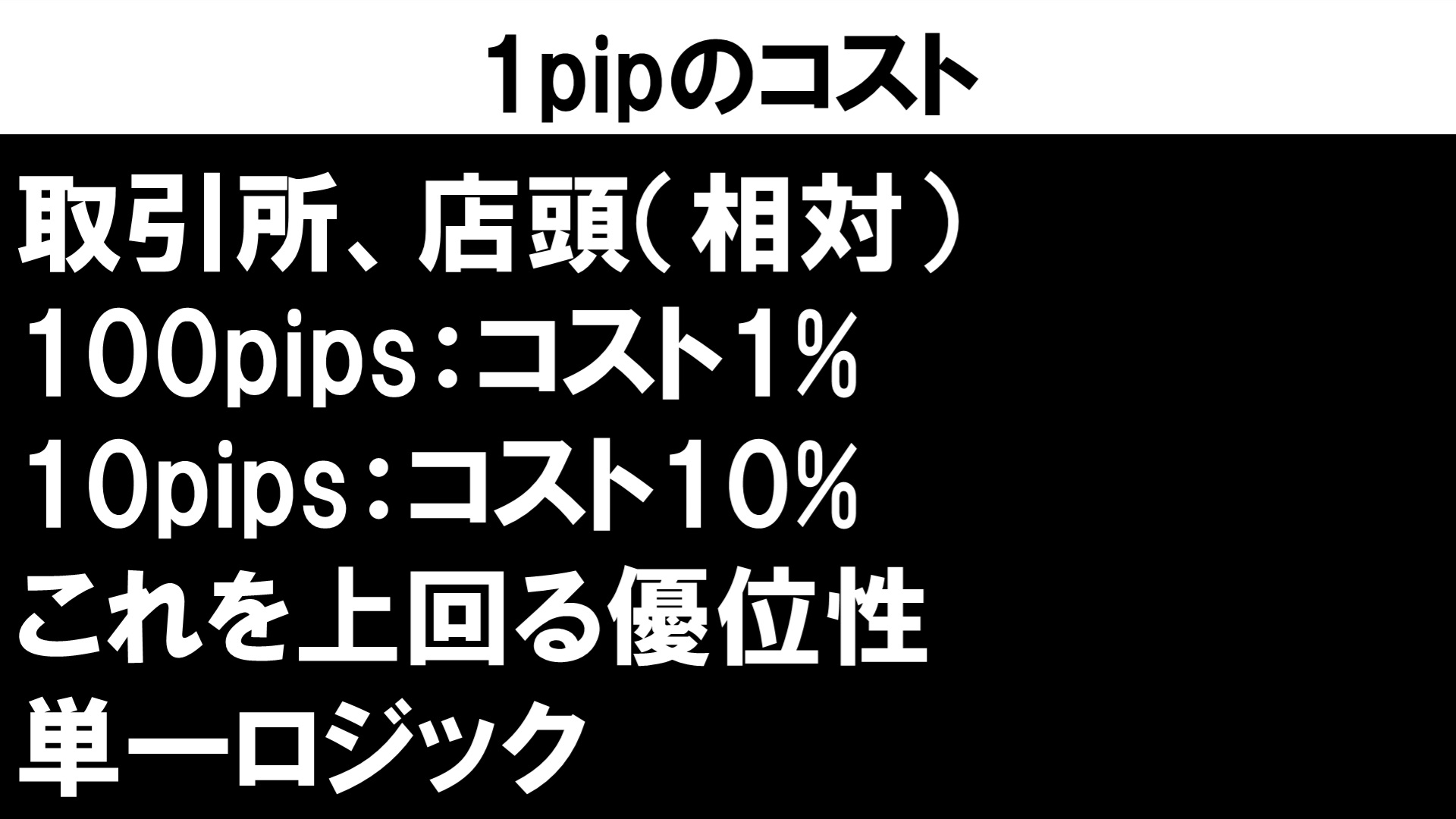
If the spread is 1 pip and you earn 100 pips, the cost is 1%. If you earn only 10 pips, it’s 10%. It’s the same as sales tax.
Some brokers offer zero-spread trading, but they charge a commission instead.
Do you think such a disadvantage-benign edge would appear repeatedly within one second, or even one day?
The USD/JPY movement in a day is rarely even 100 pips. It’s common to see under 50 pips.
Even just this demonstrates how unrealistic it is to have rapid scalping with a single logic repeatedly trading 10 or 20 times a day.
I’m not saying you can’t increase the number of trades; you can. What I’m saying is that such an edge does not occur that frequently.
You’re not a gambler, so trading isn’t the purpose for you, right?
Healthy Trade Frequency (Day Trading)
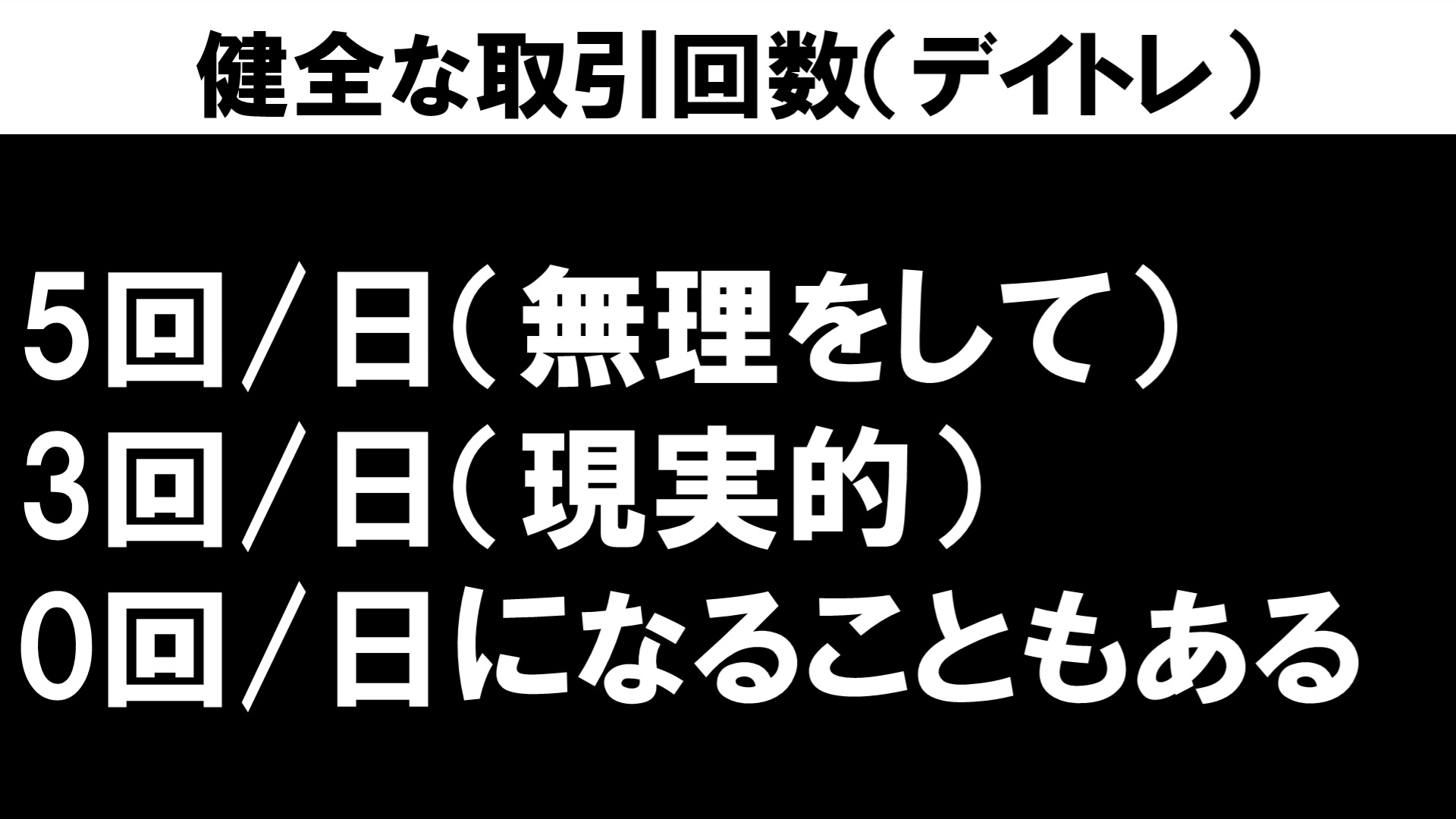
So what is the realistic number of trades? If you use a single logic, with a single method, five trades per day would be the limit.Pushing to five would be very hard; realistically about three, and even then, that might be high on average. There will be days when no edge occurs at all.
This is based on my long experience with discretionary trading and EA development; other traders with different perspectives certainly exist, though.
So this time I’ve shared my view on trading frequency, a common beginner question.
When trading becomes the goal or gambling addiction seems near, please remember this discussion.
■ My Developed EA Concept and Operating Policy
EA Artisan’s EA (Three Arrows) is Here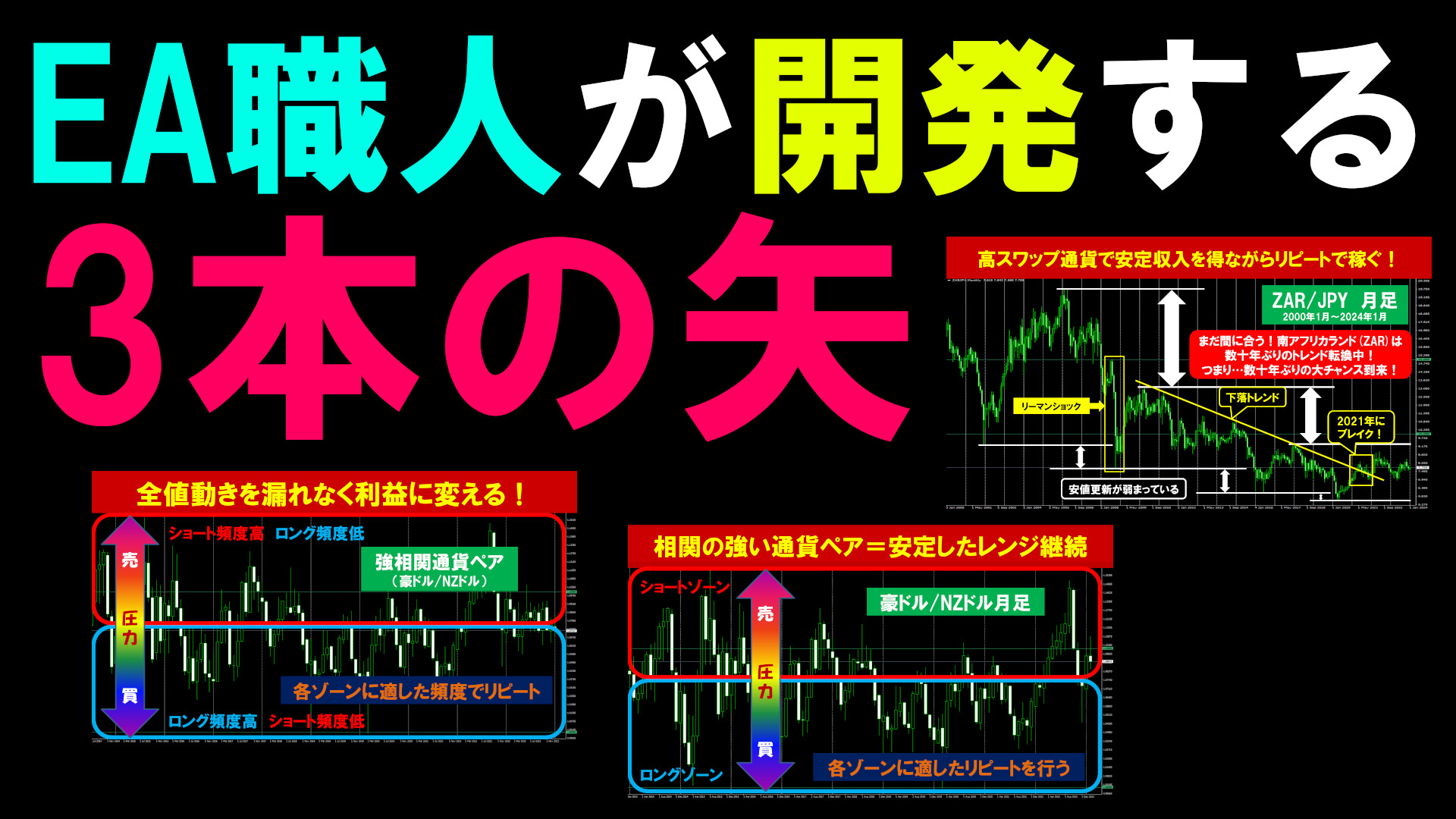
× ![]()