EA Craftsman's EA Course [021] How to construct a portfolio that makes a smooth equity curve with automated trading
0
Seeing Realistic Dreams
For beginners, don’t jump to building a portfolio right away. Please reconsider what kind of EA you are looking for in terms of how you want to earn.As long as it makes money, anything goes! I’m only interested in explosive profit EAs that turn 1 million yen into 100 million yen in a year!
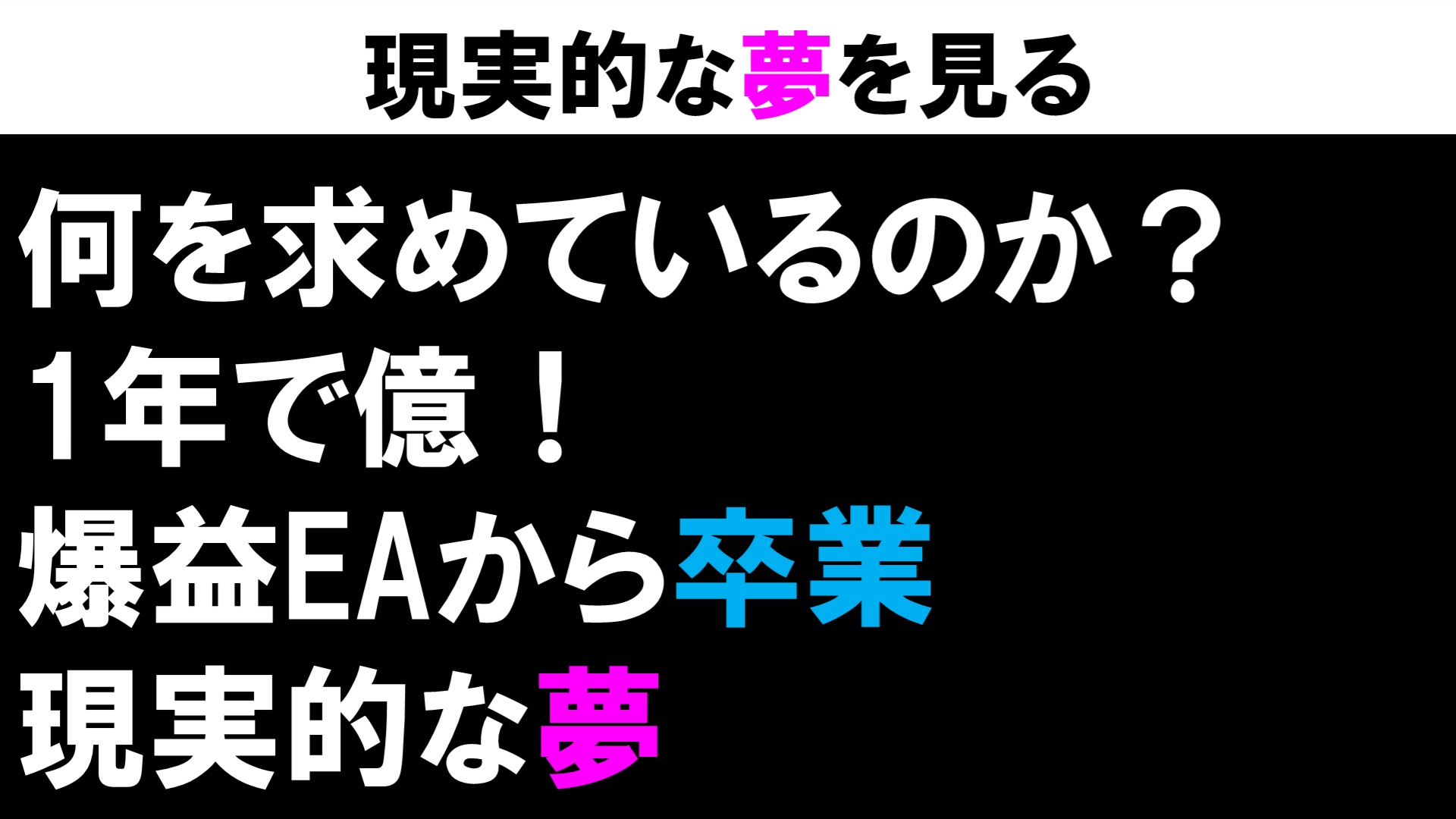
If you’re prepared to lose 1 million yen in an instant, that might be fine too.
If you’re lucky, you might encounter an EA with such potential as if you’ve won the lottery. However…
I don’t want to do something like gambling! I don’t need explosive profits; I want an EA that earns steadily in the long run.
In that case, you must graduate from chasing such explosive-profit EAs.
When people think of automated trading, they might imagine a dream tool that makes money 24 hours a day, even while you sleep…
Yes, that’s true in practice, but that’s exactly why we must face reality. Let’s dream a realistic dream, shall we?
Self-Analysis
So once you can face the reality, the next step is self-analysis.This is taught in discretionary trading as well: do you prefer a loss-cutting, profit-taking type, or a high-win-rate type?
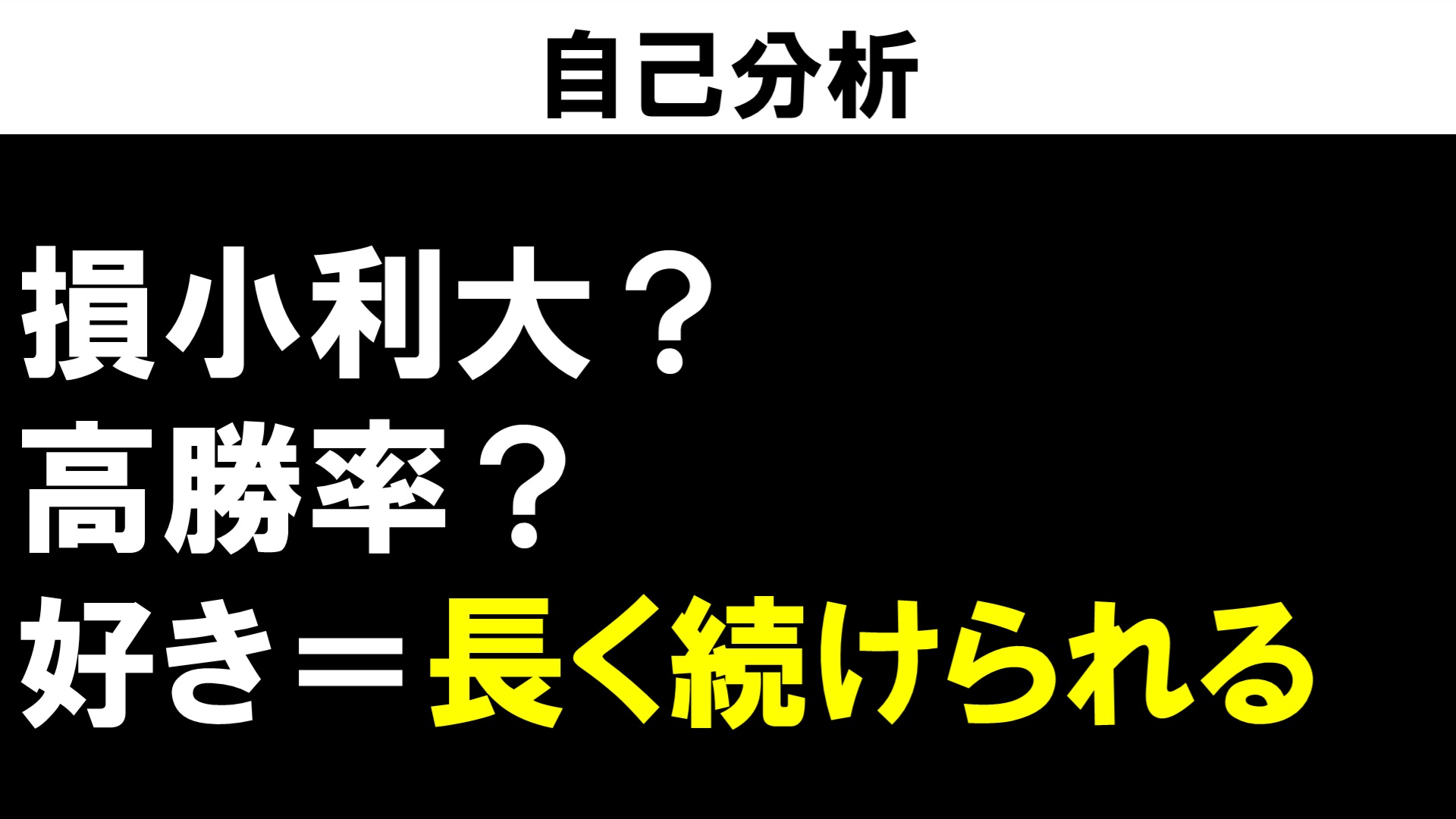
There are endless possibilities, but here “liking” should be interpreted not as “I want to do this” but as “Could I continue this for a long time?”
If you tend to flare up or get discouraged easily when you lose, you might choose high-win-rate trading… something like that.
Of course, a high win rate means that a single stop-out can be relatively large, but decide clearly in your self-analysis whether you can accept that.
Trading Policy
After self-analysis is done, next decide your trading style and currency pairs. Trading style basically refers to the method.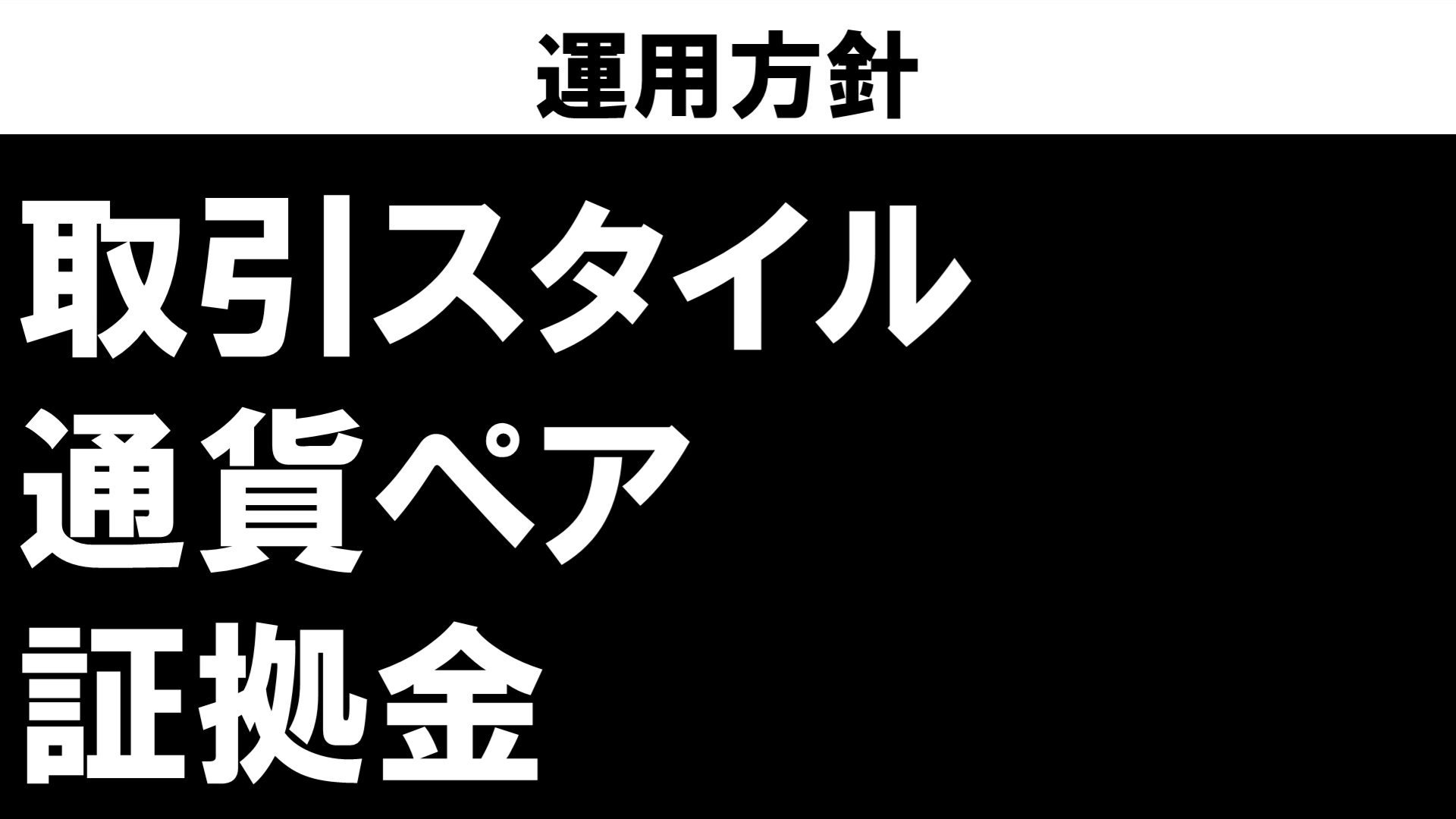
Then, you select an EA in consultation with the amount of margin you can prepare.
Once you can do these things, the concept of a portfolio begins to take shape.
Portfolio
When running multiple EAs, naturally you consider low correlation. The most important aspect of low correlation is the timing of drawdowns.If multiple EAs draw down at the same time, the margin maintenance ratio drops all at once, making it difficult to continue operating.

To know the drawdown correlations, I think layering past backtests and forward test results is best.
※ I’ll show an example by hand. Different methods have different trade frequencies, so simply overlaying them may misalign timing; align the periods properly. If multiple EAs draw down in the same period… that’s okay as long as it’s not repeated.
This also requires a sense of balance; you can tolerate a little overlap in timing.
Being overly fussy here is like a novice trader screaming that the support line isn’t working if it brushes the line even a little.
At first glance, even EAs trading by completely different methods may draw down in the same period… so don’t judge solely by trading style.
Position Sizing
Next, set the position size so that the maximum drawdown amounts are as close as possible.If EA A has a max drawdown of 200,000 yen and EA B has 1,000,000 yen, the imbalance is not good for diversification.
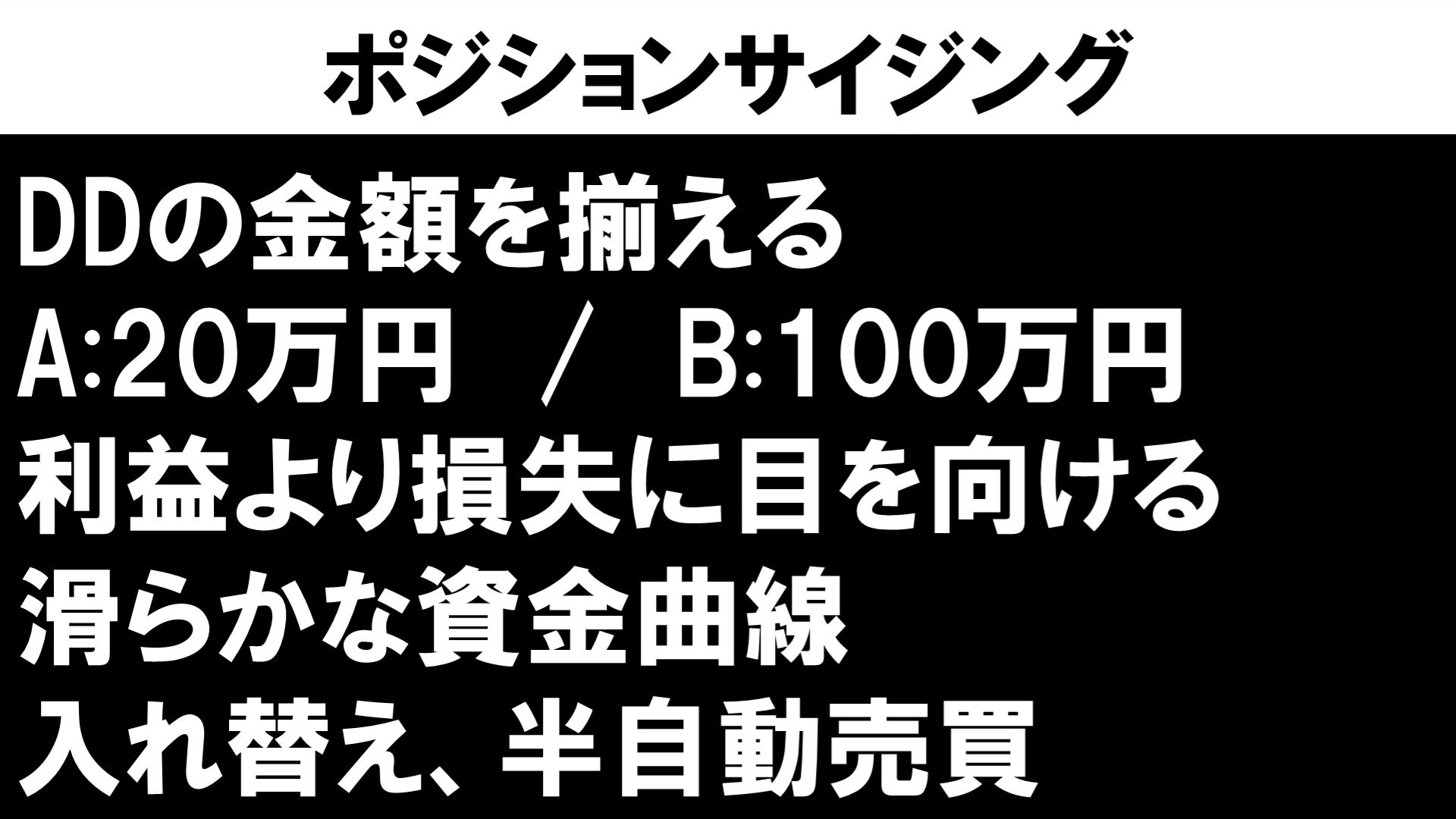
The key point to note here is not to try to equalize the amounts you earn.
If B earns 1,000,000 yen in a year but A only earns 200,000 yen… then you might think, “Let me increase A’s position size by 5 times!”
Don’t do this; it’s risky. Risk management should focus on losses, not profits.
In this way, gradually increase the number of operating EAs and build a portfolio that yields a smooth overall equity curve.
Check the situation at least once a week, and, if needed, replace EAs.
When swapping, consider not just swapping out a bad EA for a new one, but using semi-automatic trading techniques to pause and resume operations as appropriate.
■ My Developed EAs: Concept and Operating Policy
EA Craftsman’s EAs (Three Arrows) are here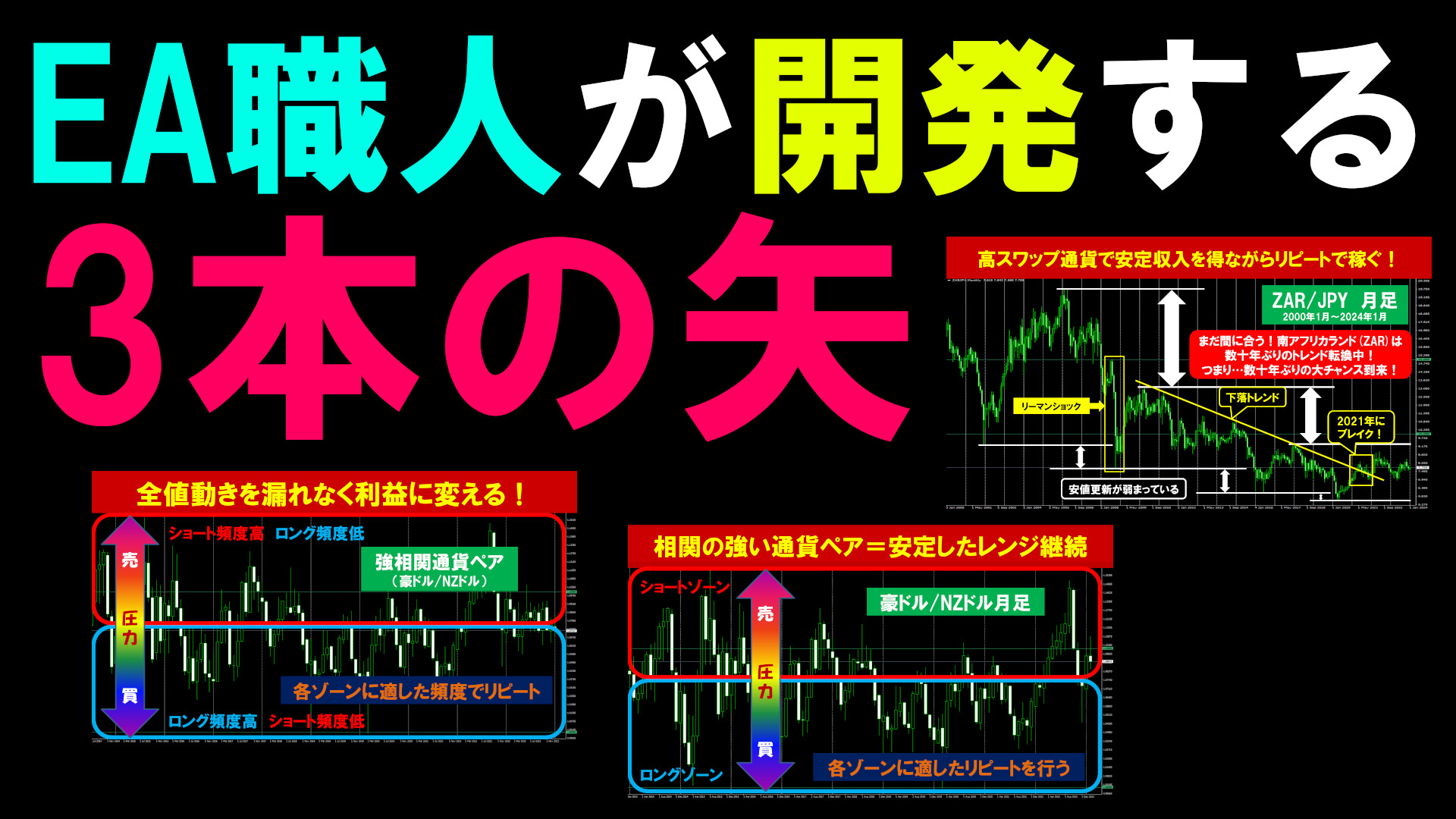
× ![]()