EA craftsman’s EA course [007] Do you want an EA that guarantees 100% sure to win, an EA whose results are guaranteed?
Traits Imprinted in Our Genes
We’ve been discussing the investment brain series that relates investing and trading to neuroeconomics, but like other animals, humans dislike uncertainty.
We prefer a certain 5,000 yen over an uncertain 10,000 yen.
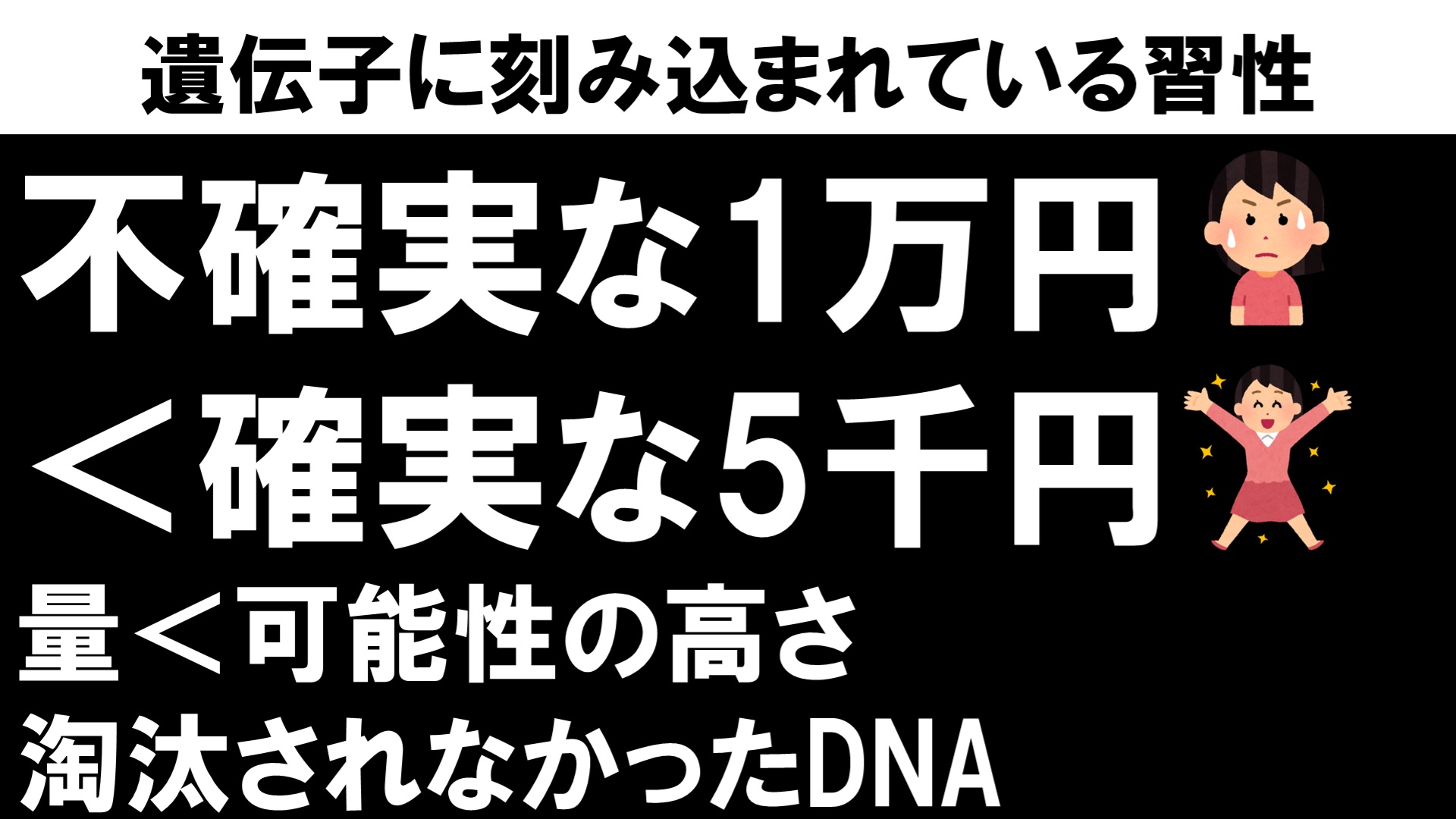
In wild animals, harvest uncertainty threatens life, so when seeking food they emphasize the likelihood of success over sheer quantity.
Even if the amount of food is small, as long as it isn’t zero, life continues for now, and that gives a chance to search for the next meal, right?
Conversely, animals that seek quantity over certainty have a lower chance of surviving, and thus cannot increase and prosper their offspring, so they were subjected to natural selection.
In other words, the animals we include humans who have survived to this day have DNA ingrained with a tendency to dislike uncertainty.
That’s why we prefer a certain 5,000 yen over an uncertain 10,000 yen.
However, under certain conditions, that is not always the case. This is the interesting part of human psychology...
Prospect Theory
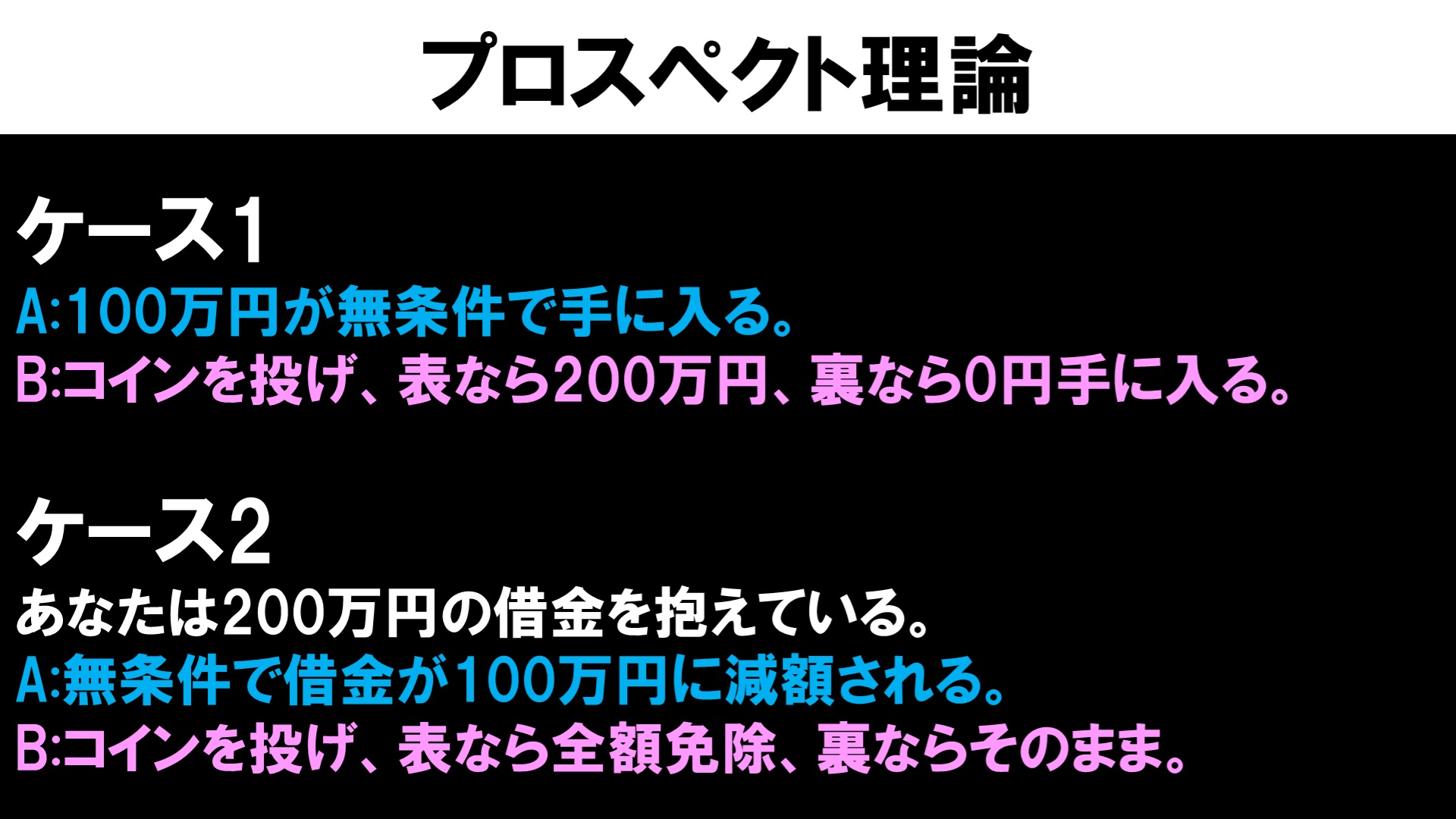
Case 1
A: You get 1,000,000 yen unconditionally.
B: Toss a coin; if heads you get 2,000,000 yen, if tails you get 0 yen.
Which do you choose?
Case 2
You owe 2,000,000 yen.
A: Your debt is unconditionally reduced to 1,000,000 yen.
B: Toss a coin; if heads you are completely absolved, if tails your debt remains.
Which do you choose?
Yes, for those who know, this is the famous empirical demonstration of Daniel Kahneman’s Prospect Theory, from Fast and Slow thinking.
In Case 1, A and B both have an expected value of 1,000,000 yen. A guarantees a 1,000,000 yen gain. B has a 50% chance of 2,000,000 yen, so the expected value is 1,000,000 yen.
First, Case 1: even though both have the same expected value, many subjects choose A. In other words, they avoid the risk of getting nothing with a 50% chance.
Conversely, in Case 2, many subjects choose B, avoiding the loss of guaranteed 1,000,000 yen by taking a risk.
Even those who chose risk-averse A in Case 1 largely choose risk-seeking B in Case 2.
Thus, when seeking food or any reward, our DNA makes us dislike uncertainty, but when facing losses, that instinct does not manifest, and procrastination and avoidance psychology lead us to choose uncertaintyagain.
However, this convenient DNA becomes a hindrance in the world of investing and trading.
Self-Improvement Seminars?
For example in sports, you think, “If I keep practicing like this, will I really improve? Will I win the next game?”, and in business you think, “Is this approach really right…,” and end up worrying and unable to move forward. Some people can’t act unless outcomes are guaranteed.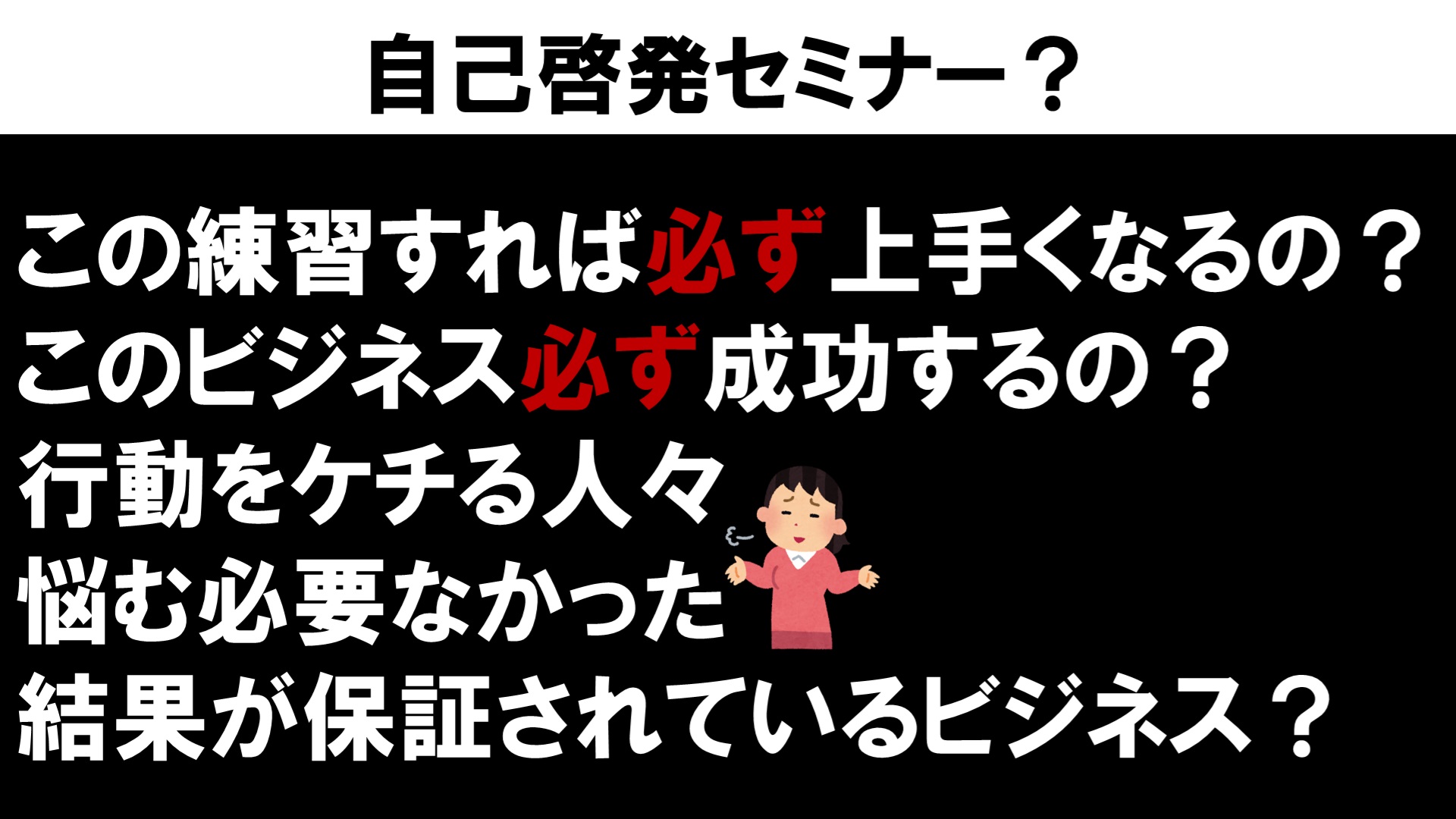
I’d like you all to imagine: can someone succeed in sports or business by being stingy about such behavior?
Don’t you think, just try it quickly, and if it doesn’t work, you can think then? I’m this type, but what about you?
Have you ever had the experience of worrying a lot and then realizing you didn’t need to worry at all when you actually tried it—how silly your worries were?
This might sound like a self-help seminar, but whether it’s discretionary trading or automated trading, ultimately like any other business, you must take risks to earn.
Just as there are no businesses with guaranteed results, there are no EAs with guaranteed results.
If it’s a business that you know is earned through colluding with politicians, then that’s different, but unfortunately there are no EAs colluding with politicians.
The Depth of Understanding Through Action Is Tremendous
So what should you do? First, take action.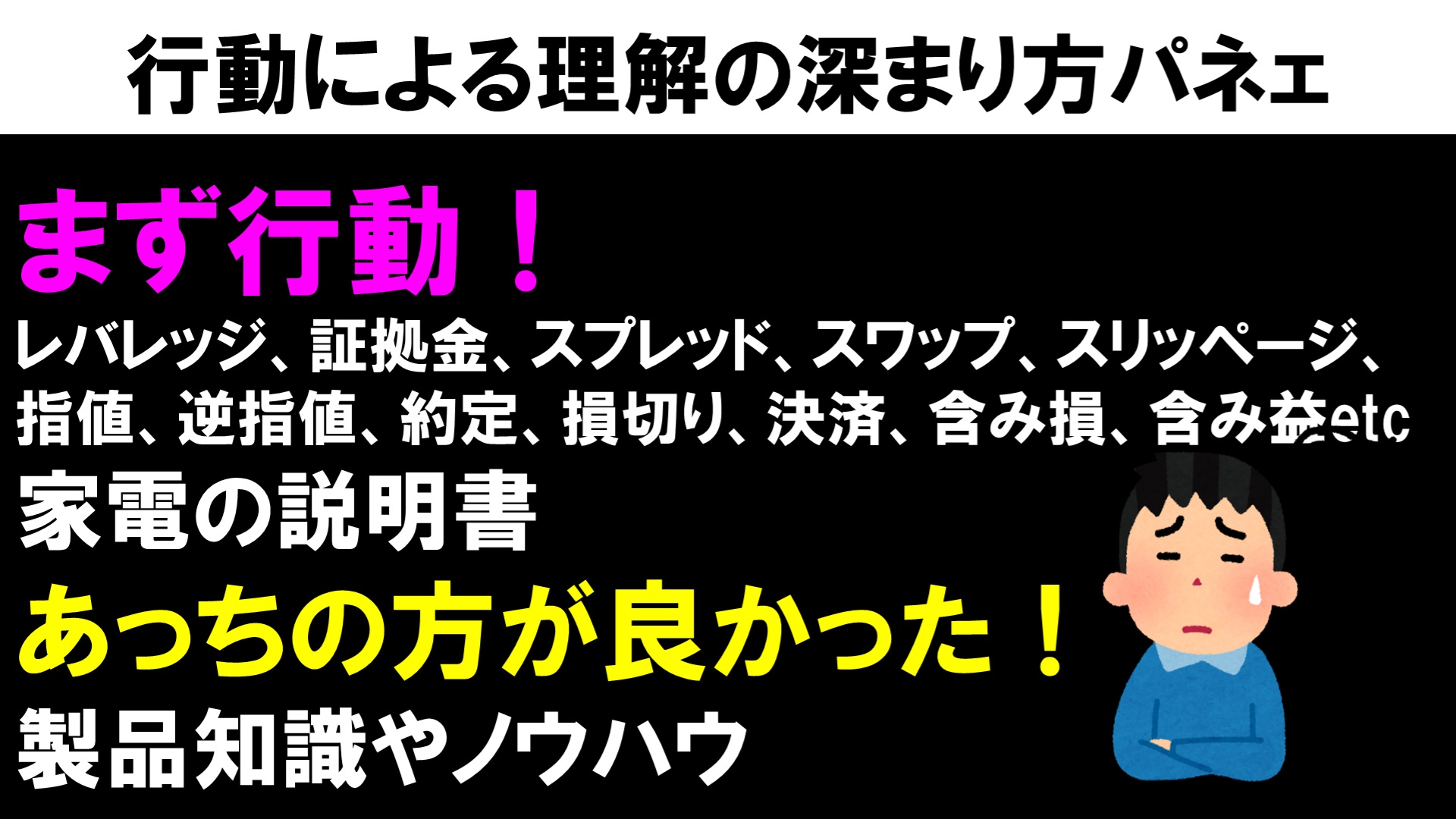
In discretionary trading, even if small, try real trading. That means opening an account with a securities company, making deposits, and gaining various experiences, right?
Leverage, margin, spreads, swaps, slippage, limit orders, stop orders, executions, stop losses, settlements, unrealized losses, unrealized gains, and more… before acting you didn’t know these concepts, did you?
When you buy appliances, do you read the manual thoroughly? Or do you first power it on and try to understand the product as you use it?
Don’t you read the manual or look things up online only when you don’t understand?
And after gaining experience and increasing knowledge, only then…
“Ah, that other product was better…”
This happens because you increase knowledge and skills about products by acting, and only then realize it; beforehand, you couldn’t know it.
The earlier you act, the sooner you realize. So when I see people hesitating, I think, “Just take action already.”
Common Traits of Successful People
The same applies to automated trading. For now, try moving something, anyway.What criteria should you use to choose an EA? We’ve covered the know-how in previous lectures, so you already have at least minimal knowledge about EAs.
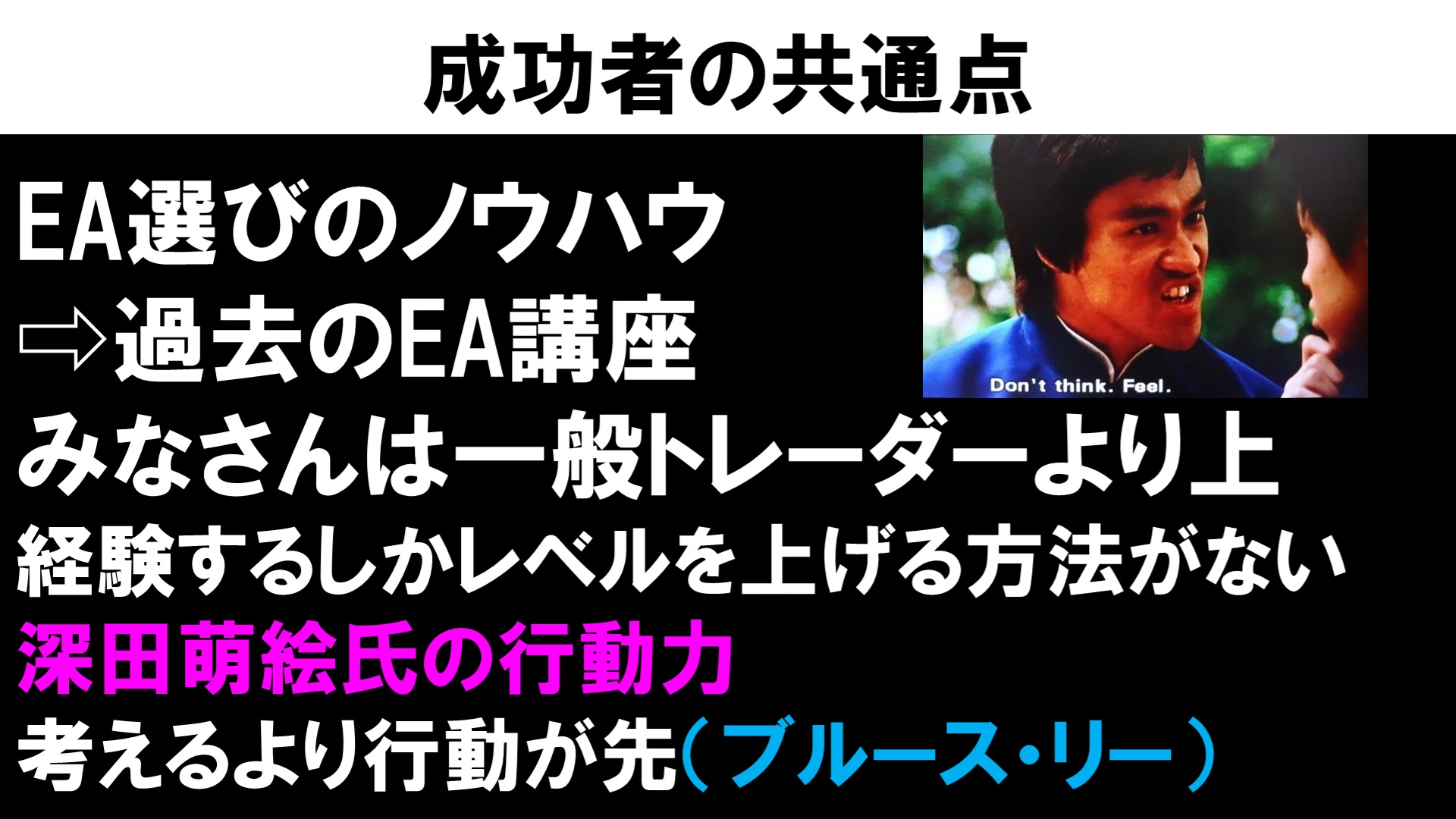
In fact you know even things that ordinary traders don’t know, such as excessive optimization.
From here on, it’s a level where you must gain experience.
On a related note, there is Moe K. Fukada, a IT business analyst.
She publishes books and runs YouTube, so you may know her, but censorship and bias in major media are so severe…
“I will start my own program!”
She stated this, and this year (2024) launched a program called Political Economy Platform, and I remember how amazing her drive and speed were at that time.
What left the strongest impression was when she rented a studio in front of Tokyo Station.
Nobody can imagine how expensive the rent would be, but she said, “I’ll figure out the specific format of the show later.”
Do you understand? Action comes before thinking. Act and then think. Think while acting. If you fail, you learn from it.
There is a parallel to Bruce Lee’s famous line “Don’t think, feel.”
This is the common trait of the successful.
Those Who Never Fail Also Never Succeed
They don’t view failure as failure. Even if they build a company and close it down, that is not a failure.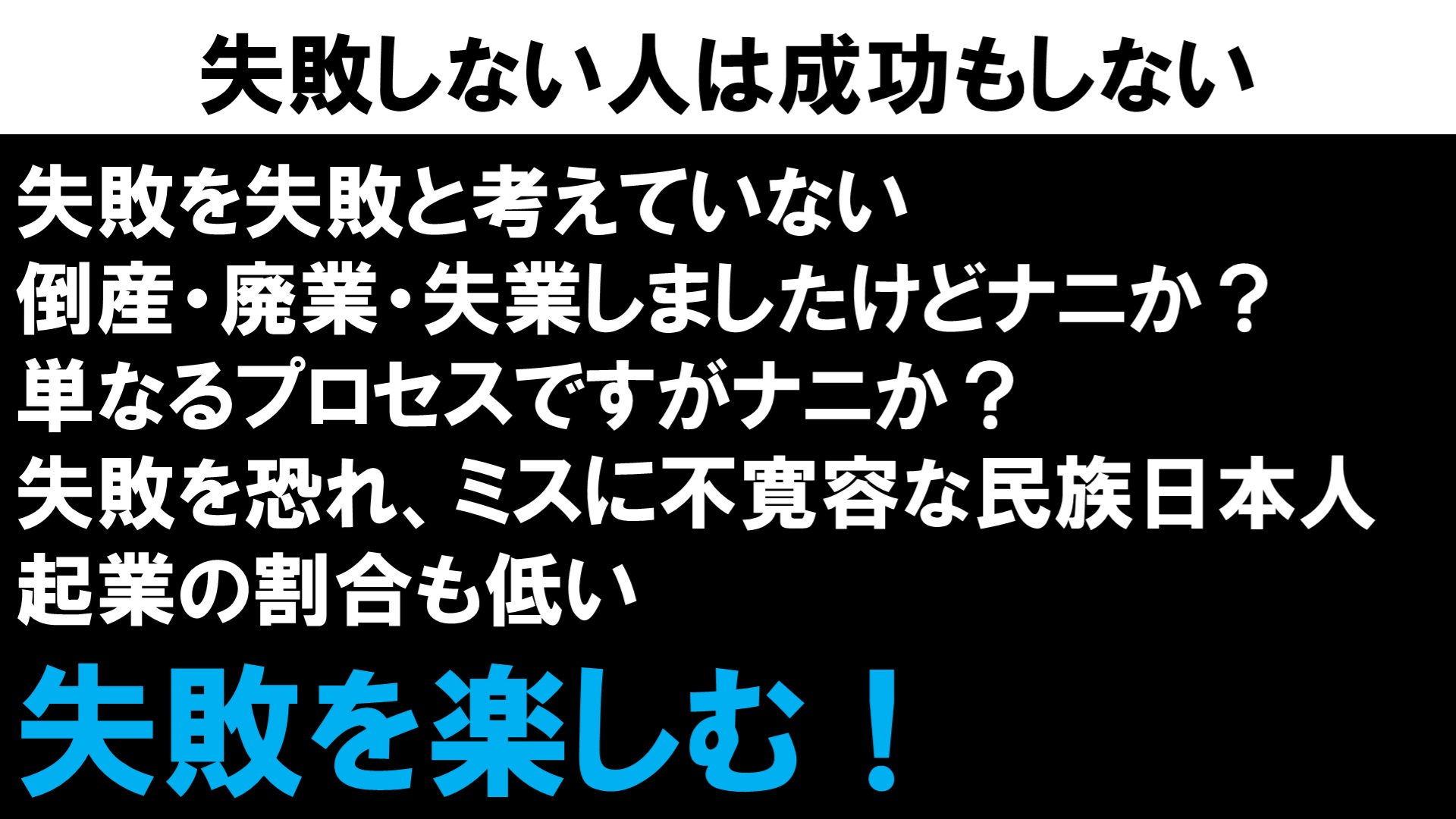
They tried something and confirmed it didn’t work. But they also learned what did work. Then they think, “Next, let’s try this.”
Thus, bankruptcy, business closure, and unemployment are just processes.
The Japanese are particularly afraid of failure. They are intolerant of others’ mistakes.
When driving a car in Japan, if you make a small mistake, people glare, honk, and give taunts or insults; people here tend to have small tolerance.
Because you belong to such a society, you cannot act. Even when starting a company, you aim for success on the first try.
The rate of entrepreneurship is lower in Japan than in the West, simply reflecting differences in how failure is perceived.
So to succeed in FX and businessyou need to be an outlier.
In a world where the majority fail, where “everyone is doing it” becomes loud, investing and trading are not suited for those who seek crowd-pleasing or to become mere fodder.
This has become more and more of a self-help seminar, but if you want success in investing, trading, or automated trading, act with a mindset that you can enjoy the process of failing!
■ My Developed EA Concept and Operating Policy
EA Craftsman’s EAs (Three Arrows) are here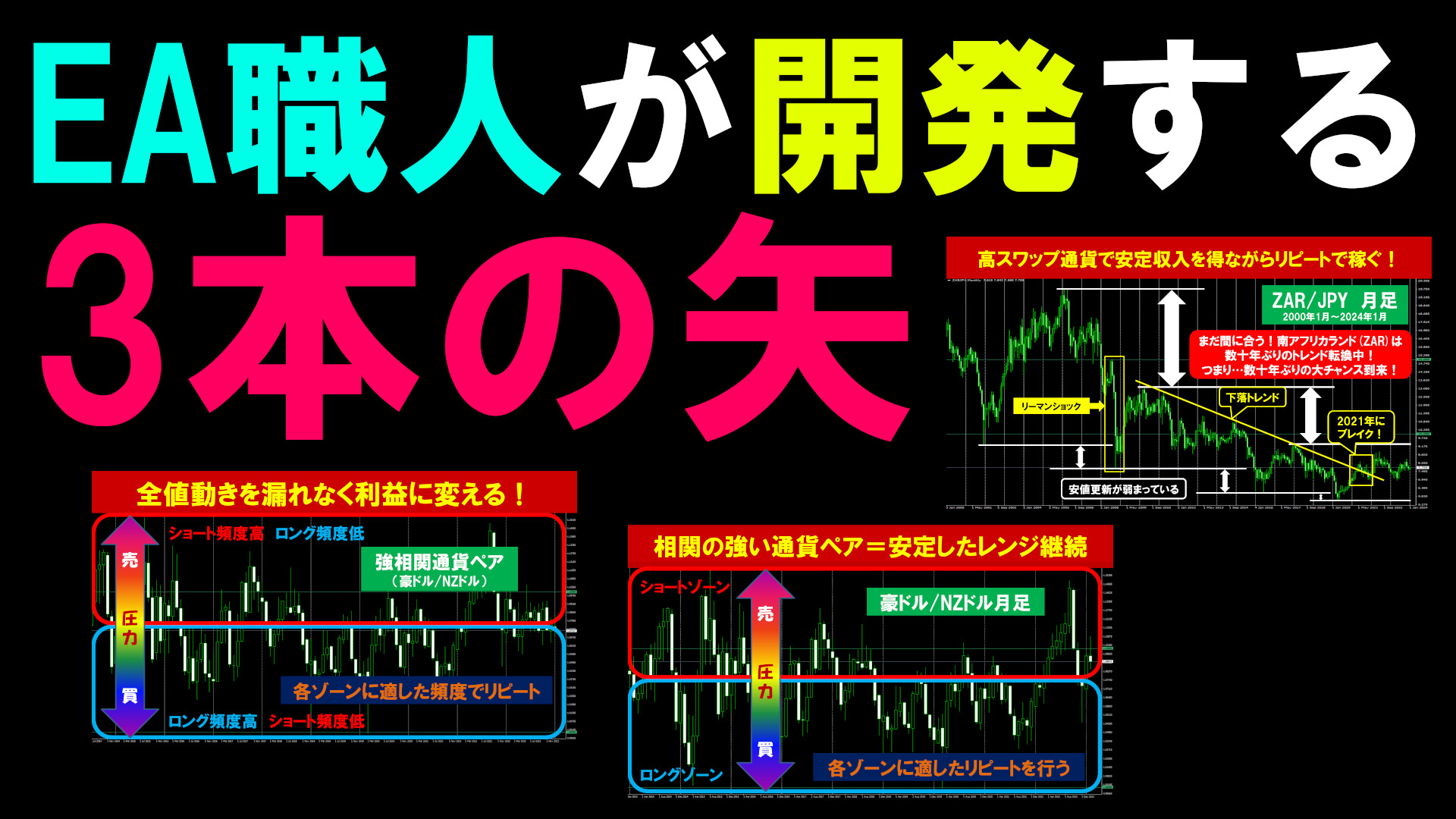
× ![]()