EA Craftsman EA Course 【006】 Acquired the Holy Grail EA! But when I run it myself, it doesn’t earn at all
Only when I was operating it...
I purchase a promising EA or develop one myself, and when I start running it, it doesn’t earn as expected...If you are a trader building a portfolio with automated trading, I think many have had that experience at least once.
One possible cause is the over-optimization issue I mentioned last time, but you can understand that by looking at the forward test results, right?
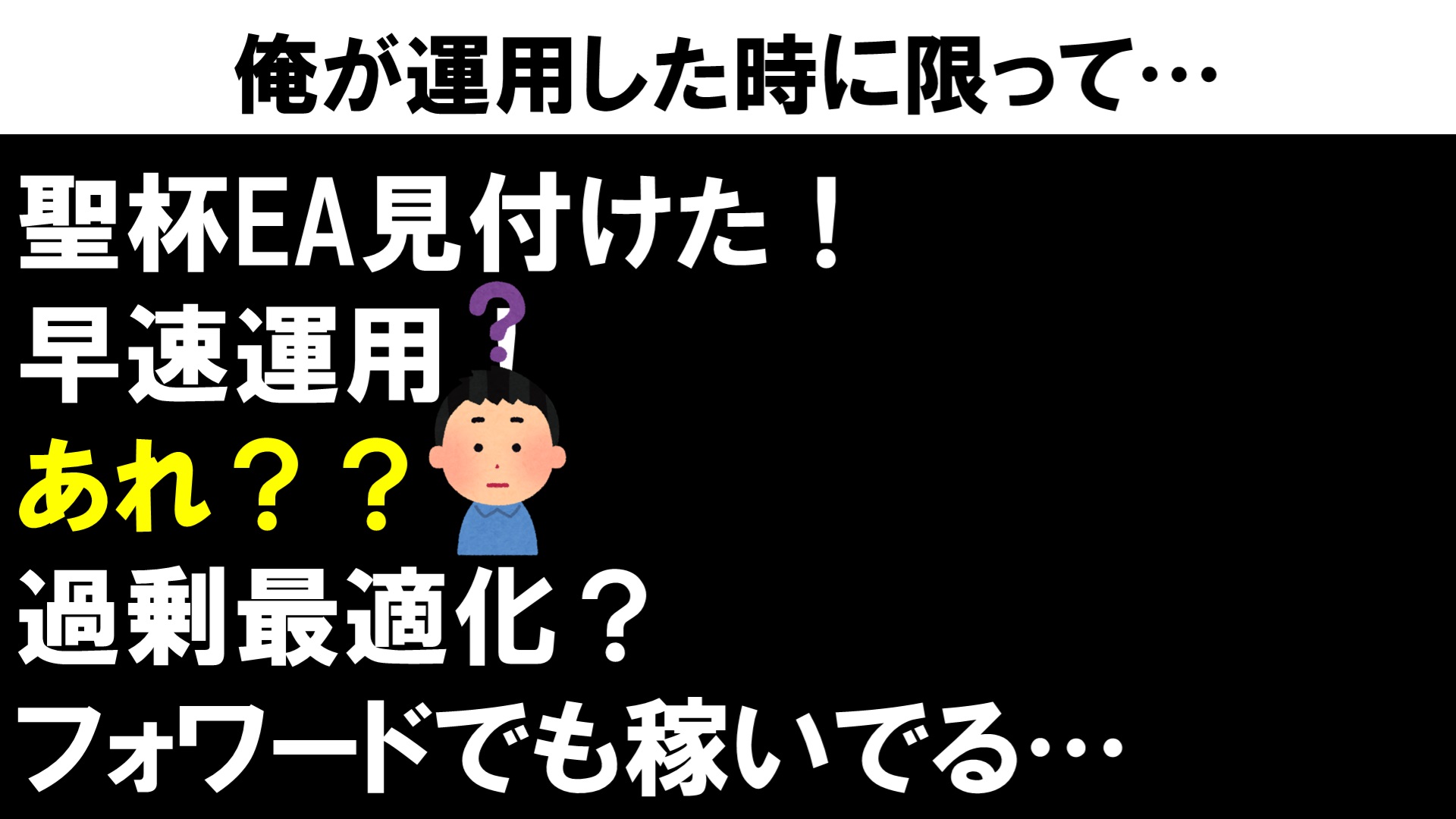
In other words, an EA that earns well in backtest and also in forward tests but suddenly stops performing when you start live trading...
I would like to talk about this phenomenon. By the way, what kind of causes do you imagine?
Criteria for choosing an EA
So, what criteria do you use to purchase an EA?For developers, when is it the right time to say, "Alright! I’ll run this EA in real trading!"?
Probably when it’s raking in forwards, right?
For example, if you’re running the EA on a demo account and the account balance keeps growing, adrenaline is released at the sight...
"Wow! It’s making so much money! I must start real trading soon!"
Wouldn’t you feel that way?
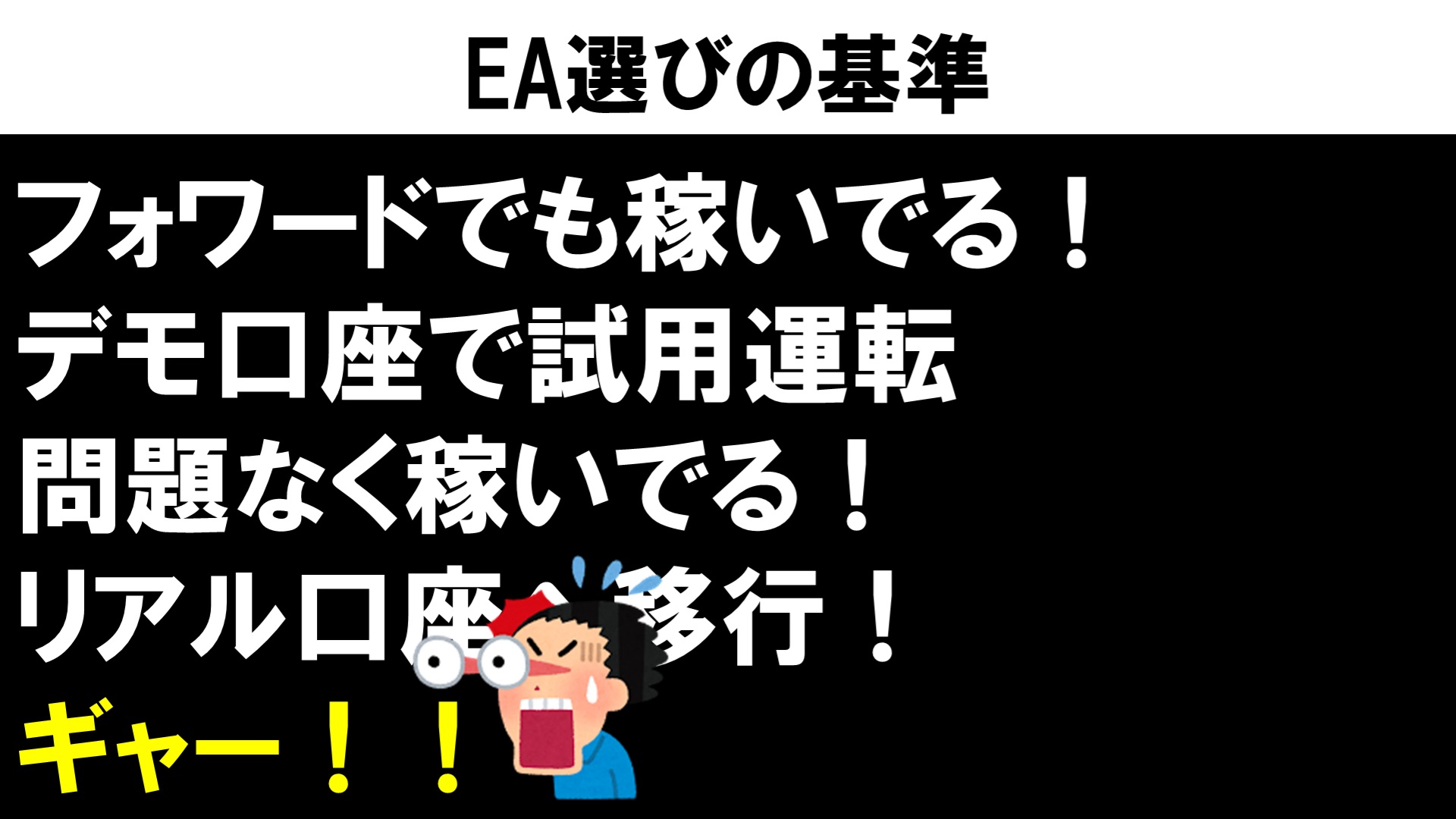
Then, when you move to real trading you don’t earn as much as you showed in forward testing...
"Why is that!"
Timing of starting real trading
If you have been following this series from the beginning, you may already have the answer...Yes, the timing of starting trading overlapped with a drawdown.
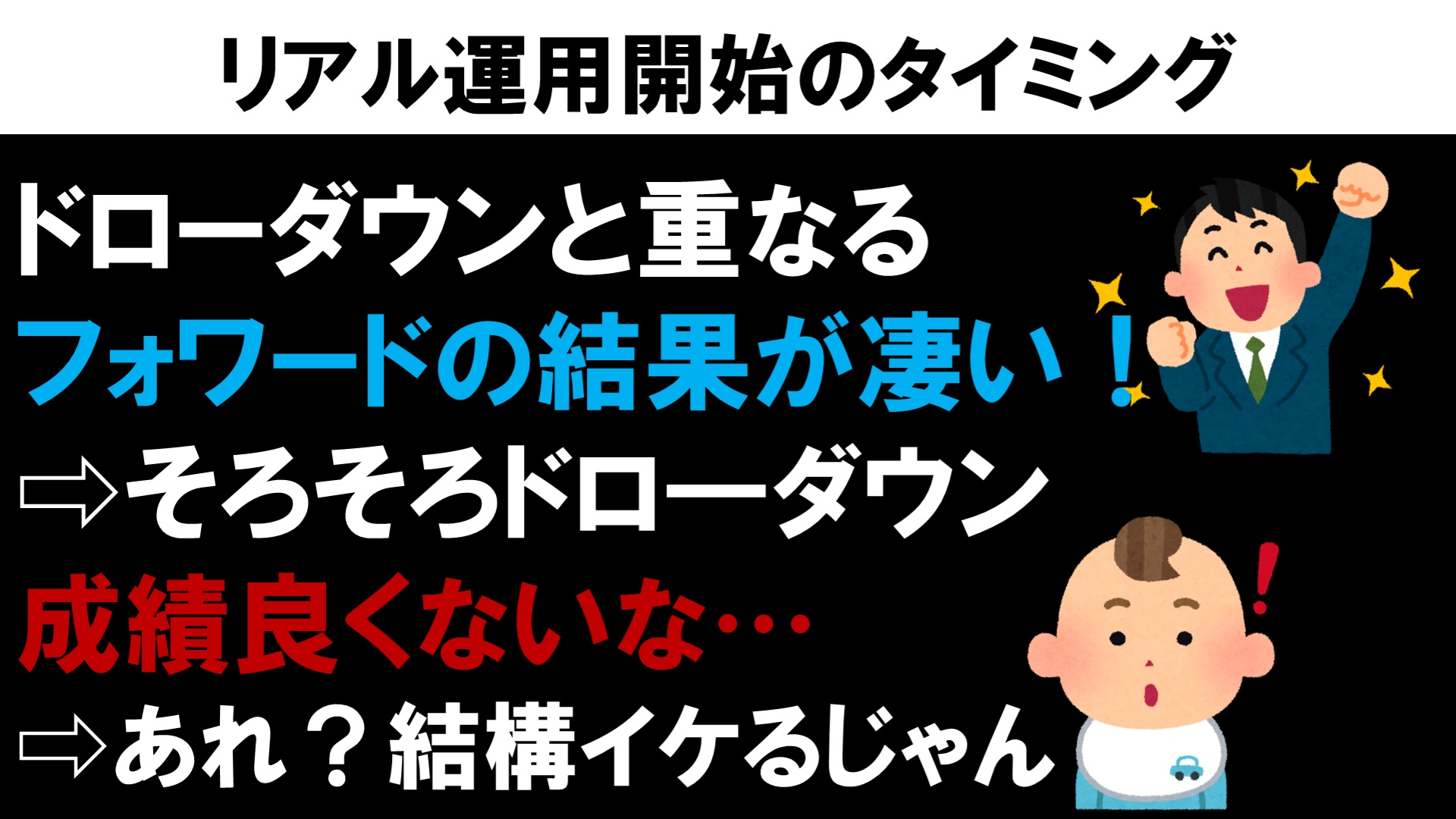
No matter how excellent the EA or method, drawdown will inevitably come, as discussed in the first lesson.
In other words, if the forward results are exceptionally good, it’s not strange for a drawdown to begin at any time.
Conversely, if you start live trading during a drawdown...
"I thought this was a bad EA, but once I started using it live it actually earned surprisingly well, and I’m surprised"
and so on can happen.
Considerations on operating timing
So, how can we avoid that bad timing?While it’s not possible to avoid it completely,if forward results are better than backtests, be cautious.
A common point for all EAs and methods is that it’s rare to get better results than backtests or past verifications.
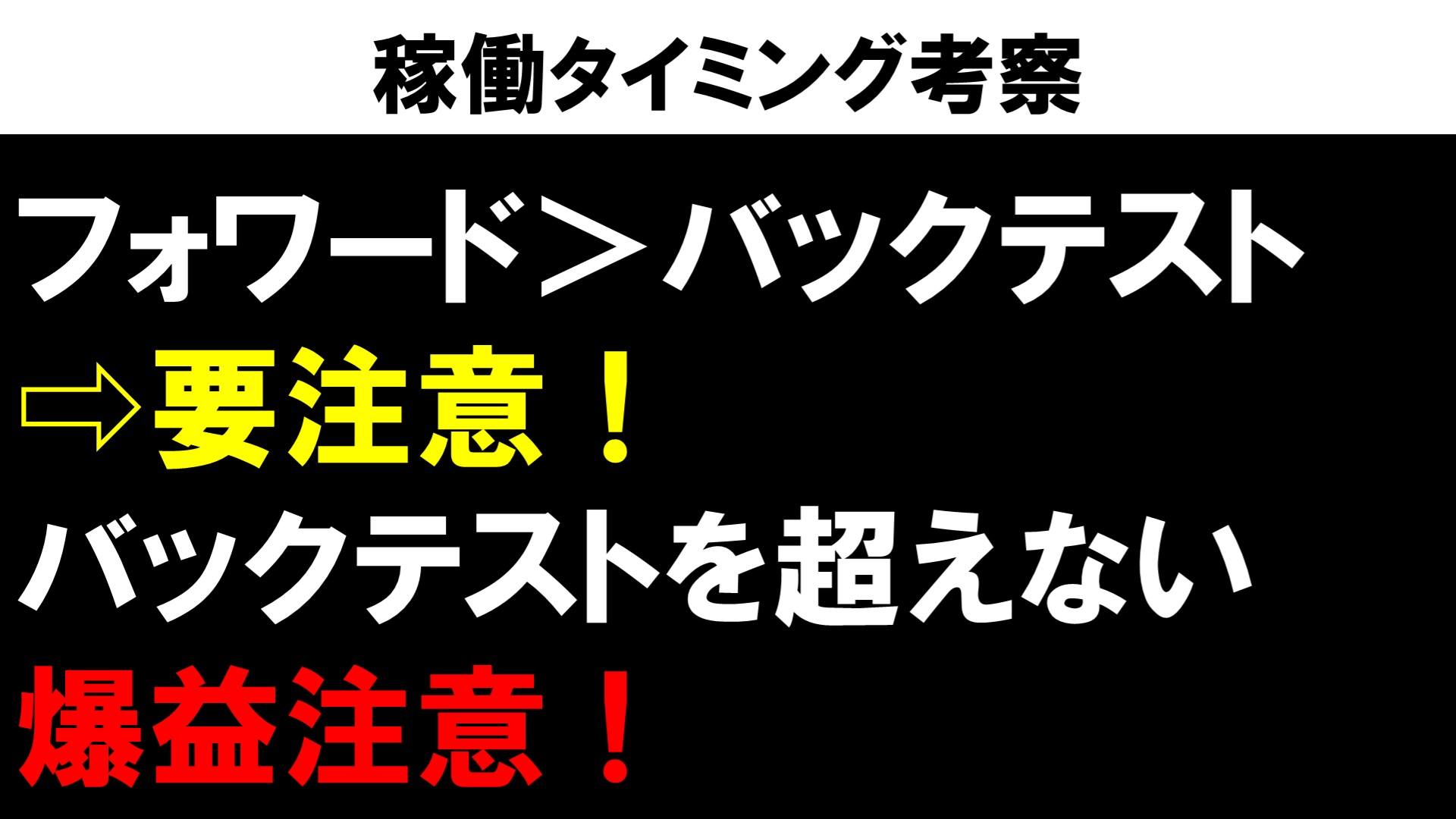
There can be temporary explosive gains, but the longer you run, most EAs and methods fall short of backtest results.
Once you understand this, you’ll know that an EA or method that recently produced explosive gains is likely to experience a large drawdown soon or is more likely to do so.
The ultimate holy grail method?
With that understanding..."Huh? Then maybe starting live trading on a drawdown EA and if it yields results beyond expectations, stopping trading to avoid drawdown would improve performance, right?"
is a line of thinking that arises, isn’t it.
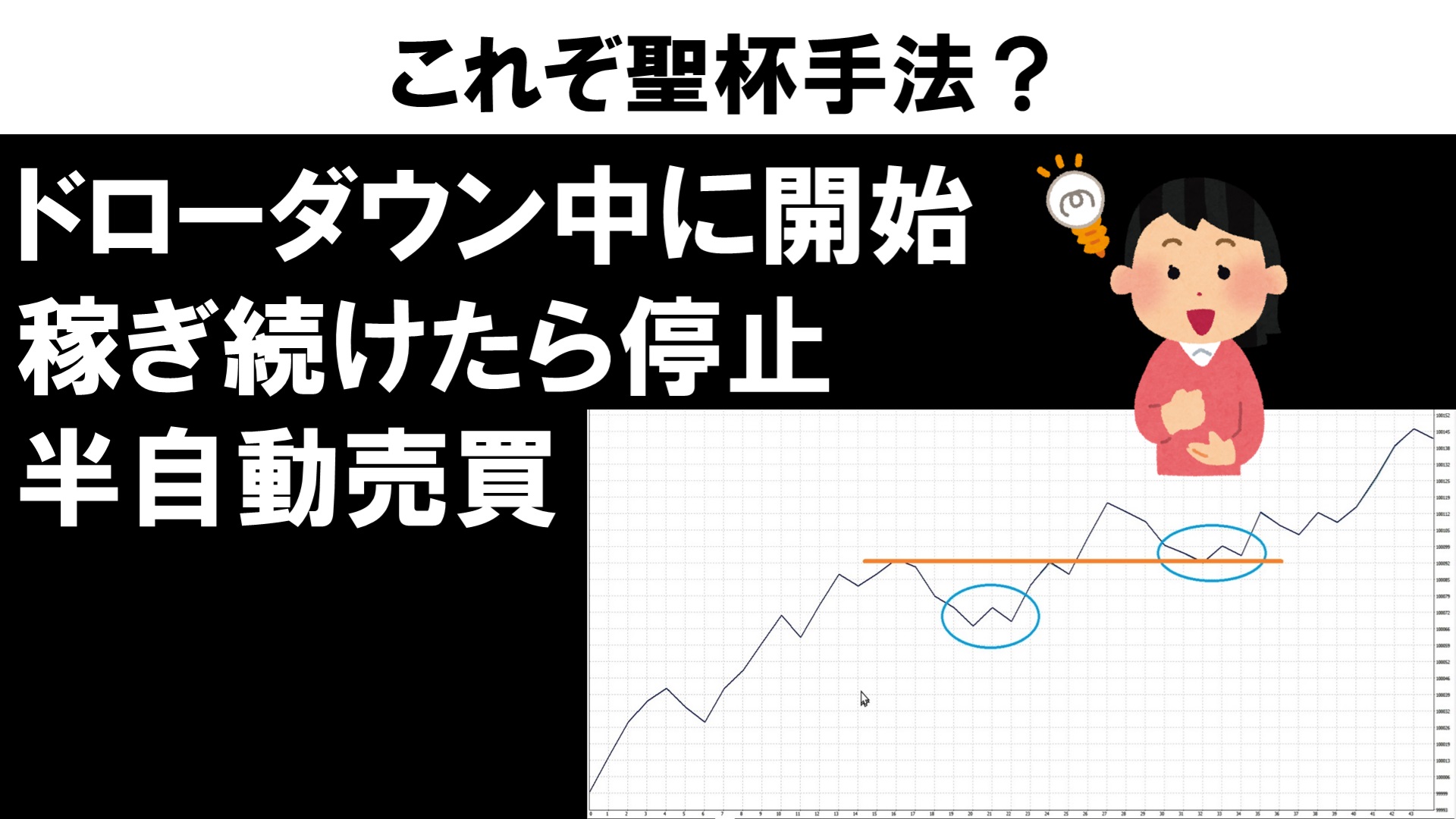
Yes, some people actually earn with semi-automatic trading by that approach.
However, since you cannot know the best timing for starting and stopping in advance, this also requires judgment and experience, just like discretionary trading.
Compare the drawdown and other performance metrics against backtests.
For example, if a long-term backtest has a profit factor of 1.5 but the latest three months exceed 2.
If you have discretionary trading experience, you can add market condition awareness and fine-tune the timing of starting or stopping the EA to improve accuracy.
Use maximum drawdown
There is also a method using maximum drawdown.For example, suppose the EA’s maximum drawdown is 500,000 yen.
If you shift to real trading when the forward test or demo account drawdown reaches about 400,000 yen, even if you get caught in the maximum drawdown you would stay within 100,000 yen loss.
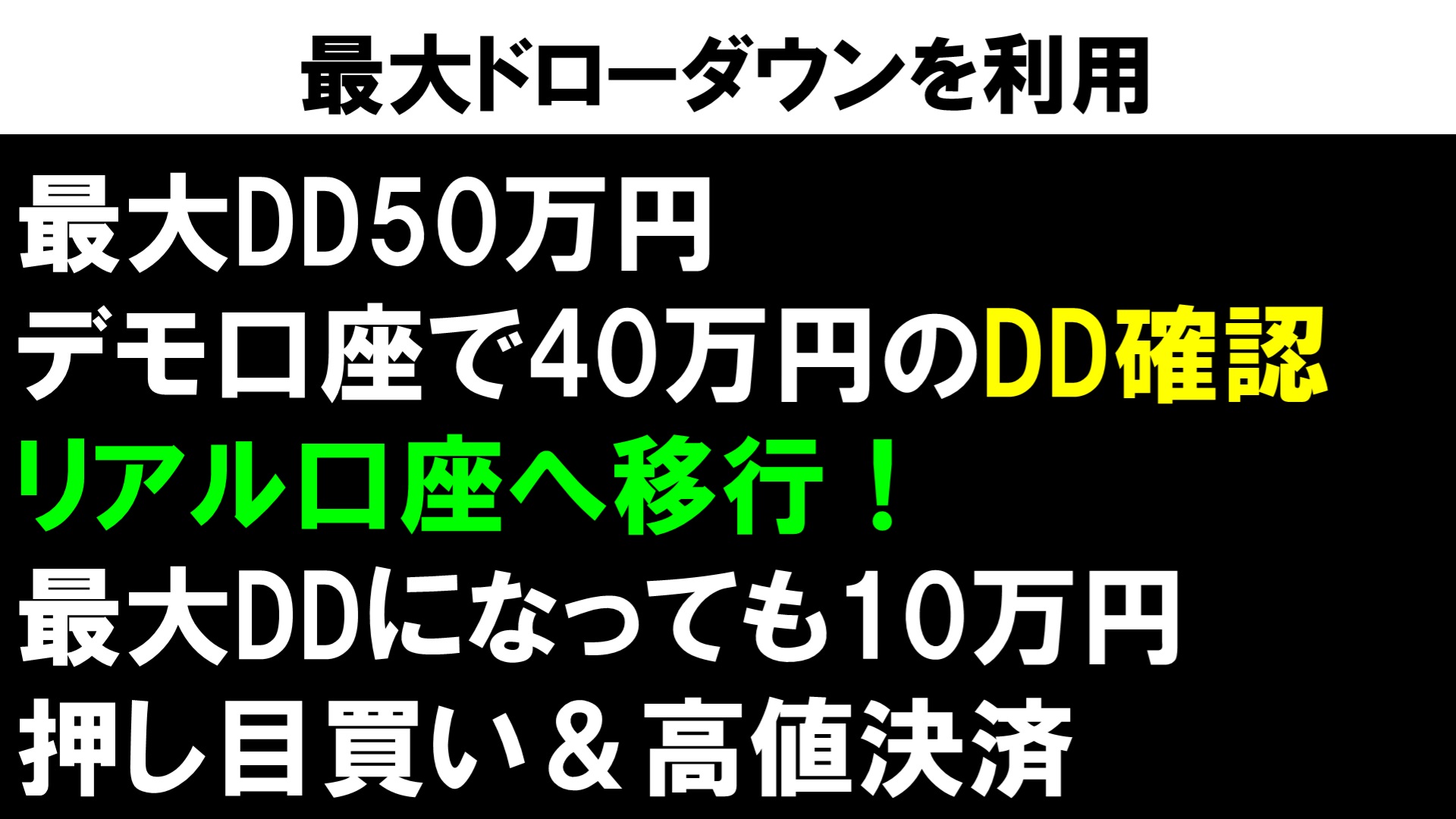
Of course there is a possibility of updating the maximum drawdown value, but starting without thinking through would pose higher risk.
In discretionary trading terms, it’s like buying on dips and selling at highs.
Dip-buying method for operation
However, after you have closed positions and stopped the EA..."If I had kept it running, it would have earned more!"
This happens naturally.
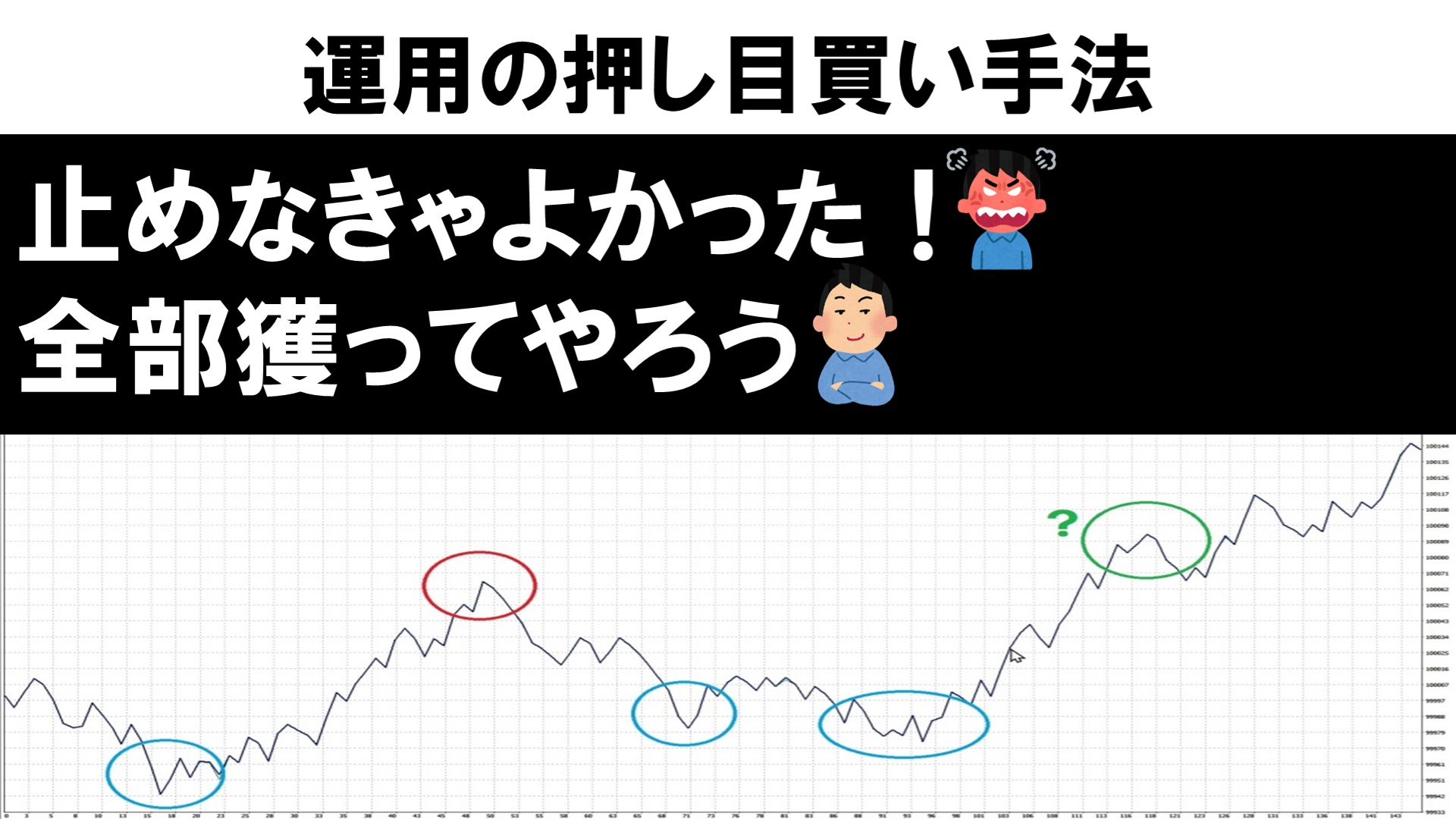
In discretionary trading, even after closing, if it continues to rise, you regret not holding it longer. And this problem cannot be completely solved.
The same is true for automated trading. If you are greedy...
"I will handle every situation perfectly."
Then performance may drop, and results won’t stabilize. This is also true in discretionary trading. Know your limits...
Discretion and automated trading share the same root
From what we’ve discussed,jumping on an EA that’s making huge profits is like chasing a stock that’s surging, a behavior common to beginnersI think you can see it now.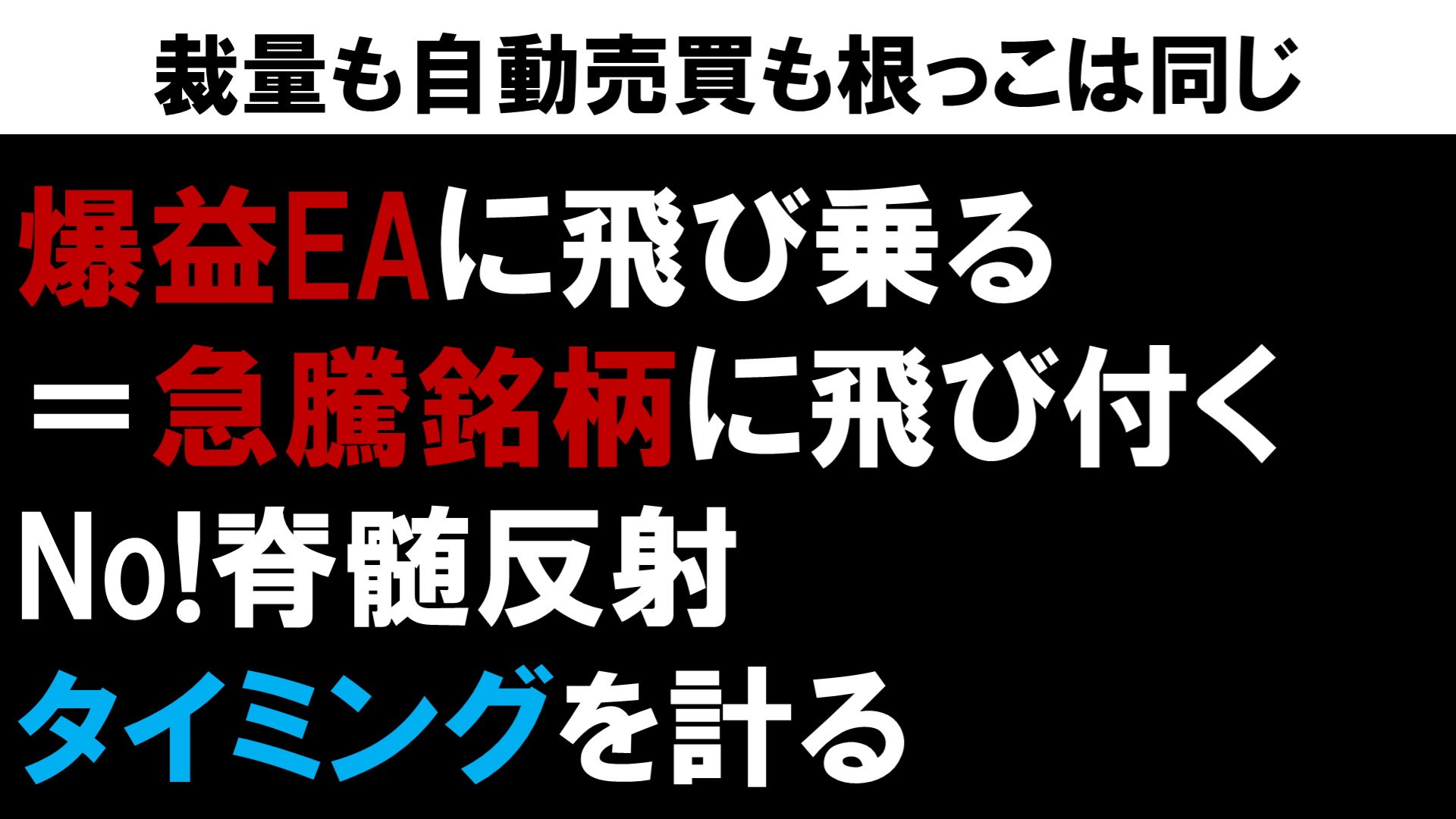
So, even if you discover an EA that’s earning aggressively...
"Oh no, I’ll be late if I don’t jump on it now!"
don’t react instinctively; calmly compare with backtests and other performance, and analyze...
"Okay, looks good."
and even if you think it’s fine, don’t activate it immediately. By following this discussion and using a demo account to transition to real trading, you may avoid the situation of “I start and it just won’t earn!”
■ My developed EA concepts and trading policy
EA craftsman’s EA (Three Arrows) is here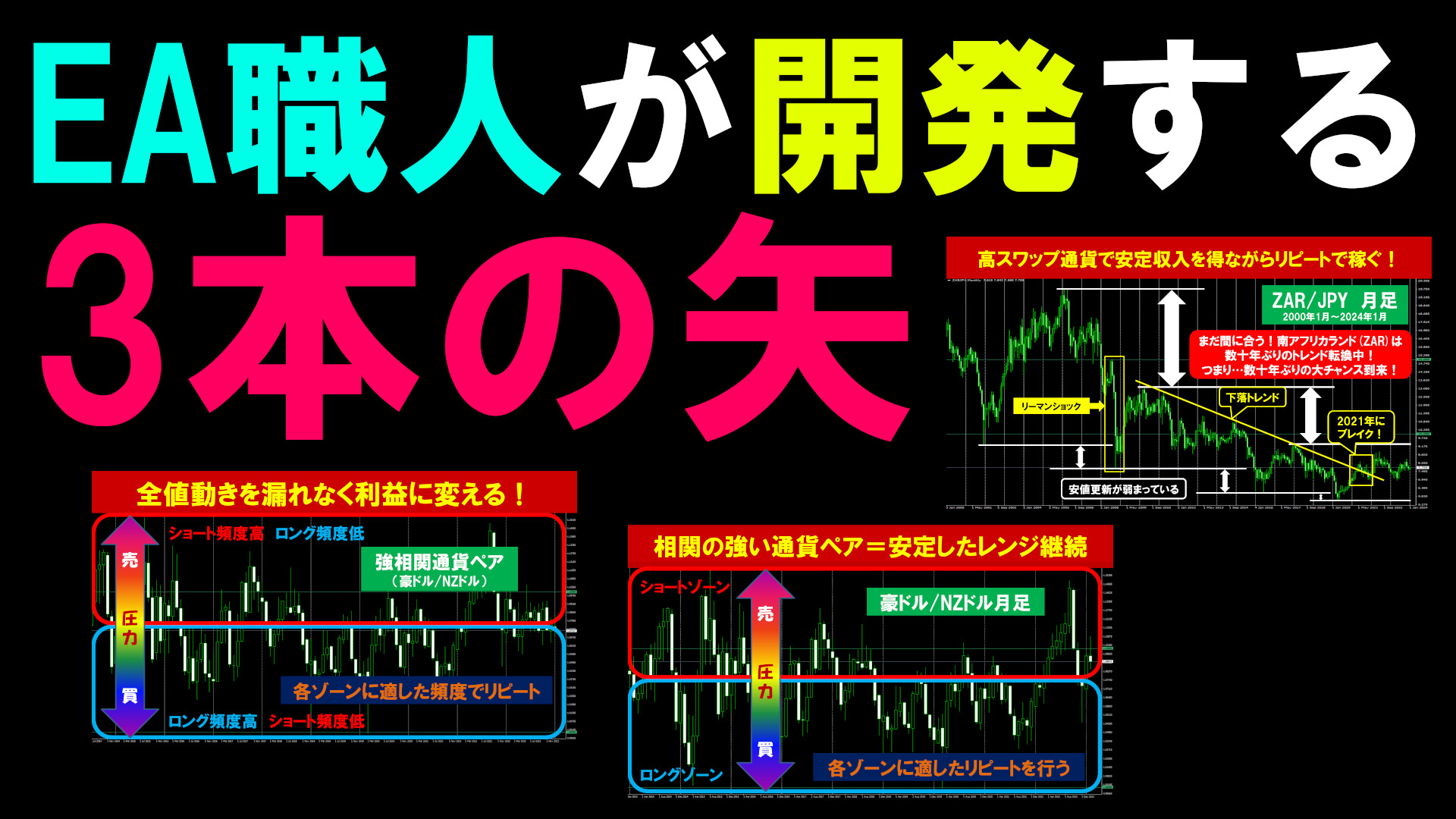
× ![]()