I counted the times when it’s better not to enter in gold. The Japanese time 6–9 in the morning, and the 15 minutes right after the US CPI release
Verification Notes | I counted Gold's "common sense"
When I wake up in the morning, I first look at charts on my smartphone. If there was a big move overnight, I enter before going to work. If there was a sharp move on the release of an indicator, I jump on to avoid missing the move.
Both are common ways to enter. However, when the author counts gold's past movements, these two"situations where merely entering puts you at a disadvantage"become quite clear.
First a quiz: In which time is entering disadvantageous?
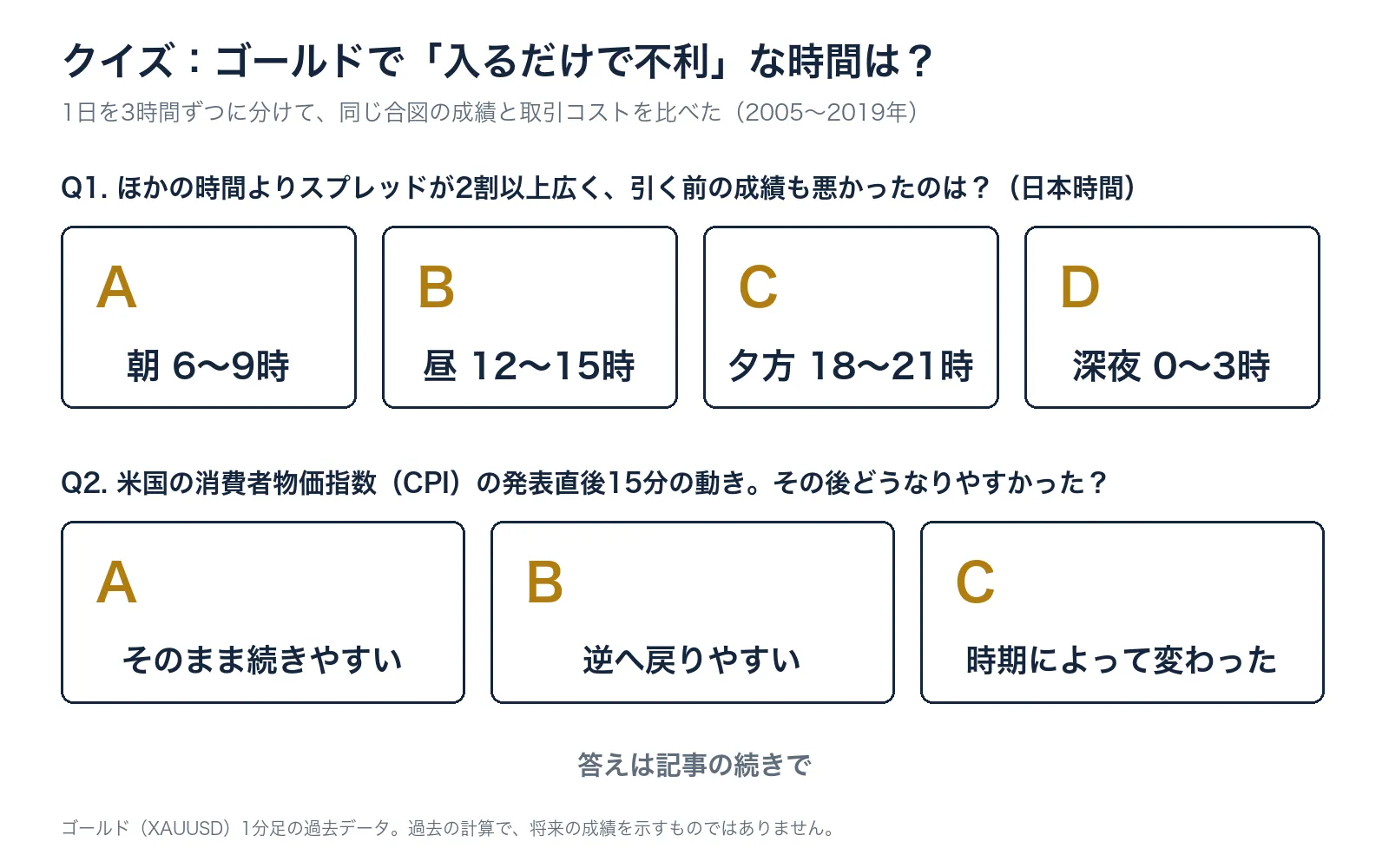
Q1.Dividing a day into three hours each and comparing the performance of the same signals and transaction costs. Compared to other times,the spread was more than 20% wider, andthe performance was already poor even before the spread was deductedwhich period in Japan time was it?
A: 6–9 a.m. B: 12–3 p.m. C: 6–9 p.m. D: 12–3 a.m.
Q2.After the U.S. Consumer Price Index (CPI) release, there was a 15-minute move. Was it likely to continue in the same direction afterward?
A: It tended to continue as is B: It tended to reverse C: It varied by period
The answer comes from counting more than 30,000 trades from 2005–2019 and 15 years of CPI days. In the continuation, I will also present therules for "time to avoid entering" that can be decided from today.