

Bank of Canada keeps policy as consensus—Canadian dollar buying strategy
This morning, the Bank of Canada announced policy rate, a statement, and held a press conference. The policy rate remains at 1.75% as consensus.
However, judging by the contents, it doesn’t seem that bad, so I’m considering buying Canadian dollars.
◎ CAD Buy Strategy
・CAD/JPY Buy Strategy
Entry: 82.00 yen
Take-profit target: 89.00 yen
Stop: 80.00 yen
◎ Fundamentals Analysis
・Statement and Governor’s Remarks
BOC (Bank of Canada) Statement
“There is agreement that policy rates should be raised to the neutral range in order to achieve the inflation target
“The appropriate pace of rate hikes will depend particularly onoil market, housing market, and global trade policy dynamics
“The Bank projects real GDP to rise 1.7% in 2019. This is 0.4 percentage points lower than the October projection, reflecting a temporary slowdown in the fourth quarter of 2018 and the first quarter of 2019.
“The decline in the Canadian dollar will put upward pressure on inflation to some extent.”
“Inflation is expected to return to around the 2% target by the end of 2019”
“Global growth is projected to slow gradually, with growth in 2019 falling from 3.7% in 2018 to 3.4%.”
Poloz, Governor of the Bank of Canada
“The trade war is already delivering negative outcomes
“The risks of trade wars lie on both sides.”
“Rates will need to be raised toward the neutral range over time”
From the statement and the governor’s remarks, it indicates that policy rates should be raised toward the neutral rate while watching market trends and the economy.
The economy and outlook were modestly revised downward from October’s projections. Real GDP is expected to slow temporarily.
However, by the end of 2019, the Bank’s target inflation around 2% is expected to be reached.
・Oil Prices
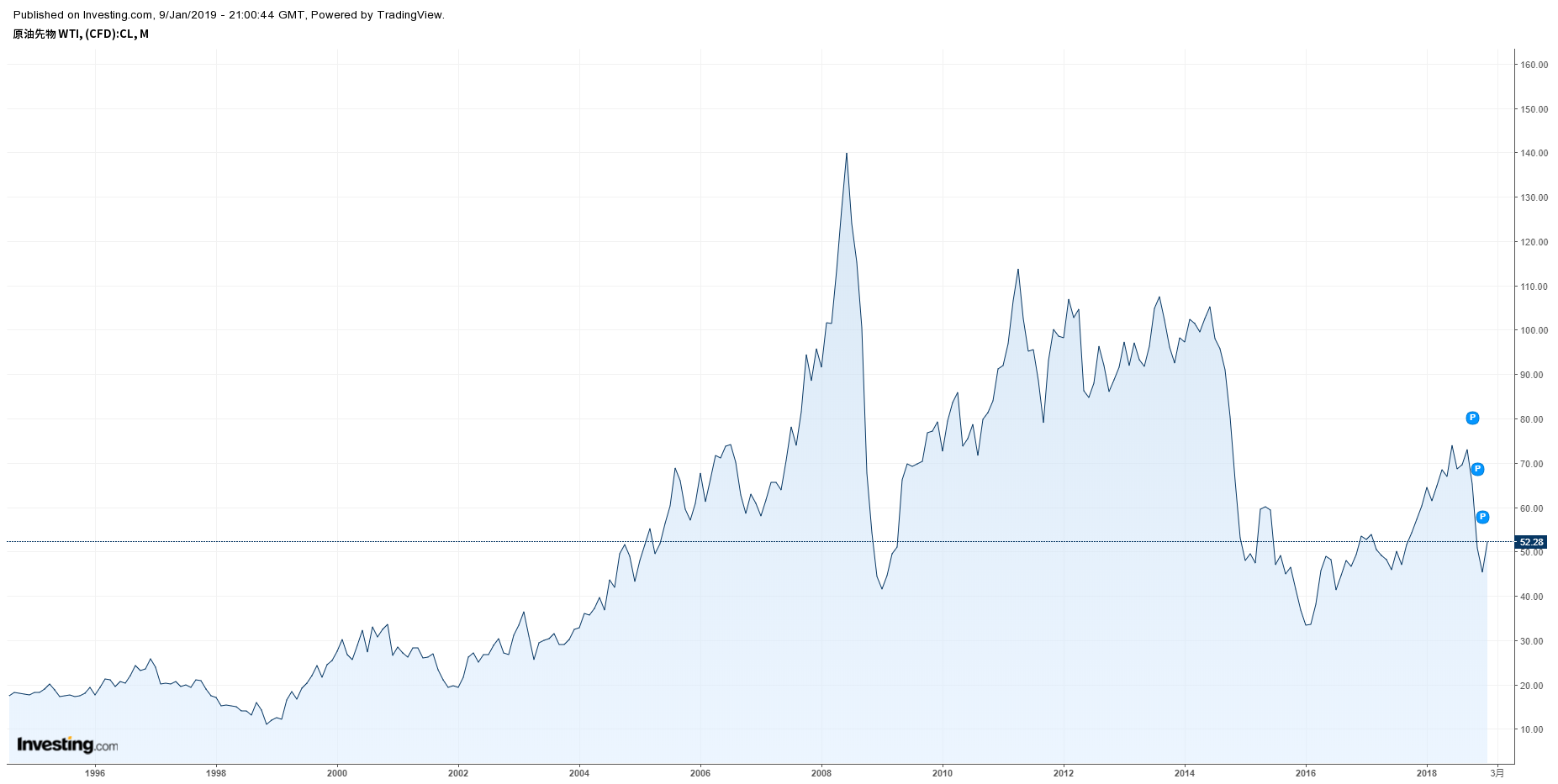
WTI Oil Price Chart
Oil prices, a key Canadian industry driver, have weighed on the Canadian dollar. Still, oil prices have rebounded somewhat from their lows.
◎ Outlook
Oil prices may temporarily retreat from current levels, but a long-term decline is unlikely. If prices rise from here, that would be favorable for the Canadian dollar. Since the global growth outlook is being revised downward not only for Canada but worldwide, the probability of broad Canadian dollar selling pressure is low.
With the United States signaling an end to rate hikes, it could become the currency with the highest expectations for rate increases among major currencies. Therefore, funds that had moved into the U.S. dollar for rate hikes may flow into the Canadian dollar as well.
◎ Technical Analysis
 CAD/JPY Weekly Chart
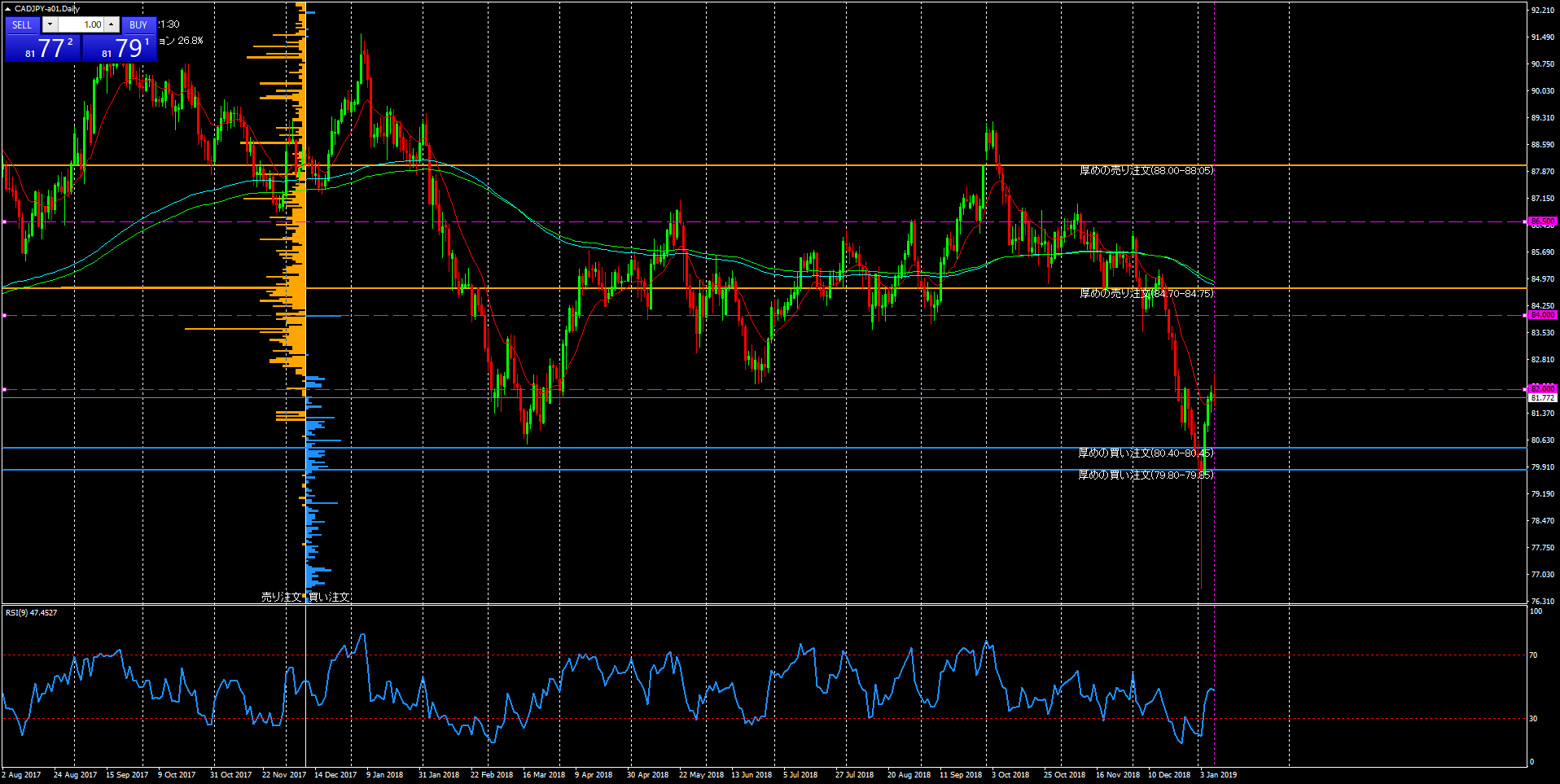 CAD/JPY Daily Chart

USD/CAD Weekly Chart
The Canadian dollar, when viewed on CAD/JPY and USD/CAD weekly charts, is at a low level. Personally, I feel the Bank of Canada looks at currency levels when deciding monetary policy. Therefore, I tend to monitor currency levels first.
CAD/JPY has been moving in a range centered around 80–90 yen for the last three years. It is currently within that range at a relatively weak CAD level. The entry timing is not bad.