
【Recovery indicator Method Explanation Video Vol.3】Video explanation on how to distinguish signals and a methodology to acquire a balance between stop loss and take profit with a risk-reward ratio of 1:1.
Today, we recorded a technique explanation video mainly aimed at purchasers of the Recovery Indicator.
However, this video provides hints for acquiring a basic understanding of Dow Theory and the balance between stop loss and take profit, even for those who are not using the Recovery Indicator.
Now, for everyone currently using the Recovery Indicator, I’d like you to first learn how to distinguish signals.
Please let the trades follow the signals with an EA named Super Recovery, and I would be glad if you could learn the edge that can only be made through discretionary judgment.
Details of Super Recovery are here.
https://www.gogojungle.co.jp/systemtrade/fx/46181
Now, the video is a lengthy 30-minute explanation of the Recovery Indicator method, but purchasers, please be sure to watch it repeatedly two or three times.
This historical test examined one week from the moment a short entry at a pullback sign reversed to a long entry.
It was only a one-week backtest, but it achieved 7 wins and 1 loss, a decent record.
Profit was 110 pips, so with 100,000 units, that’s 110,000 yen in profit.
If this held for four weeks, that would be 440 pips or 440,000 yen in profit, which is a substantial gain.
Of course, the market doesn’t follow such simple arithmetic.
The reason past testing is important is that it contributes to the reliability of signals.
In my 15 years in the market, I’ve seen and used many indicators and EAs, but ultimately what’s important is the trust in the tool.
After a decade of losing in my 15-year market life, I became mentally weak, unable to trust tools created by others or even ones I built myself.
When one thing you can’t trust undermines many things, everything becomes suspicious.
So in my own thoughts, this is bad, that is bad, that guy is bad, that person is bad...
That leads to a tightening, a chain of distrust born from my own thoughts and actions.

In such a dilemma, there was a moment when I thought,
Wait a minute!
Maybe everything is the opposite!
Perhaps the real reason I kept losing wasn’t money, tools, the market, or others, but my own judgments?!
And the only thing I could freely change was my own thinking patterns and behavior patterns.
From there, development of a tool capable of changing my thinking and behavior patterns began.
One of the things I thought might be reversed was that I had lost 30 million yen in FX, but if everything were reversed, I would have won 30 million yen instead.
Could everything really be reversed?!
This is the third piece in this indicator series, and only now, on the third installment, have I truly built a tool I can trust from the bottom of my heart.
That is the Recovery Indicator.
https://www.gogojungle.co.jp/tools/indicators/45724
Recovery means restoration, but in fact the restoration of self-trust is the most fundamental and the most important restoration matter.
If you can’t trust yourself, can you truly trust someone else’s signal tools?
If your self-trust hasn’t been restored, can you trust entries and exits like “sell here” or “buy here”?
I want to break the demon chain of distrust in myself!
The way to do this is to forgive my past mistakes, encourage myself, and vow to trust myself again.
If you are truly reflecting, you should forgive your sins and commit to restoring self-trust.
And by breaking the long-standing chains you’ve built within yourself, you become free.
If somewhere in your heart you feel your own trust is weak, it may be a sign that your trust in others is also weak.
And because trust in others’ indicators is weak, flaws quickly become noticeable as evidence.
If you think the loss came from the signal tool or the author who made the signal, you embark on a journey to find the next signal tool.
There is no end to the quest for a white knight who will save you.
The truth is that FX trading tools and methods each have their strengths and weaknesses.
Focus on those strengths to increase profits and minimize losses in areas of weakness.
How much can this indicator win each day?
Or since the strength of this indicator is here, what if you combine it with this indicator to make a decision?
And then, endless past testing.
The market is alive, so today you might win and tomorrow you might lose, but past testing is necessary to increase probability.
There is no exact repetition of the same pattern, but similar patterns occur frequently.
It is crucial to acquire this ironclad pattern through past testing.
And money management is important.
Risk-reward becomes important.
If you enter the market assuming you will lose, you will stop losing.
Because in my ten years of losing, I always entered with the expectation of winning, I wasn’t prepared for losses, so when the market moved sharply against my expectations, I couldn’t react, and losses ballooned.
Before I realized it, unrealized losses grew, and I could no longer cut losses.
Then I undertook actions I hadn’t previously considered.
“Sure the price will come back eventually... It happened before too; I cut losses and it came back...”
And then trades started to languish without cutting losses.
A few days later, forced liquidation wiped out my funds, leaving me demoralized.
Not only did I lose funds, I also lost self-trust.
That’s the time I lost faith in the signal tool I had been watching, the author, and the market itself.
Even if you don’t win every day, you can still finish each month with a positive balance.
By keeping risk-reward at 1:1 or better to reduce losses and with a win rate above 60%, your money will grow.
If you endure losses at 25 pips and take profits at 25 pips, and you have 6 wins and 4 losses out of 10 trades, you’ll retain 50 pips of profit per month.
This translates to about 600 pips of annual profit on average.
With 100,000 units, that’s 600,000 yen in annual profit.
In recent years, my mental state has changed dramatically because I’ve come to trust tools I created myself.
As I’ve said many times, turning signal tools into EAs and running hundreds of thousands of backtests in just two years increased my funds from 100,000 yen to 1.2 billion yen.
Backtesting is only a possibility, but since FX technicals are probabilistic, it cannot be denied.
This video uses manual verification, but automating it has significantly increased my confidence in the tool I built.
This development of a reliable tool has helped me regain trust in the market, in my own tool, and in myself.
When losses mount, it’s natural to blame the market, environment, or tools, and I understand that feeling very well.
Wouldn’t it feel easier if you could blame something other than yourself for losses?
But if someone other than you is causing the losses, when will you ever encounter the holy grail?
In fact, the holy grail does not exist—FX is about wins and losses.
So those who preserve capital lose less, while those who lose capital do so because their losses are poorly managed.
And when you get better at losing and winning well, your capital grows.
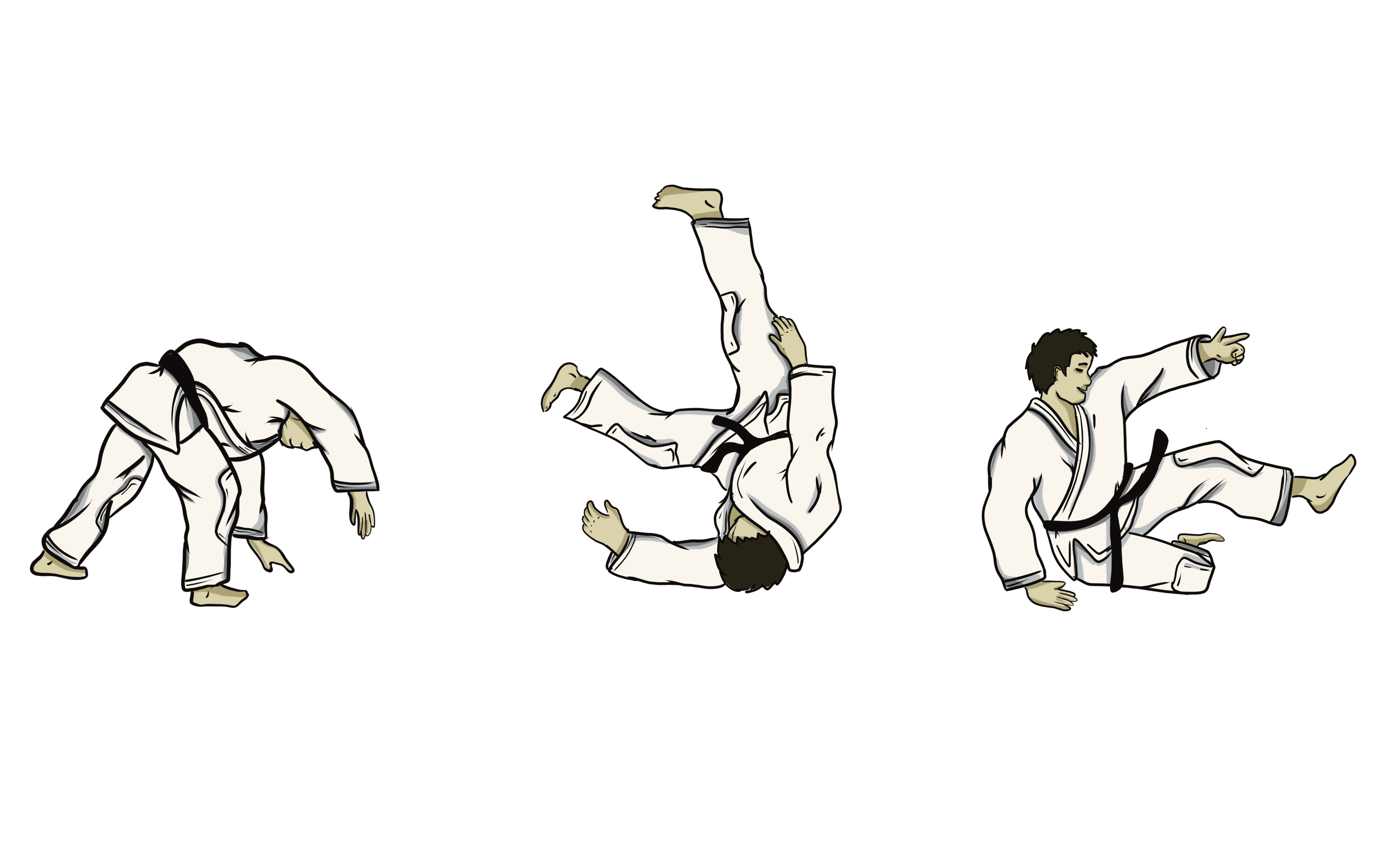
When I studied judo, I often wondered why we keep practicing breakfalls forever.
What is the point of such breakfall practice?
I wanted more throwing practice...
That’s what I was thinking.
Not knowing that breakfalls are the ultimate defense, I became dissatisfied with daily practice and quit judo in a few months.
If you apply this to FX trading, breakfall practice is practicing cutting losses and how to lose small and win big.
That is the essence.
But there is a pitfall here too.
That is the trap of loss-averse thinking.
Indeed, you must not only lose small but also increase your win rate and keep a 1:1 risk-reward or better to maintain a win rate above 60%.
Even if you win small, too many small losses can lead to account ruin.
I too have suffered long through this pattern.

It felt as if someone watching my entry direction after I had entered, and after I cut losses, it would still move in the entered direction.
However, that wasn’t the case, and I learned to win.
Now I understand that the cause of losses lies in my own decision criteria.
That is, how I read charts and indicators and how I think.
The moment you determine the entry timing and enter the market thinking “this is it” was the moment it was wrong.
The judgment criteria itself—how you look at the chart and indicators to decide long or short—was the problem.
What I looked at was the same chart as everyone else, yet I felt I was the only one losing.
So no matter how excellent an indicator is, without trust in the tool, it’s almost nothing.
To build trust, you must repeatedly backtest the logic.
And once you trust it, you must become proficient in using that tool.
How can you become proficient with a trusted tool?
That too is past testing.
Repeatedly test, especially on weekends, to prepare for Monday to Friday.
Whether you can maintain this routine and perform consistently is key.
Or after finishing an entry and exit and winning, was that timing truly according to logic?
Did you follow your own rules?
Even if a rule was decided by someone else, if you trusted, backtested, and were satisfied, it is the same as having decided it yourself.
In that sense, your actions are all your own judgments and responsibilities, and nothing will change unless you accept that.
If so, learn criteria for distinguishing tools, and if you don’t understand or it’s unclear, don’t enter the market.
The ability to say “I cannot judge” is the most important judgment.
Being able to say you cannot judge means your criteria are clear.
If you can practice not entering the market when you cannot judge, your performance will dramatically improve.
Of course, you will stop losing.
Looking back, entering with vague criteria in a confusing market is the height of folly.
The reason I finally escaped a long losing streak was that I was ruled by a sense of urgency, entering daily to earn and recover big losses, which controlled me.
And now that I no longer fear losing, I have decided to live in the present without clinging to big losses, and my life has changed.
The feeling of a major loss isn’t completely gone, but I scarcely remember it anymore.
By breaking the chain of attachment, since we were born with nothing, today’s thousand-yen win is a windfall profit.
Everyone starts life from zero with nothing, and while we acquire things along the way, in truth we own nothing.
Because all matter flows and would disappear with time.
Everything depends on your own criteria, so it’s important that you arrive at a point where you can be satisfied with your own entries and exits.
Today the video is long and so is the article, but I have a responsibility to sell the Recovery Indicator.
I believe the first phase for all purchasers is to stop bleeding and stop losing.
And I earnestly wish for you to become traders who can consistently profit.
We will continue to develop tools in the future, but today I’ve spoken about topics before using those tools.
See you again!