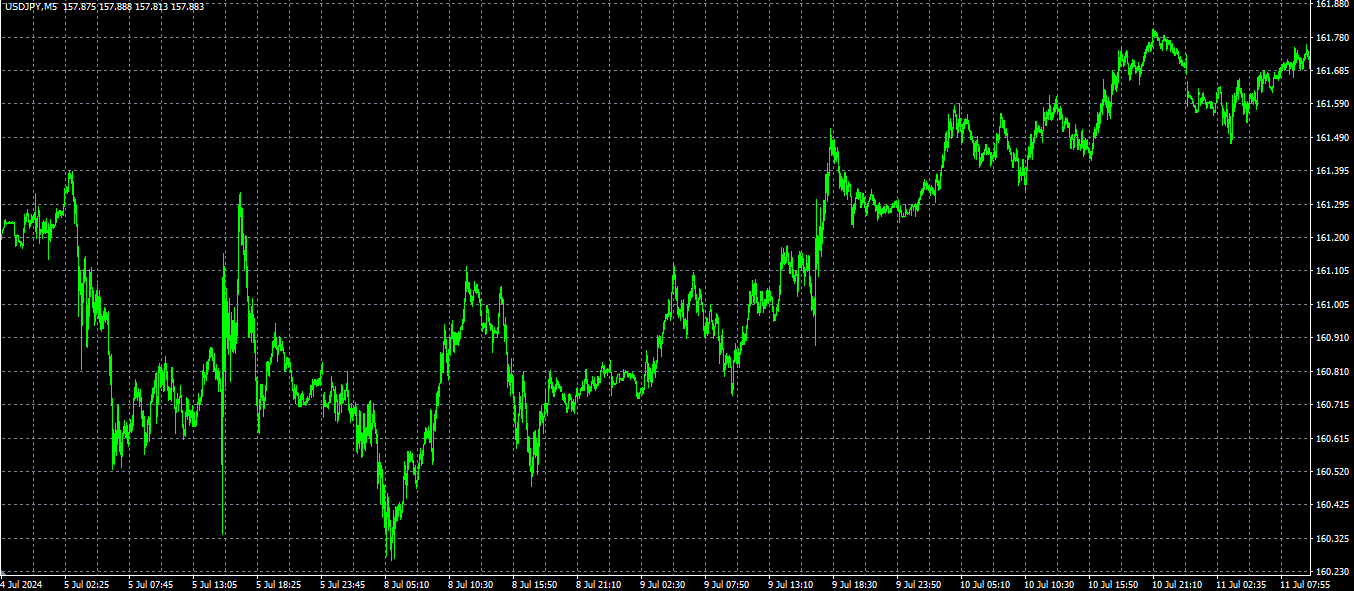

Probabilistic thinking is effective
Probabilistic thinking is effective
Poker is advantageous between players
To adapt to the market
You monitor market movements, but you must discard ideas like ceilings and floors
You must view it in poker terms
In poker, there are no concepts like ranges or ceilings/floors
Only the ideas of high or low are desirable
In market terms, whether a trend appears or not, whether you trade against the trend or not—that’s the discussion
If you think in terms of ceilings and floors, you cannot trade with probabilistic thinking
roulette and FX also rely on probabilistic thinking, and trying to close losses and take profits as a convergence of win rate is a pipe dream
Both are akin to a mental discipline
Convergence of win rate
A contemplative system of probabilistic thinking
If you could systematize these, you could reproduce them
But reproducing that is in human hands, so you realize its futility
In the end, there is no secret to winning that can be seen as merely a result of outcome
One-shot in the direction of the trend
It’s fine to experiment with things like Dalambelle via a trend-following pyramid, but
Putting in a limit will cause you to lose
Setting a limit means the number of stop-outs cannot be offset
By setting a single limit, you can offset the number of stop-outs
“Fixed limit: minimal stop-loss”
If you do that
For example, until the trend moves as expected (assuming 500 pips movement)
The stop-loss is 20 pips
Suppose you were trading with a trend-following entry
About 20 entries a day (just averaging the total movement up to the trend)
About 100 entries per week
Usually, it appears about once a month
400 entries worth
A trend appears
Since it’s 500 pips
20 entries can succeed (perhaps)
20×5 (number of wins) = 100
Losses are 500 times, so -400
In reality, you don’t take that many entries, so even if it’s around 100, you’re at ±0
Moreover, even after 500 pips moved
If you consider the minimum scenario, a system that does not factor in the minimum scenario is the minimum system
If you set profits in one go, by the time the trend ends at 500 pips
If about 10 entries were successful
25+24+23+22+21+20+19+18+17+16
+200 is a win
Trade systems look to be “losing” when viewed on a chart
By building a trading strategy over time intervals, you “systemize” it
Trade during a time window under those conditions to see if you are winning
If you do not incorporate these elements, you cannot determine whether the trend-following pyramid is effective
To capture market movements, trading ultimately becomes a gamble
Trend-following and trends
If it’s ranges, there is a way to analyze, but
With trends, there is no way to analyze, so ultimately it tends to become a gamble-like trade
The premise that you will incur losses
If you continue trading in a direction, losses will naturally occur
Naturally, as you continue, profits will come
Because you are not trying to make a profit
You are trading in the direction the market moves
There is no fair price in price movements
Because a market where traders go against the grain to profit eventually results in losses
When trend-following occurs, eventually the price-appropriate highs and lows cease to function at all
Even the ceiling and floor of trend lines will continue to break normally, so there is no fair price
In terms of direction, it is considered that the number of losses increases
In reality, since you’re entering in the direction of the trend,
By the time you reach the stop loss, you have already opened both sides, and profits are riding
Thus, the number of losses does not increase that far
Following the market
Averaging down is a waste of time
If you follow the market, you pyramid the trend-following
No signal is more useless
Just silently follow the market patterns
Without thinking, just quietly place stop losses and trade the market
It’s fine to become net long at the initial move, but do not add more than that
The market forces changes, so
Analysis becomes meaningless
Market observation is okay, but
There is no meaning in the act of analyzing the market