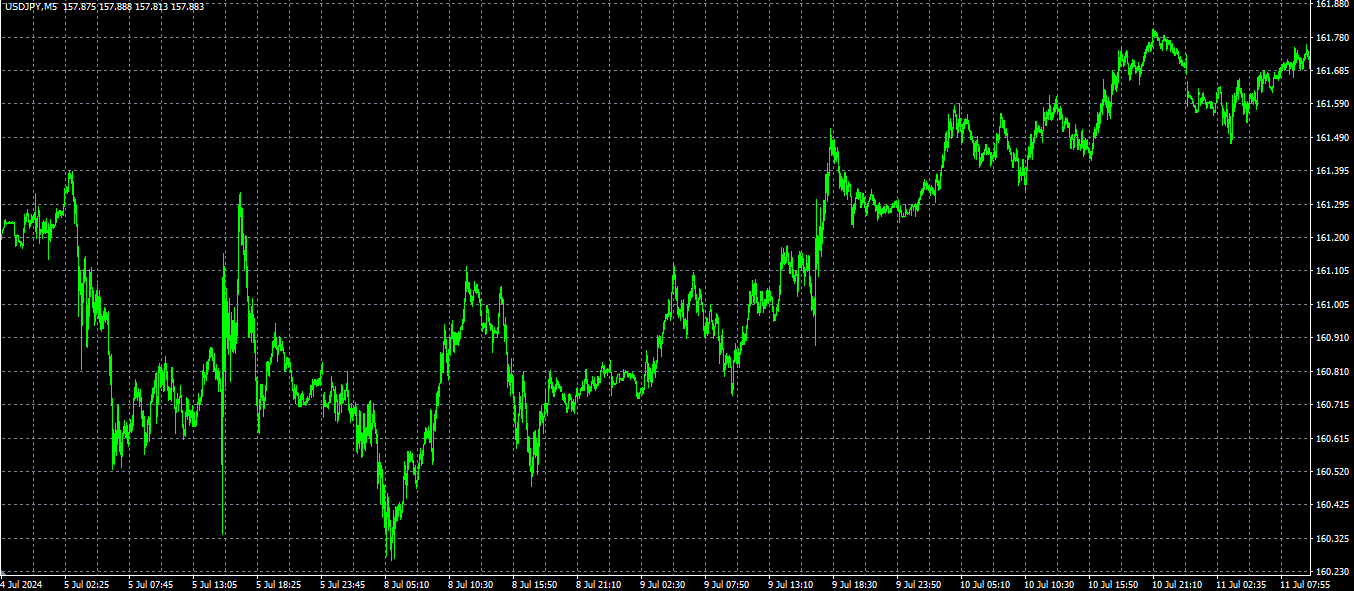

Positive-direction trade and reverse-direction trade
As a relationship of positive and negative
Win with a正 direction trade
Win with a逆 direction trade
there is
When the逆 direction trade wins
You can win by averaging down
When the正 direction trade wins
You can win just by aiming for the trend
One shot
Averaging down
The content changes drastically depending on the chosen logic – the two extremes
With one-shot manual stop-loss, I think it isn’t worth it
If you wait for the trend, it becomes a premise that anyone can win only by aiming at the trend
Then there is no need for manual stop-loss; manual stop-loss loses more than the stop
Averaging-down stop loss is not needed
Because you never know when the counter-market will return
If after a large loss it eventually returns, not having averaged down again would mean those many opportunities were lost
Similarly, aiming for the正 market is the same
In the end, you should only target the major trend market
Major trend market
From day trading to swing trading, a range-trading around the arrow-signal level
Everything else is “all averaging-down logic”
Since there is no edge, you must have a logic that trades only in markets where the edge is absolutely preserved
Therefore averaging-down logic
Mid-risk, high-return reverse-Martingale with exit-taking
must be used
Other than that
A major trend market where anyone can profit
From day trading to swing-trading around the range
is all you should do
Everything else really comes down to luck
If discretion is not truly skilled, you will just lose (that’s why I called it luck)
Other logics are discretionary, so
If you can’t profit from reverse averaging-down, you can’t profit from discretion either
In a major trend market, stops work
In day-to-swing range-trading, manual stop-loss works precisely because of its nature
The remaining trade logic
1, Discretion = reverse averaging-down
2, Mid-risk, high-return, averaging-down trades, reverse-Martingale, exit-taking
3, Day-to-swing range-trading
4, Major trend market stop-loss
It’s better to say, “If it increases and then becomes zero, abandon that logic from then on.”
Early giving up and identifying strengths and weaknesses
Reverse averaging-down
Partial take-profit during averaging-down
Envelope or MA
Day-to-swing range
MA only
and so on
Major trend market
Only succeeds from a swing-trading perspective
Mid-trend, every two weeks
Major trend, once a month
Reduce entry frequency
Day-to-swing range and major trend share the same concept
“MA25 on 30-minute chart, repeatedly place stop-loss on hourly chart for infinite profit trading”
Take profit in 2-3 days
Positive-direction trade
Reverse-direction trade
If you continue to profit in both
that means you can profit from either one
In the end, it’s just about ability/skill
Using high-leverage brokers
First
Trade with strict stop-loss using reverse averaging-down
If you lose, next
Try a partial take-profit during averaging-down
If you run out of funds, next
Trade with only stop-loss
In this way, the best is to assess strengths and weaknesses