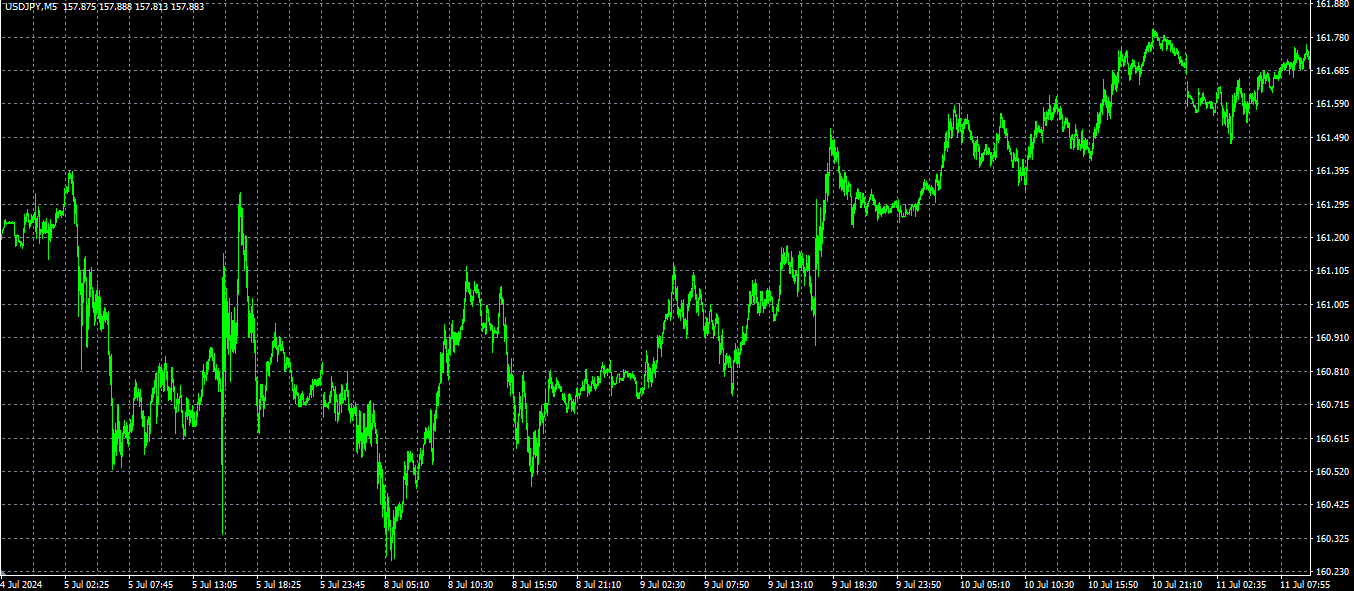

Basic flow of layover logic
The turn-around logic is as its name suggests
Rather than cutting losses, it is a logic that simply turns around as is
Therefore in the market
Turn-around = does not go against the trend, in other words
Turn-around = a one-shot choice is appropriate
Namping (averaging down) only serves to cover losses
Also, once you incorporate averaging down, the meaning of the turn-around becomes completely meaningless
Because the turn-around is a logic precisely because it does not go against the trend
Nevertheless, adding averaging down implies a belief that it will go against the trend
If you incorporate “going against the trend,”
You will misplace the place to turn around
You hesitate to cut losses
If you add averaging down to a turn-around, it becomes a factor that causes at least some stumbling
What is effective with turn-around averaging down is only when a trend market appears
That is, buying more or selling more; it can also be called pyramiding or averaging down
It simply means increasing the quantity
But you enter because the trend market has progressed to some extent
It is not that you are covering losses, but that you are increasing profits
Now, what was the concept of the turn-around logic?
It was a trading logic based on the idea that turn-around does not go against the trend, right?
Then
Compared to averaging down to cover losses
Averages up in an advancing trend to increase profits with pyramiding is far superior, isn’t it?
According to the concept of turn-around logic, that’s how it is
Also, turn-around profits take at a temporary peak and either peak, and take profit
A temporary peak can be considered in Dow Theory patterns
But accordingly, the profits are small, so the benefits of turn-around cannot be realized
And the real peak is when a major trend market ends and a reversal occurs to take profit
At this time, the pip count that becomes profit is 1 yen or more
To utilize both, you simply enter one shot split in half into two portions
In other words, not averaging down, but splitting one shot into two equal parts at turn-around
The basic of turn-around logic is
“Do not go against the trend” “Pursuit of profit”
Therefore, by splitting in two, you should pursue profit as the “temporary peak” and the “profit eaten to the tail”
Also, when you increase buying or selling, the one-shot is split into two in the same way
Basically, let's not forget the basics of Dow Theory
Technical analyses suitable for turn-around include
25 MA, 25-envelope, support and resistance, Dow Theory, breakouts
That’s about it
Everything else is unnecessary; all can be covered by those technical analyses
Losses:Profits
From this perspective,
Temporary peak logic alone does not lead to substantial capital increases
And the ratio of small losses to large profits is inefficient
Therefore in turn-around logic
Aim for temporary peaks and tails-eating peaks
Never perform loss-covering averaging down even once
That is the rule of turn-around logic