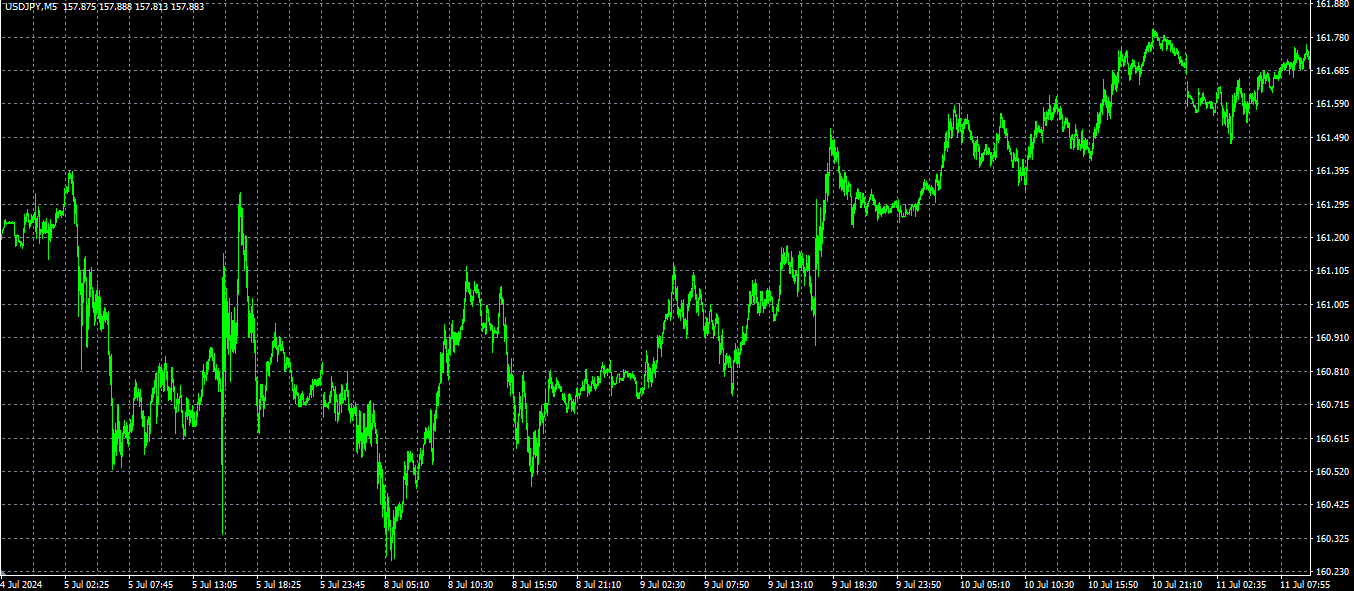

Trading strategy to turn a right-shoulder-downward trade into a right-shoulder-upward trade
To make a living from FX, you must trade with a consistently rising performance
However, in reality, even though you should have chosen a good trading logic with a rising track record
what awaited in reality was a falling track record
Does that ever happen to you?
It happened to me. A lot, and forever
but
I was able to put an end to that kind of trading as well
A declining-trend trade is
in essence a trading strategy that turns negative as a result of repeating increases and decreases
that was what it was
So you should reverse this strategy
It doesn’t mean to trade in the exact opposite way
What you need to do is quite simple: adopt a trading strategy that can produce results after a sequence of gains and losses
Some people think, “I’m doing that, but the results aren’t there, so I’m troubled!”
but basically a strategy for increasing capital in trading is about “reconfirmation”
There are parts where people tend to give up in these aspects
So, although I know some of this content,
it’s quite simple, so if you internalize it well, your trading strategy should yield better results
ーー
First, what causes a decline?
Why would a rising-trend trade become a decline
simply because you’re trading in a similar way to systematic trading or automated trading
In other words, “entering everything indiscriminately”
Rather than waiting and watching, you need to have an eye for gauging market sentiment
Market sentiment may be appropriate to say it is arbitrary, but
behind arbitrary there is always a temporal allocation
which means cultivating market sentiment on multiple timeframes
Market sentiment on multiple timeframes includes short-term, mid-term, and long-term
Short-term = entry timeframe
Short-term is the benchmark value
The benchmark value is the timeframe used in trading in the market
Long-term is used less often
In normal market conditions, short-term and mid-term are usually enough
However, when the market creates noise, the concepts of mid-term and long-term become important
In such a time, if the market is in a slump or confusion, the idea of taking a break becomes appropriate, right?
Basically, the market must be approached with mental considerations about whether to trade or take a break, otherwise capital increases are hard to achieve
Everyone loses sight of the important values with such simple trades, so capital cannot increase as a result
The essence of mental trading is not deciding to buy or sell
The essence of mental trading is deciding whether to trade or rest
This difference in perception makes market profits easier or harder
Market profits vary the most when market conditions are harsh
The trading logic isn’t that important
Rather, the parts that lead to profit, such as trading and resting, are what are focused on
The focal points are always in the behind-the-scenes aspects
More important than the trading timeframes is the next step, and such behind-the-scenes concepts should be held
To produce results on the surface, there must be an underlying mechanism behind the scenes
I investigated the mechanical causes, but
this time it’s the opposite
Aren’t you trading too emotionally?
Even those who deny it often engage in emotionally charged trades
This market condition includes aspects like ~
The market also needs rest; you won’t make profits unless you actively face it, but
that profit zone is a double-edged thing
A double-edged situation is full of flaws, so you should eliminate those flawed parts
That is what we call an emotional-trade in this context
Market awareness refers to the surface movements—the entry timeframe—and the behind-the-scenes mechanisms—the mid-term and long-term timeframes
In an emotional-trade, even movements that aren’t very active can be interpreted as
“Mid- and long-term have expectations in this direction” and then you trade as buying pressure or selling pressure
As a result, you end up increasing unnecessary losses
Always aim for the moment when the starting position just peeks out of the head
Around the second step of the staircase, roughly
You aim from the start; forecasts before the trade has even begun are unreliable
That market tends to end up moving within a range
Simply, you see it as either a big box range or a small box range
To profit in trading, the market tends to move outside the box
Rather than “market sentiment for a trending market,” the more important consideration is “where within the box is the upper or lower bound”
Emotional-trade tends to be driven by the value of a trending-market mindset
Because
“I should aim for a trending market”
The result differs from the pursued answer, causing mental strain
You tend to get caught in noise
Checking the positions of the box’s upper and lower bounds
Always consider and apply the behind-the-scenes mechanism
The market, through such mechanisms and their combinations, surprisingly contributes to capital increases
In market capital increase approaches, the number of small realizations you can gain matters
By that, profits differ in a striking way