
Brexit Plan Vote Rejected! A recap of what’s happened and key points to watch going forward
◎ Background to date
・In November last year, an interim withdrawal agreement was agreed between the EU and the UK
↓
・On December 11 last year, the interim withdrawal agreement was scheduled to be voted on in the UK Parliament, but it was postponed as it did not appear likely to pass
↓
・On January 15, Parliament would vote on the withdrawal agreement, but it was rejected by a historic margin (230 votes)
↓
・On January 16, a vote of no confidence in the government was tabled, and Prime Minister May remained in office as the no-confidence motion was defeated
↓
・On January 29, several withdrawal amendments and a no-deal withdrawal bill were submitted, and the no-deal withdrawal was rejected
↓
・In February, amendments were submitted and voting repeated to revise the withdrawal bill
↓
・In late February, discussions on delaying the withdrawal deadline emerged
↓
・On March 12, withdrawal amendments were voted on; on the 13th, no-deal withdrawal was voted on; on the 14th, the vote on delaying the withdrawal deadline, with schedule announced
↓
・On March 11, after a telephone call between Prime Minister May and European Commission President Juncker, May met Juncker directly
↓
・On March 12, Juncker proposed concessions regarding the backstop
◎ Yesterday’s developments
Because May’s withdrawal plan was highly likely to be rejected, there were rumors of a postponement of the vote. However, the postponement was rejected, resulting in a pound rally.
Subsequently, legal opinion by British lawyers on the concessions reached between May and Juncker was announced. Attorney General Cox stated that the legal risk remained, causing a sharp drop in the pound.
As a result of the vote, 391 opposed, 242 in favor; it was rejected by a margin of 149 votes (230 votes in January).
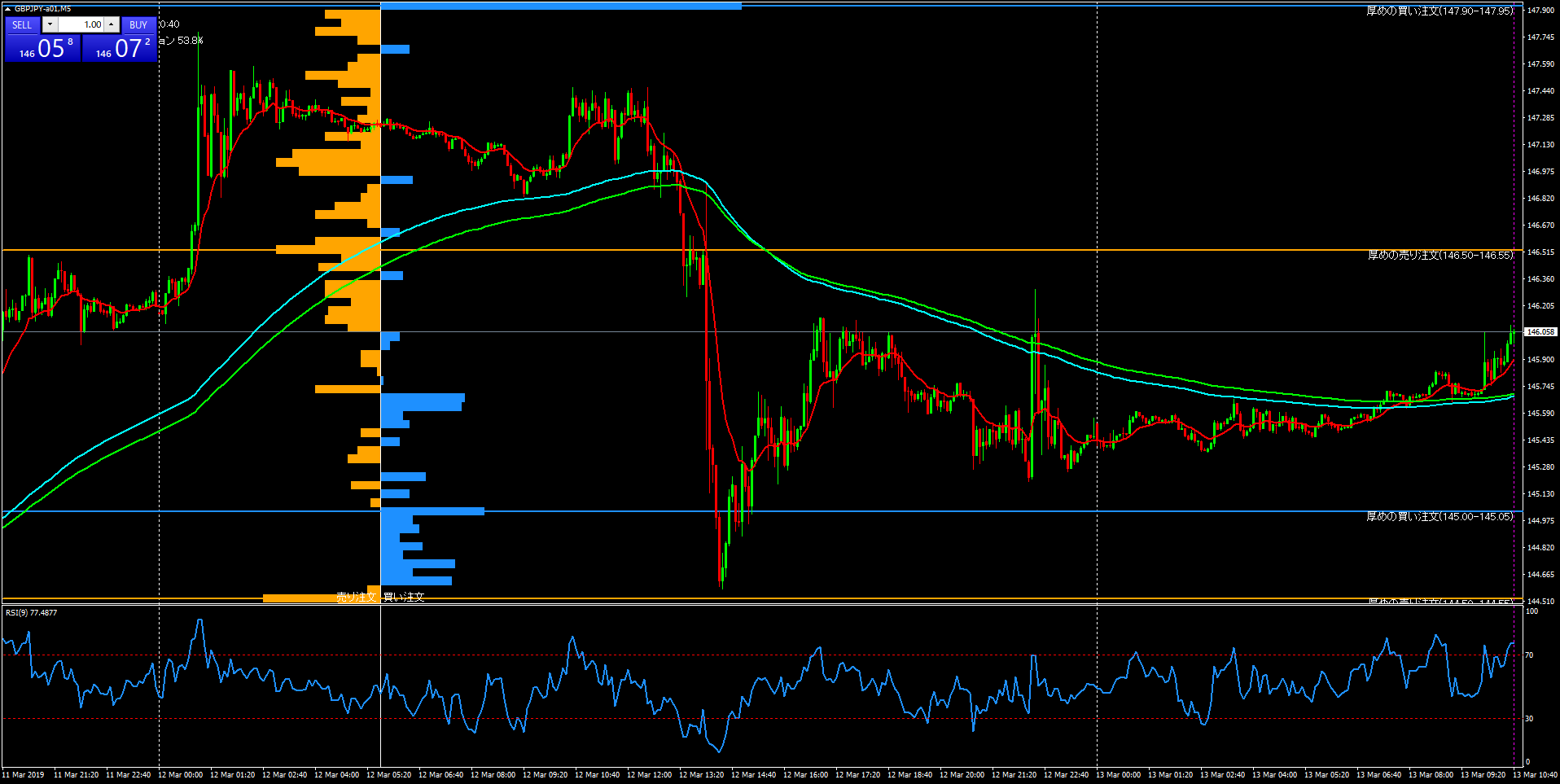
GBP/JPY 5-minute chart
◎ Points of focus from here
1) No-deal Brexit
On March 14 at 4:00 (Japan time), there will be a parliamentary vote on whether to proceed with a no-deal Brexit. The consensus is to reject, but if it were to pass, the pound would crash.
2) Extension of the withdrawal deadline
If today’s no-deal withdrawal vote is rejected, a parliamentary vote is scheduled tomorrow in the UK Parliament on extending the withdrawal deadline. A passing vote is the consensus.
3) EU Summit
Based on the parliamentary votes so far, Prime Minister May will travel to the EU Summit to negotiate with the EU. The current consensus is to seek an extension of the withdrawal deadline, but the EU will not allow an extension if even one of the 27 member states opposes it. All eyes are on what will happen at the EU Summit.
4) Other
The above is the most orthodox flow, but opposition parties are expected to propose measures such as a vote of no confidence in the government or a second referendum. These areas are also noteworthy.