

Why completely passive scalping EAs tend to have a long-term rightward downward slope

ScalpingEA funding curve: this is how it ends up (reality is difficult)
When you’re building and testing a scalping EA, most people hit the same wall at least once.
That is “you can make explosively a few days, but looking long-term it trends down.”
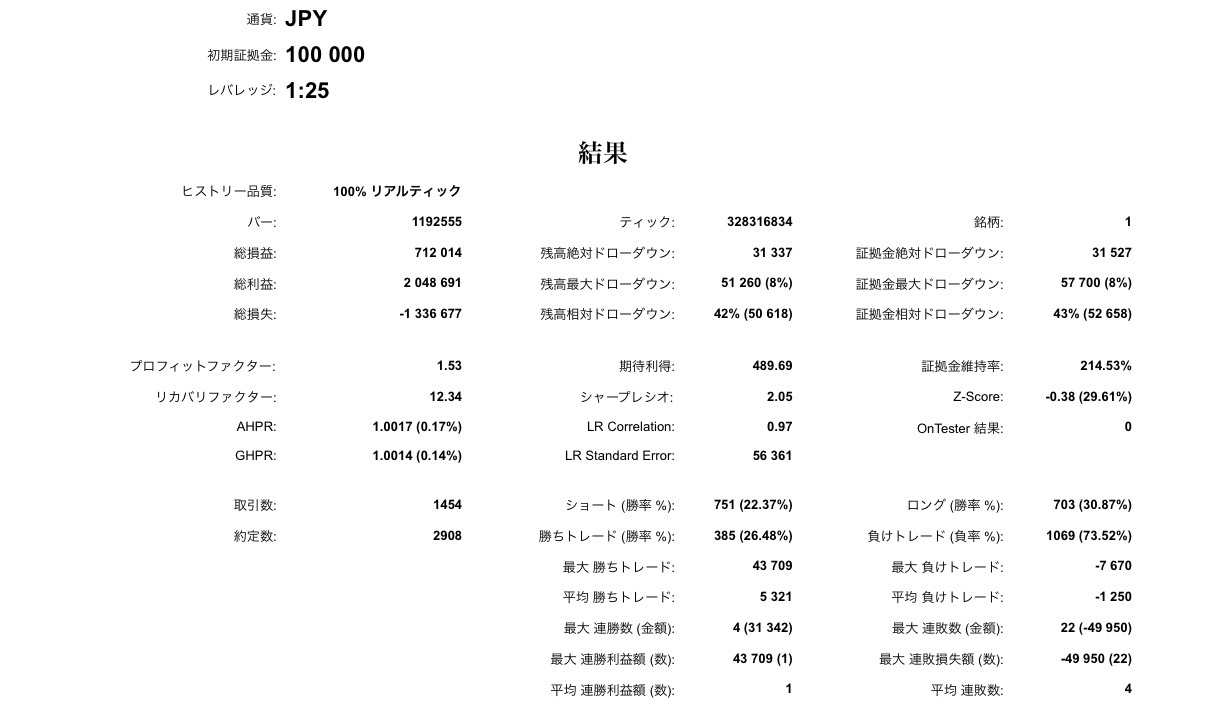
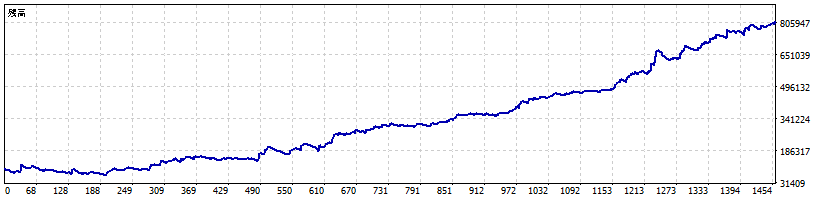
The two funding curves I’ve attached this time are exactly that典型例です.
⸻
Image ①: a funding curve whose right shoulder keeps trending down
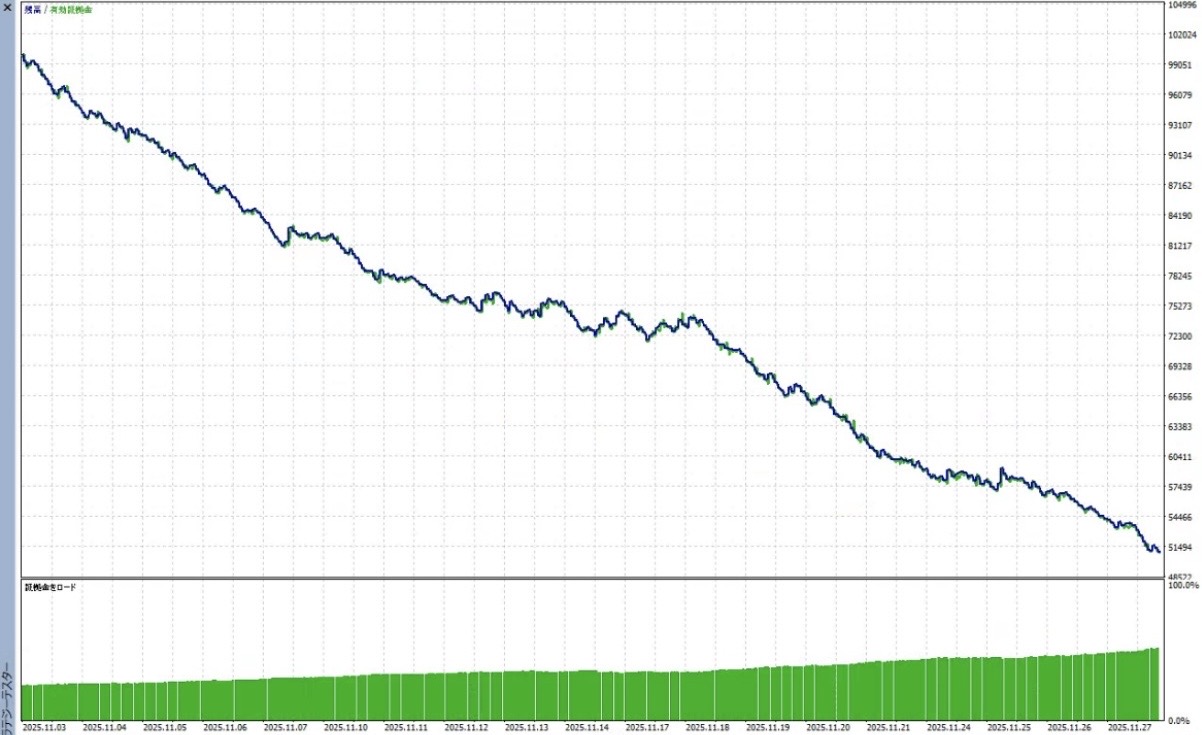
This shape is familiar to anyone who has built a scalping EA.
• Rather than starting with a clean, continuous loss
“There are places where you can take big profits from time to time.”
• But more than that
Small losses and subtle losses accumulate
• As a result, long-term
the right shoulder down trend doesn’t stop
The scary thing about this type is that you occasionally see “hope” along the way.
⸻
Image ②: It seems you’re gaining in the short term, but in the end you’re being whittled away
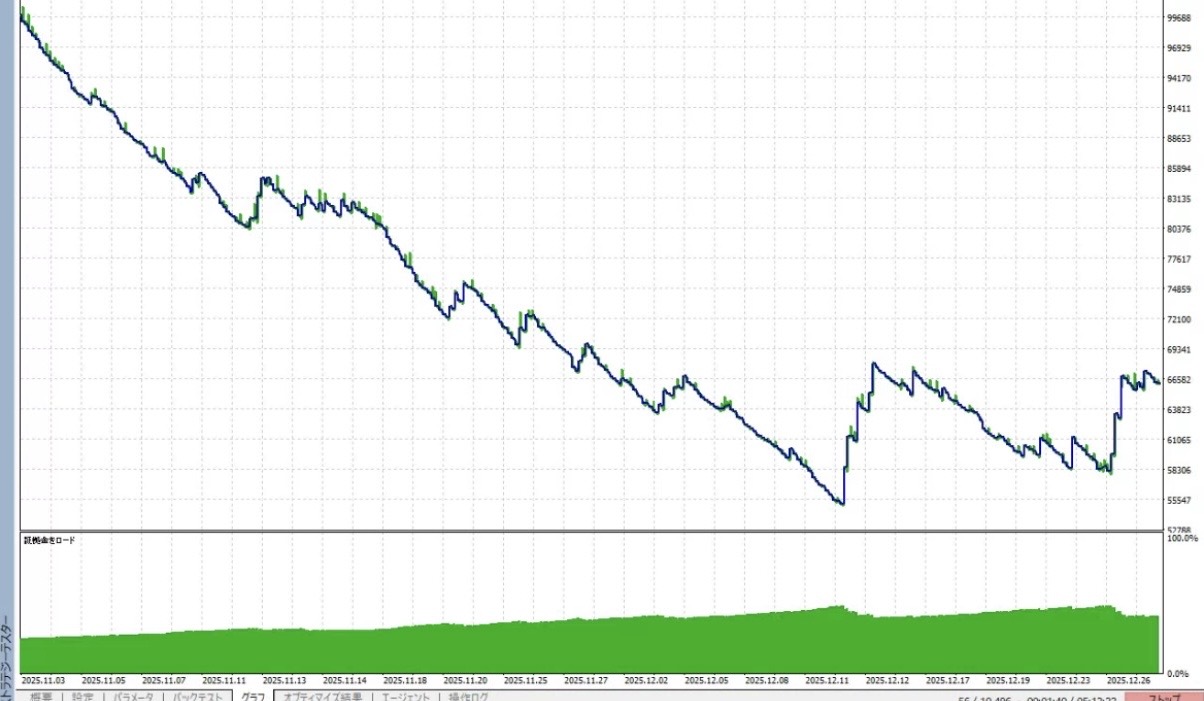
When you capture over a short period, such as a few days,
• Clearly a “winning day”
• What looks like a surge that could become enormous
• Times when you’re on a winning streak
These moments certainly exist.
But in the long term,
• You enter even in low-odds situations
• Spread and slippage (realistic) start to bite
• There are more times when the market doesn’t move than when it does
These accumulate and ultimately lead to drawdown.
⸻
Why do scalping EAs tend to end up like this?
I’m pretty clear about the cause in my own mind.
• Scalping has a short period where an edge can appear
• EA tends to mechanically touch those “subtle times”
→Small losses accumulate
• Even if you win on OHLC (1-minute bars), it collapses in RealTick
→Operating costs in real trading are heavier than you imagine
In the end, scalping isn’t just about finding times when you win; you need a design that thoroughly avoids times/areas where you lose, otherwise it won’t last long-term.
⸻
Then, how can you avoid drawdown?
For me, there are two conclusions right now.
①Create a rule/indicator where reproducibility and edge appear only when they do
For example, thinking in this way:
• Only when the trend is clearly present
• Only when volatility exists
• Only when spreads and slippage are within tolerance
• Only when the structure is well-formed
This kind of “restricted entry moments” should be formalized as a rule.
This is where scalping cannot function well unless you do this; otherwise the equity curve becomes choppy.
②Hedge toward EA that are easier to run long term (increase time frame, reduce frequency)
Even if short-term explosiveness drops,
• Reduce number of trades to lower cost impact
• Reduce noise to improve stability of same logic
• Not by increasing winning moments, but by reducing losing moments
In practice, this approach often makes it easier to achieve an upward-trending shape.
⸻
:Winning in a few days does not equal winning long-term
Looking at this funding curve, I’ve thought again.
• There is nothing unusual about a place where you can take profits in a few days
• Problem is being whittled away in the times when you cannot take profits
• Therefore what’s needed is
“Design to touch only when edge appears” or
“Shift toward an easier long-term shape.”
For now, I believe this is the best thing I can do.
Previous articles
↓
ORION_USDJPY Public Announcement — “Don’t trade in quiet markets” USDJPY-specialized logic
This time we published a new system for USDJPY “ORION_USDJPY”.
In one sentence, this ORION is designed as“do nothing until conditions align.”.
Compounding
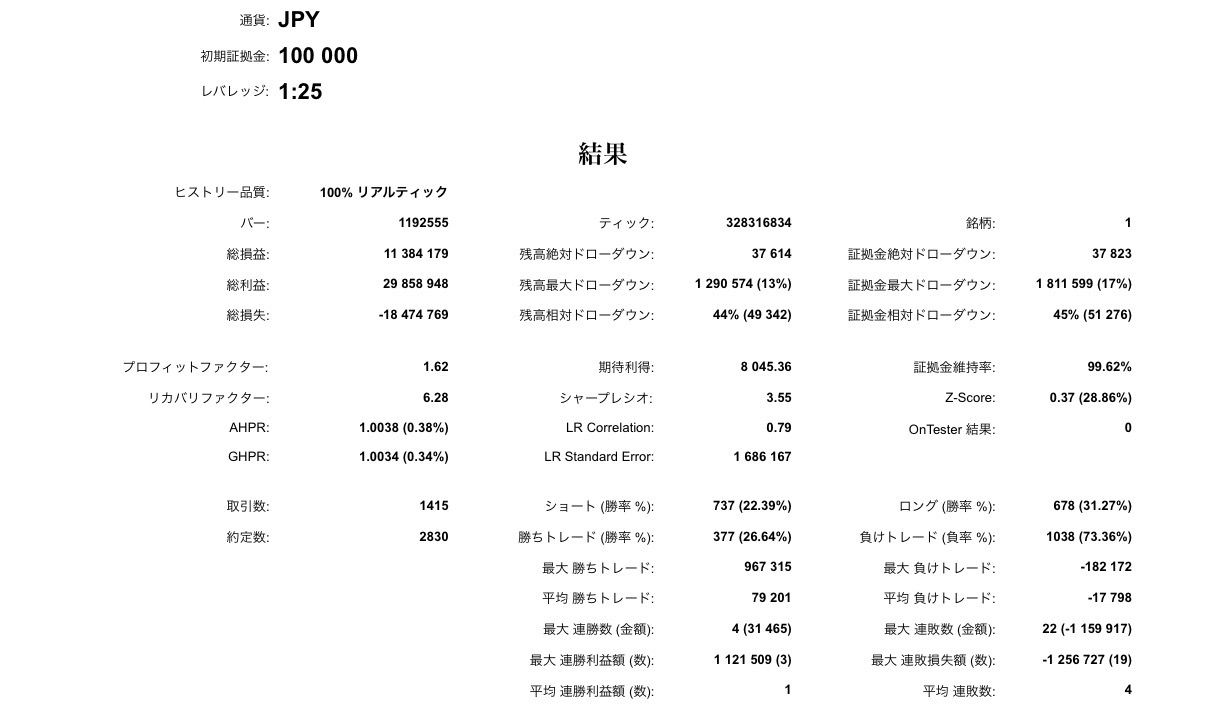
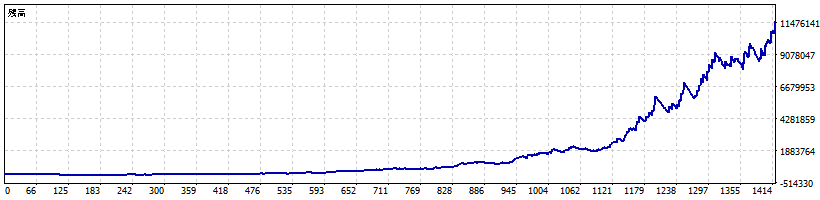
Simple interest
⸻
■ ORION_USDJPY is a “market-selective” type
Dollar-yen tends to be shaved away in times when there is no clear trend or volatility.
Therefore ORION is,
• When the trend is weak
• When there is no price range
• When there is no buying pressure
In such situations we simply do not enter.
⸻
■ There are times when you trade only a few times per month
Depending on the situation, you may trade only a few times in a month.
This is not a flaw, but an intentional design to avoid unnecessary stop-outs.
⸻
■ Aim for “only the timings when movement should occur”
A favorable market from the start has a different atmosphere.
ORION formalizes that difference in logic and targets only expanding moments..
⸻
■ This is recommended for people like
• Value quality over quantity
• Wants to reduce unnecessary entries
• Wants to target only the rising moments in dollar-yen
• Wants to run toward a more hands-off approach
⸻
If you’re curious, please take a look here.