

Background of the Australian dollar decline and future points of focus! ~ February RBA Board meeting summary ~
The AUD rose on RBA monetary policy announcements and the statement. After an initial rise, it fell sharply due to remarks from Governor Lowe, and the AUD was heavily sold.
Recently, the Australasia currencies have been popular for repeat (scalping) and swap-target trading, but with the sharp decline, many may have been wiped out.
I’ve summarized the background to the AUD decline.
◎ AUD decline chart
 AUD/JPY Time-frame chart
◎ Governor Lowe’s remarks
RBA Governor Lowe
“The outlook for the policy rate is now more balanced”
“We will monitor progress in the labor market closely”
““There is no strong case for a near-term change in the policy rate””
“GDP in the fourth quarter is likely to strengthen more than in the third quarter
“Economic growth in 2019 is expected to be around 3%, and in 2020 to exceed 2.75%”
“Over the next two years,the unemployment rate is expected to be near 4.75%”
“Over the next two years, household spending is expected to exceed 2.75%
“Credit tightening is excessive”
“The housing price adjustment is manageable; a moderate adjustment is appropriate”
“Global risks have risen”
“If employment improves and wages rise, a rate hike will be appropriate at some point”
“The biggest risks come from the world economy and China for Australia”
“Low rates lead to a lower AUD”
“If necessary,lower ratescould stimulate the economy”
“Citizens are seeking lower mortgage rates”
“The Australian Securities and Investments Commission should penalize bad bank behavior and act more proactively if needed
“Further rate hikes or cuts are possible”
◎ Background and context
For the situation and background up to the RBA board decision and policy announcement, please see here.

AUD rise, RBA policy rate and statement release
The initial expectation of a rate cut had faded, supporting the AUD, but Governor Lowe’s remarks made a rate-cut scenario plausible again. As a result, the remarks leaned dovish, and the AUD was sold again on expectations of a rate cut.
Among the remarks above, there are mentions of weak growth and low interest rates. If future dovish statements or weak economic indicators continue, the AUD is likely to come under renewed selling pressure.
◎ Relations with China
Many current Australian issues are closely tied to relations with China.
Australia relies heavily on coal and iron ore exports, with most destinations being China. As China’s economy slows, Australia’s economy has started to feel the impact.
Additionally, Australia faces housing price surges and loan issues. High real estate prices in major cities have made rents and mortgages a burden. One factor driving real estate prices is foreign demand, largely from Chinese buyers who, seeking assets abroad, often buy property in Australia or New Zealand.
China’s influence has grown economically and, it seems, interferes domestically as well. Australia is currently trying to reduce dependency on China, but this has caused political tensions between those who favor reducing reliance on China and others.
◎ RBA vs major banks
As noted above, holding large mortgage debt means paying significant interest. When mortgage rates rise, repayments rise, increasing the burden, which hinders the Australian economy and constrains the central bank from raising rates.
Mortgage lending may be influenced by China, but loan rates could be a domestic issue. The RBA has kept policy rates low to support the economy, reducing bank earnings and squeezing profits. Consequently, major banks such as Westpac Banking Corporation (WBC) and National Australia Bank (NAB) moved to raise mortgage rates. Smaller banks may follow.
Lowe’s remarks above also touch on mortgages. In the future, further rate cuts and extended low-rate policies may occur. In this context, the focus for AUD may be more on housing and major banks than on inflation or unemployment for now.
◎ Outlook and strategy
One of the draws of Australasia currencies is high interest rates, but currently the US dollar and the Canadian dollar offer higher rates. If Europe moves from Tapering to rate hikes, Aus currencies may face further selling pressure. Therefore, I see a bearish stance in the short to medium term, with a potential bullish stance in the long to very long term.
In my personal trading, I have held a long AUD position for two years, a classic repeat strategy. I plan to keep long positions and collect swap interest during drawdowns, but I am mindful of risk management. For now, it looks like a position that may incur unrealized losses.
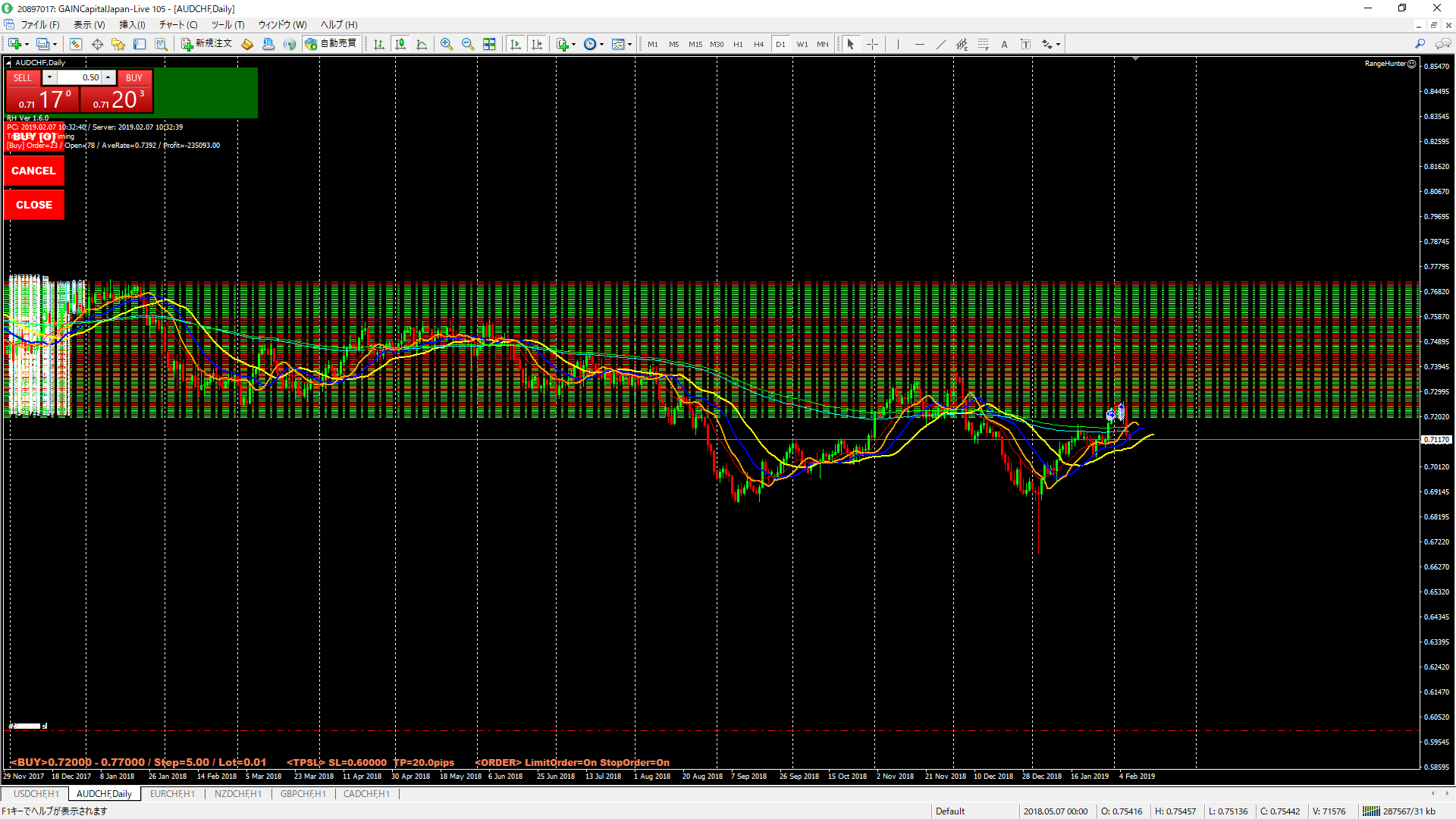
AUD/CHF daily chart