

?Investment: Orcan 15% rise and 3% economic growth distortion! This kind of situation will not continue; the danger of yen appreciation risk and the peril of relying on Abe-nomics' successful experience
Orcan has risen by 15% in the past year. Yet global economic growth is around 3%, inflation is contained at about 3–6%, and the gap between reality and stock prices continues to widen.
If the economy is lagging behind while stocks are running ahead, this situation cannot last long; a plateau, stagnation, or a crash is likely to occur. In particular, in a strong-yen environment, the value of overseas assets declines and the Nikkei Average tends to fall.
That is precisely why now is the time to prepare practical measures such as portfolio diversification and currency hedging. Rather than rushing in due to momentum, continue investing in a planned manner with the assumption that crashes and corrections are “within expectations” — that calmness is what investors will be asked to display going forward.
?Key takeaway from the news: the gap between “3% and 15%” as told by the numbers
Stock prices led the way. And how about the economy? Growth around 3% is solid, and inflation in many regions is contained at 3–6%. In a scenario where prices rise but the real economy does not, if you do not understand the background, you risk being knocked off balance by a reversal. The rising momentum over the past year has been propelled by large US tech.
Expectations for future profits and the overweight in top indices created a structure that easily draws in funds. Additionally, passive inflows from methods like Tsumitate NISA automatically buy top stocks, and for Japanese investors the weaker yen provided a tailwind.
Even if dollar-denominated gains are +10%, the yen conversion can show gains of over +15%. In other words, three layers — “expectation × automatic buying × currency” — overlapped to produce stock price gains well above the economy’s growth rate.
?Expectations are not eternal: Three paths for the gap to close
A sustained 15% rise is not permanent. The gap between stock prices and the economy must adjust in some form. Three patterns are anticipated.
(1) Hard landing where expectations collapse and prices crash; even major-name stocks have seen near-halving corrections in the past. (2) Soft landing where stock prices remain flat for several years up to 10 years while profits catch up, reducing overvaluation. (3) Diversified absorption where other sectors such as energy, finance, and infrastructure are relatively stronger and absorb the overall index drop. Which of these resembles the current phase?
If tech profit growth eases, energy, materials, and infrastructure could revalue due to oil price and capital investment cycles. Indices may seem weak against changing composition, but they adapt. If the face of the index changes, the trend changes too. Keeping such possibilities in mind and preparing the portfolio for “what if” provides reassurance.

?Japan’s investors’ lifeline: another board, the currency
Returns for yen-based investors come from “stock price changes × exchange rate changes.” For example, if a dollar-denominated +10% persists for three years, the cumulative would be +33%, but if the USD/JPY moves from 150 to 110 (about 27% yen appreciation), the yen-based gain is nearly offset, leaving only a total of a few percent. Conversely, a weaker yen raises asset valuations, but with new contributions it would be buying high-priced dollars, reducing efficiency.
In other words, protect in a yen-weak period and attack in a yen-strong period — whether you can adopt this switch as a rule is a turning point.
A concrete estimate: +10% in dollars over 3 years is about +33%; if exchange rates move by 27% yen strength, the yen base is roughly +33% − 27% ≒ +6%. On an annualized basis, it’s only a slight net gain. The numbers are sober. Therefore, adjust risk assuming currency trends. Decide whether to use hedges or absorb via cash ratios. Apply the calculations and test your own comfort level.
?Policy, interest rates, and geopolitics: three handles that move the exchange rate
Forex is heavily influenced by interest rate differentials, policy stances, and geopolitics. For instance, if the US leans toward cuts and Japan advances rates gradually, the yen is likely to strengthen. Conversely, if the world moves to risk-off, safe-haven yen purchases rise, and authorities may intervene in case of extreme yen weakness. Therefore it is valuable to think ahead about how you will move if the yen strengthens.
Also, money flowing into the new NISA supports demand for index funds, but in a reversal it could act as a weak hand and accelerate declines. The same could happen in past bubbles or crypto booms. Continue investing in installments while maintaining a buffer to prevent forced selling according to your risk tolerance — quietly uphold this basic approach.

?Was Abenomics’ fruit really “the dividend of the era”?
Over the past decade or so, some investors captured large gains from the double effect of rising Japanese stocks and a weak yen. However, that tailwind was also an era of dividends from interest rates, policy, and forex.There is no guarantee that the same strategy will reproduce itself over the next decade; in fact, changing conditions could turn into headwinds.Shifts in interest rates, supply chain reconfigurations, and geopolitical realignments — new challenges appear one after another.
Even those who rode the Abenomics wave to success may not find that approach always correct going forward. Rather, clinging too tightly to past successes could lead to big future losses. Therefore, not bringing past fruits into the future as-is is important. This seems to be the etiquette of investing going forward.
?One more “what if”: if yen strengthens, where should you position?
A stronger yen is often feared. However, for long-term accumulations, it can be a favorable opportunity. Don’t get stuck on excessive fears of yen weakness; instead think about what to buy, how much, and in what order if yen strengthens. The key is to go on the offensive rather than chase prices. Notes will suffice; rough numbers are acceptable. Those who are prepared are always calm and quick.
Additionally, write down your own standards on a single sheet — target return, maximum drawdown, rebalancing thresholds, cash ratio, etc. You don’t need to show it to anyone. It’s your own roadmap. In good times and bad, returning to this sheet keeps you aligned. The more unsettled the market, the more the standards prove their power. If you have a moment tonight, take up a pen.
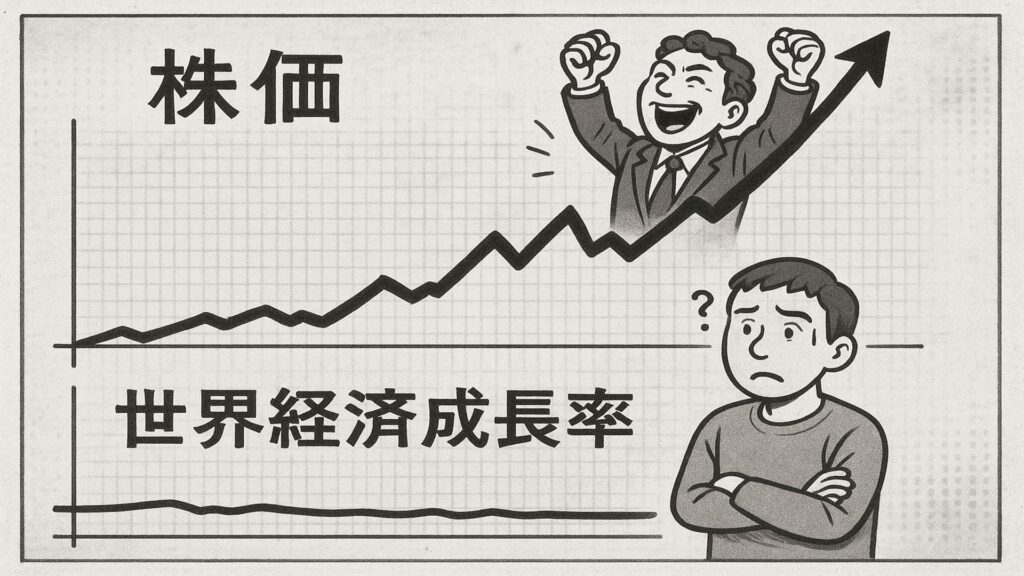
?We’ll accept the “twist” of economy at 3% and Orcan at 15% as within expectations
Lastly, one more time. While Orcan continues to grow at 15% annually, the real economy (growth, inflation, nominal GDP) is unlikely to keep pace for a long time. Examined calmly, it is clear that at some point there will be plateau, stagnation, or adjustment (sometimes a crash).
Among themyen-strength driven currency appreciation is not easily avoided, and it is advisable to prepare now with diversified portfolios and currency hedges. Nevertheless, if yen strengthens further, the yen-denominated value of overseas assets will erode, and the Nikkei may weaken in some phases.
Therefore, it is essential to prepare to keep such developments within expectations. Do not rush into buying on impulse; continue a planned investment that assumes some adjustments. George Soros has said, “The market is always wrong,” but even that idea should remain in the back of your mind as a possibility of a big misstep.
Completely risk-free trade simulator for free practice and verification!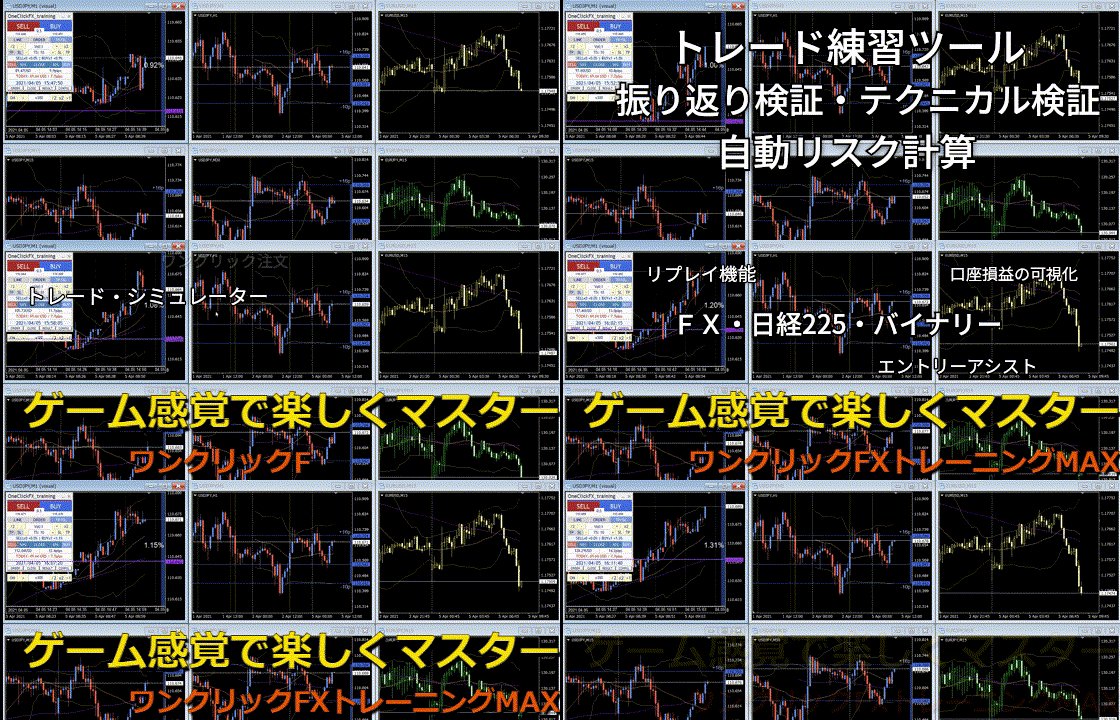
Details page for One-Click FX Training MAX