

?FX: Why do stocks rise? Prime Minister Ishiba's missteps, Trump tariffs, and global fragmentation push to new highs! The true nature of the passive bubble lurking behind the Orcan myth
Today's theme is “The Safety Myth of Index Investing,” a topic that might give you a little shock. Lately, many people are steadily contributing to “all-world” and “S&P 500.” When NISA and iDeCo emphasize “long-term, diversification, and low cost,” it provides a sense of security and is easy for beginners to start… But, please wait a moment. Is that really enough?
When you think about it, while Japan’s politics wobble over Ishiba’s leadership issue and the ruling party is a minority with instability, the Nikkei average hits new highs. In the United States, despite President Trump’s protectionist tariffs creating economic uncertainty, the S&P 500 keeps reaching new highs. Isn’t this strange?
Behind this may be the impact of “automatic buying by passive investing,” where fund flows take precedence over the real economy. Today, let’s quietly consider the possibility of an “automatic buying bubble” that may be swelling.
? The Mechanism of Index Investing and the Dynamics of “Automatic Buying”
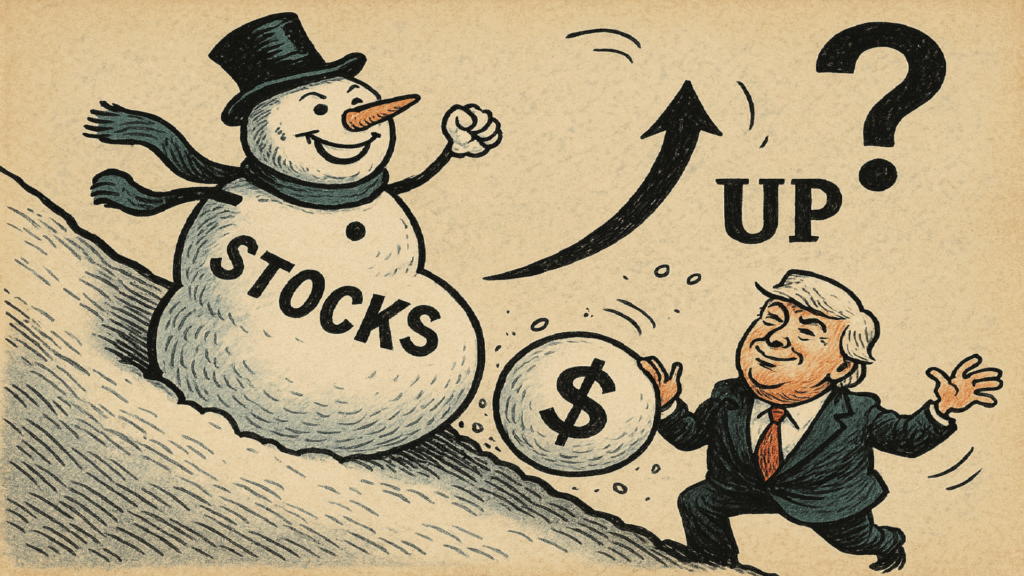
Index mutual funds and ETFs are designed to “track the index.” In other words,you buy not because the company is good, but because it is included in the index. Since S&P 500 and OC are market-cap weighted, large-cap stocks like Apple and NVIDIA attract funds automatically as money flows in, pushing stock prices up → market capitalization grows → even more money flows in… creating a snowball-like cycle.
If you think about it calmly, this is a “mismatch of supply and demand.” Academic papers and financial institution reports have started pointing out “distortion in price formation.” For example, Yale University economist Robert Shiller warns that “the bloating of passive investing is creating a new bubble in the market,” and domestic economists also express concern with the term “passive bubble.” What do you think? Hearing that “indexes are safe” can be reassuring, but behind the scenes this automatic buying mechanism is driving significant market moves.
? The News and Stock Price Discrepancies
Now, let’s look at some recent news. In Japan, Ishiba’s leadership issue smolders, and the ruling party shows volatility with a small faction. Yet the Nikkei average somehow reaches new highs. In the U.S., President Trump uses high-tariff cards and the economy is unsettled, yet the S&P 500 hits new highs. Moreover, with the Ukraine war lingering and difficulty in reaching agreements with Putin, concerns about EU division arise, yet stock prices rise as if nothing is happening…
Doesn’t this feel odd? In normal circumstances, risk factors would cause a downturn, but the market remains bullish. One reason could bethat automatic buying by passive investing is dominating supply and demand. In other words, “fund flows” may be prioritized over the real economy and political turmoil, and index-linked buying could be lifting stock prices.
? Visible Signs of Overheating
Now, let’s look at the numbers.
- The top 10 stocks in the S&P 500 account for more than 30% of the index
- Over $8.82 trillion flowed into passive investments in the past year
- Active investing saw $194 billion flow out
- Several large tech names contribute more than half of the index’s gains
How should you interpret this? On the surface, the fund flows look efficient, but on the flip side, only a biased set of stocks are rising. In other words,a new form of bubblemight be emerging.
2015-2024年-1024x576.png)
? Possible Risk Scenarios
So, what if the trend reverses? Here are a few possible scenarios.
- Capital inflows stop and reverse
When redemptions rise, big-cap stocks are sold mechanically, accelerating price declines. - Discrepancy with actual fundamentals corrects
Overly high P/E ratios and excessive growth expectations collapse when earnings slow, prompting a rapid valuation adjustment. - Capital shifts
Funds flee to bonds or gold, lowering the overall market’s net asset value.
How would you prepare for such scenarios? If you think “index investing is safe,” you might panic when the tide turns.
? Comparison with the Nikkei 225: Why They Are Not the Same
People often compare with Japan’s bubble collapse, but the Nikkei 225 and S&P 500/OC have different circumstances.
- Nikkei 225uses price weighting, which during bubbles makes overvalued stocks disproportionately influential. As a result, it took about 30 years to reach new highs.
- S&P 500 and OCare market-cap weighted with periodic rebalancing, so company churn makes it easier for fundamentals to matter.
In other words, a 30-year stagnation is unlikely, but a stagnation over 10 years is quite possible. Are you prepared to invest for a decade?
-1024x576.png)
? What Individual Investors Can Do to Prepare
What matters here is “ingenuity.”
- Reduce Concentration Risk: Adopt evenly weighted ETFs or sector-balanced allocations in part
- Rule-based Rebalancing: If the top holdings exceed the target weight, adjust automatically
- Keep Safe Assets: Hold bonds and cash at a certain proportion
- Check for Overheating: If P/E or fund flows are too biased, gradually reduce risk
How about it? Going beyond mere “automatic accumulation” and understanding the mechanism to craft thoughtful strategies may be necessary for investing going forward.
? Falls in Markets Have Recurred Throughout History
Bubble crashes are a recurring theme in history.
- During the Japanese bubble around 1990, the last ones to ride the land boom ended up with the bad luck of getting stuck holding the bag.
- Tulip mania, tea mania, Lehman Brothers crisis… at the peaks, people believed prices would rise further.
- Bitcoin in 2017 surged 20x, creating many “millionaires,” but many suffered large losses when it fell at year-end.
The common thread is an influx of inexperienced new entrants. Perhaps there is a sense in which today’s index popularity resembles that.
? There Is No Safety Myth
Today's theme is “The Safety Myth of Index Investing.”
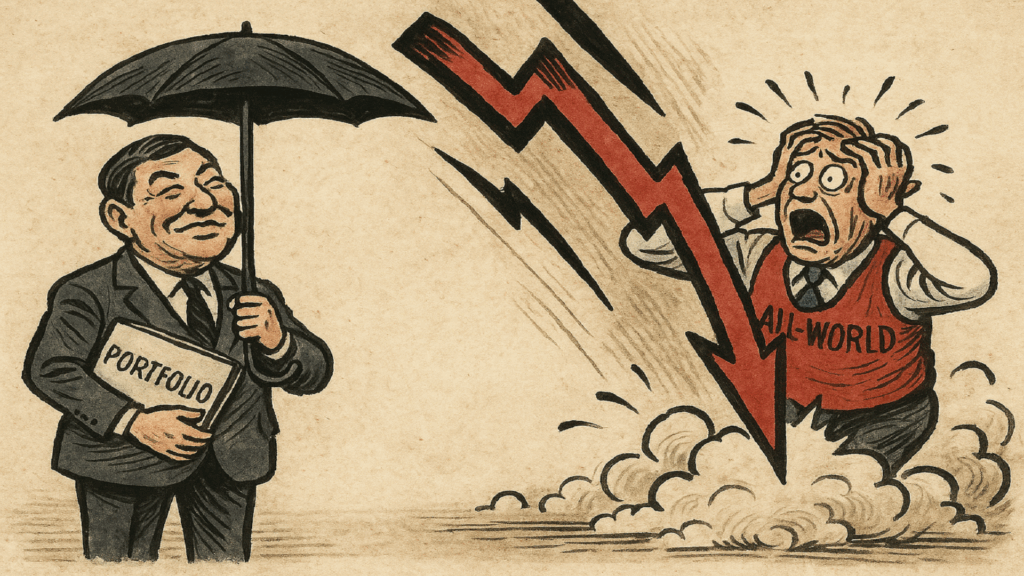
Long-term, diversification, and low cost are indeed strengths. But hidden within them is a new risk ofbias in automatic buying.
- Index investing is overheating, causing distortions in price formation
- Even if political and geopolitical risks accumulate, stock prices rise nonetheless
- Behind it is a high likelihood of fund flows from passive investing
- Rather than “pile up and you’ll be safe,” you need to devise asset allocation and investment rules
What matters in investing is preparation. A crash will come. Therefore, preparing a “calm-denial mechanism” now may lead to real long-term investment security.
Now, what do you think? Do you believe “index investing is万能” or “overheated and dangerous”? Please share your thoughts in the comments.
Completely risk-free trade simulator to practice and verify freely!
Details page for One-Click FX Training MAX