

Will 15% tariffs truly win? The unseen costs and the truth about the 80 trillion yen loan
In the summer of 2025, Japan secured an agreement of 15% in the tariff negotiations with the United States, which at first glance appeared to yield concessions. However, in essence this merely lowered a negotiable item that had been set higher from the outset, and it cannot be regarded as a genuine victory.
Moreover, the agreement includes an extraordinary financial commitment of 80 trillion yen in investments and loans from Japan to the United States, which goes beyond a mere trade negotiation and directly affects Japan’s national finances and geopolitical standing.
This article delves into the history and content of the tariff negotiations, the structural risks of the massive investment, and the challenges ahead, from perspectives investors and policymakers should calmly consider.
Background of the tariff negotiations
In July 2025, former President Trump once again pushed for tariffs, and Japan had been quietly negotiating to avert the August 1 tariff increase on Japan. Ultimately, an agreement was reached to reduce the 25% tariff to 15%.
The Japanese government emphasizes this result as a “won achievement,” but reports also described it as a situation whereconditions unilaterally presented by the United States were accepted, making it hard to call this a negotiation success. Additionally, the 15% tariff remainsextremely high by developed-country standardsand it cannot be considered a permanent agreement; there is a possibility of future revisions.
Impact on stock prices and exchange rates
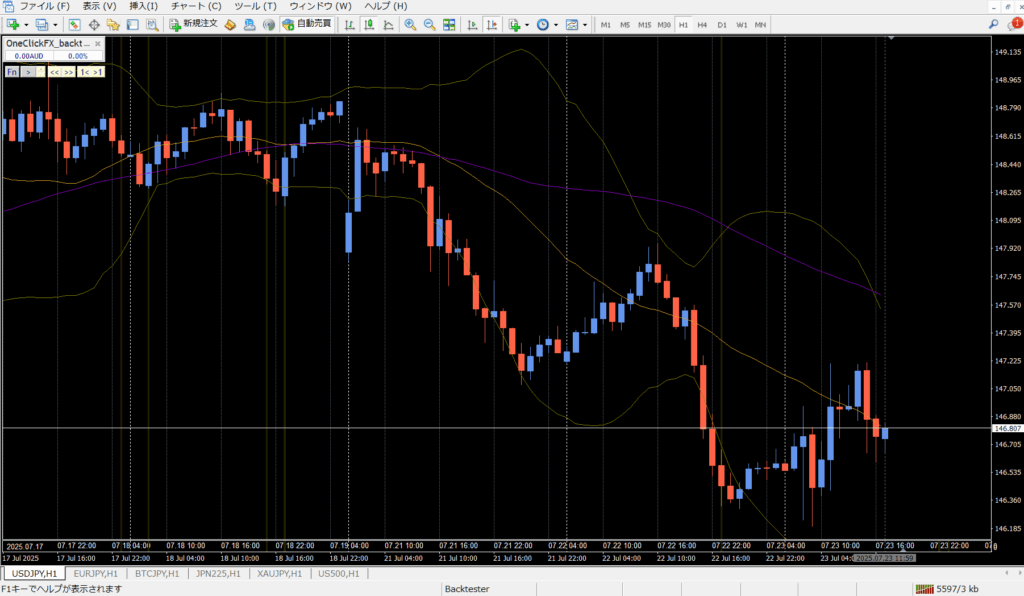
Following the announcement, the Nikkei Stock Average rose sharply by about 2,000 points at one point. In the currency market, the dollar-yen, which had moved about 250 pips higher immediately after Prime Minister Ishiba’s press conference indicating continued leadership, retraced by about 100 pips after the announcement but then moved toward a stronger yen again, showing mixed market judgments.
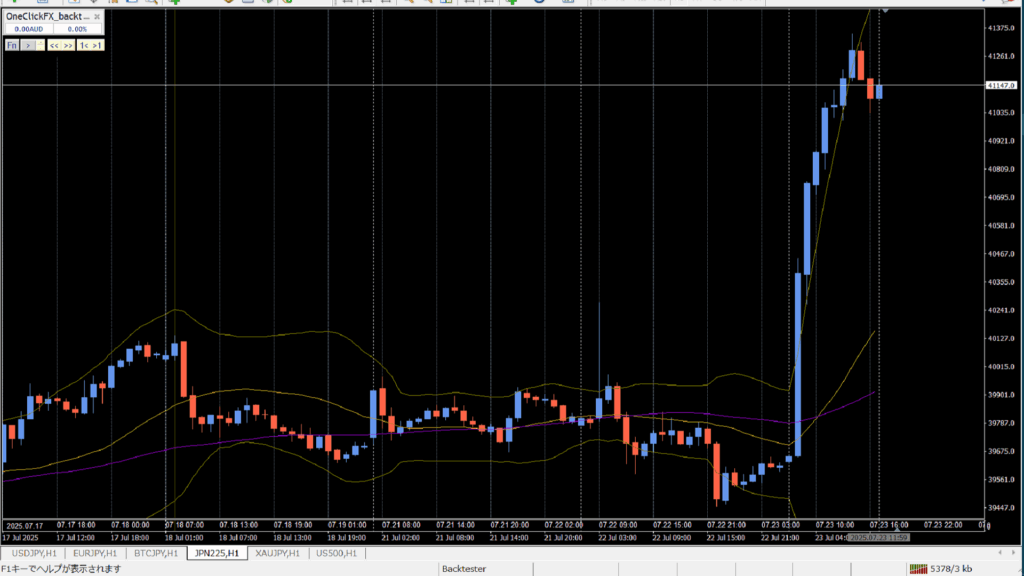
Going forward, the reduction in tariffs and the 80 trillion yen investment scheme are expected to provide some support for Japan’s exports to the United States, but persistent fiscal opacity could raise overall market volatility. In the near term, policy-effect expectations may lead, but next US demands or rising international credit risk could cause a renewed decline.
Contents of the agreement (as currently known)
- Reduce tariffs on some items like autos from 25% to 15%
- Commitment to 550 billion dollars (about 80 trillion yen) in investments and loans from Japan to the United States
- Investments target semiconductor, pharmaceutical, AI, energy-related infrastructure and startups in the US
- High tariffs on steel and aluminum (50%) remain unchanged
- For agricultural products (such as fruits, etc. in the US), agreement to expand imports within zero-tariff quotas
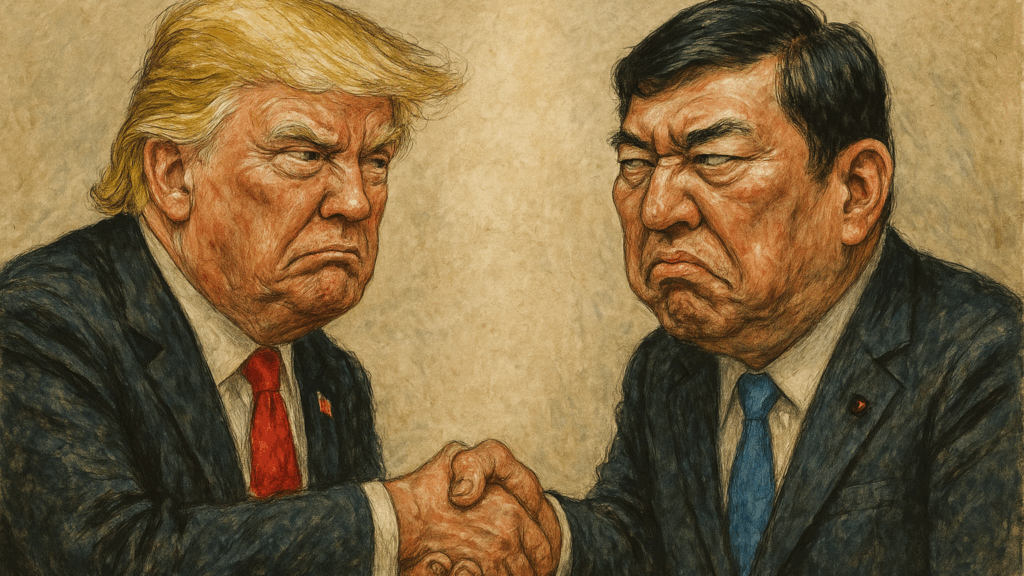
However, at present the announced contents are all that is known, and details have not been disclosed. As this is an intergovernmental negotiation, it would not be surprising if there were non-public, backdoor agreements.In particular, it is hard to believe that there is no mention of fentanyl, defense, or security in any form, so attention to future information disclosure is required.
Origin and structure of the 80 trillion yen
This 550 billion-dollar package is said to be handled by government-backed financial institutions (JBIC and DBJ) and is likely to take the form of indirect lending with government guarantees using fiscal investment and loan programs (FILP bonds), rather than direct spending from taxes.
However, this essentially makes the government a guarantor, and if a funded US company were to fail, public funds could ultimately be used to cover losses. In effect, it is a structure of “lending with no problem if recoveries are impossible.”
Risk constraints on issuing bonds in emergencies
The 80 trillion yen investment is formally a government-guaranteed loan rather than a bond, but it could still erode future fiscal flexibility.
If large emergencies such as a Taiwan crisis or a major earthquake in the capital occur, Japan would need to issue tens of trillions of yen in bonds to fund defense and reconstruction.
However, with already 80 trillion yen in government guarantees in place, the risks include
- A decline in confidence in Japan’s finances, raising government bond yields
- Investors adopting a cautious stance toward new bond issuance
- Credit rating agencies downgrading assessments of fiscal flexibility
These risks could materialize.
There is a need for prudent examination of the scheme to avoid exhausting the credit margin available for emergencies in peacetime.
We should not celebrate high 15% tariffs
Initially reports suggested around 24%, then President Trump escalated to 30% (perceived as retaliation to fentanyl), and finally pushed to 35% before an eventual activation at 25%.
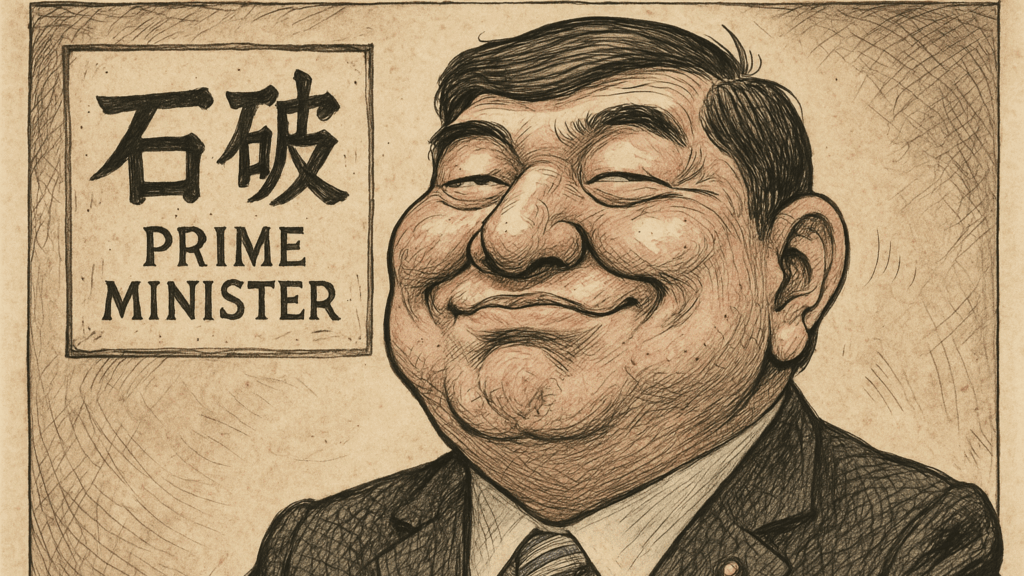
Even though it became 15%, to celebrate as a win is like thanking the other party for lowering a deliberately raised hurdle, as if the reduction was granted after being set up intentionally.
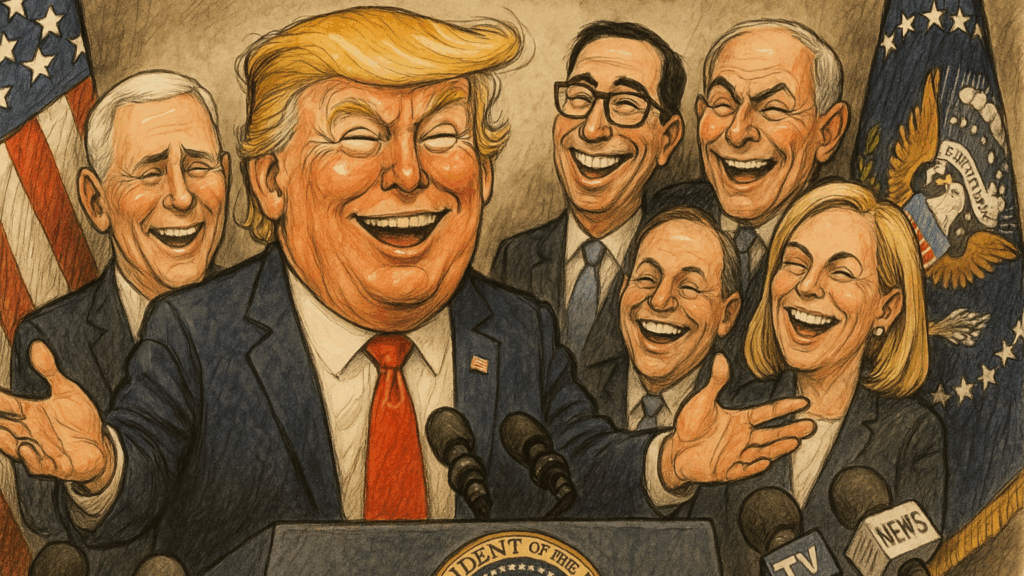
This is a “deal theater” tactic, and Japan may be perceived as being steered entirely by the other side. The fluctuations in Trump’s statements and numbers have created the illusion that “15% is cheap,” which dangerously dulls national discomfort with the negotiation.
To prevent a chain of total defeats
15% is not the final agreement; Japan should pursue further tariff reductions in subsequent rounds.
This “concession” is akin to a one-off major card pressed by Prime Minister Ishiba at his strong insistence, making it difficult to pursue similar investment negotiations next time. Moreover, the negotiation with the United States this time cannot be treated as a precedent, as China may make similar demands.
In an extreme example, one cannot deny the possibility of negotiations like “maintain rare earth exports in exchange for Japan’s 80 trillion yen investment in China.”
Summary: recognizing the risks
The agreement brought temporary market optimism, but investors must remain vigilant about future developments. The 80 trillion yen, being a huge commitment, could reduce Japan’s fiscal flexibility and raise concerns about geopolitical risks and the difficulty of issuing new bonds in the event of natural disasters.
In the future, should abrupt crises like a Taiwan-related incident or a direct-capital earthquake occur, rapid fiscal response would rely on national credit; however, this scheme may have consumed that credit margin in peacetime.
Maintain strong vigilance
Markets have reacted with temporary optimism, but volatility in stocks and exchange rates is likely to rise, and investors should maintain a cautious stance on future developments.
The 15% tariff level remains high; Japan should continue negotiations and seek additional concessions in the next round.Even though a large diplomatic card was deployed, the fact remains that only about 10% was actually achieved, which must be faced directly.
Moreover, without being swayed by market short-term reactions or expectations, prudent risk management and maintaining long-term fiscal soundness are essential. Investors should not overtrust short-term rebounds and should ensure liquidity and position-adjustment room.
Practice and verify freely with a completely risk-free trade simulator!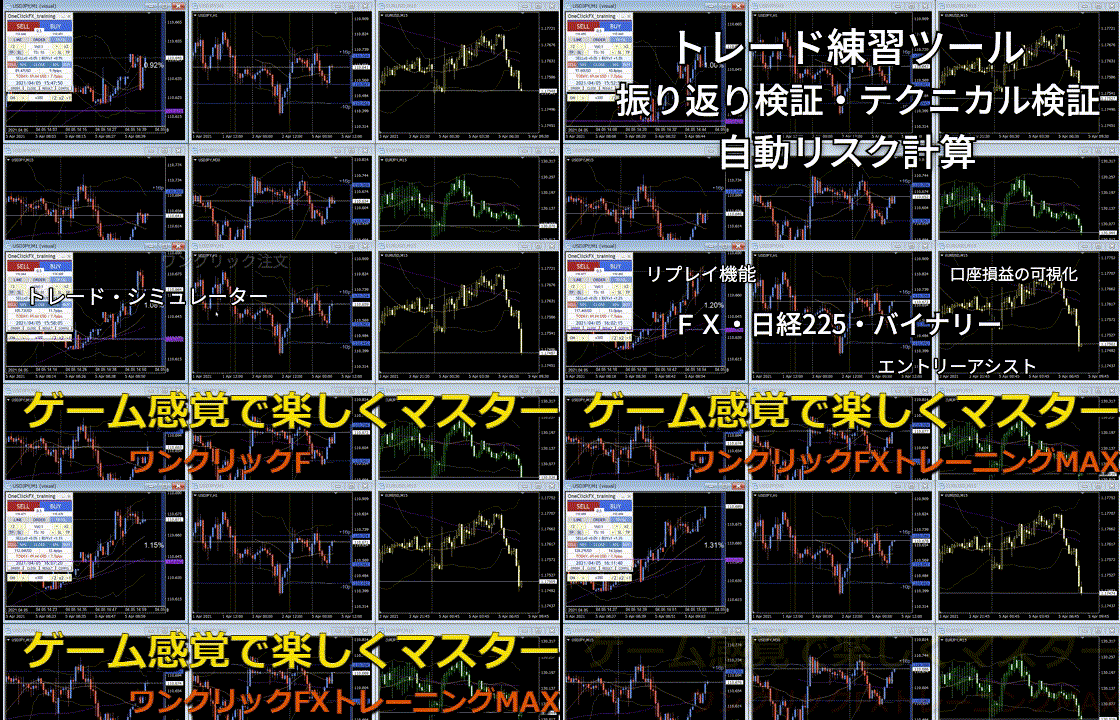
Details page for One-Click FX Training MAX