
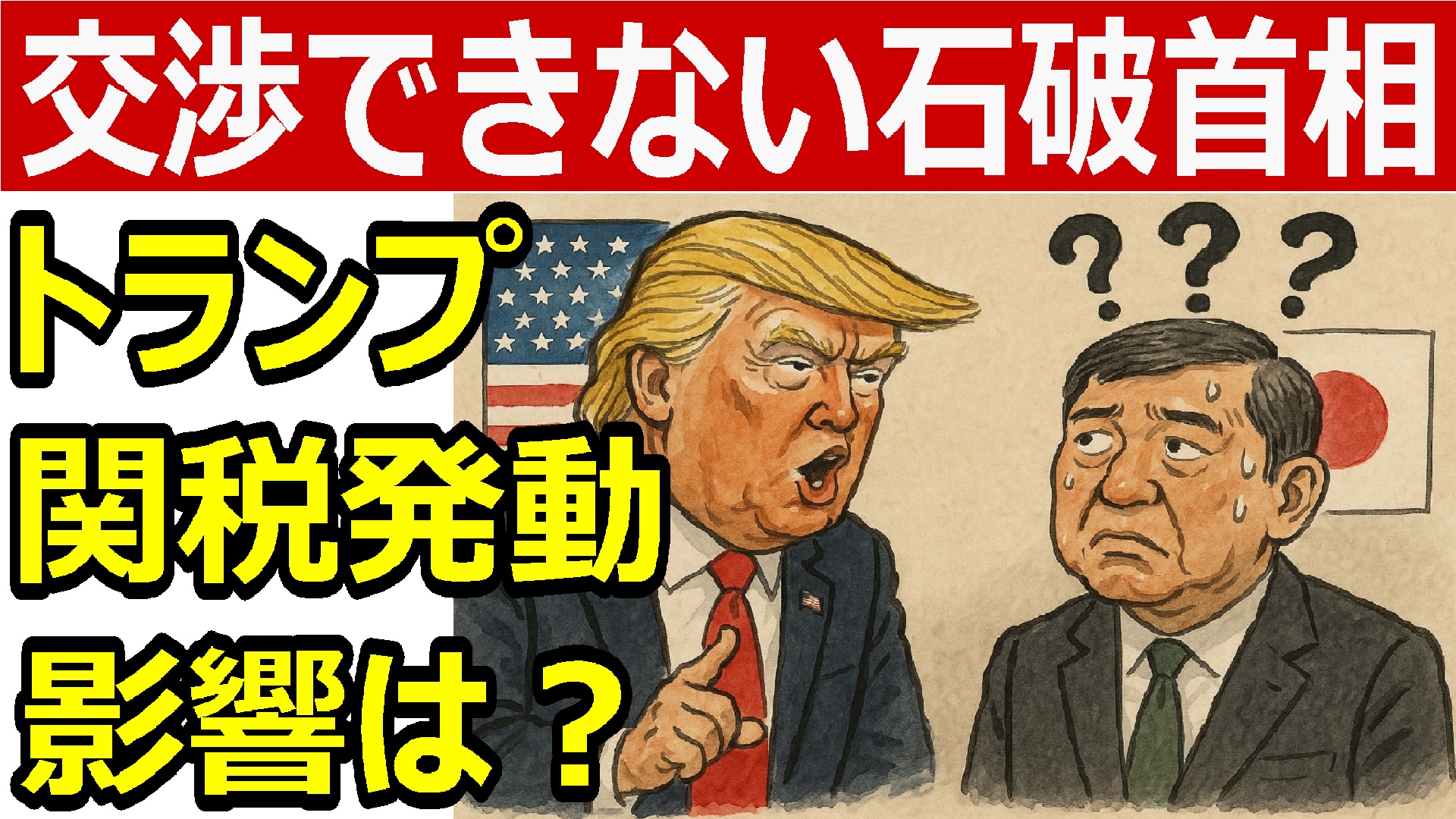
The Fate of Countries that Succumb to Trump Tariffs — A Shambolic Ishiba Administration Unable to Negotiate, and the Cost of Imposing High Tariffs in July 2025 #TrumpTariffs #IshibaPrimeMinister
As the deadline for the United States to impose high tariffs approaches, Japan is approaching the expiration without having conducted any effective negotiations. Even though a negotiation forum had been prepared, the administration did not respond and appears to have relinquished the initiative to negotiate on its own. As a result, Japan’s economy and diplomacy could be seriously affected. Let’s consider the current issues and the impacts after the high tariffs are enacted.
?? The Japanese government missed the chance to negotiate
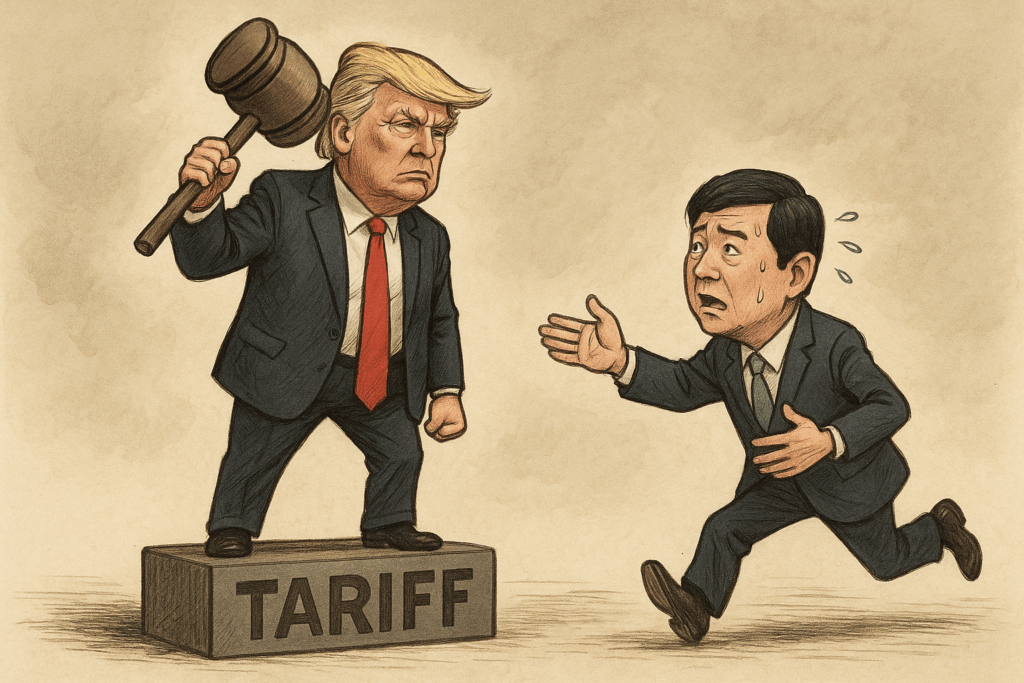
With July 9, 2025 fast approaching, the tariff negotiations between Japan and the United States may be said to havevirtually ended in total failure. President Trump announced imposing a uniform 10% tariff worldwide and setting up up to 50% additional tariffs by country, giving a 90-day window for negotiations.
As this negotiation deadline nears, the Japanese government’s concrete countermeasures and negotiation cards are vague, andMinister Akaza is isolated and racing around without support. At the Canada summit, despite Mr. Trump arranging a meeting with Prime Minister Ishiba, discussions did not advance at all, and voices of disappointment from Trump’s camp were said to have been heard like “we don’t know what he’s saying.”
? Some voices say there is no need to engage
On some posts on social media, statements like “The high tariffs may as well be enacted now” or “There is no need to cooperate with Trump” are seen. Such claims risk being interpreted as a lack of understanding of Japan’s security, trade, and national interests, and are viewed as signs of indifference.
Behind this may be a mindset cultivated during the “lost 30 years” that favors postponement and maintaining the status quo. Instead of pursuing a future strategy, a “self-preservation first” attitude that avoids risk and does nothing, accepting the worsening situation, seems to be spreading in society.
? Negotiation is the basics of business
In business, it is common to contend with strong competitors and overcome tough conditions through negotiation. Negotiation is not about concessions; it is a process of adjusting interests to achieve outcomes.
In fact, Nippon Steel’s acquisition of US Steel was realized despite opposition under the Biden administration and continued difficulties under the Trump administration. This is a victory of behind-the-scenes negotiation efforts and strategy, showing that Japan also has that power.
Before declaring “Trump is a tyrant,” recognize that he is adeal-maker in negotiationsand that calmly addressing this is the path to protecting national interests.
? Structural problems of the Ishiba administration
The Ishiba administration could not produce concrete results even though President Trump arranged a meeting. There was a surprise visit by Mr. Akaza to the United States with Trump present, and a call to the prime minister was made, but Japan could not negotiate.
Clearly, Japan was being favored, and there was a clear opportunity to negotiate. Yet, why did the government not capitalize on it—was there no willingness to negotiate, or did they avoid political judgment? I would rather not speculate, but is there some deference to something?
? Learning from history: the outcome of abandoning negotiations
On July 26, 1945, near the end of World War II, the Allies issued the Potsdam Declaration calling for Japan’s surrender. The Japanese government did not provide a clear response, effectively “silent,” which led to the tragic dropping of atomic bombs on Hiroshima and Nagasaki. The worst outcome of choosing not to negotiate is also clear in history.
As a norm of diplomacy and security, there is always room for negotiation. If appropriate judgment and negotiation had occurred at that time, it might have led from a ceasefire to an end of the war. The choice not to negotiate is not simply maintaining the status quo; it is a dangerous posture that entrusts all decisions to the other side. It is almost akin to renouncing sovereignty.
? Trump is a master negotiator; not responding is losing
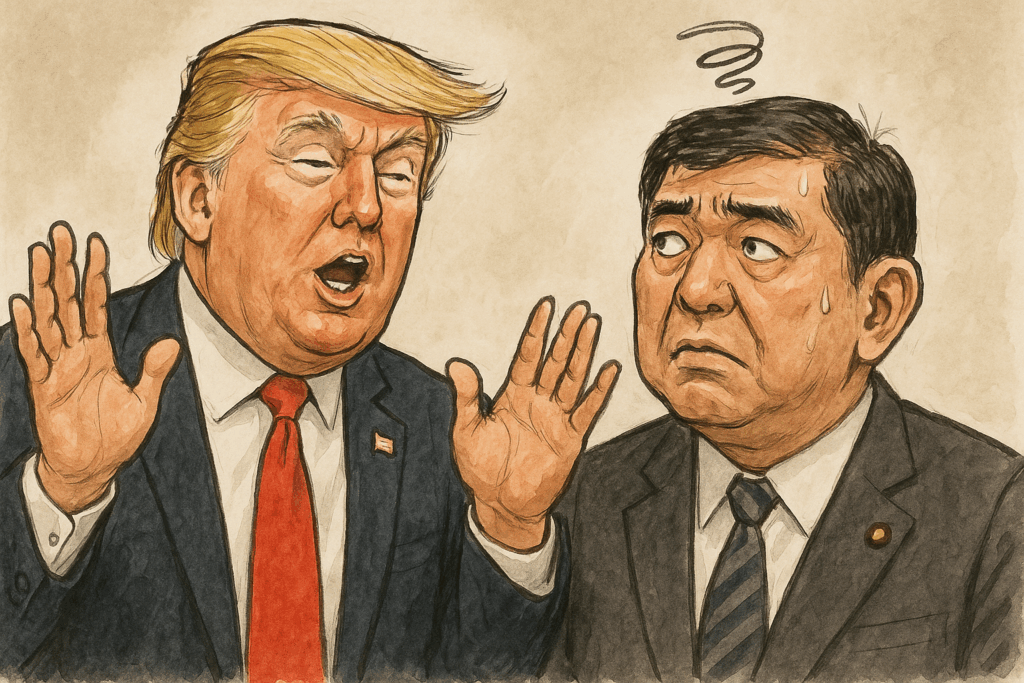
Trump is known for a negotiation style that, while showing a hard stance, actually offers multiple compromise points. U.S. Ambassador to Japan George Glass also sent a clear signal that there is room to negotiate with Japan.
However, Japan failed to correctly grasp that intention, and Akaza’s negotiations did not yield results. This tariff issue was originally a historic opportunity to rebuild the postwar 80-year U.S.-Japan relationship, and Japan should have taken the lead to rethink its strategy.
Nevertheless, as a result, Japan is about to face an extremely humiliating development of unilaterally receiving a tariff enactment notice as the deadline arrives.
? If tariffs are enacted, what will happen to the Japanese economy?
The United States is Japan’s largest export market, and if high tariffs (24–35%) are imposed on autos, machinery, semiconductor equipment, etc., it would create an additional burden of about 5 quadrillion yen annually, significantly squeezing corporate profits. It is estimated that Japan’s real GDP could decline by about 0.7% (about 4 trillion yen), and the growth rate for FY2025 will fall below 1%.
Small and medium-sized component manufacturers and companies without manufacturing bases in the United States would be hit hard, and as production and employment adjustments spread, the wage growth rate for FY2026 would fall, consumption would decline, and recession risk would rise. Price pass-through and relocation to local production would not be easy, and near-term earnings deterioration is unavoidable.
In the foreign exchange market, a stronger yen would advance, raising potential exchange losses for exporting companies. With declines in the Nikkei stock average, negative effects on corporate sentiment and markets would be inevitable.
✅ Abandoning negotiations is abandoning decision-making power
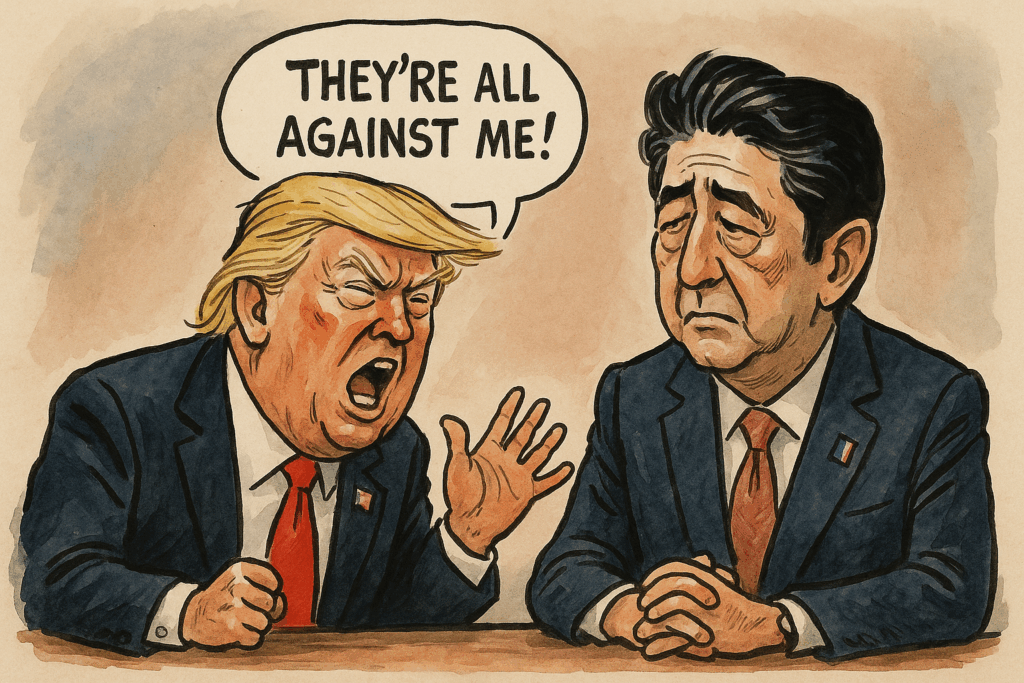
Tariff issues are not merely trade frictions. They are a major question of Japan’s economic backbone and the country’s negotiating power. Negotiation is not about compromise; it is an act of facing national interests with strategy.
I have long argued that all ministers in the administration should join forces and negotiate together. Moreover, proposals such as “emergency import of 1 million tons of rice” at the start of negotiations symbolize this. Whether it is the best policy or not,preparing the materials and attitude necessary for negotiation is the essence of diplomacy.
There are negotiation materials in multiple aspects of the Japan-U.S. relationship—economy, security, technology, etc. A government that does not utilize them, stays idle, and delays further has no qualification to negotiate.
We would like to see a prompt transition to an effective negotiation-ready framework.