
Stockpiled Pearl Rice 5kg for 3,500 yen! While Minister of Agriculture Eto says "I have never bought it," the government supposedly makes a huge profit of 24.5 billion yen behind the scenes!?
From 2024 to 2025, Japan is experiencing an unprecedented surge in rice prices. This situation, dubbed “the Rice Panic of Reiwa,” was triggered by overlapping factors such as delays in the government's release of reserve rice. Of particular note is the claim that the JA Zen-Noh brand “Pearl Rice” is circulating as reserve rice. It may look cheaper than the market average, but it has risen sharply compared to a year ago. We will verify the plausibility of Pearl Rice being reserve rice and the reasonableness of its price by comparing it with government wholesale prices and actual market prices.
■ Additional Articles
・Who toppled Abe administration’s “aggressive agriculture”? Abolition of production adjustment policies and resistance from the agricultural and fisheries sector(2025/06/05)
Outcry over Minister Taku Eto’s Remarks
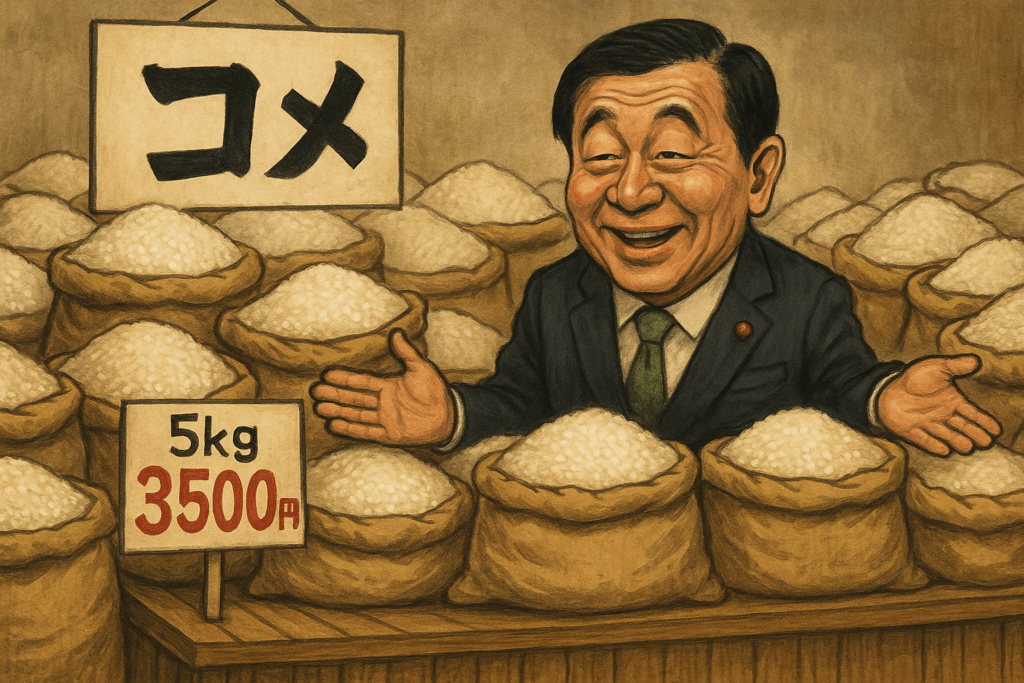
Minister of Agriculture, Forestry and Fisheries Takumi Eto stated on May 18, 2025, at a political fundraiser for the Liberal Democratic Party in Saga Prefecture, “I have never bought rice. I receive a lot from supporters, so I have plenty to sell.” This remark drew sharp criticism for diverging from consumer perception amid rising rice prices.
On the 19th, Minister Eto held a press conference to explain, stating, “In reality I regularly purchase rice,” admitting the statement was not accurate. He noted an intention to promote brown rice distribution, but said the phrase “there is more to sell” was inappropriate and initially limited himself to a “correction” of the remark, later issuing a full withdrawal and apology.
Meeting with Prime Minister Ishiba and Reactions Thereafter
After meeting with Prime Minister Ishiba, Eto said he acknowledged insufficient consideration for consumers and producers and was harshly criticized. He stated his intention to continue in office as minister and to fulfill responsibilities through results.
Meanwhile, on social media there were many voices saying, “Cannot accept the commoner’s sense of not being able to buy at 4,000 yen for 5 kg” and “inappropriate for a minister,” further eroding trust in agricultural policy as a whole.
Additionally, calls increased to reexamine the Ministry of Agriculture, Forestry and Fisheries’ response and the approach to the production adjustment policy, raising interest in structural challenges. Reports already indicatea dismissalhas occurred, and there is little doubt that this remark symbolized public discontent.
Are Reserve Rice Prices Truly Reasonable?
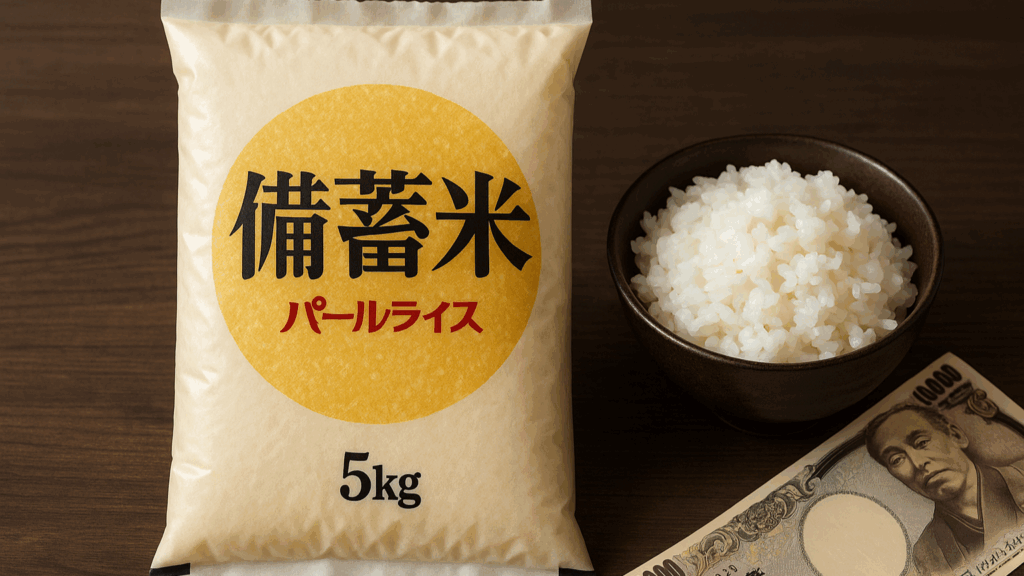
Although the market release of reserve rice began in March 2025, prices remain high.In this context, the Pearl Rice brand from JA Zen-Noh is drawing attention as possibly being reserve rice.“Pearl Rice” is typically sold as a blend using domestic rice, but it is now being pointed out that it is highly likely circulating as reserve rice. In particular, a price around 3,500 yen for 5 kg is cheaper than the usual rice price of about 4,300–4,600 yen, aligning with reserve rice price levels. JA Zen-Noh won 94% of reserve rice at government auctions, most of which is believed to be supplied to the market under the “Pearl Rice” brand.
In fact, online shops list “Pearl Rice 5 kg” for 3,350 yen before tax, and consumer reports share information such as “store clerk described it as reserve rice” and “about 1,000 yen cheaper than regular rice.” However, since “Pearl Rice” is a brand used for regular rice as well, it is not possible to make a definitive conclusion unless the packaging indicates year of harvest or reserve rice status.
Price Gap and Effects Between Reserve Rice and Regular Rice
Historically, wholesale rice prices are the prices at which shipment organizations such as JA Zen-Noh sell to wholesalers, and vary by region, variety, and year. According to the Ministry of Agriculture, Forestry and Fisheries data, the average brand price is about 14,000–15,000 yen per 60 kg of unhusked brown rice, with prices rising last year due to poor harvests from heat waves.
On the other hand, reserve rice that was first fully released in 2025 had an average winning price of 21,926 yen per 60 kg of unhusked brown rice, with most purchases by JA Zen-Noh and others at this price.
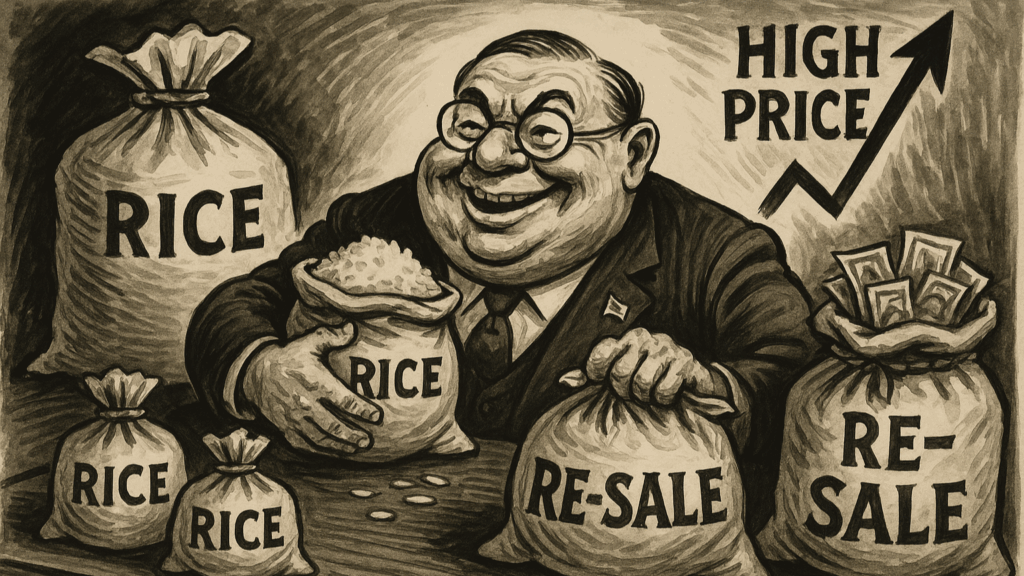
In other words,reserve rice in 2025 was substantially more expensive than regular rice, and the price-stabilizing effect of government releases was limited.The market release volume of reserve rice was small, and the actual impact on prices is limited; its effect depends on future distribution volumes and government sales policies.
Estimating Reserve Rice Profits
Reserve rice is rice harvested in prior years that is stored, and released as reserve rice at prices based on past transaction prices. In other words, even though it could have been shipped at the past transaction price, it was sold at a high price. We will compare typical transaction prices with the current reserve rice price to estimate the profit.
Below are the assumptions and calculation steps.
Assumptions for the Calculation
・Selling price (2025 reserve rice):Approximately 22,000 yen/60 kg
・Acquisition price (typical average price of previous years):Approximately 15,000 yen/60 kg
・Sales volume:210,000 tons. March trading volume.
Calculation Procedure
・Selling price per kilogram: 22,000 yen ÷ 60 kg ≈ 366.674 yen
・Acquisition price per kilogram: 15,000 yen ÷ 60 kg ≈ 250.005 yen
・Gross profit per kilogram: 366.674 yen − 250.005 yen = 116.669 yen
=> Net profit: 116.669 yen × 210,000 tons = about 24,549,000,000 yen
Thus, the wholesale price profit amounts to 245.49 billion yen.
However, this figure is an estimate; reserve rice storage is reportedly costly at several thousand yen per ton per year, so actual profit may be eroded when considering storage costs. Also, reserve rice may include multiple harvest years such as 2021 or 2023; since purchase price and storage duration vary by harvest year, profit margins may vary.
Re-examining Pearl Rice Price
As of April 2025, Pearl Rice 5 kg at about 3,500 yen is cheaper than other products at 4,200 yen for 5 kg, but remains considerably higher than the market price of about 2,000 yen for 5 kg in April 2024. If the government had purchased reserve rice at the earlier price of 15,000 yen and wholesaled it to Zen-Noh, shelf prices could have been kept lower, perhaps?
Background and Current Price Structure
- 2025
- Government sale price: about 22,000 yen/60 kg,
- In-store price: about 3,500 yen for 5 kg
- Typical year prices
- Wholesale price: about 15,000 yen/60 kg
- Market price: about 2,000 yen for 5 kg
Pearl Rice 3,500 yen Estimate
This year’s winning price increase rate:22,000 yen ÷ 15,000 yen = about 1.47 times
→ If shelf prices simply move in tandem: 2,000 yen × 1.47 ≈2,933 yen
Considering rising costs such as fuel, manpower, and electricity from 2024 to 2025, if the winning price rose from 15,000 yen to 22,000 yen by about 1.47 times, it would be reasonably consistent that shelf prices rise from 2,000 yen to about 3,000–3,500 yen.
Therefore, according to this estimate, if sold at usual year prices or if shipped to Zen-Noh at purchase price, the shelf price would be around 2,000 yen; the current 3,500 yen price results from the government’s sale price setting of about 22,000 yen/60 kg. If traded at ordinary year prices, even with inflationary pressures, the price in stores could have been aroundapproximately 2,500 yen.
Agricultural Policy Challenges and Consumer Perception Gap
The price of staple rice is something farmers and consumers have little direct control over, and price surges directly affect people’s lives. This rice panic is not merely a temporary price fluctuation; it is the result of long-standing missteps, the failures and misperceptions of those responsible, and perhaps misguided privilege attitudes.
The administrative agencies, bureaucrats, and industry groups involved in agricultural policy should support farmers’ sustainability and control markets. In reality, rather than protecting farmers, maintaining vested interests has often taken precedence, leaving the market realities and consumer voices behind.
Why would the government seek profit even from reserve rice releases? Why would a Minister of Agriculture say things that are hard to accept as recognizing the issues? It is an unsatisfactory situation.
Policy Direction Needed Amid Rising Rice Prices
If we leave the structure of rising rice prices unaddressed, domestic rice reliance could further erode, and increased imports of foreign rice could undermine Japan’s long-term agricultural competitiveness. In current price conditions, even high tariffs often make importing foreign rice cheaper for retailers than buying domestic rice.
As a result, overseas rice products are more visible in retail, priced about 20% cheaper than domestic rice. Yet, since retailers can still maintain some profit margins, domestic rice pricing remains at a disadvantage in terms of price competitiveness.
With these challenges in view, what is required is listening to on-the-ground voices, properly valuing farmers’ efforts, and appointing people who can design sustainable policies. The focus should be on farmers’ futures and Japan’s food future, not protecting vested interests.