

Minister Akazawa and President Trump's Negotiation Strategy — Gaining the Upper Hand in Tariff Talks with “1 Million Tons of Rice”
President Trump may have chosen Japan as the gateway. The world is watching Japan's leadership in tariff negotiations. What kind of demands did Prime Minister Akazawa convey to President Trump to showcase results to the American people? A scheme to create ‘visible成果’ for both sides is already in motion. What is the true aim behind this diplomatic show? Let us think about it.
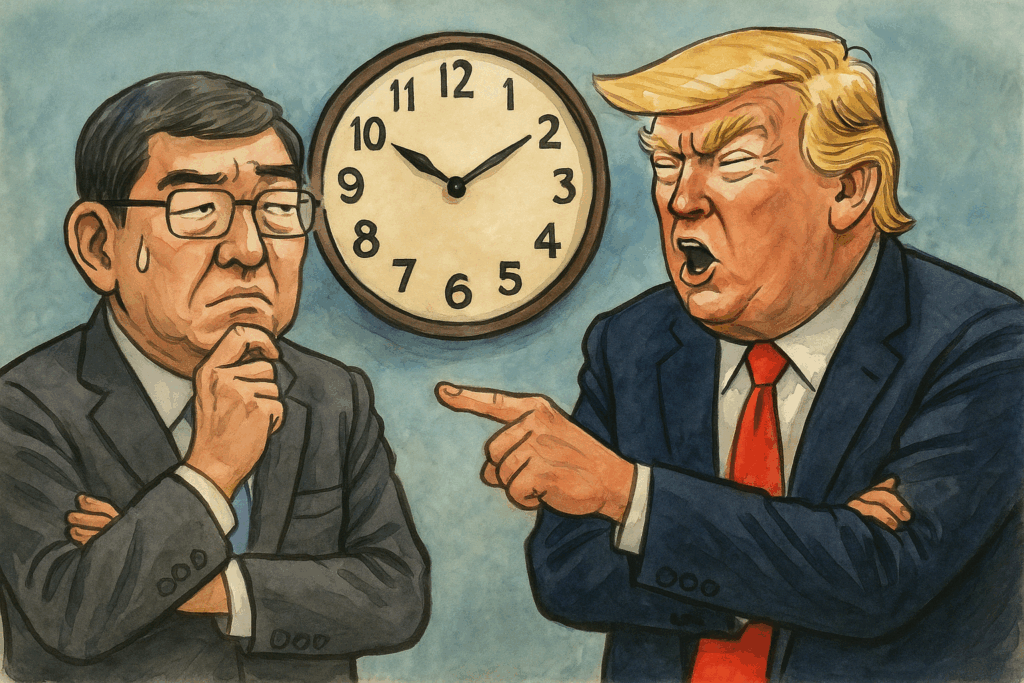
Trump Wants Results
In 2025, four months have passed since President Trump’s reappointment. Internationally, he is negotiating on multiple fronts including Ukraine, Gaza, the EU, and China, but there have been no notable成果. Amidst this, Akazawa, Japan’s Minister for Economic Regeneration, visited the United States unusually early and held a direct meeting with Trump. It is understood that Akazawa, whom the U.S. would consider junior, was granted a meeting time, and there are indications of a planned return visit within this month, suggesting that the United States desires early成果.
Akazawa’s US Visit and Trump’s Reaction
Minister Akazawa Ryomasa (Akazawa Akihiro) of Economic Regeneration visited the U.S. in mid-April 2025, held talks with American government officials, and also met with President Trump. The main purpose of the visit was to discuss strengthening economic ties between Japan and the United States, tariff policy, supply chain resilience, and energy cooperation.
President Trump, intent on orchestrating this meeting as a clear成果 of his administration’s comeback, spoke of “Japan’s cooperation at an all-time high” while refraining from disclosing details at the press conference, signaling a pressure through silence. This is interpreted as groundwork to elicit visible concessions from Japan in future negotiations.
Trump’s Aims
Trump seeks成果 that are visible to the public. In particular, serves to appeal to his base—“forgotten people”—in areas like employment, agriculture, and trade. Therefore, in negotiations with Japan, he needs to extract visible concessions and advertise them as成果 on a grand scale.
Industries Belonging to Forgotten People
The “forgotten people” Trump is keenly aware of concentrate in certain industries. Examples include steel and aluminum in the Rust Belt and workers in auto parts, Midwestern agricultural workers, coal-related industries that have lost standing amid energy transition, and local manufacturing dependent on defense spending.
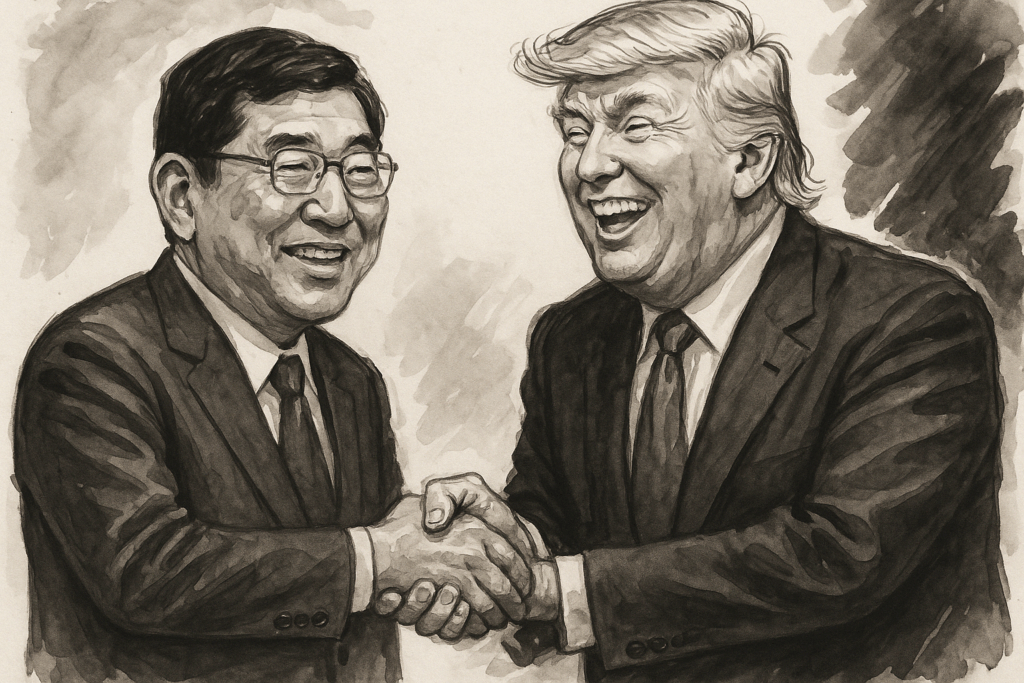
Concessions Realizable in the Short Term
With this backdrop, Japan has concrete options for concessions that can be implemented in a short period. One option is an emergency expansion of imports of grains like corn and soybeans. Immediate contractual execution is possible and would create a performative effect by supporting American farmers.
Allowing imports of U.S.-made rice or increasing quotas is also a practical option. Japan currently faces a rice shortage domestically, and leveraging this situation could trigger speculative stock sales, stabilize prices, and directly impact inflation countermeasures. There is also a political benefit in advancing agricultural policy revisions without making them conspicuously apparent.
Value as a Diplomatic Show
For instance, if a scenario were staged where 1 million tons of rice were contracted for immediate procurement, President Trump would likely promote a message to U.S. media such as “Japan is a wise partner,” “We saved farmers,” and “Shipped in 72 hours.” If such rapid, impactful figures can be broadcast worldwide, it would put pressure on other negotiating countries to follow suit.
Domestically, stabilized rice prices would help curb inflation and support the administration’s popularity. Additionally, portraying Japan as the first to concede would strengthen Japan’s bargaining position in future talks with the United States.
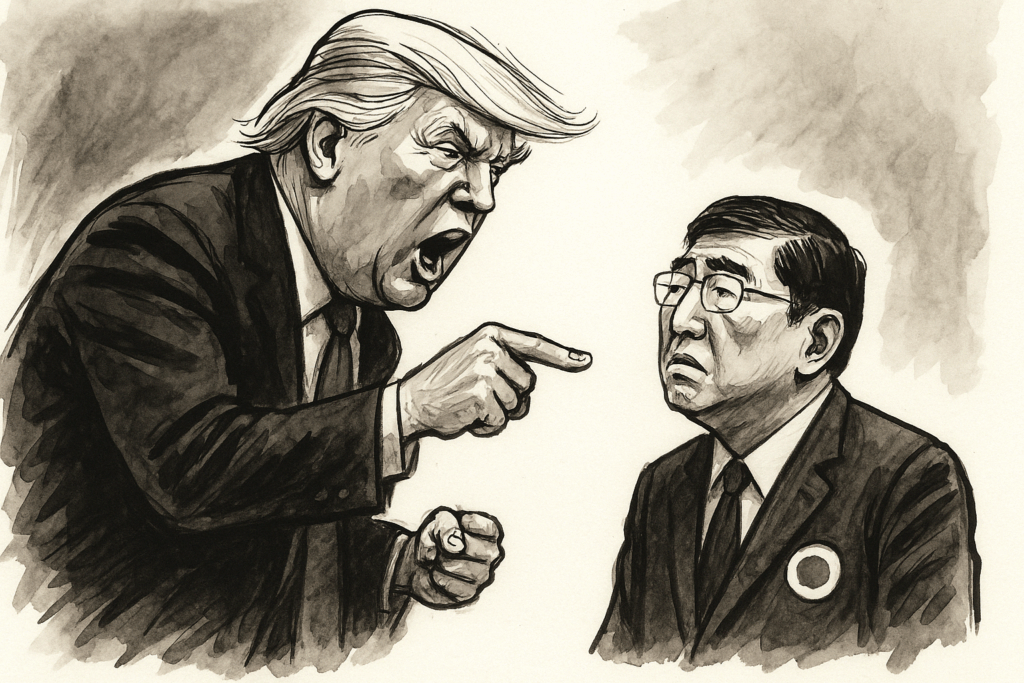
The Greatest Concern Is the Ishiba Administration
Nevertheless, despite these feasible scenarios, the response of Prime Minister Ishiba is a concern. Ishiba is known to be pro-China, and if China pressures him with warnings like “don’t bow to Trump,” he might delay decisions or keep negotiations ambiguous.
Delays in Decision-Making Could Miss Opportunities
In negotiations where speed determines outcomes, delaying decisions equates to losing成果. Given Akazawa’s stated return visit within this month, it is clear that swift action is required. If a resolution cannot be reached here, the diplomatic impact may weaken, jeopardizing a valuable opportunity.
Perhaps Trump’s meeting with Akazawa signals a message that speed and impact will be prioritized.
For components or weapons manufactured in the United States that are likely to take time, a joint statement announcing future orders could serve as a meaningful diplomatic成果. Pre-orders for EV-related parts could balance demonstration effect with practical gains.
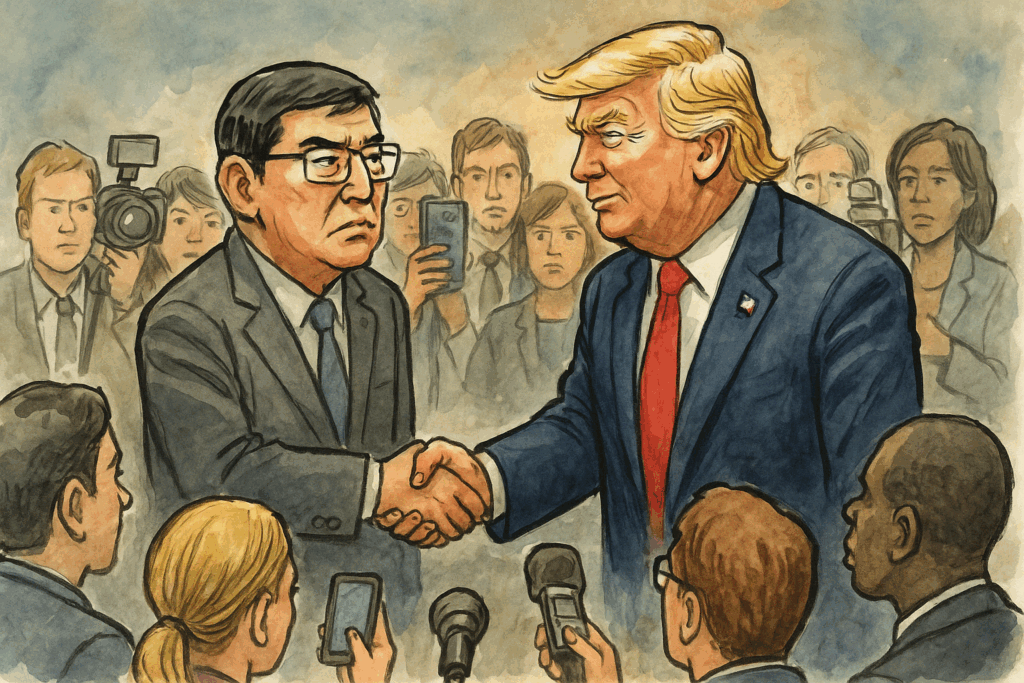
This Tariff Negotiation Is Also an Opportunity
This tariff deal is one of the few opportunities where diplomacy and domestic interests can be aligned, with the added merit of being implementable in the short term. For example, large purchases of rice or corn would align with Trump’s scenario of supporting American farmers while domestically contributing to price stabilization and adjustments to agricultural policy.
If this scenario is the result of thorough preparation by both sides’ administrations, it could be considered a strategically planned stage setup. It would be desirable for Japan to seize this timing with clear action to maximize the display of Trump administration’s “initial成果.”