

The True Meaning of the 90-Day Tariff Freeze: A “Face-saving Trap” that Isolates a Confident China
The United States suddenly announced a 90-day pause on the Trump tariffs. This move affects not only financial markets and fiscal policy but also China, which retaliated by expanding tariffs, ultimately targeting additional tariffs as well. It’s a point of no return—the “face-saving trap.” We will examine the background of this strategic chess game involving global markets.
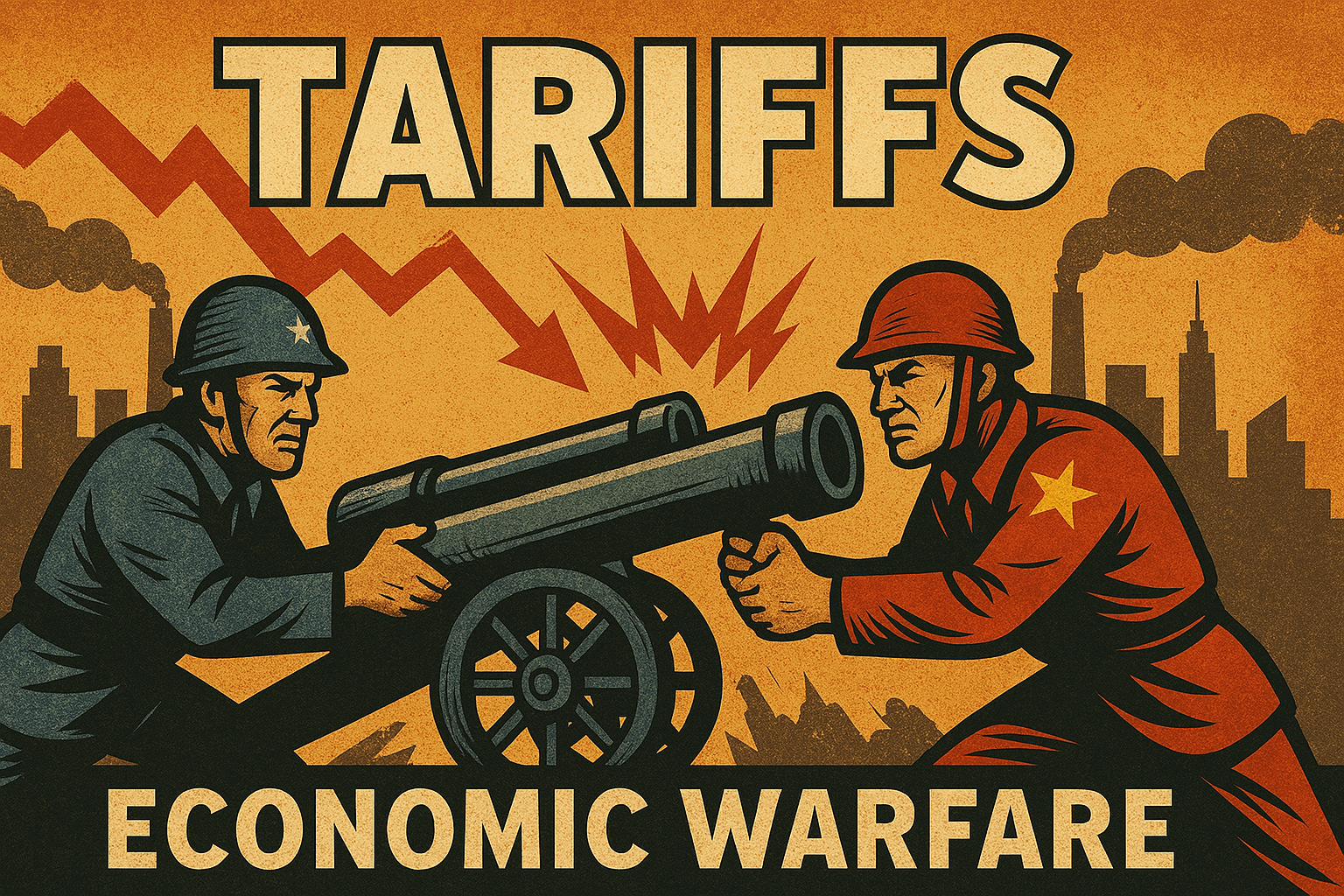
Why did the tariffs stop suddenly?
On April 9, 2025, the Trump administration suddenly announced a 90-day halt on the additional tariffs. However, China, which retaliated, continued to announce further tariff increases, causing significant ripple effects in markets and media. Behind the pretext of “a pause for negotiations,” there may be deeper factors at play. The decision reflected a rebalancing of economic policy, with the actual influence likely stemming from a sharp rise in the 10-year U.S. Treasury yield.
Market reactions and the surge in the 10-year yield
When high tariffs are imposed, investors expect prices to rise, i.e., inflation to advance, and begin selling government bonds. As bonds are sold, prices fall and yields rise. The 10-year U.S. Treasury yield surged, causing market confusion. Rising rates ripple through mortgage payments, corporate borrowing costs, and hurt stock prices.
Impact on the budget and policy adjustments
More importantly, the government’s interest payments on its debt would rise sharply. With a budget deficit exceeding $1 trillion, rising interest rates pose a major risk to fiscal management. The Trump administration likely viewed this “interest-rate shock” with strong caution and tried to stabilize financial markets by announcing a 90-day halt on tariffs.
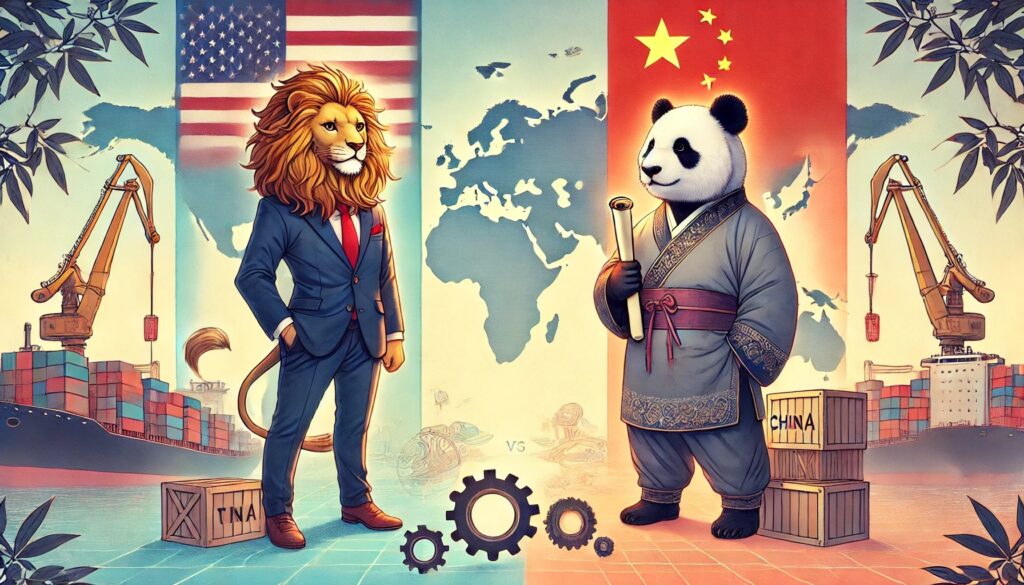
China’s retaliation and the inescapable structure
China promptly announced retaliatory tariffs. Domestically, this approach received broad support, with many interviews stating “retaliation is natural.” Yet here lies China’s distinctive “inescapable structure.”
China’s culture of prioritizing face
China places great importance on “face.” Under the Xi Jinping administration, concessions in diplomacy are seen as damaging the Communist Party’s prestige and domestic governance risk. Once a posture is raised, lowering it becomes difficult, leading to a self-reinforcing cycle of countermeasures and escalations.
The deepening trap of tariffs and inescapability
In this context, the Trump administration implemented additional tariffs exceeding 100%, pushing China into an ever more inescapable position. To preserve face, China felt compelled to respond in tandem with U.S. tariff increases.
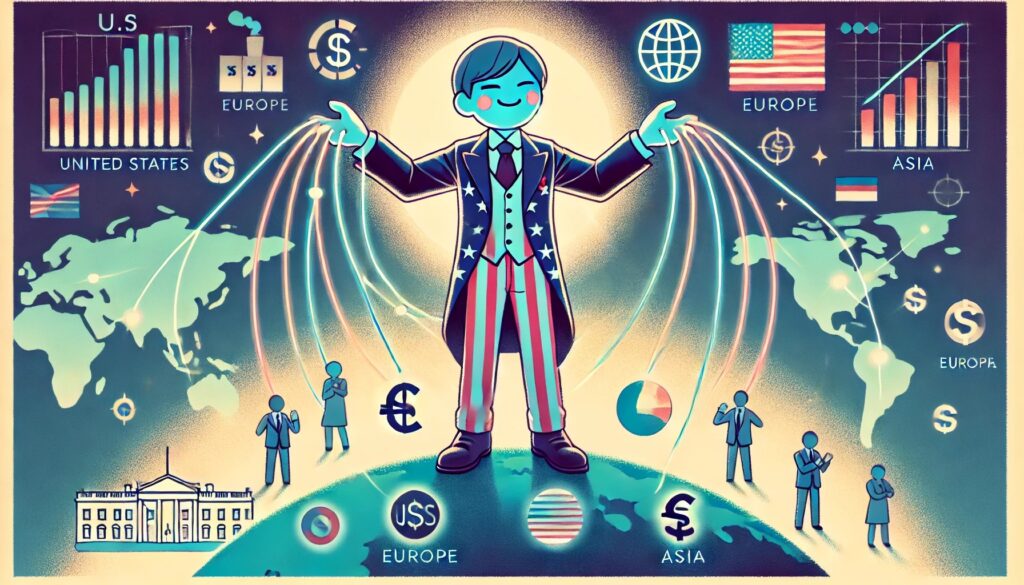
Movements by countries and China’s isolation
Japan quickly had Prime Minister Kishida hold a phone call with President Trump. Although it was largely a message transmission, Treasury Secretary Steven Mnuchin suggested Japan could gain an advantage by starting talks early, and reports followed that nearly 70 countries and regions were seeking negotiations with the United States over tariffs.
Japan’s stance and the potential for propaganda
This may have been used as propaganda to give the impression that the United States offered room for negotiation, allowing Japan to actively engage in talks and potentially gain an edge. Despite Japan’s perceived decline amid a weak yen, it remains an economic powerhouse globally, and it’s possible others followed its lead. If this was a plan between the Trump administration and the Kishida administration, it could be somewhat defensible, but in reality Japan may have simply been drawn into the strategy.
International reaction and China’s isolation
What’s interesting is how other major countries engaged in this U.S.–China tariff war. Initially, China may have expected many countries to oppose the U.S. approach and retaliate. However, many countries leaned toward the United States, leaving China increasingly in an “one-to-many” dynamic and internationally isolated. This could be seen as a strategic victory for the Trump administration.
Who wins in this economic war?
This sequence of moves extends beyond tariffs and trade negotiations; it weaves together culture, political systems, public opinion, and financial market reactions in a complex psychological battle. The Trump administration pursued a distinctive style: “impose tariffs first, then adjust based on responses.” By leveraging China’s face, it pushed China into an inescapable position and managed to isolate it internationally.
A battle beyond the framework
The essence of this conflict was not merely economic indicators or numbers. It was the formation of a global power structure and how perceptions were manipulated—an advanced information and psychological warfare arena. Labeled as a tariff war, this sequence of actions unfolded on the real market stage and extended beyond conventional trade negotiations into a real-world economic war.
Moreover, it was launched without prior warnings, and policy adjustments followed as results emerged. It behaved like an experimental approach to shake the world economy, with an unpredictability that may continue in the future.
The ongoing “Trump Show”
More importantly, we remain trapped in the “Trump show.” This arrangement is not just policy; it is a theater-style politics emanating from the presence of Trump himself. We must not forget that.
This upheaval has caused global stock markets to swing wildly. Whether you view it as risk or opportunity is up to you, but regardless, one must understand the factors driving these fluctuations and approach trading calmly and prudently.
Practice and verify freely with the completely risk-free trade simulator!
Details page for One-Click FX Training MAX