

Trading should be scientific
------------------------------------------------
Empathy level 99.9%!
What is the FX manga that's trending now??
↓
------------------------------------------------
◆Preface◆
The trading strategy I advocate is
“scientific trading”
.
”Scientific Trading”is
a trading method proven to be effective by probability statistics
..
There are innumerable trading methods claimed in the world
and it is hardly an overstatement to say that
many people
are working on various methods.
Among them,
there is a fear shared by an overwhelming majority of people.
That is,
“whether the method currently being used actually has an edge”
.
That anxiety can be resolved by clearing the perspective of
“scientific trading”
.
Many traders,
“engage in non-scientific trading methods”
and struggle with it.
Even if they win temporarily with that method,
they fear and worry as soon as the performance falters,
and they worry again.
The reason for this loop is
precisely
“non-scientific trading methods”
.
“If you think you might be in that category”
then
I highly recommend this article^^
◆Name of “Scientific Trading”◆

“Scientific Trading”was a naming coined by Takahashi, who has now become part of our education content production staff.
I really like it^^
I myself,
“Trading should be scientific”
“Non-scientific trading methods are dangerous”
is a line of argument I often present in the media, and this naming serves to unify those ideas!
By the way, Takahashi also hosts the FX Radio program
“Ryusei’s Steady FX Talk”
with me^^
Takahashi was originally my consulting student, but now he is a core trading researcher.
Because of that, I can entrust him with producing educational content for consulting.
He makes frequent appearances on my media, and
look forward to Takahashi’s future activities♪
◆What is Scientific Trading…◆

Now then, let’s get to the main topic.
I
“define as trading methods with long-term statistical edge proven from probability statistics”
.
This is what I call
“Scientific Trading.”
If the trading method is based on technical analysis, it can be automated (EAed) and subjected to precise backtesting to exhaustively examine the strategy’s potential.
We investigate whether the strategy can survive long-term market volatility and still profit,and we also scrutinize risks (drawdown) and the magnitude of returns..
In FX trading,it is commonplace to be guided by probability statistics..
However,establishing a method that is truly long-term effective based on probability statistics is very challenging.
- A method that seems promising
- A method that is currently profitable
Even if it works in the short term, turning it into an EA often yields much harsher long-term results.
Even if you win visually, automating it may produce drastically different results.
That’s something I can say from experience.
It’s a true non-fiction story (lol)
◆Non-scientific Trading Makes “Proper Verification” Impossible◆
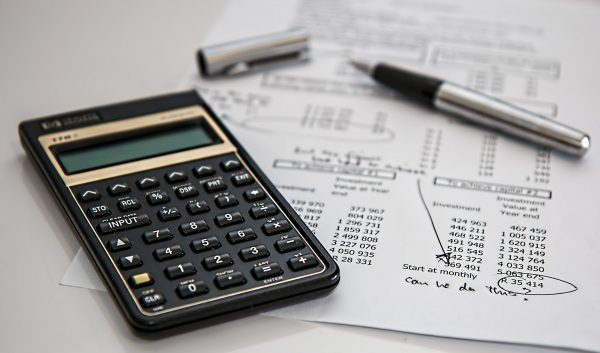
To accurately measure the probability statistics of the trading method itself,
“proper verification”
is required, but
“intuition and hunch”are involved in discretionary trading, so proper verification is not possible, thus I believe it’s difficult to certify a probability-based trading method.
Many people worry and waste effort on such “non-scientific trading.”
Clearly,“Scientific Trading”relies on a mechanized trading (system trading) premise.
In other words, it means a method that can be EA’d.
“A completely automated method with long-term statistical edge proven”
.
If you can establish“proper verification”in discretionary trading, that’s fine, but as long as intuition and feeling are involved, true verification is difficult.
A method that is built on proper verification is one where“almost everyone would obtain the same results”.
(Of course, differences in broker quote rates for buy/sell are excluded.)
If any sense or hunch is involved, thenit’s almost impossible for everyone to obtain the same results.
Even if a verification shows low errors, it’s just one person’s result, and others trying the method will inevitably have lower reproducibility.
Even in expensive discretionary trading schools, the reason students can barely reflect the instructor’s performance is the
“low reproducibility due to non-scientific trading”
itself.
◆Discretionary Trading vs. System Trading◆
However,
“If it’s mechanized trading, it must have edge”
is not necessarily true.
EA that runs on MT4 is mechanical (system) trading, but that doesn’t mean all EAs have edge.
In fact,many EAs are poorly developed, which is why system trading is often criticized.
Moreover,many Japanese people prefer discretionary trading
and thus there are many who criticize system trading (haha).
Among them, there are many misunderstandings about system trading, typically the following misunderstandings:
■ Misconceptions about System Trading from Discretionary Traders① “System trading can only show edge if you fine-tune to market conditions”
Even among detractors of system trading, there are many renowned foreign traders who use system trading, and seem to acknowledge this fact.
Among such people, they say
“System trading can only show edge if you fine-tune to market conditions”
.
That kind of rhetoric is commonly heard.
But I think that is a misunderstanding.
First of all, system trading is not about making fine adjustments to market conditions.“Once a trading rule is proven to have edge, you must not tweak it midway”
I see it that way.
If you need to change parameters to fit the market, then that becomessemi-discretionary trading.
That would undermine the probabilistic-statistical basis and drift away from what I advocate as“scientific trading”.
If market conditions change, you could incorporate rules that adjust fine-logic parameters into the system as well.
If you must judge that with discretion, the essence of system trading disappears.
A superior system trader pursues a fixed, steady strategy that does not change parameters midway, from a scientific perspective.
They develop several strategies that fit those conditions and use them as a portfolio to stabilize overall performance.
Among such people, do you think they adjust and tinker with parameters as market conditions change?
Adjusting strategy parameters during development should be finished before deployment.
■ Misconceptions about System Trading from Discretionary Traders② “Trading programs cannot compete with the human brain”
“Trading programs cannot beat the human brain”
is another common claim.
This is highly questionable (haha).
Even if you have a brilliant brain and can use fuzzy logic that computers cannot, the future of the market is unknown to anyone.
In fact, this fuzzy aspect of discretionary trading is often the go-to topic for many trading schools.
“If you can’t win, it’s because your market sense or discretion is inferior.”
This can be used as an escape clause, and legally it is not fraud even if there is malice.
In markets, nothing is more unreliable than the human brain.
In short, whether it’s the human brain or mechanized trading, the foundation of the method matters.
“whether the human brain outperforms mechanized trading is a trivial debate.”
.
■ Misconceptions about System Trading from Discretionary Traders③ “System trading yields low returns”
Discretionary trading often promises unusually high returns.
From that perspectivesystem trading’s expected value may appear cloudy.
However, excellent system trading is built on long-term statistics, having fully accounted for risk, so returns are kept at appropriate levels.
Conversely, those promising high returns often do not fully account for risk patternsand are likely underestimating risk.
For example, if someone trades with their body and achieves 100% annual returnfor one year.
Then they might think
“I have grasped the universality of trading and doubled my funds in a year. At 30% annual return, I would be world-class, perhaps the best in the world!”
It’s understandable to think that.
“it’s only one year of victory.”
.
It’s common for strategies to fit the market and explode in profits, but the danger is“the assumed range is narrow.”.
Even a strategy with explosive profits may collapse in the next year under proper verification, and you may be trading confidently without knowing that.
If you think about that, you’ll understand the risk of a method that hasn’t been properly verified.
Regardless of method, I believe annualized return has universal meaning.
Why is earning 30% annually considered world-class for an investor?
There is a fairly deep world behind that,so be careful not to assume that high returns are universal proof of investment skill.
But with discretionary trading, you often only know the potential of the method within a limited range, so you have to rely on what you have personally experienced...
Even if a method is losing eventually, if you are winning now, you might think you will never lose.
On the flip side, this is very scary.
◆BBP will take responsibility as a scientific trading method◆

I take pride that BBP, my own trading method, possesses genuine edge.
That is, of course,“scientific trading method”and I bear responsibility for how it is used.
On that basis,“non-scientific trading”is basically not recognized.
That said, as I often say, I am not opposed to discretionary trading altogether.
In discretionary trading, if a method demonstrates edge under proper verification, it can be genuinely advantageous.
“Seems like it could win”
“Right now it’s winning”
so I want to sound a caution there.
If you’re unsure,“reconsider the perspective of scientific trading”.