
DAY 48: Week 7 Summary & Q&A
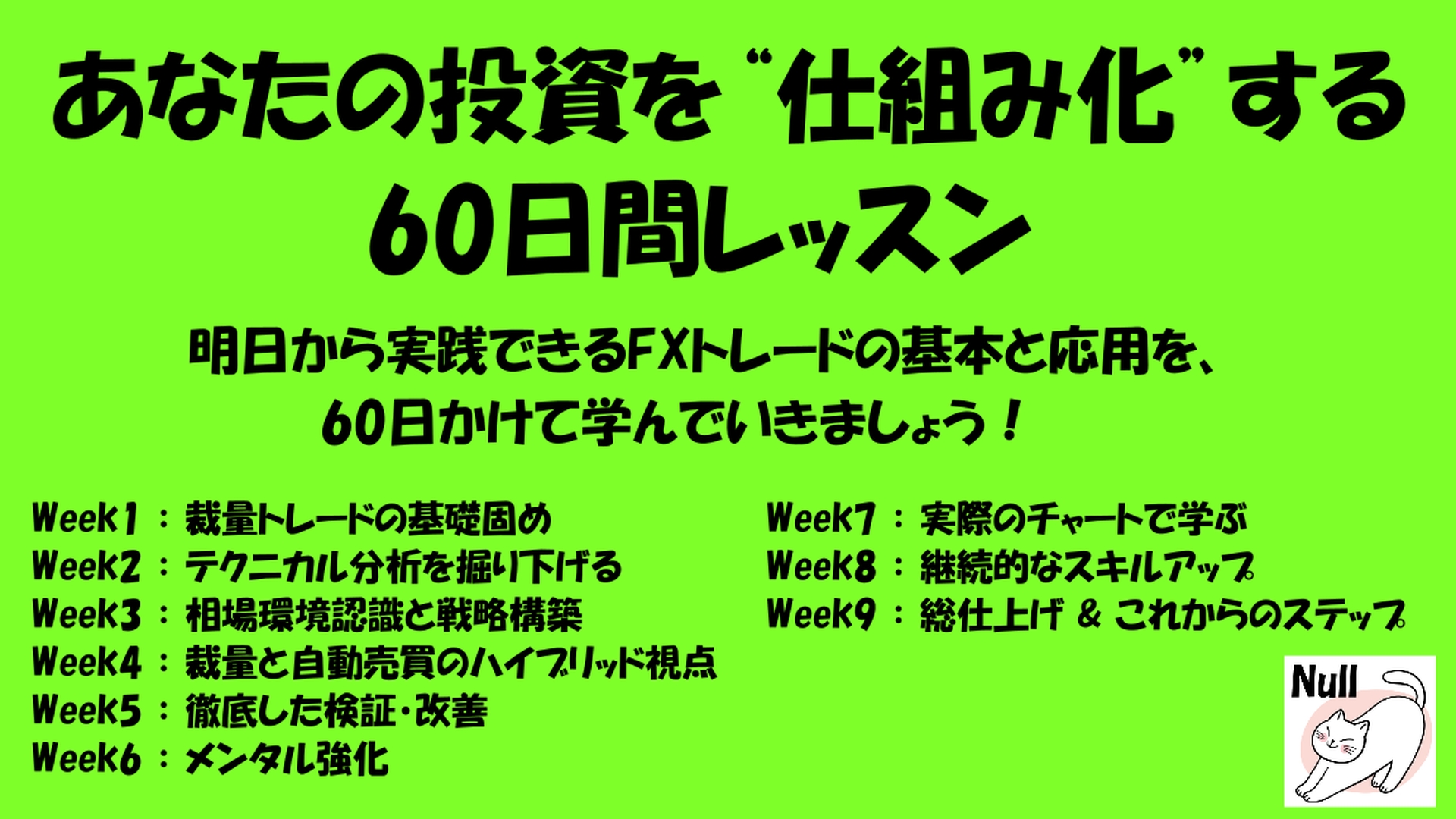
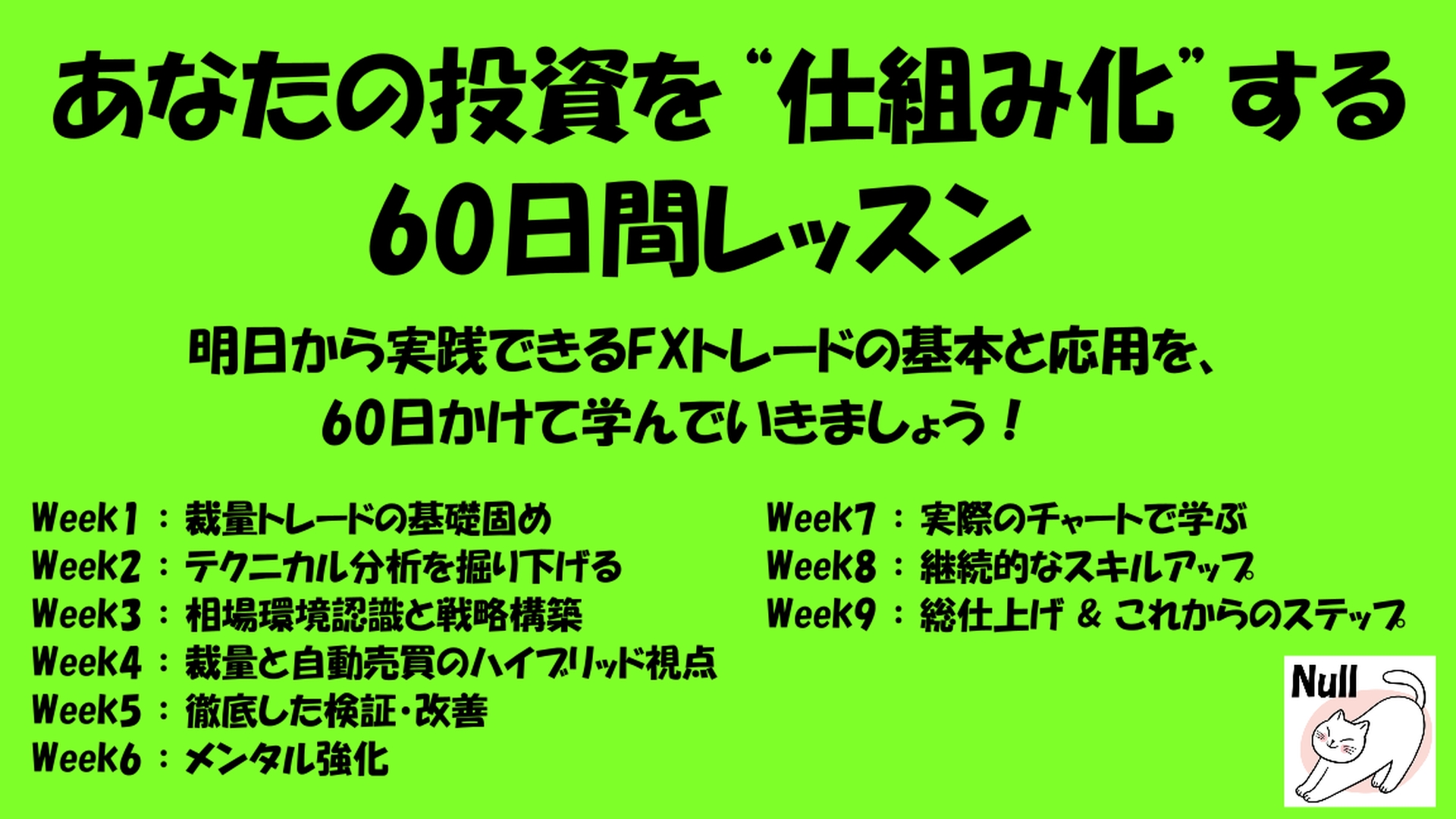
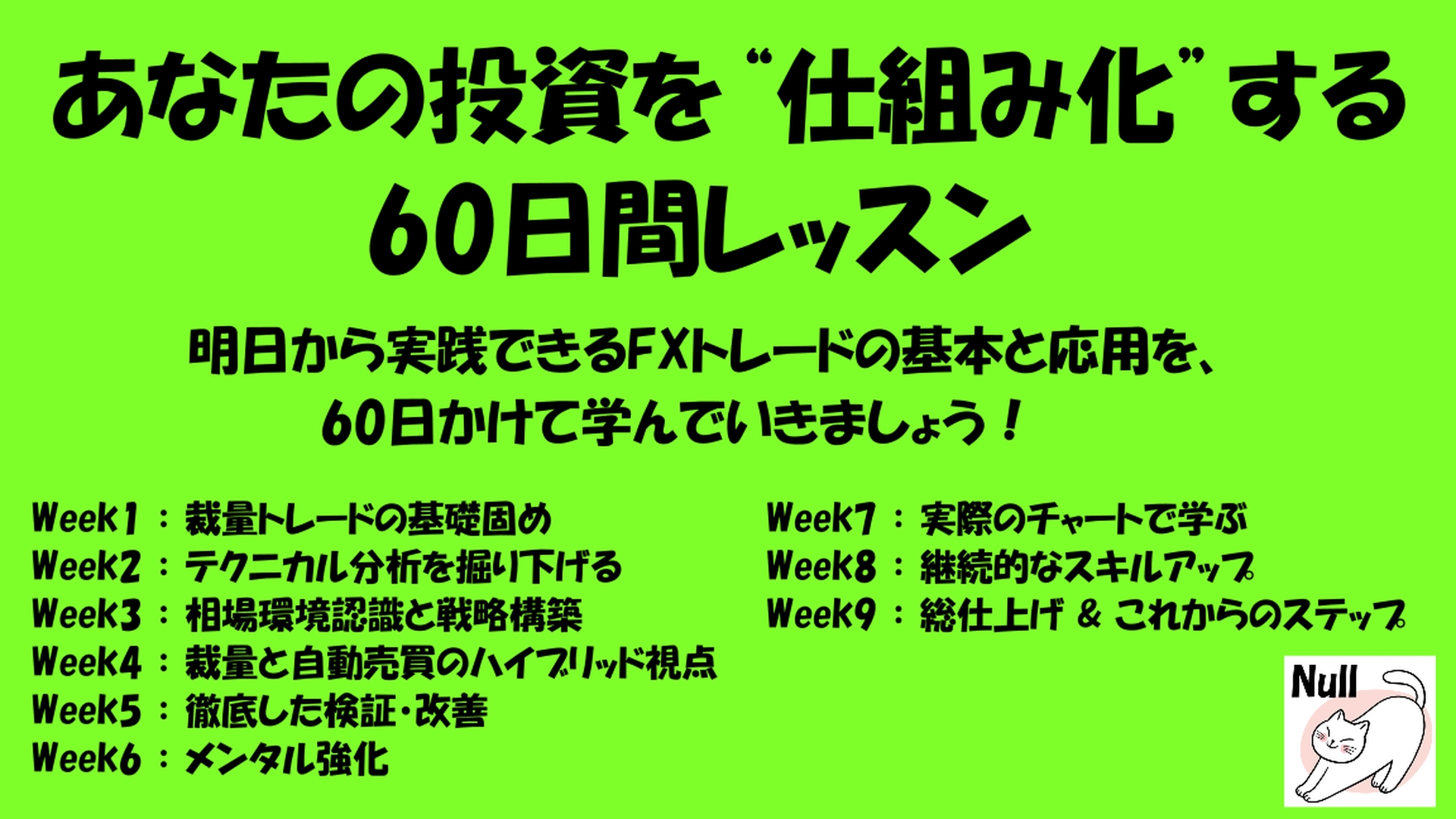
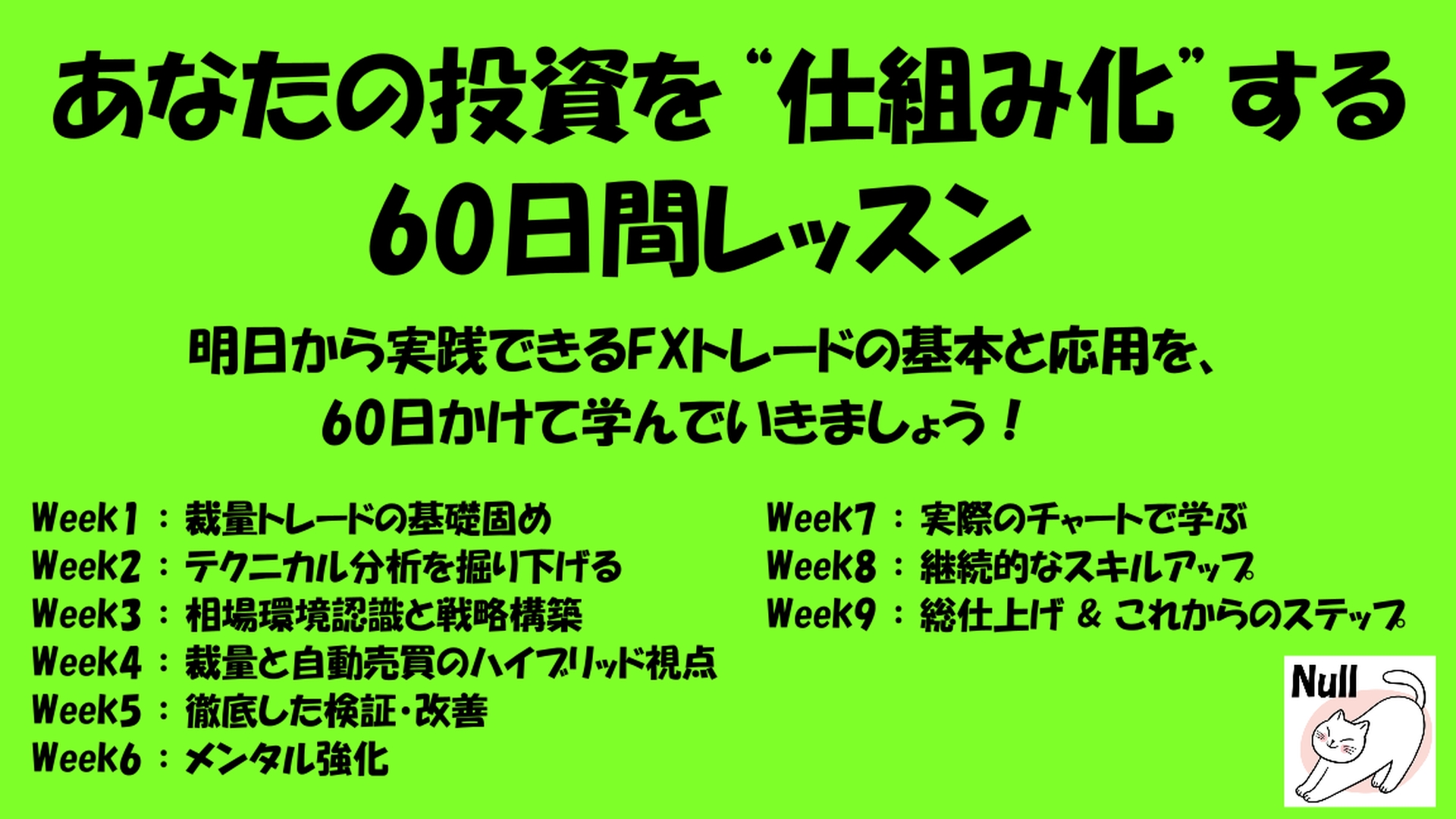
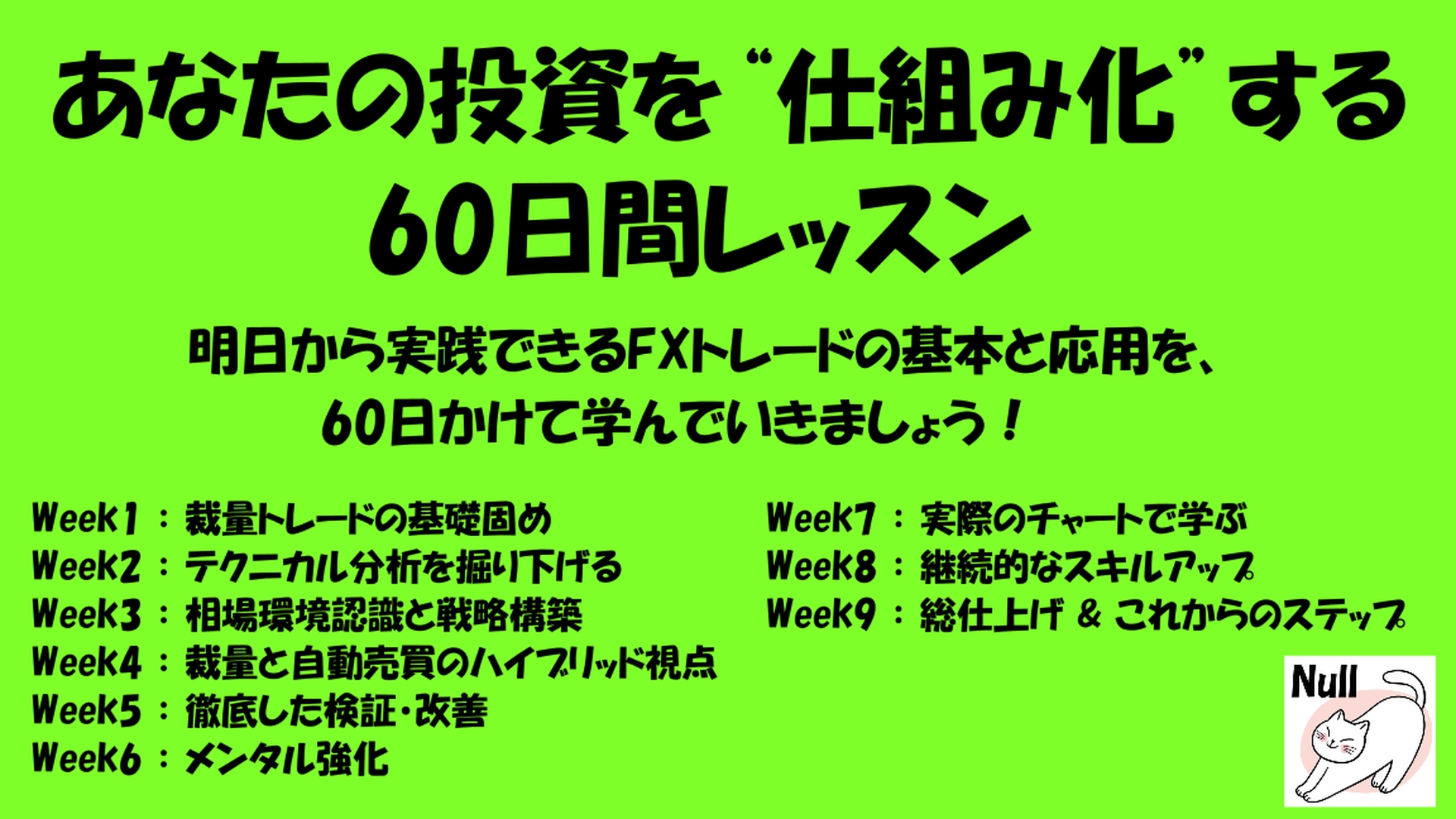
From DAY 43 to DAY 47,Week 7we have studied with the theme of “Market environment analysis and strategy fine-tuning.”
Originally, the plan was to handle actual chart case studies, but by shifting the perspective to “market environment × strategy implementation,”this week has deepened the know-how to adapt flexibly to a constantly changing market.Today, as a summary, we will整理 the main points and answer common questions. Looking back on what we’ve covered,
let’s solidify the steps to WEEK 8.
1. Overview of DAY 43–47
DAY 43: Understand the market environment and fine-tune the strategy
- Points:
- Identify whether the market is trending or ranging, whether volatility is high or low, and toggle various logics (EA/manual) on/off accordingly.
- Avoid making large rule changes at once; a safe approach is “small tweaks → re-evaluation” in a loop.
DAY 44: Read the market by blending technicals × fundamentals
- Points:
- Use technicals (MA, Bollinger, oscillators) to confirm price structure, and fundamentals (economic indicators, interest policy, risk factors) to seek the major direction and timing of changes.
- Using both together allows you to determine more accurately whether it’s a range or a trend and when it may move.
DAY 45: Fine-tune strategy by currency pair characteristics × time of day
- Points:
- Change your trading approach considering the currency and time-of-day fit (e.g., GBP/JPY tends to be active during London hours, EUR/USD during New York hours).
- Avoid forcing trades at times or with currencies that don’t fit the market—this is a major risk-avoiding measure.
DAY 46: Concrete examples of real-time strategy fine-tuning
- Points:
- Explain “on-site” decisions such as reacting to post-news breakouts, extending ranges, or emergency exits or ride-the-wave based on officials’ statements.
- Implement strategy tweaks gradually; avoid dramatically changing lots or the system all at once.
DAY 47: Managing multiple positions and correlation risk
- Points:
- When holding multiple positions, having correlated currencies in the same direction can concentrate risk.
- Use combinations like EA + discretion, cross-yen + USD/JPY etc., keep track of total risk, and apply ON/OFF or lot-size adjustments.
2. Key learnings from Week 7
-
Market environment is the key to strategy
- Even the best method has strengths and weaknesses depending on whether the market is trending or ranging.
- When the market changes, change the strategy—that is the hint for doing this naturally.
-
Trinity: Currency × Time of Day × Real-time information
- When you judge by combining currency pair characteristics (volatility, indicator impact), time-of-day characteristics (Asia/Europe/NY liquidity), and real-time indicator results/news,you can make proactive strategy adjustmentswith confidence.
-
Managing correlations among multiple positions
- Distribute risk by avoiding focusing all in one direction; use ON/OFF and adjust lot sizes to spread risk.
- Be mindful of overall risk (e.g., dollar-buying or yen-selling in the same direction) to avoid a large trend swing causing simultaneous losses.
-
PDCA of “small tweaks”
- Making big changes abruptly can lead to over-optimization and confusion.
- Observe market environment → tweak slightly → test and practice → readjust… this cycle tends to lead to stable results.
3. Frequently asked questions & answers
Q1: “Even when I feel the environment has changed and switch the strategy, it often ends up reverting due to a false signal …”
- A:
- When changes seem dubious,alter only a part of the positionor reduce the lot size and observe for safety.
- Set cautious steps such as “do not enter fully until a market-turning signal is confirmed.”
- Even if you get whipsawed, minimize damage with small lots and strict stop-loss rules.
Q2: “I monitor multiple currencies, but what should I do when they all move in tandem?”
- A:
- A simultaneous move suggests the market may be leaning strongly toward a dollar-buying or dollar-selling scenario.
- Be mindful of total lots across currency pairs; if one scenario fails, limit the overall loss.
- If you hold several currency pairs with high correlation,keep total lots to less than one pair’s amountto manage risk.
Q3: “Real-time対応 is busy; what should people do who can’t keep their PC attached due to work?”
- A:
- If you can’t switch frequently during work, design your strategy around swing or day trading and allow overnight positions.
- Use EA with “pre-indicator stop” features or remotely turn ON/OFF via smartphone to manage minimally.
- On days with high market volatility, avoid positions or limit to a subset as a pre-emptive measure.
Q4: “Where is the boundary between excessive adjustment and optimization?”
- A:
- When changing anything, check the results during the test period to see if improvements are evident.
- If you steadily lose and rush to overhaul the logic, you’ll fall into the optimization trap.
- A step-by-step approach—test a little, verify, and if okay, expand gradually—is important.
4. The role of Week 7 going forward and its connection to Week 8
-
WEEK 7 is about the practical ability to respond to market environments
- By combining technicals × fundamentals, analyzing time-of-day and currency pair characteristics, and managing multiple-position correlations,you develop the skill to adapt strategies in real markets.
- By this point, you should have formed an image of when to adjust lots or turn EA ON/OFF in various situations.
-
Flow toward final polish in WEEK 8
- Next week (WEEK 8), we plan to focus on risk management and overall consolidation. The aim is a complete trading framework that integrates what you’ve learned about validation, mindset, and market-environment response.
- For example, final portfolio design or annual operation planning, aiming for a longer-term trading system.
-
Review this week → prepare for WEEK 8
- As we covered daily, consider how you would apply “how to discern market environment” and “how to control total risk with multiple positions” to your own method to make WEEK 8 easier to understand.
5. Summary & future actions
Summary
- What was tackled in WEEK 7 (“Market environment analysis and strategy fine-tuning”):
- Currency pairs and time-of-day,Technicals and fundamentals,Real-time strategy switching,Multiple-position correlation risk.
- The idea that methods change with the market, i.e., a dynamic trading perspective, should have been formed.
- Answers to common questions:
- Connection to WEEK 8:
- After building practical adjustment skills,move to risk management and finalization in the final week (Week 8).
- When designing multi-year operation plans and continuing approaches, the dynamic responsiveness learned this time will form the foundation.
Action List
- Habit of reviewing market environments: Do technical × fundamentals checks daily/weekly and verify your strategy’s ON/OFF.
- Check total risk of multiple positions: Be mindful of correlations and view positions collectively.
- Integrate validation, mindset, and practice: Make moderate rule adjustments and run the PDCA cycle.
If you’re interested in automated trading, please also check the link below.
https://www.gogojungle.co.jp/users/147322/products
If this was helpful, please click “Read more.”
Thank you.