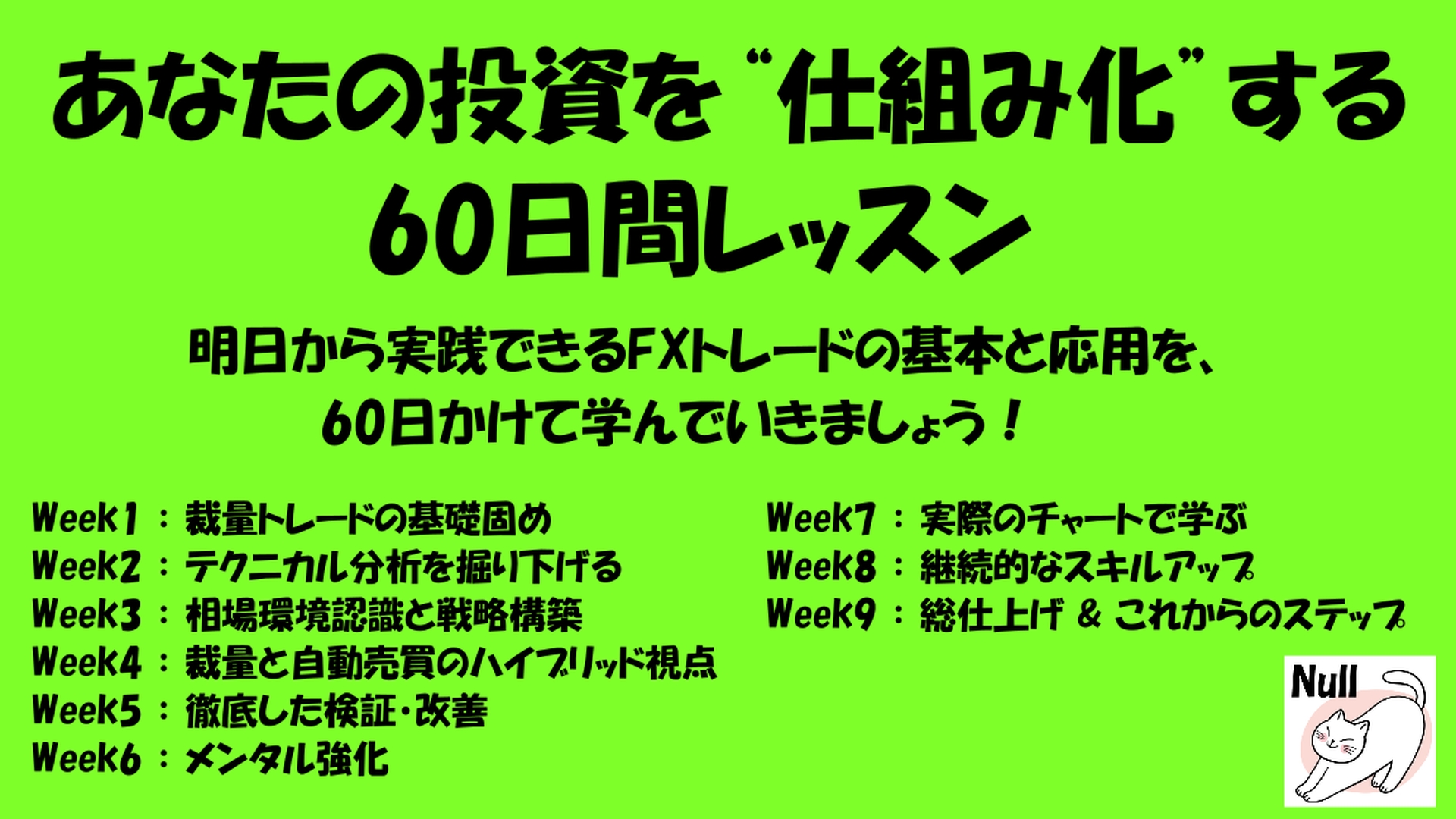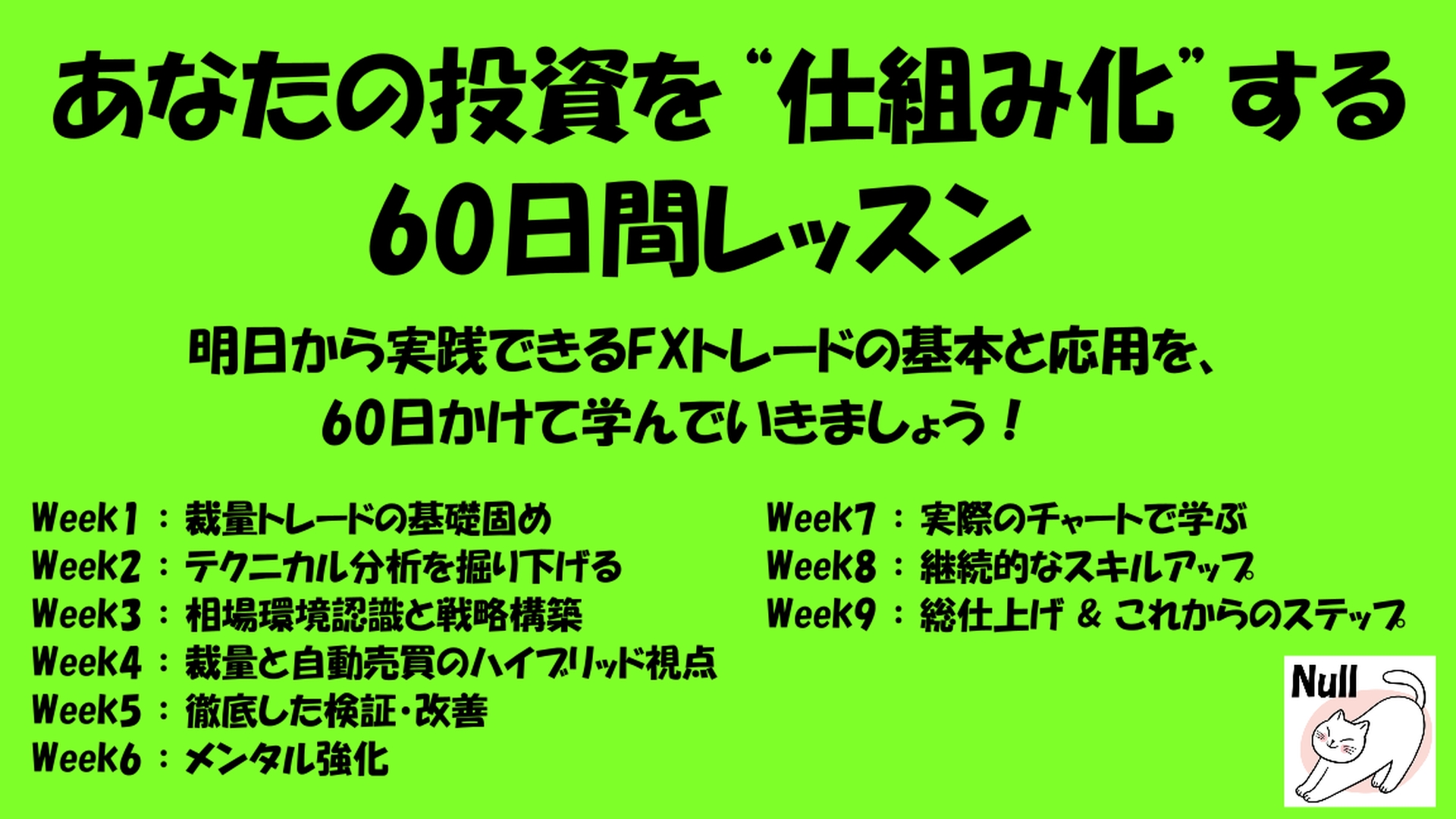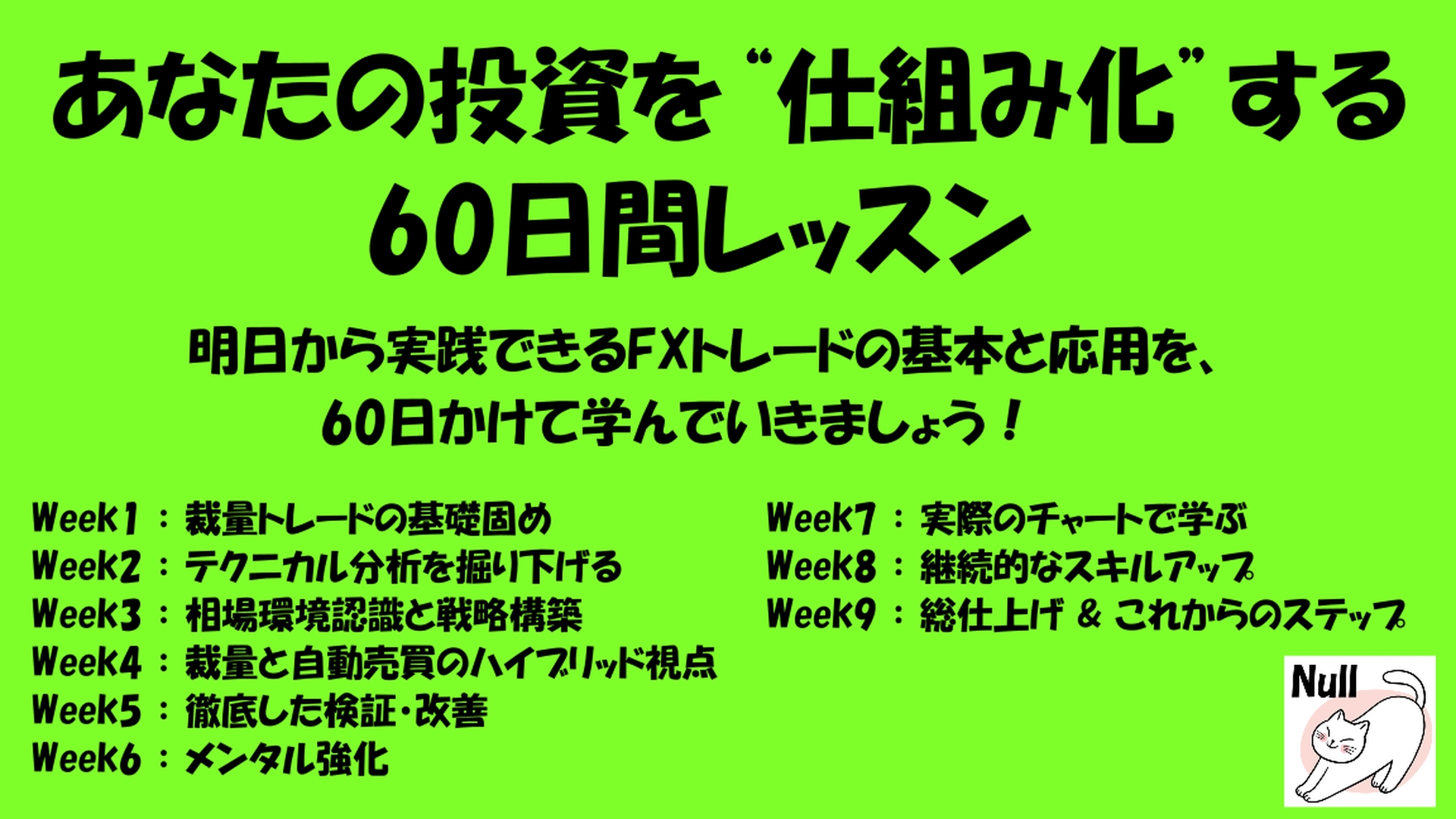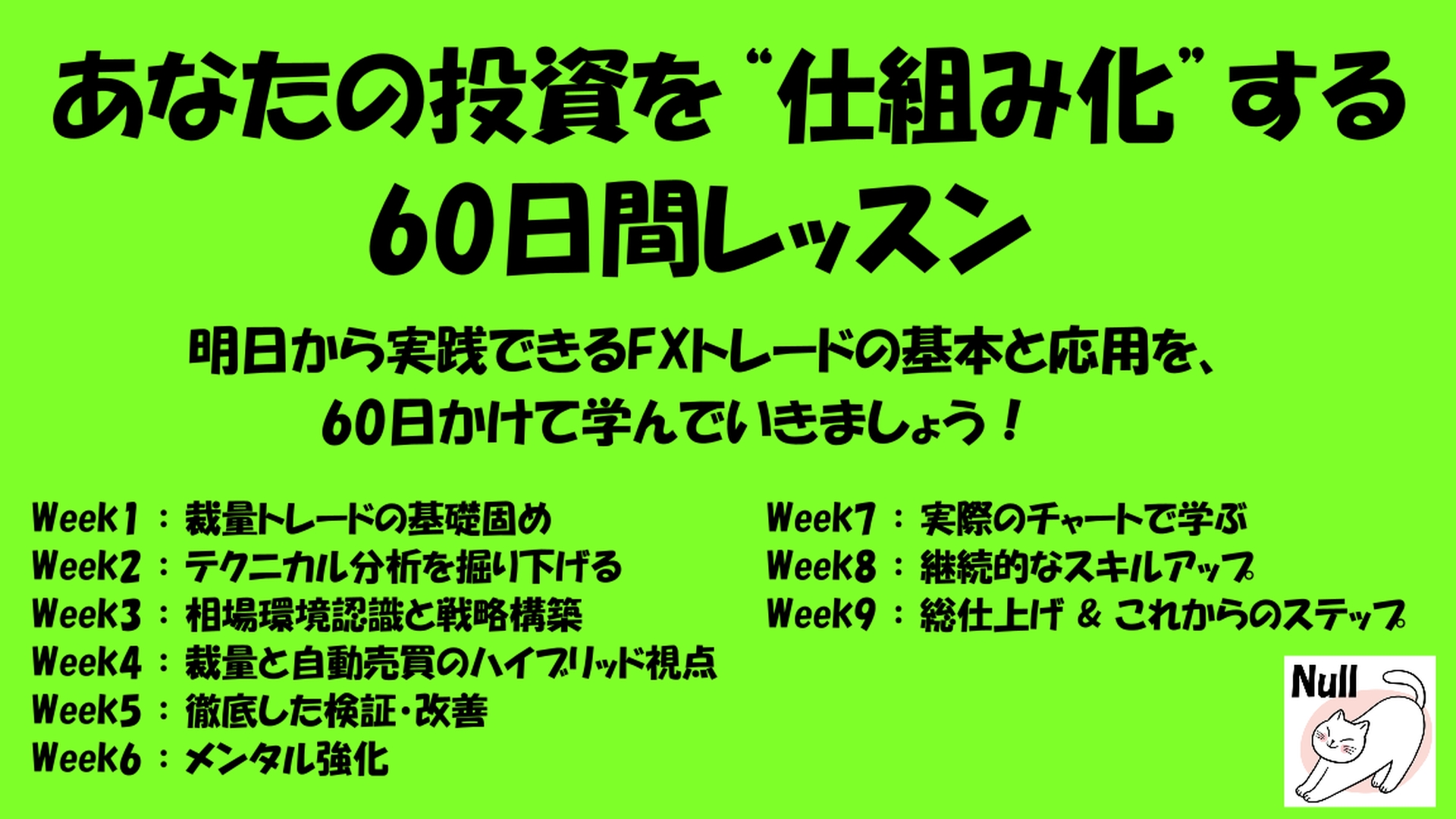

DAY 22: What is System Trading? – Basic concepts
By Day 21, we have laid the foundations of strategy construction centered on discretionary trading and market environment awareness.
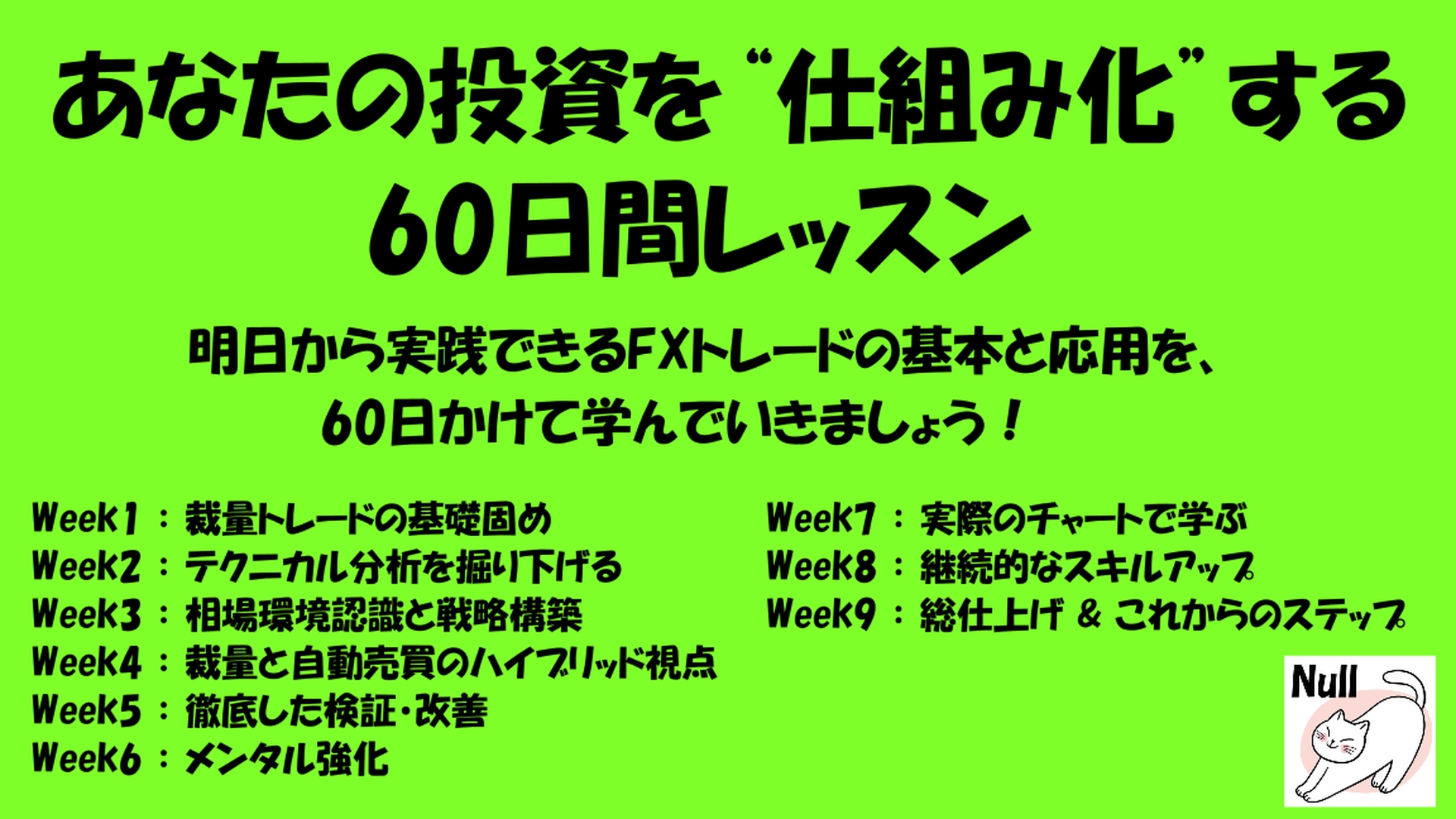
From hereWeek 4's theme is “a hybrid perspective of discretion and automation”, so let’s dive in.
First,we will explain what system trading (automatic trading) is and its basic concepts.
Discretionary trading and automated trading each have their advantages and disadvantages, and by combining them well you can expect to reduce mental burden and maintain objective rules, so please explore the possibilities!
1. What is system trading (automatic trading)?
- Definition: A method where a computer or server automatically executes trades based on predefined rules or programs.
- Implementation forms:
- EA (Expert Advisor): An automated trading program that runs on MetaTrader, etc., is a representative example.
- Custom algorithm: Cases where a custom logic runs on a VPS or dedicated server.
(1) Big differences between discretion and system
- Discretionary trading: You judge and trade yourself by watching the market. It is highly flexible but easily influenced by emotions and biases.
- System trading: Rules are embedded mechanically and executed consistently. It has no emotion but can struggle with adaptive responses to changing conditions.
(2) Rules-based approach is fundamental
- It is necessary to clarify what indicators to use and what price action to Enter/Exit,trade rules must be explicit
- If this is vague, it cannot be translated into EA, and the results can be more scattered than discretionary trading.
2. Benefits of system trading
Eliminates emotions
- Strengthens weaknesses in the mental aspect, such as not being able to adhere to stop-loss levels or falling into premature taking profits.
- Since entries and exits are executed according to the rules, it prevents impulsive increases in lot size after a losing streak.
Can operate 24 hours
- FX trades are possible almost 24 hours on weekdays, and running an EA allows catching opportunities while you sleep or work.
- Because it automatically enters/exits at data releases or during sharp moves, it is easier to handle situations that are difficult in discretionary trading.
Easy to test and analyze
- Backtest rules on historical charts.
- Validation such as “how much did this logic win over the past five years?” is clear as data.
- Using strategy tester features speeds up system revisions and retesting.
3. Disadvantages of system trading
Weak to sudden market changes and unforeseen events
- When the program encounters movements it did not anticipate, or when news causes the market to move abruptly, flexible response is difficult.
- Spread widening or order execution rejection can also lead to unexpected losses.
Literals in logic become obsolete
- What worked in the past may not work in current market conditions.
- If optimized too much for a certain period, you risk overfitting and facing losses in future markets.
Requires programming development and maintenance
- If you build it yourself, you need programming knowledge and development environment.
- Even purchased EAs often require version updates and parameter tuning.
Rapid leverage expansion or martingale, if risk management is misapplied, can lead to failure
- A highly profitable EA also carries the risk of large losses.
- If you merely take宣宣 promise of “XX% win rate EA” without understanding the mechanism, you may face a painful outcome.
4. Auto vs discretionary: domains each excels
Situations where discretion excels
- When fundamental analysis is required, such as “there are important speeches coming up, so we should reduce positions.”Fundamental perspective.
- When news and geopolitical risks cause sharp movements, you want to respond quickly based on intuition.
Situations where automation excels
- Simple strategies that repeatedly follow a trend, such as “keep following the trend,” are suited to automation.
- Even in methods with strong mental swings like winning/losing streaks, EA can proceed mechanically.
- Never miss entry opportunities regardless of the time of day.
5. Examples of hybrid operation
(1) Entry automated, exit discretionary
- Benefits:
- EA enters according to signals, preventing timing loss and emotional hesitation to enter.
- If risk is felt before an indicator or due to sudden news, you can exit early by discretionary judgment.
- Drawbacks:
- You need to monitor charts continuously (for discretionary exits).
- If EA exit logic does not fit, some rules may be left half-finished.
(2) Divide by currency pair
- Benefits:
- You can assign “trade favorable currencies discretionary, weaker currencies to EA”.
- Risk diversification (discretionary logic and auto trading logic complement each other depending on market conditions).
- Drawbacks:
- Managing multiple accounts or multiple charts increases effort.
- Running auto and discretionary simultaneously makes profit/loss calculation and capital management more complex.
(3) Use discretion for big-picture direction, automate precise entries
- Benefits:
- Perform higher-timeframe analysis via discretion, decide direction “buy” or “sell,” then set the EA’s operating direction.
- In trending markets, the EA may frequently capture pullbacks and rallies.
- Drawbacks:
- If the market goes in an unexpected direction, you must manually stop or modify the EA to avoid losses.
- If the market goes in an unexpected direction, you must manually stop or modify the EA to avoid losses.
6. Summary & next preview
Summary
- System trading (automatic trading) can strictly follow rules and remove emotions, but it is weak to sudden market changes and unforeseen events..
- Discretionary tradinghas strengths in flexibility and human judgment, but mental and time constraints can be drawbacks.
- Hybrid operationenables you to use “favorable currencies by discretion, challenging currencies by EA” or “entries by EA, exits by discretion.”
- If you introduce EA, it is essential to conduct thorough past validation and forward testing and implement strict risk management.
Next time (DAY 23) theme: The essence of discretion derived from automated trading
- Having covered the basics of system trading, we will further explore how to “apply rules clarified by automated trading to discretion as well.”
- The validation results of “winning patterns and losing patterns” obtained from system trading should provide very useful hints for discretionary traders.
- Tomorrow we will reassess the essence of discretionary trading from the perspective of system trading, so stay tuned!
If you are interested in automated trading, please also check the link below.
https://www.gogojungle.co.jp/users/147322/products
If this was helpful, I would appreciate it if you click “read more.”
Thank you.