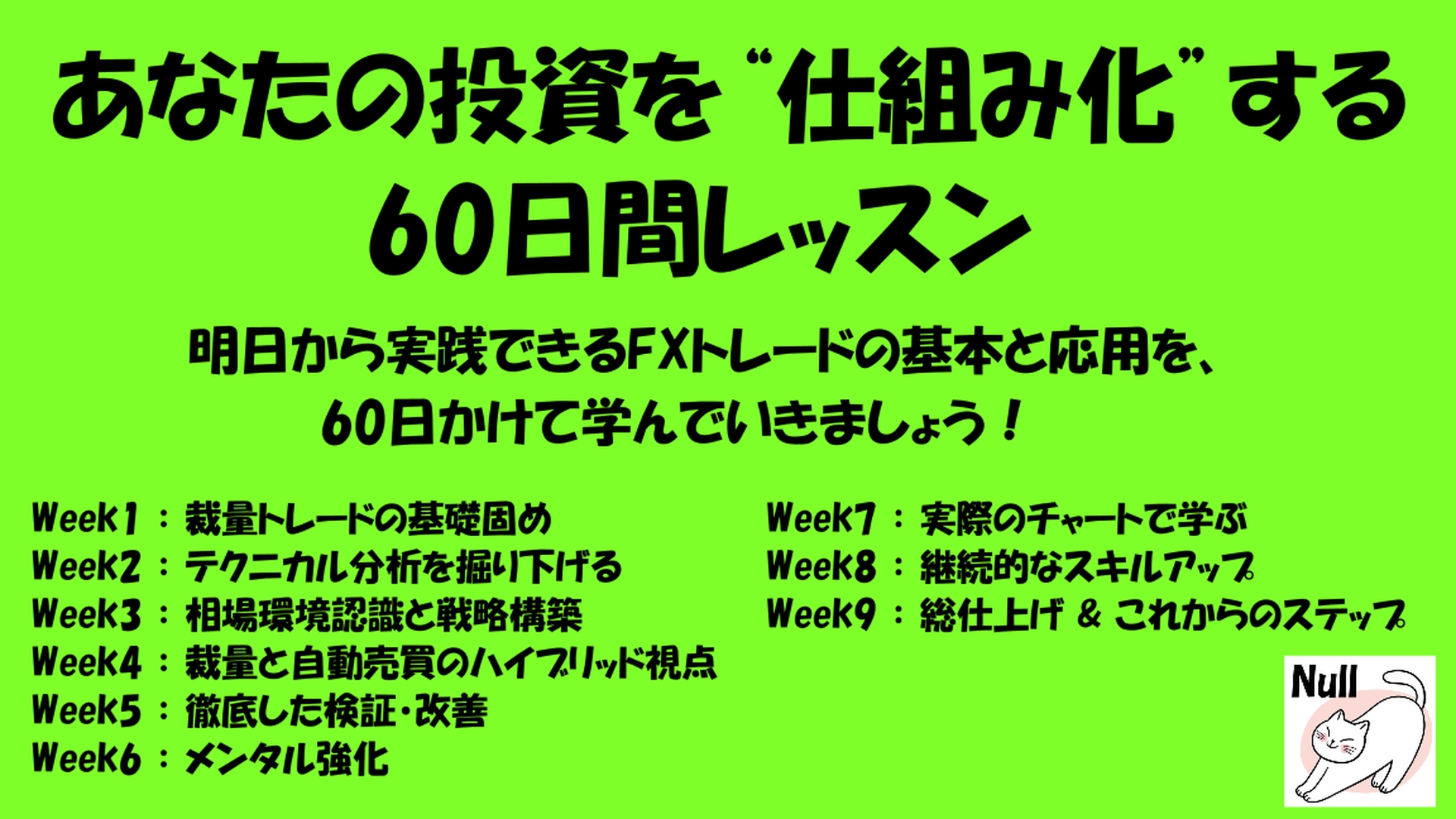

DAY 12: Ichimoku Kinkō Hyou – A Japanese-origin all-in-one analysis tool
By Day 11, we have learned the major technical methods such as moving averages, oscillator indicators, and the Bollinger Bands.
Today's theme is the comprehensive analysis tool Japan is proud of, the Ichimoku Kinko Hyo. It is highly regarded overseas as well,“cloud” to capture market strength and turning pointsand is famous as a unique method.
Let's quickly look at its components!
1. Basic Structure of Ichimoku Kinko Hyo
Ichimoku Kinko Hyo comprises five lines.
Base Line (Bankan Sen)
- The average of the high and low over a fixed period: (Highest high + Lowest low) / 2.
- Generally uses the high and low of 26 periods (default setting).
- An important line indicating the major direction or balance of the market.
Conversion Line (Tenkan Sen)
- The average of the high and low over a fixed period: (Highest high + Lowest low) / 2.
- Generally uses the high and low of 9 periods (default setting).
- Since it is calculated over a relatively short period compared to the Base Line, it follows the market more closely.
Leading Span A (Part of the Cloud)
- Display the average of Base Line and Conversion Line asshifted 26 days forward.
- The average of the Conversion Line and Base Line forms the base.
Leading Span B (Part of the Cloud)
- Display the average of the highest high and the lowest low of the past 52 days asshifted 26 days forward.
- The area between Leading Span A and Leading Span B forms the “cloud.”
Lagging Span
- The “current closing price” is shifted back by26 days.
- By comparing with past candlesticks, you can assess market strength and lagging.
2. How to View the Cloud
One of the Ichimoku Kinko Hyo’s most distinctive features is this cloud—the space between Leading Span 1 and Leading Span 2.
- Price above the cloud: bullish, buying pressure
- Price below the cloud: bearish, selling pressure
- Price inside the cloud: unclear direction, range or potential turning point
The cloud not only acts as support/resistance, butthe thickness of the cloudcan indicate market strength later on.
- The thicker the cloud, the more likely it is a strong resistance
- Areas with a thinner cloud tend to allow price to break through more easily (upward or downward).
3. Basic Ways to Use Ichimoku Kinko Hyo
(1) Cross of the Conversion Line and Base Line
- Buy signal: The Conversion Line breaks above the Base Line from below (the condition “Tenkan Sen > Kijun Sen”).
- Sell signal: The Conversion Line breaks below the Base Line from above (the condition “Tenkan Sen < Kijun Sen”).
Notes
- Crosses of the Conversion Line and Base Line alone can be prone to false signals,check the cloud positionandLagging Spanposition as well.
(2) Relationship of Lagging Span to Candles
- Lagging Span above price: even looking back, current price is in uptrend
- Lagging Span below price: current price is in downtrend
- Price piercing from below to above the candles: potential early sign of buying pressure
(3) Using the Cloud for Support/Resistance Judgments
- Price rebounds near the upper edge of the cloud (Leading Span 1 or 2)→ tends to find support
- Price stalls near the lower edge of the cloud→ tends to act as resistance
- Since the cloud itself projects into future periods,it helps in predicting future support/resistanceas well.
4. Examples of Trend Continuation & Reversal
(1) Upturn & Reversal
- Upturn: price is above the cloud, and the Conversion Line > Base Line, with Lagging Span above price.
- This is considered a state of “three-line bullish” and suggests a strong uptrend may continue.
- Reversal: price is below the cloud, and the Conversion Line < Base Line, with Lagging Span below price.
- Also called “three-line bearish,” indicating a strong downtrend is expected.
- Also called “three-line bearish,” indicating a strong downtrend is expected.
(2) Trend Following with Cloud Breakout
- If price breaks from below the cloud to above, consider a buy entry as a signal of a trend shift to the upside.Buy entry.
- If the breakout ends in a false breakout, and price returns into the cloud, specify a rule to cut losses immediately.
5. Benefits & Drawbacks of Ichimoku Kinko Hyo
Benefits
- Visually intuitive to grasp the overall market
- You can see multiple elements at once: cross of Conversion and Base Lines, Lagging Span position, cloud thickness, etc.
- Easier to judge medium-to-long-term trends
- The cloud projects 26 days ahead and Lagging Span is shown 26 days back, making it suitable for a broader time horizon.
- Popular overseas, with broad market attention
- Many Western traders are fans of Ichimoku Kinko Hyo, and the cloud tends to function well as support/resistance.
- Many Western traders are fans of Ichimoku Kinko Hyo, and the cloud tends to function well as support/resistance.
Drawbacks
- The display is somewhat complex
- It takes time to become accustomed to five lines plus the cloud concept.
- Lagging aspects remain
- Especially Base Line and the cloud are based on past highs/lows, so they may lag behind during sharp moves.
- Not ideal for short-term trading
- Defaults are mid- to long-term periods like 9, 26, 52 days. Substantial adjustments are needed for scalping.
- Defaults are mid- to long-term periods like 9, 26, 52 days. Substantial adjustments are needed for scalping.
6. Application: Combining with Other Indicators
- Ichimoku + MACD
- Use MACD to supplement trend momentum and align with cloud breakout timing.
- Ichimoku + RSI
- Aim for breakouts above the cloud with trend-following, while checking that RSI is not overextended to avoid reckless entries.
- Ichimoku + Moving Averages
- Using a short-period MA to supplement short-term direction and refine breakout判断.
- Using a short-period MA to supplement short-term direction and refine breakout判断.
7. Summary & Next Preview
Summary
- Ichimoku Kinko Hyo is a comprehensive indicator composed of Base Line, Conversion Line, Leading Span 1, Leading Span 2, and Lagging Span.
- Cloud position relationshipsandLagging Span relative to candleshelp determine market strength and potential turnings.
- When multiple bullish or bearish turning conditions occur, such as three-way bullish or reversal, trend continuation is often strongly indicated.
- The display is somewhat complex, but once accustomed, it greatly aids in grasping the market’s big picture and is highly regarded overseas.
Next time (DAY 13) Theme: Fibonacci – Exploring Pullbacks and Retracements
- Next, we move to Fibonacci analysis, famous for the golden ratio.
- When estimating how far pullbacks and retracements may go, we’ll look closely at how to use Fibonacci retracements and extensions.
- Combining with other techniques makes it easier to target well-founded entries and exits!
If you’re interested in automated trading, please also check the link below.
https://www.gogojungle.co.jp/users/147322/products
If you found this helpful, please click "Read more" to continue.
Thank you.