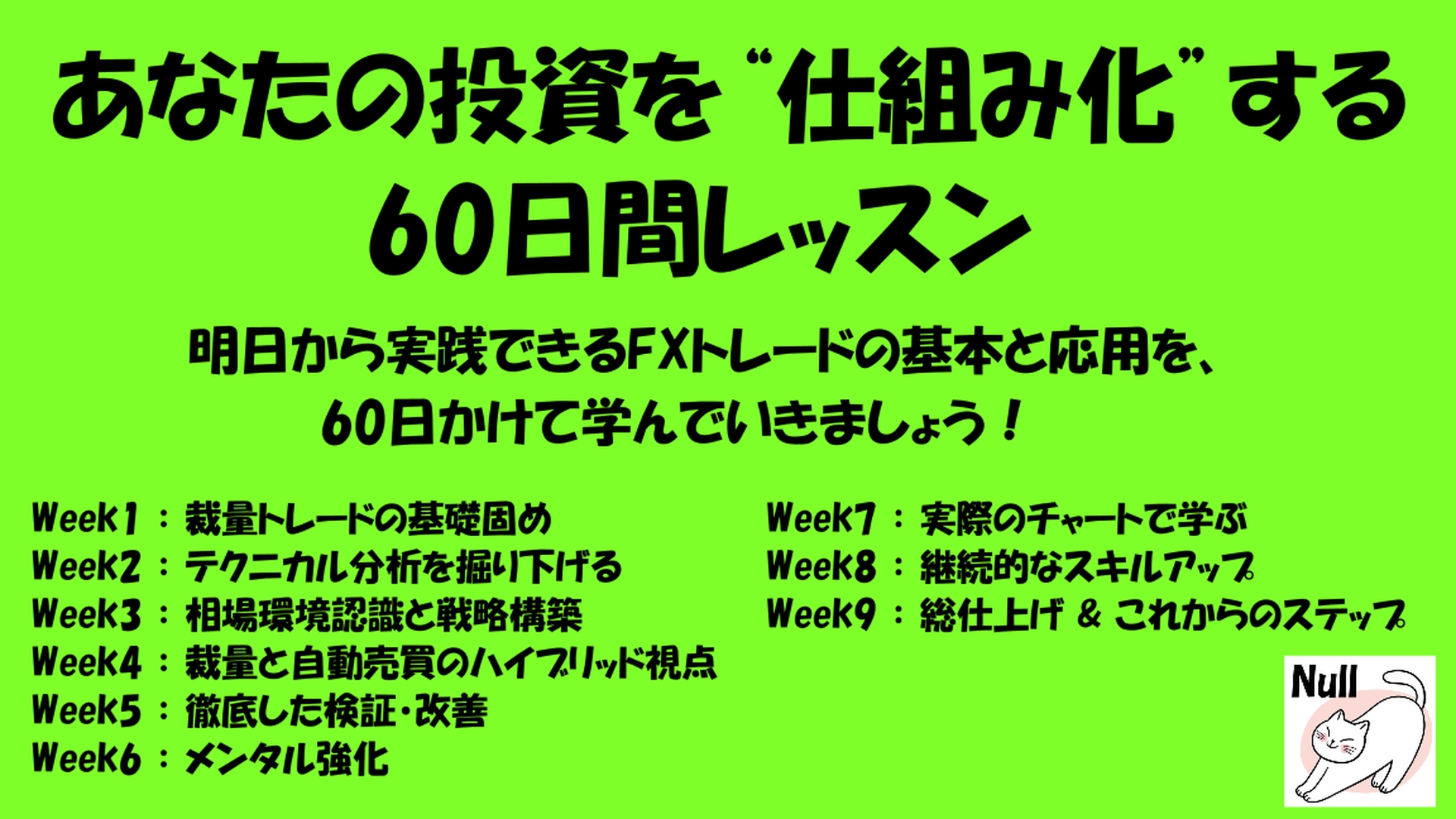

DAY 7: One-week Summary & Q&A
In the past week (DAY 1–6), starting from a trader's mindset, we covered fundamental trading terminology, chart analysis (candlesticks and price action), basics of fundamentals, money management, and mental management—the sequence of essential topics.
Today, as a final touch,let's organize the points learned and look back over the weekinto a consolidated content.
1. Review of DAY 1–6
DAY 1: Aligning your trader mindset
- Keyword:Treat trading as a “business”; losses as “costs” and profits as “revenue.”
- Learning point:Clarify your purpose and goals for trading, and aim to systematize it to build a stable source of income in the future.
DAY 2: Review of trading terms and basic concepts
- Keyword:pips, lots, spreads, leverage, margin, buy/sell, technical & fundamental analysis.
- Learning point:Understanding basic terms makes information gathering smoother and helps you structure trading ideas.
DAY 3: How charts work – Candlesticks and price action
- Keyword:bullish/bearish candles, wicks, engulfing, pin bars.
- Learning point:Reading the battle between buyers and sellers from candlestick shapes—price action—is the foundation of technical analysis.
DAY 4: Basics of fundamentals – Economic indicators and market relationships
- Keyword:Nonfarm Payrolls, FOMC, policy rate, CPI, GDP.
- Learning point:Be mindful of market sharp moves around key indicators. Decide whether to take risk or avoid it, and manage positions carefully.
DAY 5: Risk management – Money management and position sizing
- Keyword:per-trade allowable loss, risk-reward ratio, win rate, drawdown countermeasures.
- Learning point:No matter the method, neglecting money management increases the risk of large drawdowns and exit risks. Calculate lot size from the stop-loss width.
DAY 6: Mental management – Reducing resistance to stop losses
- Keyword:loss aversion bias, prospect theory, sunk cost effect, codify into rules.
- Learning point:Adopt a mindset that treats stop losses as a necessary expense; it lightens the mental burden and leads to more stable trading results.
2. Points to confirm from what we've learned so far
Is your goal clear?
- For example, “aim to earn an extra 50,000 yen per month” or “create stable income outside my main job.”
- When the goal is clear, motivation for learning and testing improves.
Do you understand the basic terms?
- Being able to explain things like “how much profit/loss is 1 pip” or “what a lot is” fluently is good enough.
- If any parts are vague, re-check them.
Have you developed a habit of looking at charts?
- Even 10 minutes a day to observe candlesticks and price action helps.
- If you start asking, “What does this long upper wick on a bullish candle indicate?” you’ll improve faster.
Do you feel comfortable with fundamental analysis?
- You don’t need to know everything in detail, but know the release dates of major indicators and events likely to attract attention.
- Check a simple economic calendar and adjust positions considering risks around indicators.
Are you applying money management and stop-loss rules?
- Always calculate the lot size from the stop-loss width and your allowable risk.
- Have you gotten into the habit of placing a stop-loss order at the same time as entry?
Has stop-loss become smoother?
- During losing streaks or drawdowns, are you sticking to your own rules?
- Has the mindset of “stop losses early to prepare for the next opportunity” taken hold?
3. Q&A Corner
Here we pick up and answer several questions that have come in so far.
Q1: What should I do if I simply cannot stop my losses?
- A:Make it a habit to place a stop-loss order before entering a trade. Rather than closing the order manually, set the stop-loss line systemically from the start to eliminate the hesitation to exit.
Q2: I want to increase my lot size, but when is the best time to do it?
- AWait until you can confirm a stable winning pattern and drawdown remains within tolerance. After one month or three months of consecutive gains, you can reinvest those profits to gradually raise lots.
Q3: Is it still risky to hold positions during indicator releases?
- A:The risk increases, but it can also present short-term trading opportunities. For beginners, it’s advisable to minimize positions or skip trades when big moves are likely. With experience, you may grow accustomed to moves right after indicators release, so proceed cautiously.
Q4: I’m not good at discretionary trading, is it okay to start with automated trading only?
- A:Okay, but having some basics of discretionary trading helps you configure EAs and respond to market changes more effectively. Knowing the markets favorable and unfavorable to EAs is aided by discretionary insight.
4. How to proceed with future study
(1) Continue to solidify the basics
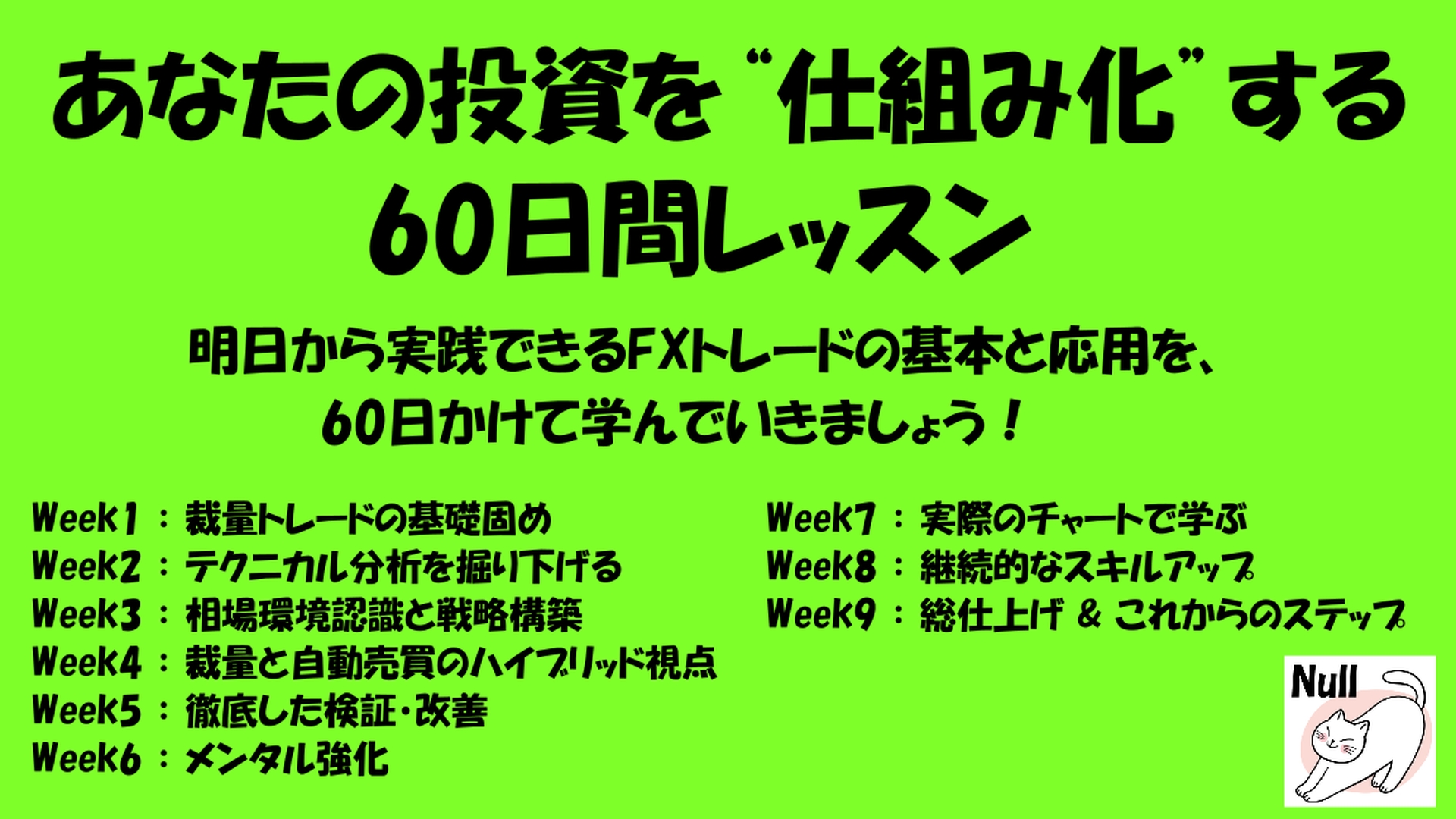
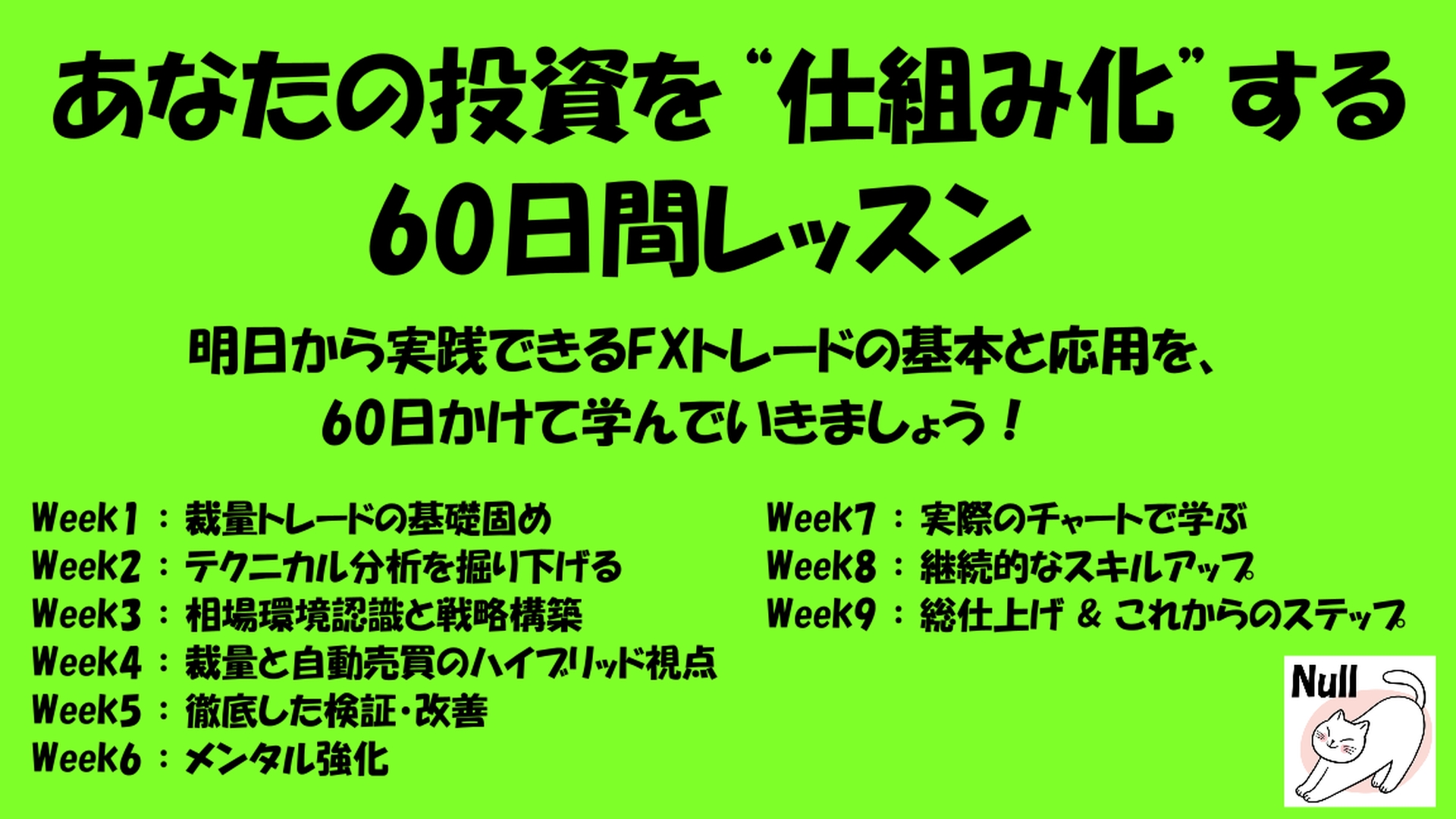
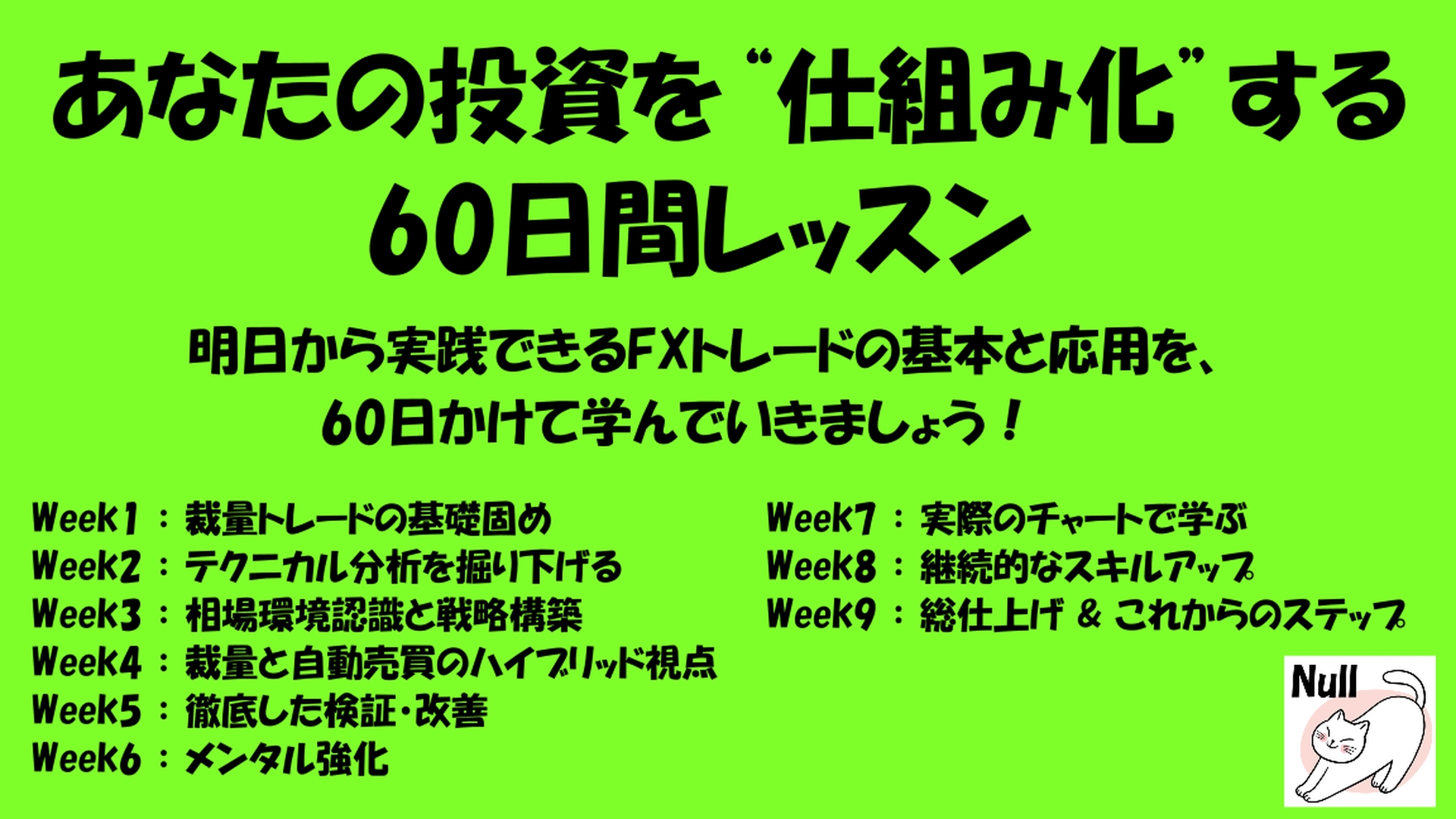
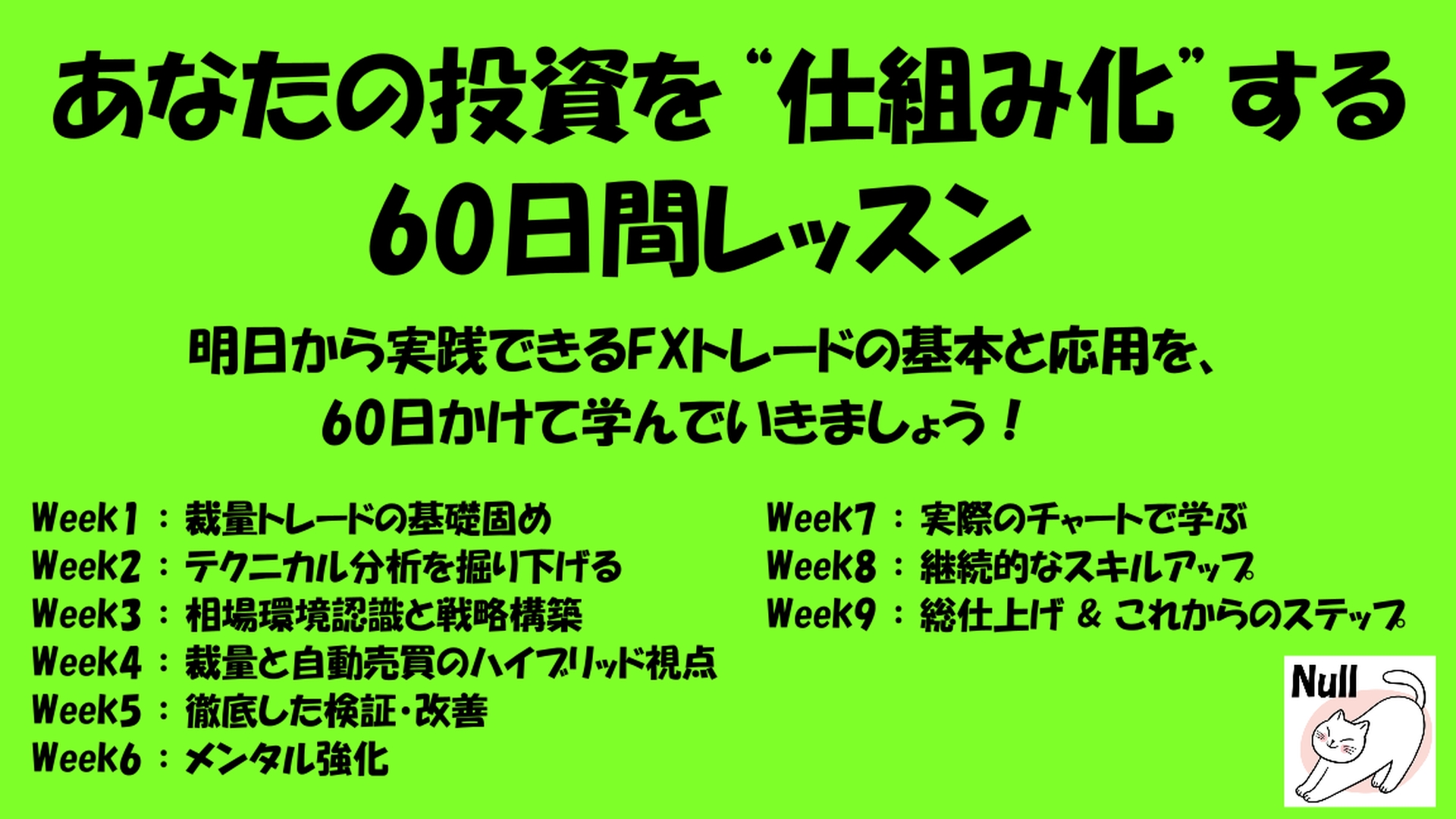
From DAY 8 onward, we will delve deeper into technical analysis and discuss hybrid management (discretionary + automated trading).
Let's internalize each item through a cycle of “actually observe on charts → try using it yourself → revisit questions if any.”(2) Build small successes
Even in a demo account or with small lots, accumulate experiences like “I won by following the rules,” which will stabilize your mindset.
Anyway, practice then review repeatedly, gradually increasing risk.(3) Share questions and concerns often
Trading can be solitary, but having peers with the same goal helps maintain motivation.
Feel free to post questions or ideas using comments or social media.
5. Summary & Next Preview
Summary
- What you learned in the 1 week (DAY 1–6) forms the “foundation of foundations” for the next 60 days of study.
- If you learn with awareness of both “discretionary trading basics” and “entry to automated trading,” your trading range will expand more easily.
- In particular, keep thinking about risk management and mental management and make them a habit going forward.
From next time (DAY 8)
- We plan to delve further into technical analysis. We will cover practical indicators and analyses you can actually use, such as moving averages, RSI, MACD, and Bollinger Bands.
- Answering questions like “What technical indicators suit me?” while gradually introducing a view toward discretionary + automated trading.
If you’re interested in automated trading, please also check the link below.
https://www.gogojungle.co.jp/users/147322/products
If this was helpful, I’d appreciate it if you click “Read more.”
Thank you.