
Japan-origin “Black Monday” crash surpassing big drops; for “Tsuna mi Monday” we demand the nation’s designation of “severe disaster” to laughter
The Nikkei average's decline is the largest in history, so the country should designate an "extremely" disaster and pay disaster relief, right? haha
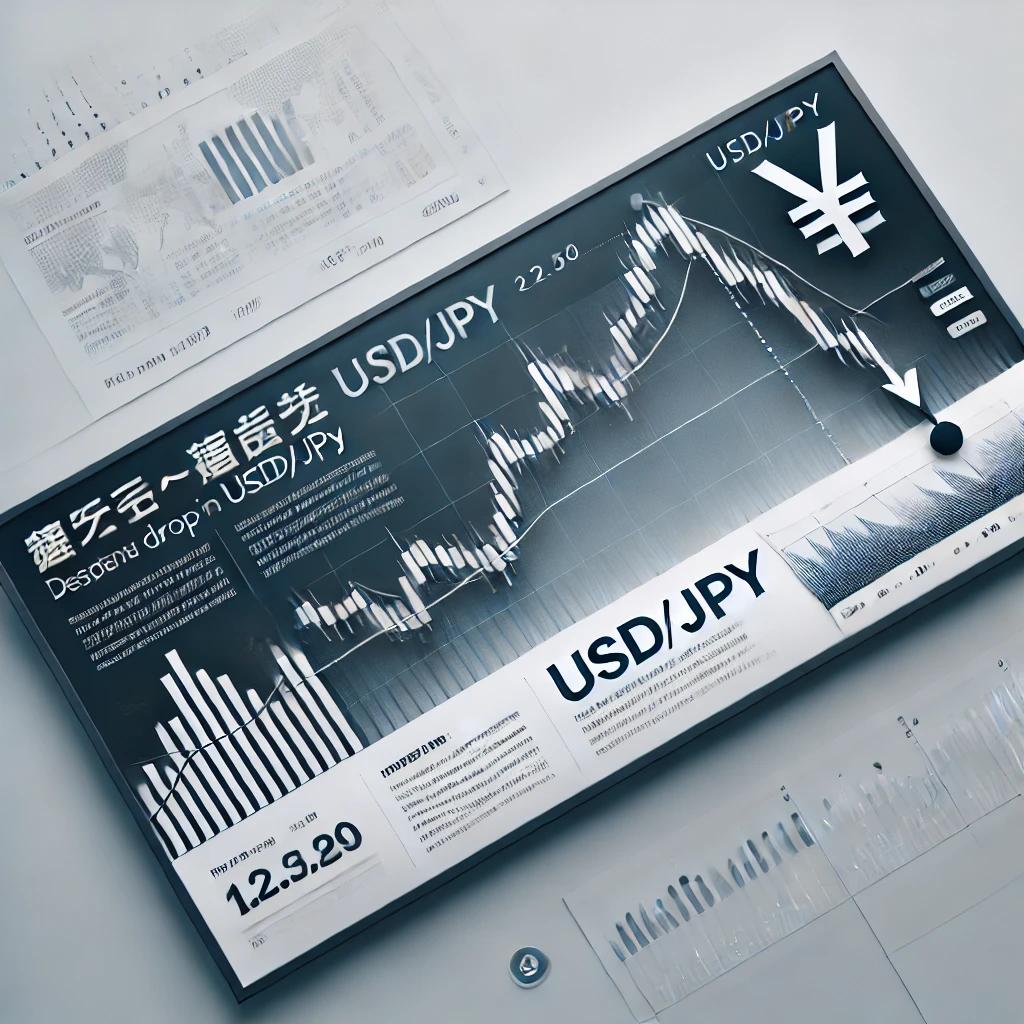
This time, we will discuss the topic that the Nikkei average could plunge sharply and become the largest shock in history, surpassing Black Monday. There is also news that the S&P 500 has lit the Hindenburg Omen indicator. Let's carefully consider how to interpret this situation.
## The Nikkei Average's Great Plunge
First, about the Nikkei average. As you all know, recently the Nikkei average has shown very unstable movements. And this major drop can be said to be the extreme manifestation of that instability. In particular, global economic uncertainty and geopolitical risks are believed to be influencing it.
### Global Economic Uncertainty
First of all, the sense of a global economic slowdown is having a major impact on the Nikkei. The growth slowdown in major economies like the United States and China surely cools investor sentiment. Moreover, supply chain disruptions since the COVID-19 era continue, and concerns about corporate performance have not been dispelled.
### Geopolitical Risks
Furthermore, geopolitical risks are also fueling the Nikkei's instability. In particular, the Ukraine situation and rising tensions in the Asia region are factors investors cannot ignore. These factors collectively pushed the Nikkei down sharply.
## Shock Beyond Black Monday
This crash is said to have the potential to exceed Black Monday of 1987. Black Monday refers to the massive plunge in the New York Stock Exchange on October 19, 1987. On that day, the Dow Jones Industrial Average fell by 22.6%, causing large losses for many investors.
Experts warn that the current situation could deliver a shock comparable to, or greater than, that event. The market is already very nervous, and if further bad news accumulates, there is a danger of panic spreading quickly.
## What is the Hindenburg Omen Indicator?
Now, here is an explanation of the Hindenburg Omen indicator lighting up in the S&P 500. This indicator is used to predict a significant drop in the stock market. It gets its name from the Hindenburg airship disaster in 1937. When this indicator lights up, it is believed there are ominous signs in the stock market, hence the name.
### Conditions for the Hindenburg Omen
For the Hindenburg Omen to light up, several conditions must be met. The main conditions are as follows.
1. **The number of new highs and new lows on a stock exchange exceeding certain thresholds**: This indicates market instability.
2. **The proportions of 52-week new highs vs. 52-week new lows exceeding a certain standard**: This shows that the balance between rising and falling stocks is off.
3. **A downward-sloping moving average that indicates the market trend**: When this is confirmed, it is interpreted as an overall downward market trend.
When these conditions are met simultaneously, the Hindenburg Omen lights up. What this indicator suggests is that market participants are split between bulls and bears and have lost their sense of direction.
## The S&P 500 Situation and Outlook
The fact that the Hindenburg Omen has lit up in the S&P 500 means that the U.S. market is also in a very unstable state. The US economy is the world’s economic center, and its trends affect markets worldwide. In particular, with the focus on the Federal Reserve's monetary policy and inflation trends, the lighting of this indicator cannot be ignored.
### Mindset for Investors
What should investors do in such a situation? First, it is important to stay calm. Do not react emotionally to market fluctuations; instead, review investment strategies with a long-term perspective.
Also, thorough risk management is essential. In particular, diversification of the portfolio and revising asset allocation are basic measures to reduce risk. As a option, increasing cash reserves to prepare for sharp market fluctuations is also possible.
## Conclusion
The severe drop in the Nikkei and the lighting of the Hindenburg Omen in the S&P 500 indicate that the current market is very unstable. Yet it is precisely in such conditions that calm judgment and proper risk management are required. The market is always volatile, so it is important to invest with a long-term perspective without being swayed by temporary shocks.
Please understand this situation well and review your future investment strategy. Then, see you next time.
× ![]()