
New NISA Introduction: Combine stock investing and FX to minimize risk
Introduction
When you start investing in stocks, you will notice that various factors influence investment success. Among them, the presence of foreign investors in the Japanese stock market is a particularly important factor. In fact, about 60% of the Japanese stock market is occupied by foreign investors. To understand the movements of foreign investors with such influence, knowledge of FX (foreign exchange margin trading) is indispensable. This article explains in detail why you should learn FX in stock investing and the concrete methods to do so.
The Influence of Foreign Investors
First of all, it is important to understand the influence of foreign investors in the Japanese stock market. Foreign investors refer to funds and institutional investors from around the world. These investors respond not only to the trends of Japan’s economy and companies but also to global economic conditions and exchange rates.
For example, U.S. interest rate policies, European economic indicators, and China’s economic growth rate can significantly affect the Japanese stock market. Since foreign investors trade Japanese stocks based on such information, it is very important to keep track of their movements.
Why Learn FX
FX is a financial product that trades exchange rates between different currencies. Unlike stock investing, FX can be traded 24 hours a day, with currencies markets moving in real time worldwide. By understanding the FX market, you can more easily predict the flow of funds and investment decisions of foreign investors.
Impact of Exchange Rates
Exchange rates directly influence foreign investors’ investment actions. For example, if the yen strengthens, Japanese exporters’ competitiveness may decline, and corporate profits may fall. This can increase selling pressure on Japanese stocks and cause prices to drop. Conversely, if the yen weakens, exporters’ competitiveness improves and stock prices may rise.
Foreign investors keenly detect such movements in exchange rates and make investment decisions accordingly. Therefore, understanding FX market trends helps predict stock market movements.
Global Economic Trends
The FX market is heavily influenced by global economic trends, including each country’s economic indicators, policy, and geopolitical risks. For example, U.S. employment data and GDP growth, the European Central Bank’s monetary policy, and geopolitical risks in the Middle East can affect exchange rates.
This information is an important factor when foreign investors make investment decisions in the Japanese stock market. By grasping these global economic trends through the FX market, you can anticipate foreign investors’ movements and build your stock investment strategy.
FX Basics
To learn FX, you first need to acquire basic knowledge. Here is a brief explanation of the basic FX concepts.
Currency Pairs
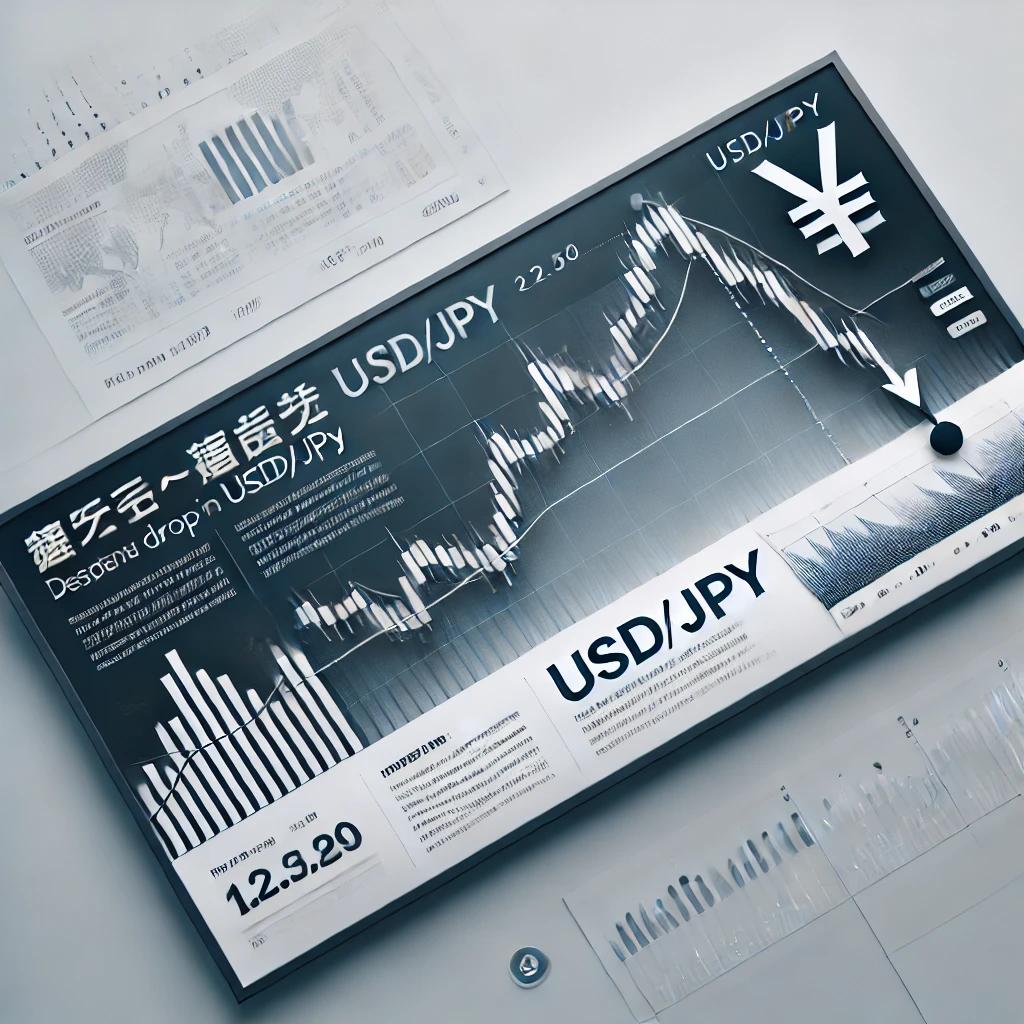
In FX, you trade exchange rates between different currencies. This exchange rate is displayed as a “currency pair.” For example, USD/JPY is the currency pair of the U.S. dollar and the Japanese yen, showing how many yen you can exchange for 1 dollar.
Leverage
In FX trading, you can trade more than your own funds by using leverage. For example, with 10x leverage, you can trade 1,000,000 yen with 100,000 yen of your own funds. However, using leverage also increases risk, so careful trading is required.
Spread
The spread is the difference between the bid and ask prices. In FX trading, this spread constitutes the transaction cost. The smaller the spread, the lower the trading cost and the easier it is to trade.
FX Market Analysis Methods
To understand the FX market, it is important to learn the following analysis methods.
Fundamental Analysis
Fundamental analysis is a method of analyzing exchange rate movements based on economic indicators, policies, geopolitical risks, and other factors. For example, you check GDP growth rate, unemployment rate, inflation rate, and other indicators to understand each country’s economic situation.
Technical Analysis
Technical analysis is a method of predicting future exchange rate movements based on past price trends and trading volume data. It uses technical indicators such as moving averages, RSI (Relative Strength Index), and MACD (Moving Average Convergence Divergence).
Sentiment Analysis
Sentiment analysis is a method of analyzing investors’ psychology and market mood. It uses news, social media, and investors’ position data to gauge the market’s psychological state.
How to Learn FX
To learn FX, it is recommended to follow these steps.
#### Books and Online Resources
First, use books and online resources to learn the basics of FX. There are many introductory and specialized books and online courses, so choose materials that suit you.
#### Demo Trading
Use demo trading to experience real trading environments. With demo trading, you can trade with virtual funds, allowing risk-free practice.
#### Actual Trading
After gaining basic knowledge and experience from demo trading, start actual trading. Begin with a small amount and gradually increase the trading size.
### Integration of Stock Investment and FX
By integrating stock investment with FX, you can formulate more effective investment strategies. Here are some concrete ways to connect them.
#### Hedging
Using both stock investment and FX allows hedging. For example, to hedge yen depreciation risk, you can hold a position selling yen in the FX market.
#### Efficient Capital Management
The FX market operates 24 hours, so you can trade even when the stock market is closed. This enables efficient capital utilization.
#### Gaining Global Perspective
Learning FX provides a global perspective. Understanding global economic trends and policies helps you devise effective investment strategies not only in the Japanese stock market but also in other markets.
Conclusion
To succeed in stock investing, it is essential to understand foreign investors’ movements. Therefore, acquiring FX knowledge is important. By understanding the impact of exchange rates and global economic trends, you can craft more effective stock investment strategies. Learn FX and link it with stock investing to become a more capable investor.
This is an outline of why you should learn FX for stock investing and the concrete methods to do so. Please use it as a reference and develop effective investment strategies.
× ![]()