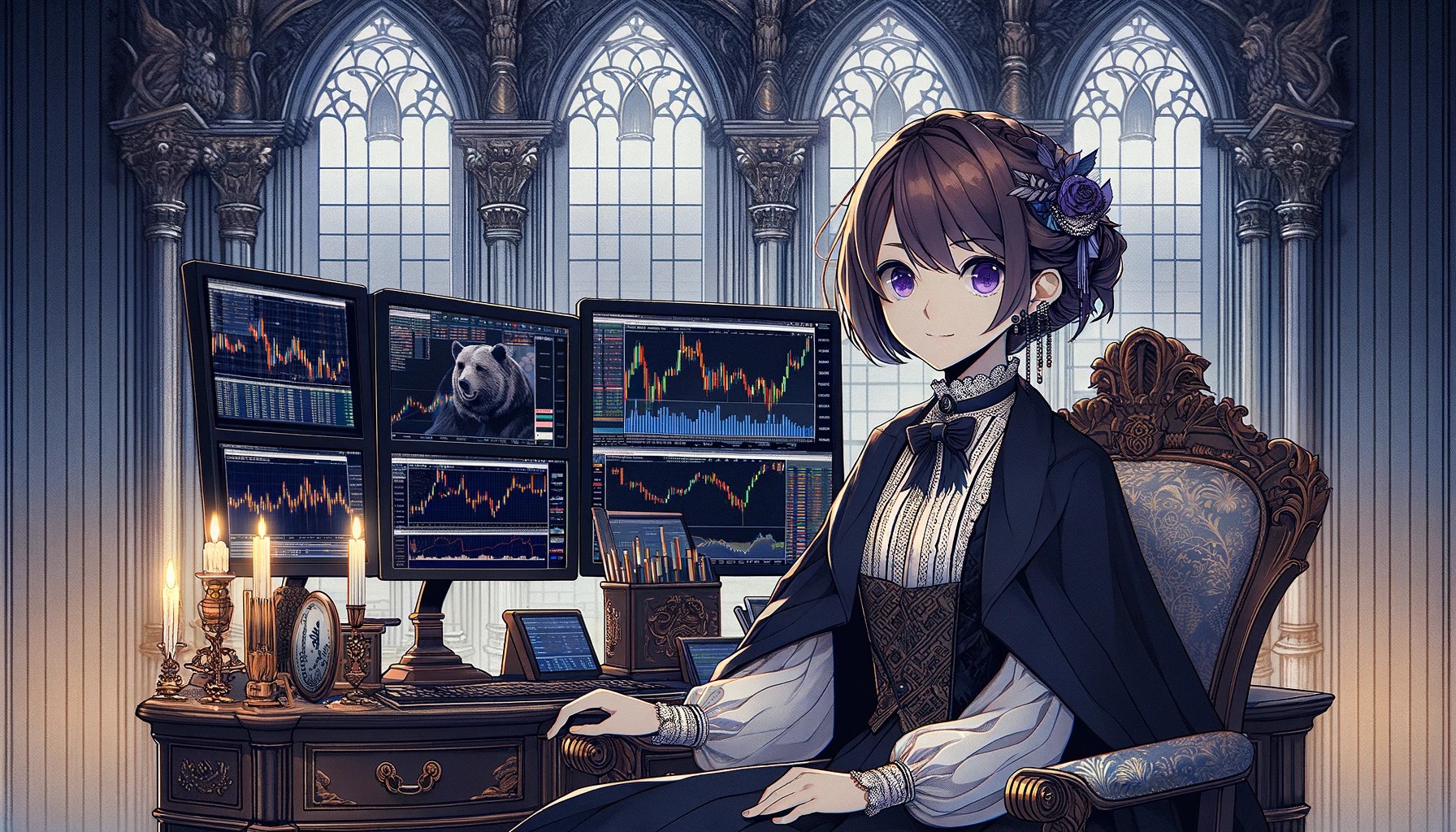

Path to becoming an EA Trading Master
Automated trading systems, especially Expert Advisors (EAs), have attracted attention in the financial markets in recent years.
EA is a program that analyzes the market based on a set trading strategy and automatically executes trades.
By utilizing this technology, traders can be liberated from market surveillance and trade without being swayed by emotions.
In this article, "The Path to Becoming an EA Trading Master," we start as an introduction to the world of EA trading with an understanding of the basic concepts.
Furthermore, beginners will learn concrete steps to use this technology to refine their trading skills and ultimately grow into professional traders.
This journey is not only about learning the technology but also focuses on how to apply it in real markets and on success stories of trading with EAs.
Through this article, you will firmly grasp the basics of EA trading, develop your own trading strategy, and gain knowledge and tools that lead to success in the market.
Common Challenges for Beginners
The most common challenge beginners face when stepping into the world of automated trading is understanding that market moves and EA behavior are not always predictable.
Here we explain problems you are likely to encounter when starting EA trading and how to avoid them.
Common Pitfalls and How to Avoid Them
1. Over-optimization (Overfitting)
Beginners often optimize EAs too much based on past market data.
This can produce an EA that performs well only under specific past conditions and fails under real market conditions.
To avoid this, test the EA across multiple market conditions and timeframes to confirm stability in more general market environments.
2. Insufficient Risk Management
In automated trading, risk management is automated, which can give a false sense of security, but misconfigurations can lead to major losses.
It is essential to establish risk management strategies and set the maximum acceptable loss per trade.
3. Misunderstanding High-Frequency Trading
Many beginners think that higher trading frequency always means higher profits.
However, increasing trade frequency unchecked can lead to slippage and higher fees, squeezing profits.
It's important to determine an appropriate trading frequency and focus on high-quality trades.
Real-Life Failure Cases
One EA trader bought an EA touted as highly profitable and started trading with great expectations.
However, this EA was overly optimized for a past period and could not adapt to real, moving market conditions.
As a result, several weeks later he incurred large losses and lost a substantial portion of his investment.
This trader realized the importance of conducting independent backtests and forward tests before purchasing an EA.
Basic EA Trading Strategies
To maximize the effectiveness of an automated trading system, you need solid trading strategies and risk management.
Here we explain the basic strategies that generate profits in EA trading and the risk-management techniques that support them.
Basic Strategies That Generate Profit
1. Trend Following
This strategy trades in line with market trends.
EAs identify long-term price trends and take positions when the trend is expected to continue.
To determine trend reversal points, technical indicators such as moving averages and the Relative Strength Index (RSI) are used.
2. Scalping
Scalping is a strategy that profits from small price movements.
EAs execute many trades on very short timeframes to accumulate small profits.
Because this strategy requires ultra-fast trade execution, a high-performance trading platform and a stable internet connection are essential.
The Importance of Risk Management and Basic Risk Techniques
1. Stop-Loss and Take-Profit Settings
Setting loss tolerance and profit targets for each trade is essential for protecting capital.
EAs automatically close positions based on these parameters, shielding traders from unexpected market fluctuations.
2. Position Sizing
Properly managing position size helps avoid large losses.
Depending on risk tolerance, determine how much to invest per trade.
Usually, it is recommended to keep risk per trade as a small percentage of account capital (for example, 1% or less).
Mastering these basic strategies and risk-management techniques enables stable profits through EA trading while minimizing risk.
As a result, even beginners can enter the market with confidence and grow.
Selecting and Customizing EAs
To succeed with automated trading, choosing the right EA and customizing it to your trading style are crucial.
In this chapter, we explain how to choose an effective EA and how to adjust its settings to fit your needs.
How to Choose an Effective EA
1. Verification of Track Record
When selecting an EA, its track record matters.
Check long-term backtesting results and performance in real trades.
Reliable EAs tend to show stable performance across different market conditions.
※Note: Around 2008 (Lehman Brothers default and related market changes), market participants changed and market behavior shifted.
2. Developer Support and Reputation
It's important to confirm that the EA developer actively provides support and that user-community evaluations are positive.
A good support system will help when issues arise in the future.
How to Tailor EA Settings to Your Trading Style
1. Adjusting Risk Settings
EA risk settings should be adjusted to your individual risk tolerance.
Set the maximum risk per trade and the stop-loss at a level you are comfortable with.
2. Customizing Strategies
Some EAs allow adjustments to strategy details such as which technical indicators to use and entry/exit conditions.
Based on your trading experience and market analysis, it is recommended to optimize these parameters.
When choosing an EA, do not pick merely because the results are good; carefully select based on your trading style, risk tolerance, and market understanding, and adjust settings as needed for success.
This approach will help you maximize the EA's potential and achieve more effective trading.
The Evolving Trader - Path to Intermediate Level
Graduating from a beginner to an intermediate trader in EA trading requires acquiring new techniques and knowledge.
This chapter focuses on key points to elevate your trading skills to an intermediate level and how to use learning resources.
Techniques and Knowledge to Raise Trading Skills to Intermediate Level
1. Deepening Market Analysis
As an intermediate, you should deepen your understanding of fundamentals and technical analysis.
Improve your ability to read subtle market signals and master more complex trading strategies.
2. Diversifying Strategies
Understand and apply multiple trading strategies that can handle various market conditions to maintain consistent performance.
For example, learn strategies that respond to different market volatilities and be able to choose the optimal strategy for each condition.
Learning Resources and Practice Importance
1. Educational Platforms and Webinars
Utilize online educational platforms and trading-focused webinars to learn the latest market analysis techniques and advanced trading strategies.
These resources use actual market data, allowing you to gain practical knowledge in addition to theory.
2. Practice on Demo Accounts
Before risking real funds, it is recommended to practice on a demo account.
Experiment with new strategies and techniques while learning how they react in real market conditions.
The path to intermediate level involves continuous learning and practice to master more advanced trading techniques.
Mastering these skills will help you adapt to market fluctuations and pave the way to successful EA trading.
Advanced Techniques Needed for Professionals
To succeed as a professional in EA trading, you must master advanced trading strategies and market analysis methods, and continually learn and adapt.
This chapter delves into the advanced techniques professional traders should possess.
Advanced Trading Strategies and Market Analysis Methods
1. Use of Quantitative Analysis
Quantitative analysis uses mathematical models to predict market behavior.
This approach employs advanced statistics and machine learning to analyze patterns and make predictions.
Professional traders use these techniques to refine EA algorithms and make more accurate trading decisions.
2. Optimization of Algorithms
To adapt to market changes, EA algorithms require regular review and optimization.
Incorporating new market data and making adjustments to maintain performance helps ensure long-term stable profits.
Importance of Continuous Learning and Adaptation
1. Being Sensitive to Latest Market Trends
Markets are always evolving. Professional traders must stay alert to the latest economic news, technological developments, and regulatory changes.
This enables quick adaptation to unexpected market movements and adjustment of strategies.
2. Building a Professional Network
Also, learning from other traders provides new perspectives to improve your own trading skills.
Through these advanced techniques and a continuous learning mindset, professional EA traders can stay competitive in the market.
By continuously evolving with the market and refining your own strategies, you can enhance trading precision and efficiency.
Showcasing Success Stories
Real-world examples of traders who have achieved success in EA trading provide valuable lessons for upcoming traders.
In this chapter, explore how these traders faced challenges and overcame them through real achievements.
Case: Mr. Tanaka
Mr. Tanaka is a trader who began EA trading about five years ago and has achieved success as a full-time trader.
His strategy focuses on combining multiple EAs to handle diverse market conditions.
Difficulties Faced and How They Were Overcome
1. Market Unpredictability
Early on, Mr. Tanaka experienced large losses due to sudden market volatility (COVID-19 period).
To overcome this, he deepened market analysis skills, with a focus on fundamental analysis, and conducted extensive studies.
This improved his ability to predict market fluctuations more accurately.
2. Over-Optimization of EAs
Because the EA was overly optimized for past data, Mr. Tanaka conducted backtests using real-time market data to adjust for more realistic scenarios.
Additionally,using multiple EAs in tandemhelps diversify the risk of depending on a single EA.
From this case, you learn that success in EA trading comes from being flexible and adjusting strategies to market changes and your own trading style rather than clinging to a single method.
Also, continuing to learn and adopting new analytical techniques and strategies can maximize trading results.
The Next Step
Through this article, "The Path to Becoming an EA Trading Master," we introduced key points for gradually learning from basics to the advanced techniques needed for professionals.
EA trading is not just about using automated tools; understanding the market, selecting strategies, risk management, and continuous learning are essential.
The Next Step
1. Deepening Knowledge
Learn about market movements, fundamentals, and technical analysis basics, and stay sensitive to the latest trading techniques.
Utilize free online courses and webinars to keep knowledge up to date.
2. Practice and Experimentation
Use a demo account to try the learned strategies and establish a trading style that suits you.
Using actual market data helps bridge the gap between theory and practice.
3. Building a Network
Connecting with other traders to gain new insights can accelerate your path to success.
4. Selecting and Customizing EAs
Choose effective EAs, regularly evaluate their performance, and customize them to respond to market changes.
This will maximize EA efficiency and secure long-term profits.
Through continuous learning, practice, and evaluation, you will grow and build success in the market.
I hope this article helps you improve your trading skills.
Welcome to the world of Bear-chan @ Tokyoシストレ, opening new horizons in automated trading
I am Bear-chan @ Tokyo Shistore, the FX automated trading developer with the longest history in Japan on MetaTrader.
With over 15 years of accumulated experience and a track record of surpassing 6,000 systems worldwide and winning first place at the Trading Trend大会 ’15.
I have also achieved the runner-up at the 3rd EA-1 Grand Prix and appeared on Radio Nikkei.
The EA I developed is the culmination of knowledge and techniques forged from these experiences.
If you are interested, please take a look at myprofile and details of automated trading EAs.
Whether you are just starting with automated trading or already proficient in trading, please experience firsthand how my EA can contribute to your success.
× ![]()