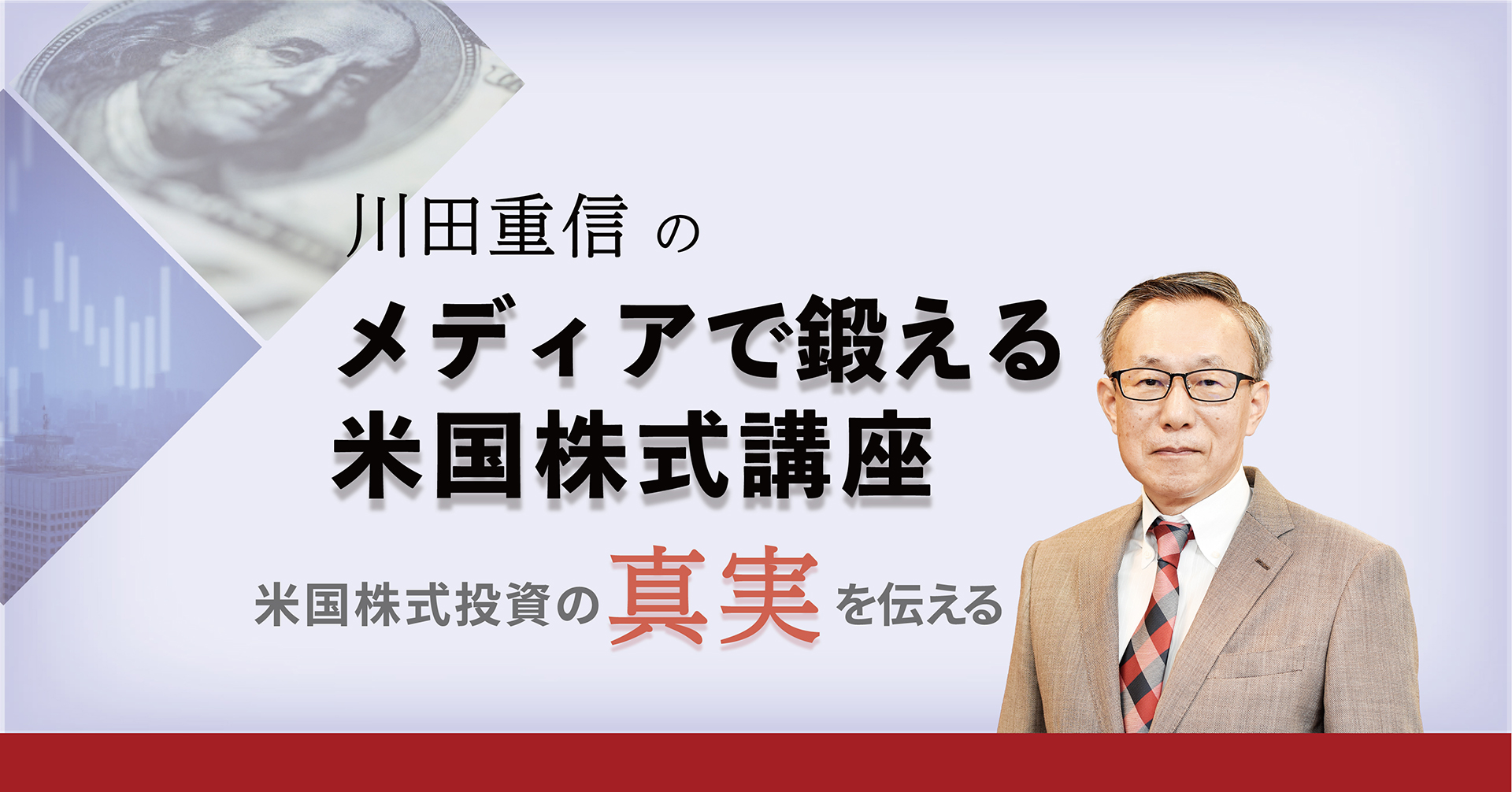
The Truth About U.S. Stock Investments from Shigenobu Kawada: "American Stock Investment Course Trained by the Media" [Vol.24] Distributed November 22, 2021
━━━━━━━━━━━━━━━━
The Truth About U.S. Stock Investing
Shigenobu Kawada's "Training in U.S. Stocks through the Media"
[Vol.24] Released November 22, 2021
━━━━━━━━━━━━━━━━
November 29 issue is a holiday
*** Table of Contents ***
Market Recap
This Week's Take!
This Week's Picked Articles
Investment Tips
Kawada's Walk
Activity Information
Q&A Corner
Achieving 20 Million Yen: Pace Setter

Source: Financial Services Agency, based on asset management simulations prepared by ExeTrust Co., Ltd.
*The figures above are for simulation purposes only and do not guarantee future results. Also, fees and taxes are not considered.
How to Read: Assumed Returns and Target Years
3–4% for over 30 years: wrap funds and balanced funds fit here
5–7% for about 25 years: this might apply to stock funds outside the U.S.
8–10% for about 20 years: a modest view of S&P 500 gains
S&P 500 Performance (Dividend Reinvestment, 1970-2021)

Reach 20 Million Yen Early with Proper Risk-Taking
Kawada's message is incredibly simple. To achieve 20 million yen, make your surplus funds work as efficiently as possible. For that, it is crucial that the participants correctly understand risk and reward. Before reading the weekly newsletter, glance at this table to confirm the correct investment posture.
Now, start the countdown to achieving 20 million yen right away!
Online Salon "Asset Formation School Where Dreams Come True"

This is an online salon where members can learn together and inspire one another to achieve asset formation. In addition to content that cannot be fully conveyed by the popular newsletter "Training in U.S. Stocks through the Media," we offer member-only seminars to experience the appeal of U.S. stock investing.
■□■□■□■□■□■□■□■□■□■□■□■□■□■□■□■□■□■
1. Market Recap (November 15–November 19)
<Major Indices>
・Dow Jones -1.4%
・S&P 500 +0.3%
・Nasdaq Composite +1.2%
= Quick Version =
Long-term yields rose on strong economic data, but with the successful, orderly auctioning of Treasuries, they settled down. Growth stocks were bought backed by strong earnings and favorable data such as retail sales, pushing the Nasdaq to record highs.
= A Bit More Detail =
Early in the week, strong economic data and caution around Treasury auctions pushed up long-term yields, weighing on stocks, but robust corporate results supported markets. October retail sales beat expectations, and consumer sentiment improved despite inflation, aiding stocks. The absence of auction disruptions helped long-term yields retreat, leading to buys in semiconductor and other high-earning names, with Nasdaq hitting record highs for two consecutive days. The S&P 500 also reached an all-time high on Thursday, but European lockdowns weighed on economically sensitive stocks, causing the Dow to decline versus the prior week.

S&P 500 Chart — Last 12 Months

■□■□■□■□■□■□■□■□■□■□■□■□■□■□■□■□■□■
2. This Week's Take!
A column delivering essential information you should know.
Re-emergence of Growth Stocks
Markets were mixed last week. When long-term yields rose early in the week, growth stocks were bought following the previous uptrend. Focus was on semiconductor and software stocks like Nvidia that surpassed earnings expectations. Meanwhile, economically sensitive stocks fell. Despite strong data, the resurgence of COVID-19 cases led to Austria's lockdown, affecting sentiment. Dow Jones declined for the second week as concerns around Boeing's travel demand, Cisco's outlook, Walmart's margins, and JPMorgan's interest rate dynamics weighed on many stocks.
Key Factors
With earnings season winding down, attention shifts to macro indicators, monetary policy, and long-term rates. The major macro data through December 3rd employment report is limited, but for monetary policy, the Beige Book will be released on December 1st ahead of the December FOMC, and minutes from the prior meeting will be released this Wednesday. In addition, various comments from Federal Reserve officials are expected.
Monetary Policy
Vice Chair Lael Brainard suggested in remarks last weekend that inflation risks remain and the economy is strong, signaling discussion on accelerating the pace of QE tapering at the December FOMC. Other officials have been hawkish, yet long-term yields have not surged, suggesting the Fed is gradually pricing in a hawkish stance. When earnings and indicators are robust, markets can price in good news since fundamentals support prices even if markets retreat. This is possible because corporate structures are resilient and can generate profits without relying on policy support.
Thanksgiving Holiday
This Thursday (the 25th) is Thanksgiving. Friday's market will close early and trading will be thin, effectively a half-day. Many market participants may take a five-day break starting Wednesday, so unexpected events could cause larger price moves. Understanding these conditions can prevent traders from being swayed. After Thanksgiving, attention will turn to retail-related data as the year-end rally approaches.
■□■□■□■□■□■□■□■□■□■□■□■□■□■□■□■□■□■
3. This Week'sPicked Articles
A column that selects information useful for asset formation from what I have found, ranks them, and comments from a very personal perspective.
【1】 Nikkei Newspaper
“Questioning the New Capitalism”New Capitalism, reevaluating excessive shareholder returns, Katsuto Iwai 2021/11/15 11:30
International Christian University Specially Appointed Professor Katsuto Iwai

Q: A government aiming to realize the “New Capitalism” is born.
A: Since the bubble burst, Japanese companies have seen flat sales, salaries to employees, and investment in facilities, while dividends quadrupled. Shareholder returns accelerated by share buybacks. About 30% of shareholders are foreign investors, and they account for 70–80% of trading volume. The market is a realm where national wealth is plundered.
Q: Why did this happen?
A: Pressure from overseas investors shifted corporate law toward a shareholder-first approach even more than in the West. It must be reversed to be more like the West.
Executive laziness is also pointed out. For growth, management should redirect added value to capital expenditure, R&D, and investments in employees. Even in the United States, criticisms of buybacks exist, yet they evade responsibility by prioritizing shareholders.
Iwai Katsuto, BA in Economics from Tokyo University, PhD from MIT (Economics). Specializes in theoretical economics. He has written many works on capitalism and corporations such as “What Will Companies Become?”
【Kawada's Comment】
It's clear that Japanese companies are not mere profit-seeking machines. They view labor as a fixed cost rather than a variable one in terms of human resources, which is natural from the American investor’s viewpoint.
Professor Iwai says, “Because Japan’s corporate law is more shareholder-focused than Europe/America, it must be brought back to Western standards,” and “Japanese firms are seen as easy targets for takeovers.”
Regarding shareholders’ powers, the US and Europe differ greatly, so discussing them together as “the West” may not be clear. From Iwai’s perspective, the US is the outlier.

Both Professor Iwai and Ubawa Hirofumi warned early about the negative aspects of American-style capitalism. Today, those crises return to us as environmental pollution and widening income inequality.
However, in the US, correcting these negative aspects is grounded in capitalism. In Japan, voices for distribution seem louder than those for growth. I wonder if Iwai has a prescription for the malaise capitalism carries.
By the way, a few years ago a hit book was “The Universe of Economics” (Nikkei Business Library) by Katsuto Iwai (author) and Hiroyuki Maeda (other).
I have the 2015 first edition. This author’s works are said to be contemplative and difficult. Re-reading this book, it is indeed challenging. The topics span widely. In the first chapter, “Origin,” you see how early life showed a person of exceptional talent. In high school he already read global philosophical classics, and at the University of Tokyo he attended Takuro Komiya’s seminar. It makes sense.
【2】 Nikkei Newspaper “Questioning the New Capitalism”
New Capitalism will be driven by talent mobility: Yohei Yasunaga of Mitsui & Co.2021/11/17 11:30
Chairman Yohei Yasunaga, Mitsui & Co.
Q: Points needed for the “New Capitalism”?
A: Japan’s growth had already stalled for 30 years. What’s needed to change is a system that promotes labor mobility.

Q: The government's “New Capitalism Realization Council” emergency proposals also mention the importance of labor mobility.
A: The symbol of labor mobility is mid-career hiring. In 2020, there were 135 new graduates and 42 mid-career hires. They’ve established an internal startup育成機関 to give young employees opportunities to challenge themselves, while accumulating knowledge from successes and failures.
Q: A rethink of working styles including lifetime employment and retirement ages is also a focus.A: Because of lifetime employment, individuals could avoid making life plans early. If we are to revitalize companies and society without visible structural roots, the public will not accept it. Therefore, I think it won’t lead to improved performance or brand value.
Yasunaga Tatsuo, 1983 Tokyo Univ. engineering graduate, joined Mitsui & Co. In 2015 he became president after a rapid rise through the ranks. From 2021, he is in the current role and also serves as Vice Chairman of Keidanren.
【Kawada's Comment】
I believe the key to Japan's revival is labor mobility. Yet major Japanese corporations still rely on new graduate hiring as the core practice.
Top leaders in the press often present claims far from reality. In Japan, one must say things one does not truly believe; that’s the harshness of the establishment.
In today’s Japan, even if mobility were embraced and hiring became extremely flexible, it wouldn’t necessarily lead to company growth. The social order—unseen but rooted—would resist and people would not support such moves. Thus, it probably won’t increase performance or brand value.
【3】 Nikkei Newspaper Share buybacks support US stock gains; 90 trillion yen as of end of September; tech-heavy backdrop2021/11/18
US companies’ share buybacks surged, lifting stock markets. By end of September 2021, about $7.8 trillion (roughly 90 trillion yen) had been repurchased, already exceeding last year’s total. On an annual basis, the figure could surpass the all-time high of 18 years ago (about $970 billion).
Many firms turned DX and other changes in industrial structure into opportunities, generating profits and ample cash to return to shareholders.
The scale of buybacks is large among major tech firms. Alphabet, formerly Google’s holding company, Apple, Google (Alphabet), Microsoft, and Facebook are among the top five, accounting for about $184.7 billion, or 24% of all US corporate buybacks.
The ratio of total returns (dividends plus buybacks) to net earnings for US firms at end of 2020 rose by 33 percentage points year-over-year to an average of 83%, while Japanese firms rose by 6 points to 29%.
【Kawada's Comment】
The US stock market capitalization is roughly 4500 trillion yen. If buybacks are 90 trillion yen, that is about 2%. This implies that earnings per share would increase by about 2% just from the buyback, making the stock cheaper if prices remain the same.
There is much debate that buybacks fuel stock-price-centric behavior. Even in the US, regulatory tightening discussions exist. Yet many tech firms issue bonds at low rates and use those funds to buy back stock.

In the US, a CEO who does not take actions to increase shareholder value may be viewed as negligent.
If the stock price rises, shareholders have a chance to sell, which circulates spending and drives growth.
For Japanese investors who lack a mindset to apply stocks to the economy, understanding US stocks is a mistake. The link between stock prices and corporate profits is not so straightforward.
Details are explained further by Masatoshi Kikuchi, a Mizuhobank strategist: “Why do US companies place emphasis on ‘buybacks’?”
【Kawada's Comment】
Yutaka Onda, the narrator of this article, was my boss during our time at Daiwa Securities’ NY office. He had a piercing voice and sternly guided his subordinates. After serving as executive managing director at Daiwa, he has pursued various fields and is now 86, and the honorary chairman of ITbook, an IT company.

Onda looks back at the 1980s corporate finance business. The four major houses Nomura, Daiwa, Nikko, and Yaichi controlled the underwriting shares of listed companies, each with its own strengths.
But in fact Nomura Securities was overwhelmingly strong, and in those days “Ministry of Finance also checked Nomura Securities’ intentions before taking actions.”
This resonates with me. In 1981, I worked in the underwriting department, advising on funds procurement for listed companies with Corporate Finance and Securities laws in mind, diligently pursuing underwriting leads with corporate sales staff.
■ The Legacy of Traditional Arts?
The four firms were described as “Hou-ya of the corporate Yaichi,” “Nomura of information,” but actually after Nomura, the other three were roughly equal. Daiwa’s connections to conglomerates were thinner, making underwriting battles tougher.
As Onda wrote, visiting daily to show sincerity was essential for securing lead underwriters. Yet the US witnessed genuine financial innovation. In the US, the only real differentiator for securities firms led by the Ministry of Finance is relationships; unlike the US innovation-driven approach, Japanese firms were seen as “the inheritors of traditional arts.”
No matter how far financial techniques progress, personal relationships remain fundamental. Is daily contact still the key? Reading this article brings back memories of “the underwriting battles of Showa era.”
■□■□■□■□■□■□■□■□■□■□■□■□■□■□■□■□■□■
4. Investment Hints
A column that writes not only about “investment methods” and “stock picks” but also “noteworthy indicators and statements” and “movements in society and politics.”
Can you really beat the S&P 500 index?
Ordinary individuals and even fund managers struggle to beat benchmarks like the S&P 500. With only a little over a month left in this year’s market, this topic is increasingly discussed in the media. In this column, to remind everyone, I’ll recap again.
① Berkshire Hathaway (portfolio holdings) isn’t that great
Nikkei NewspaperDid Buffett beat the index? Analyzing the SEC filing11/17
As of the end of September 2021, Berkshire Hathaway’s number of publicly traded holdings decreased by 1 to 41. Assuming certain conditions, the investment return rate for Q3 was only 0.78%, even less than zero.
Among those held for more than 20 years are Coca-Cola, American Express, Moody’s, Procter & Gamble, and Wells Fargo, but the last two have sold most of their holdings, leaving effectively three.
If you assume all holdings were bought and sold at quarter ends, the 2021 Q3 return was 0.78%, under the S&P 500’s 4.78%. In fact, it underperformed for three consecutive quarters. However, if you had held Berkshire’s end of September holdings through November 15, the period’s return after September would be 6.95%, above the S&P 500’s 4.68%.
To assess longer-term performance, performance was compared across seven periods: year-to-date, pre-COVID, 2 years 10.5 months, 4 years 10.5 months, 9 years 10.5 months, 14 years 10.5 months, and 19 years 10.5 months.
Recent ~3-year performance nearly kept up with the benchmark. However, mid- to long-term performance from 5 to 15 years lagged behind. Since 2010 Buffett has often been said to be in his 80s and losing his edge; in growth-stock heavy markets, performance suffered.
Over the ultra long term (nearly 20 years), performance has beaten the benchmark. Reading Buffett’s annual letters to shareholders published each February, the 2002 dip when the S&P 500 fell substantially was milder; the 2008 Lehman crisis losses were not as severe as the S&P 500. This helped.

Berkshire Hathaway has remained in the market for 57 years, and its stock price has risen incredibly. The numbers I’m about to show are not the portfolio’s performance but Berkshire Hathaway’s stock-price performance itself.
While the S&P 500 with dividends yields about 10.2% annually, Berkshire Hathaway has about 20.0% annually. Anyone managing their own investments would know this is not something achieved by luck alone. Buffett’s strength was strongest in the first 30 years; in the last 20 years, it’s roughly on par with the S&P 500.
Berkshire Hathaway stock pricePerformance table


In the early days, the company had limited assets to move, allowing nimble actions; perhaps a time when value investing outperformed growth. Buffett avoided tech and thus lagged, yet this performance is remarkable: over 57 years, the S&P 500 rose 230x, while Berkshire Hathaway rose 28,000x. This makes Buffett an exceptionally rare person who has far surpassed the S&P 500.
② Active mutual funds also fail to beat
In over 50% of cases, active funds outperforming benchmarks were seen only in Australia over the last year (55.70%). In other markets and periods, active management fell below 50%.
Most professional fund managers cannot beat the S&P 500 in the long run. There are many constraints to investing, but those constraints are largely absent for individual investors who actually record and manage portfolios.

③ Kawada Theory: There is no eternal growth stock (no “youthful,” perpetual growth)
■ Why can’t we beat the S&P 500?
Why is it so hard to beat the S&P 500? The index is composed of a broad set of stocks selected by a systematic rule.
Meanwhile, humans have limits in processing information, are prone to biases and overconfidence, and are swayed by emotions. This creates substantial room for misjudgment of reality.
Here are examples of mistakes humans make that can drag down portfolio performance.
■ “Eternal Youth” stocks?
In the past Buffett spoke of “permanent holdings”—stocks once bought would never be sold, such as Coca-Cola, American Express, and perhaps Apple recently.
I call such super-strong stocks “eternal youths.” They are not newborns or uncertain adolescence; they are mature, profitable, and growing.
■ My holdings: youth in full bloom
My portfolio consists of these “youthful” enterprises, such as the index provider MSCI, Singapore-based SE (Sea), ServiceNow (NOW), Zebra (ZBRA), Intuitive Surgical (ISRG), etc. I consider these stocks to be in the prime of youth and growth.
5-year chart of youthful stocks

However, I think there is no such thing as eternal youth in investing. Recently, two “youth” stocks chosen by professional fund managers have faltered.
Disney (DIS) announced earnings on Nov 10 and subsequently dropped. Visa (V) has recently underperformed; the main reason is perceived demand-supply issues due to sector shifts.
These two stocks are favorites of active fund managers, and to many managers they appear as “eternal youths” with potential to outperform the S&P 500 over the long term.
But are they truly worthy of that distinction? Future is unknown, so I look at their past to glean potential.
■ Disney’s ultra-long-term chart
This company was founded in 1923 and IPO in March 1957. The initial share would have been split into 384 shares. The public offering price was $13.88, so today’s market value would be about $154, representing a 65-fold increase over 65 years. If you had bought $1000 65 years ago, it would be worth $4,260,000 today. You probably couldn’t have bought the public offering, but the ascent is remarkable.
If You Had Invested $500 in Disney's IPO, This Is How Much Money You'd Have Now


■ Visa is also amazing
Visa’s 2008 IPO rose similarly dramatically. IPO was March 19, 2008, close at $44. The current price is around $200. With four stock splits since then, that is an 18x increase over 13 years.

The following is a 5-year chart showing S&P 500 (candlesticks), Nasdaq-100 (orange), Visa (light blue), and Disney (yellow).
■ Past 20 years
Looking at the past 20 years, Visa (since its 2008 IPO) rose about 18x, clearly outperforming Disney and the indices; Nasdaq-100 and Disney are about the same, while the S&P 500 slightly lagged.

■ Past 5 years
Visa led Nasdaq-100 for a while, but the gap widened in the last year. Disney also lagged behind the S&P 500.

■ If you’re buying these stocks, you’re better off buying the S&P 500
Disney and Visa are world-class companies representing the US. If you held them, would you still outperform the major indices long term?
Given their brand recognition, business integrity, and market capitalization, you’d like to think so. But blind faith is risky.
Dismissing these stocks’ future would threaten your own ability to pick stocks. It is not easy to have the courage and wisdom to challenge oneself.
In my case, I judge from the long-term charts whether these firms hold potential growth. Whether their growth has peaked remains unclear, but comparing with major indices suggests investing in the S&P 500 would be more cost-effective in terms of management.

④ Thematic funds are unstable; it’s hard to beat indices consistently
■ ARK Investment Management’s ETFs and funds
ARKCapital, led by Cathy Wood, is a rising asset manager focusing on investments in companies delivering “disruptive innovation,” achieving high growth. These are representative thematic investments.
ETFs include five stocks
ARKK: Disruptive innovation across genres
ARKW: Contributing to the evolution of next-generation Internet
ARKF: Technologies and services that change the financial system
ARKQ: Companies focusing on automation
ARKG: Companies related to genomics and biotechnology
Indeed, over the past five years these ETFs have outperformed the S&P 500. They surged through February this year but then struggled afterward.
■ Relative performance to the S&P 500: past 5 years

■ Relative performance to the S&P 500: past 1 year

What about performance after Japanese investors subscribed?

Japanese individual investors could invest in Ark Innovation Fund Series by Nikko Asset Management. There was much buzz about large inflows until spring of this year.
However, from last autumn, Japanese investors mostly started investing; since then, especially through February this year, these investors likely underperformed the S&P 500.
■ Ark’s investment characteristics
Ark invests in young, growing companies, many of which are in early-stage R&D with uncertain valuations. The era of unprecedented monetary easing and retail investor frenzy contributed to the rise as well.
From these, genuine growth companies will emerge, but it takes time and depends on the investment climate. How many investors can patiently trust Ark’s picks? The likelihood that thematic funds beat the S&P 500 over the long term seems low.


ARK Innovation Fund Series - Nikko Asset Management
【Summary】
I’ve illustrated in several cases how difficult it is to outperform the benchmark (here, the S&P 500). Investing in individual stocks or thematic funds is certainly a valid approach. However, in asset formation, it should be treated as a core-satellite investment, with satellites as a part of the strategy. Otherwise, your assets will not grow.
It’s fine to explore various ideas for asset formation, but in most cases, you won’t achieve performance exceeding the S&P 500. In that sense, Buffett’s oft-quoted remark to his wife—“Invest 90% of your funds in the S&P 500“—resonates especially with those who actively manage their own investments.
■□■□■□■□■□■□■□■□■□■□■□■□■□■□■□■□■□■
New Series “Perfect Guide to Asset Formation Using US Stocks”
Introduction
We are starting a new series that covers the essential basics of asset formation. The overall structure is planned as follows.
What era are we living in? Part 1 and 2
Independent Japanese and asset formation essential for independence: Part 1–3
Is the stock market only in the US?
Differences in stock market culture between Japan and the US
Key characteristics of the US market you should know
What is the S&P 500
Why is the US strong?
Recommended investment strategies – Core and Satellite Investing –
Core investment strategy
Satellite investment strategy
What should you buy
Sources of information and investing
Episode 3: Is the stock market in the US only? Part 3
■ Books that confirm the long-term rise of US equities
From here, I discuss books that influenced my perspective up to now.
Common to these is the idea that “the history and culture of the United States differ from any other country or region.” For Westerners, America is a New World and a Protestant-designed artificial nation. With these conditions, a highly developed stock market was born and evolved, I believe.
① The End of History by Francis Fukuyama; translated by Shōichi Watanabe, Mikasa Shobo
This is a shocking book published while I was stationed in NY in 1990.

The End of History posits that in the international community democracy and free market capitalism will ultimately prevail, after which social institutions stop developing and society maintains peace, freedom, and stability indefinitely.
Democratic politics is the final form of political system; as a result, large-scale historical events like wars and coups that would threaten political stability will no longer occur. This is why the situation is described as the “End of History.”
【Key Points】
The upper volume explains the historical superiority of liberal democracy and discusses the ideas and philosophies that formed the basis for that development.
The lower volume examines the weaknesses and risks of liberal democracy that could end history, and focuses on the driving forces of history.
The driving force of history is the spirit (courage, faith, passion) Plato spoke of. To demonstrate one’s superiority, one may be willing to sacrifice life; on the other hand, the desire to be recognized equally with others is also the driving force. In short, the struggle between the desire for equality and the desire for superiority.
Democracy based on liberalism yields a world of equality. When such a world is achieved, Nietzsche warned about human fragility and the condition of slave happiness.
Glory, self-respect, praise, ambition, effort, and discipline have been driving forces of progress and prosperity.
History advances amid the tension between equality and superiority, and the force that brings this about is courage.
【Kawada's Comment】
In 1989, when the East–West Cold War ended, the US stock market rose dramatically. The Dow, around 2,500 dollars, was said to reach 10,000, and I could hardly believe it, but it actually reached 10,000 in March 1999.
If there is less conflict in the world, goods, people, and information can move freely, enriching the world economy, and the United States would be the chief beneficiary—namely US companies and stockholders.
In reality, the US stock market saw a big rally into the late 1990s following the internet’s emergence.
Before encountering this book, I had lived in the US for about six years; reading this allowed me to glimpse Westerners’ minds, especially American intellectuals, and deepen my understanding of the historical significance of the end of the Cold War.
Even today, the text contains many scholarly passages requiring substantial background knowledge. The English original is challenging; reading it with guidance from native scholars yields intellectual excitement.
When I was in NY, I studied English with a former high school teacher; we progressed slowly. After returning to Japan, I obtained the Japanese translation by Nobuichi Watanabe, which was excellent.
② Naoki Komuro: The Constitutional Theory for Japanese people
The title says “Constitutional Theory,” but it is not a typical constitutional law book that interprets statutes. It explains what a constitution is, how and why it was formed, and its modern influence. It is challenging, but written in a Q&A format with the publisher’s editor, making it readable.【Notable Passages】
* Ito Hirobumi’s insight saw that Christianity underpinned Western modernization, and he created the Sun God Emperor as a substitute for Christ.

* Under the new US-provided constitution, Japan, which had lost its divine emperor, fell into acute anomie and normative collapse due to authority loss.
【Kawada's Comment】
This book made me understand how humanity invented democracy and capitalism. It was an accessible and fascinating read.
One idea is Calvin’s doctrine of predestination, which posits that every human action is predetermined by God, and salvation is already decided; earthly deeds do not matter. It’s hard to imagine how such thinking led to the most diligent and thrifty workers, and it shows how important beliefs and principles are for people.
Komuro’s view shows that economics, politics, law, and sociology intersect. He sometimes faced intense criticism, but his principled stance is evident in this work.
Reading this book, I was struck by how much what we learned in school or saw in media is incomplete or misleading.
The modern root cause of Japan is constitutional dysfunction. This book explains what constitutionalism means for Japanese people in an accessible and thorough way, discussing Western parliamentary politics, democracy, capitalism, and constitution, including Meiji, prewar, and postwar periods, mainly drawing on Max Weber’s sociological religion framework. It suggests that the engine of Western modernization is capitalism grounded in Christian predestination, a concept difficult for Buddhistic causal logic to grasp for Japanese.
While I cannot fully understand predestination, it remains fascinating. If Protestant mindsets drive actions, then their motivation differs greatly from ours. Japanese elites are designed to serve the country—public officials or big company employees—rather than worshiping a “god.”
Thus they may not seem to seek salvation through work. They pursue the pathways of “public service” or “corporate career” with discipline, without much material accumulation being a social norm.
With the above two books, I became convinced that US stock markets would rise continuously. Americans seek salvation from God and work tirelessly is seen as the ultimate good.
③ Smart Power—The New Power that Governs the 21st Century –July 21, 2011 Joseph S. Nye (author), Yoichi Yamaoka(translator), Kyoko Fujishima(translator)
【Content Introduction】
What power does a country need in the 21st century? A renowned international relations scholar explains the new concept of “smart power,” a combination of hard power and soft power, and thoroughly analyzes the sources of power for the US, Japan, Europe, China, Russia, and emerging nations in the 21st century.
【Excerpt】Introduction: “America’s peak has passed, and the era when the US held overwhelming power in the world has ended.” Is this view accurate? To answer, we must understand what power means in the 21st century given rapid information revolution and globalization, and be wary of several pitfalls.

【Comment】
Joseph Nye is a scholar who served in the US government during the Clinton era. I attended a debate on US elections and Japan–US relations at Sophia University in October 2016, where Nye harshly criticized Trump, though reality diverged from his expectations and Trump won.
In the book’s title, “smart power” refers to the combination of hard power (coercion and money) and soft power (persuasion and attraction).
During the Obama era, diplomacy leaned toward soft power, but the Trump era was strongly hard power. I interpreted US stock gains as investors appreciating the strengthening of both elements.
■ The stock market is a highly advanced form of soft power
Raising funds from the general public and allocating them to needed sectors through the market is a crucial role of stock markets. The US excels at this, and other countries cannot imitate it. The market’s discipline—survival of the fittest and creative destruction—is seen as legitimate by the US. This sophisticated public market—advanced and purer—owes much to the US’s “smart power.”
The book offers detailed reasons why I believe this, and it helps explain why the so-called decline of the US is not happening. For those aiming for long-term US stock investment, there are many insights to find.
■□■□■□■□■□■□■□■□■□■□■□■□■□■□■□■□■□■
5. Kawada’s Walk
◇◇

■ Highlights

Documentary by Frederick Wiseman about the Boston City Hall’s operations. The city handles public services like police, fire, public health, senior care, etc., in a diverse, multicultural metropolis. Through Mayor Marty Walsh and staff addressing various issues, the film questions the proper role of government for residents’ happiness.
■ Plot
Boston, MA — a city with a long history and diverse cultures. The City Hall’s call center handles everything from road repairs to power outages, and staff including Mayor Walsh respond daily. The film covers operations ranging from food banks to NAACP discussions, same-sex marriage, and aid for the elderly and those in need.
■ Full quotes from notable people (in no particular order)
Wiseman has observed the world for over 50 years; as democracy faces crises globally, he has created a deeply political film. Yet the master’s approach is not accusation or critique, but “blessing.” He was 88 during filming, and he is a passionate person.
Kazuhiko Sota (Filmmaker)

People who “hear all voices” are portrayed from the start. The film does not impose, but invites viewers to join in solving the issues alongside the city’s reality.
Haruka Komori (Filmmaker)
I was overwhelmed by the documentary’s power. Because it’s not fiction, the democracy in daily life comes through with a resonant, ground-level feel. It makes you think about politics and administration in Japan differently.
Mieko Nakabayashi (Waseda University Professor)
The work of Japanese local governments closely resembles Boston’s. Yet city hall work is often unseen by residents. I empathize with Mayor Walsh’s efforts to connect with citizens.
Naomi Koshina (Former Mayor of Otsu)
【Kawada’s Comment】
■ The issues here are race, class, religion
The film runs 274 minutes, a five-hour epic. Among the films I’ve seen, this is likely the longest. Ordinary American films often have barely audible English, but in this film the characters speak clearly. Subtitles help convey meaning too.
If you’ve never lived in the United States, understanding the film’s intentions can be challenging. After finishing, some elderly locals nearby lamented that they didn’t understand the thread. The film implies a critical view of party politics that divide the country, though it does not mention Trump by name.
Race, class, and religion are the root issues here. Freedom and autonomy must be earned by one’s own power. Yet family background, skin color, and immigration timing create hurdles that are hard to overcome. An energetic weapon for solving these gaps should lie in US stock investment, but those who are marginalized may not have the know-how or capital to participate.
■ We expatriates are ultimately “guests”
Watching the film brings back memories of studying abroad or being stationed overseas. In my case, I did not threaten American jobs; rather I learned from Americans as a guest paying fees for education or travel, a “guest” role.
The film’s subjects experience tangible discrimination and oppression with no easy escape route. Their daily struggles differ from the everyday concerns and frustrations of us guests in terms of intensity and gravity.
By the way, the movie doesn’t feature Boston’s tourist spots or iconic university campuses; it is set in a community college environment in ordinary brick buildings in urban America.

Conversations and unfair procedures depicted in the film reminded me of my own past, particularly the brisk clerk who didn’t care about my English level or position and spoke quickly. The clerk’s slang and the tedious procedures illustrate the difficulty of negotiating and the challenge of being understood, even with prepared practice.
■ Gratitude Received
The alienation and loneliness I felt then were tempered by family and Japanese colleagues. Yet kind neighbors invited us to meals. I learned that when you immigrate to a country, you should also offer neighborly kindness in return.
However, we were not immigrants but temporary guests. The host felt a touch of disappointment when they realized this. “So you’re not in this together with us” was the impression, and there were several such moments.
For example, Mr. Chiu from Taiwan, living opposite, asked why we were leaving; he seemed surprised when we said we would return to Japan. The film’s immigrant narratives echoed my own feelings.
■ The power of community
The film reaffirms the power of community. It seems communities used to rely on churches; today, city halls take on that hub role as a center of the community. You must be part of the community to enjoy its benefits; engagement is essential—becoming a true American means joining the community. The film’s vulnerable characters are largely first-generation immigrants with limited options for returning. The expatriates of that time had a different level of commitment.
Around Thanksgiving, family ties become stronger in the US, with neighbors, coworkers, and church events. When that happens, the “guests” are more likely to act as a family, and community ties temporarily become thinner. That sense of alienation remains a memorable part of the past.
Now, it’s time to repay the debt of gratitude owed to those who helped us; yet we find ourselves too busy to do so. This season again makes me feel that sense of guilt.

■□■□■□■□■□■□■□■□■□■□■□■□■□■□■□■□■□■
6. Upcoming Activities
◇ Friday, November 26, 8:15 AM — Nikkei CNBC (Newscaster: Nono Yasuno, photo)
◇ Wednesday, December 1, 11:00 AM — Stock Voice
■□■□■□■□■□■□■□■□■□■□■□■□■□■□■□■□■□■7. Q&A
Q: Do long-term world economic growth and global stock prices correlate, and can we assume “the world economy will rise to the right” in the future?
A: I believe so. In cases of global-scale wars or disasters, markets can falter, but generally, the trend is upward. Historically, the winners postwar were Japan at first, then China, but the United States has consistently remained strong.
Q: If the link between economic growth and stock prices breaks, when could this happen?
A: This is difficult to answer, but the link between growth and stock prices exists in countries with robust democratic and capitalist systems such as the US.
In emerging markets or authoritarian states, even if growth occurs, the fruits (profits and wealth) are distributed at the rulers’ discretion.
I think the correlation between a country’s economic growth and shareholder interests is small, especially in emerging markets. This article may explain it well.
Tell me, Investment Teacher!! Why Do Emerging Market Stocks Cause Losses? | F-Style Magazine
Nowadays, investing in overseas stocks has become easy, so Japan is no longer the sole option. The range of overseas stocks is wide, and more individual investors are boldly investing in emerging markets. While emerging-market popularity is cooling, places like India remain popular.
This article is very insightful.
・ Growth in a country does not guarantee stock price increases
・ Some studies suggest negative relationships between a country’s economic growth and stock returns
・ The fruits of growth may go elsewhere (not necessarily to shareholders: consumers, government, etc.)
・ Politics often play a role (risks in immature political systems)
・ Stock returns are influenced by economic growth, exchange rates, investor expectations, capital increases, and other factors
・ Simple assumptions like “emerging markets are attractive” can be dangerous
As for US stocks, you really don’t need to worry much. This has been very educational.
───────────────────────────────────
★ For questions, please read the 【Question Rules】 below,
and send them to info@kawata-magazine.com.
【 Question Rules 】
◆ We cannot answer all questions. Please understand.
◆ Questions may be published on our site, YouTube, social media, books, etc., in a form that does not identify individuals.
◆ We will not answer questions from those whose subscription cannot be confirmed.
◆ Obvious advertising or promotional content will be omitted.
◆ If you post a malicious question without subscribing, appropriate measures will be taken.
───────────────────────────────────
★ Disclaimer
◆ Our service does not provide recommendations to buy or sell securities such as stocks, bonds, funds, ETFs, or sectors. Investment decisions are the subscriber’s responsibility; we provide no warranty.
◆ We do not guarantee damages suffered by subscribers using our mail magazine.
◆ We are not responsible for any disputes arising between members or between a member and a third party due to information provided in this service.
◆ We do not owe any liability for damages caused by interruptions, cessation, or changes in service contents.
───────────────────────────────────
■ Publisher: Hibiya Technology & Finance Co., Ltd.
■ Kawata Shigenobu’s Thank-You to American Stocks
https://www.kawataamekabu.com/
■ Twitter:https://twitter.com/ShigenobuKawata
■ For opinions, requests, or to unsubscribe, click here
【Email】info@kawata-magazine.com
■ If you do not receive emails, check your spam folder as a precaution.
───────────────────────────────────