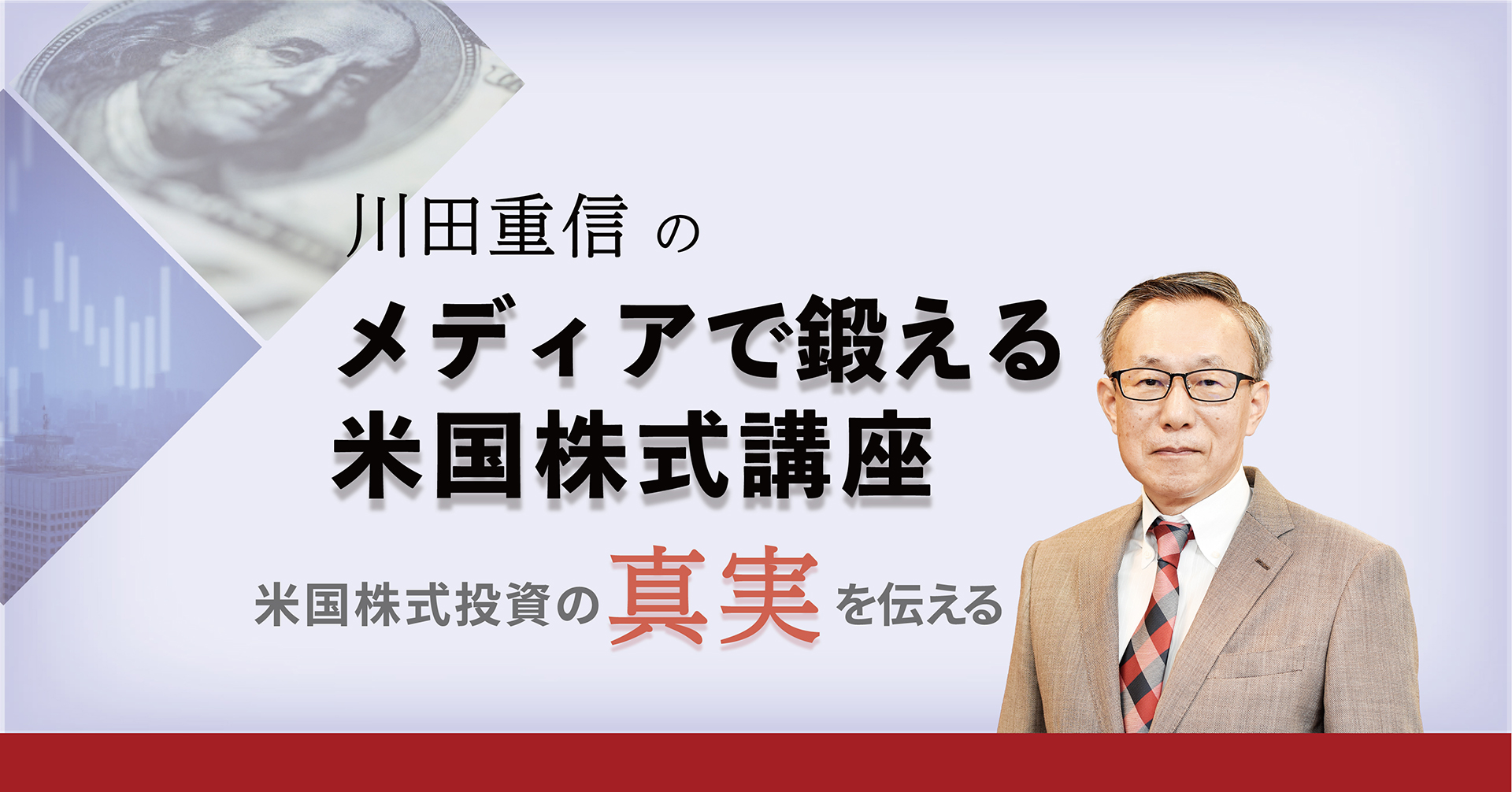
Truth about U.S. stock investment from Shinobu Kawada: "American Stock Course Trained by the Media" [Vol.9] delivered August 2, 2021
〓〓〓〓〓〓〓〓〓〓〓〓〓〓〓
Transmitting the Truth About U.S. Stock Investing
Shigenobu Kawada's "Training in U.S. Stocks through the Media"
[Vol.9]Distributed August 2, 2021
〓〓〓〓〓〓〓〓〓〓〓〓〓〓〓
*** Table of Contents ***
Market Review
This Week's Spotlight!
This Week's Picked Articles
Investment Tips
Kawada's Walk
Activity Information
Q&A Corner
Achieving 20 Million Yen Pace Setter

Source: Financial Services Agency; Asset Allocation Simulation based on ExeTrust Corporation
*The above figures are for simulation purposes only and do not guarantee future investment returns. Fees and taxes are not considered.
How to Read: Assumed Returns and Time to Target
3–4%: 30+ years for wrap funds or balanced funds
5–7%: about 25 years for non-U.S. stock mutual funds
8–10%: about 20 years, if you view the upward trend of the S&P 500 conservatively
S&P 500 Performance Record (Dividends Reinvested, 1970-2021)

Reach 20 Million Yen Early with Correct Risk-Taking
Kawada's message is remarkably simple. To reach 20 million yen, let your excess funds work as efficiently as possible. For that, it is important that participants correctly understand the meaning of risk and reward. Before reading the weekly newsletter, glance at this table and confirm the correct investing posture.
Now, start the countdown to 20,000,000 yen right away!
■□■□■□■□■□■□■□■□■□■□■□■□■□■□■□■□■□■
1. Market Review (July 26–July 30)
・Dow Jones -0.4%
・S&P 500 -0.4%
・Nasdaq Composite -1.1%
= Quick Version =
After hitting record highs on Monday driven by earnings expectations, many growth stocks sold off as results came in, leading to a weekly decline. The announcements of the Fed’s FOMC and Q2 GDP growth had limited impact on the market.
= Slightly More Details =
As earnings season peaks, expectations for corporate results drove the indices to highs on Monday. Afterwards, concerns about the Delta variant and regulatory worries in overseas markets like China weighed on sentiment. Though major tech earnings were solid, they mostly came in slightly below market expectations, keeping gains in check. The FOMC discussed tapering asset purchases but signaled no major policy changes, keeping the overall impact on markets limited. Amazon fell sharply as investors anticipated a slowdown in Q3 onwards, while Alphabet was an exception in performance.

S&P 500 over the past year

■□■□■□■□■□■□■□■□■□■□■□■□■□■□■□■□■□■
2. This Week's Spotlight!
A section that delivers essential information you should know.
July ended. The S&P 500 closed higher for the 7th trading day at a record high, marking a 2.3% gain for the six-month period. In short, lower interest rates and strong corporate earnings were the drivers.
Now it’s August. There’s a saying about a summer rally, so August isn’t a bad month: its historical probability of rising is 55.9%. When it rises, the average gain is 3.91%; when it falls, the average loss is 3.95%; the average net is about +0.70%.
However, performance for September and October after August has historically been weak, and looking at the three-month window back to 1928, the average is -0.03%, making it the only negative three-month period over the year. Therefore, based on historical patterns, summer is not a time to chase gains.
Looking at the current environment, the market seems to be proceeding with its schedule calmly. The recent FOMC did not make policy changes, and there were no new hints about future monetary policy. GDP growth fell short of expectations, but private consumption was stronger than expected, so concerns about the economy did not arise.
Earnings releases are peaking. Major tech stocks represented by GAFAM have largely completed their results. Because expectations for GAFAM were overly optimistic before the results, the pattern of "buy on rumors, sell on news" played out. In particular, Amazon.com suggested slower growth from Q3 onward, leading to a sharp sell-off on Friday. Alphabet (Google's parent) appears to be the exception.
Earnings announcements will continue this week, but in terms of market impact, the peak has passed. That means the market will again be driven by economic indicators and monetary policy expectations. The upcoming July jobs report, released this weekend, seems to be the near-term biggest event. The market currently expects nonfarm payrolls to rise by about 90,000.
With current stock valuations, a sharp surge is unlikely; instead, there are many factors that could push prices down. The Delta variant causing renewed COVID-19 spread and inflation fears leading to higher rates are examples, but even these well-anticipated headwinds are unlikely to cause a large drop.
In other words, it’s wise to have some cash on hand to enjoy the summer and to focus on buying on dips. Of course, for long-term investing, routine monthly contributions (using available cash) should not be paused due to short-term fluctuations.
■□■□■□■□■□■□■□■□■□■□■□■□■□■□■□■□■□■
3. This Week’s Picked Articles
A column that selects information useful for wealth-building from what I have come across, ranks them, and comments with a highly subjective personal viewpoint.
【1】Nikkei Newspaper Domestic asset management companies facing double trouble: fees decreasing, funds going overseas7/28

(A bit long, but please bear with me)
■ Kyoto Branch Sales Department, Section 1, Deputy Manager K

It’s long since I worked personal sales at a major securities firm’s Kyoto branch. Back then Kyoto Branch was a large-scale shop with five sections in the sales department. I started in Section 2, then moved to Section 5, I think. The center of the bustling trading floor was Section 1, and its boss was Deputy Manager K. By the way, other sections’ heads bore the title “Section Manager,” but he rose quickly, so he was one notch higher as “Deputy Manager.”

That day, as usual, he was roaring at the staff in his harsh Kansai dialect. His gravelly voice carried like a thorn, and when it scraped the back of the throat with a mix of saliva (refer to photos of Kobo Enryu), it seemed to pierce the listener’s ears or brain and the thorn never came out. Because of that, few could endure facing him for long.
By the way, his appearance resembles the character “Chibi-ta” from the manga “Osomatsu-kun” (Osomatsu-kun character introductions). If he aged, it would be perfect. After he roared with a voice that seemed to squeeze out a large commission, he would then smile with a “nyah—” grin. And at that moment, the gold tooth on his front teeth flashed. The combination of the “strange smile,” the “gold tooth,” and the “bald head” is still deeply imprinted in my mind.Osomatsu-kun character introductions). If he aged, it would be perfect. After he roared with a voice that seemed to squeeze out a large commission, he would then smile with a “nyah—” grin. And at that moment, the gold tooth on his front teeth flashed. The combination of the “strange smile,” the “gold tooth,” and the “bald head” is still deeply imprinted in my mind.
The floor has no partitions. Deputy Manager K knew his role well, and while glowering at the sales floor, he would lean over enough for everyone in the department to hear, on tiptoe to look down around him, delivering a rally (in truth, he was quite small in stature). Of course, this was the natural conduct of a king at the apex of the sales department. Other section chiefs secretly resented it, but their numbers were so superior that they kept quiet with bitter expressions.
■ From Deputy Manager K’s rallies I learned the essence of securities management
Usually, he would set the day’s menu first with a rally. Then he would focus on coaching the underperforming staff, probing why they couldn’t perform and what they should do, even delving into their private lives, and analyzing them like a disciplinary officer, driving them hard. This would often leak to other sections, making the person feel trapped. That look, thinking back now, is similar to Chibi-ta’s “I am innocent!” directed at a Japanese person, followed by a fierce glare—there were times when his face could be monstrous.
Among many memorable teachings, the most engrained in my memory is the “sermon” in the mutual fund section. “You all—, never let the mutual funds (targeting quotas) drop. Why do you think we’re still getting paid every month? It’s because we collect these mutual funds that no one wants to buy. Stock commissions alone won’t sustain the business. If you drop this, securities management cannot stand—do you understand?!”
Incidentally, Deputy Manager K’s sales performance was consistently among the top nationwide. He insisted he was effectively the national top because his clients in Kyoto were all those he personally developed (or so it seemed). In fact, his sales numbers at the branch were outstanding, and his reputation echoed across the Kansai region. The zeal and intensity in sales were immense. His bald head seemed to steam while on a call with a client.
■ Was Deputy Manager K’s kindness just a disguise for ulterior motives?
By the way, I was a young salesman with decent numbers. When I stood out in the numbers, he approached me with a smile, saying, “Kawada-kun, you’ve got it. How’s that big client XX (a major client) doing? If you keep rolling the client as the company asks, the client will gradually shrink.” He smiled with a chibi-ta look and a warm grin.
When colleagues heard Deputy Manager K praised me, they said, “That guy will eventually pull you into his own department, and when you transfer, he’ll own that client.” I was too young to see that possibility.
■ Deputy Manager K didn’t actually get promoted that much
On another note, Deputy Manager K would sometimes boast, “West K (himself) vs East XX.” East XX is a legendary successful figure in securities who rose to top executive positions. K’s career, by contrast, did not progress far beyond heading a large branch’s sales department. Perhaps his coaching and sales style failed to adapt to changing times. A colleague of mine who studied the link between sales performance and promotion found no strong correlation. I, too, heard that he was fond of me and sent me new year’s cards for a long time, but he passed away relatively young some years ago.
Securities sales indeed shorten lifespans, I believe. It’s not just in your 20s; into your 40s, your heart rate and blood pressure surge, your stomach bleeds, and you worry about clients’ losses even while you drink yourself to sleep. Sunday afternoons used to bring stomach-churning discomfort common to salespeople. I wonder if sales are still like that today—there’s a hint of nostalgia.
■ Deputy Manager K’s Final Lessons
Anyway, this article today reports the quandary of asset management companies. In my view, Deputy Manager K’s teachings still place domestic mutual fund companies as stabilizers within the group, with a major role in employee treatment and organization. However, the business of massively collecting Japanese stock funds and churning them recklessly to pay headquarters fees is long dead.
Times have changed; currently, “sub-advisory” services from overseas management companies, represented by firms like Ark, are increasing, and these are squeezing profitability.
Seeing this article about the difficulties of domestic mutual fund companies, I recall Deputy Manager K’s Chibi-ta face, the Goan glinting in his eyes, and his fierce sermons with nostalgia. The fees embedded in domestic mutual fund products reflect the group’s management and employment stability in securities.
By the way, most U.S. asset managers are independent. U.S. big securities used to house affiliated mutual funds, but for profitability and conflicts of interest reasons, they have separated or sold them off.
■ This is a trigger to doubt the very premise of the mutual fund business
I must say I wish prosperity for my former firm. But as a prerequisite, I strongly hope customers will be honest. Reading this article about the difficulties faced by domestic mutual funds, customers deserve more honest product offerings. That is, perhaps, broad adoption of ETFs or mutual funds that track major U.S. stock indices like the S&P 500. If not, maybe we should rethink the business premise itself?
Given this background, I tend to stay away from domestic mutual fund products. When you buy mutual funds, please be mindful. This is my current “gikei” (rousing challenge) to younger asset-formation generations and Deputy Manager K’s “legacy.”
(*)Sub-advisory Agreement
Foreign asset managers set up and operate their own branded funds, while providing executing and portfolio-management capabilities to domestic large asset-management firms under a sub-advisory contract, enabling domestic firms to offer funds under their own brand.
【2】Nikkei Newspaper Chinese stocks see accelerating outflow of money; indices fall sharply to half their highs; authorities tighten control on IT and education sectors7/27
There is rapid outflow of money from Chinese stocks by foreign investors. Regulators are expanding controls from IT platform companies to the education sector. The Nasdaq Golden Dragon China Index, which tracks ADRs of Chinese companies, fell 7.0% on the previous Friday, after a peak in mid-February, nearing half of its high.
In 2022, ahead of the Party Congress, Xi’s administration tightened controls to consolidate power, including:
① Control of enormous IT platform firms, while promising to protect small businesses.
② Regulation of the education industry due to rising education costs impeding birth rates.
③ Strengthened regulation of real estate developers due to surging housing costs fueling public dissatisfaction.
I have long warned that investing in Chinese stocks is difficult, and this time that difficulty is on full display. Stocks are fundamentally about ownership; however, outside the U.S., ownership rights are weaker. In China, the state can intervene in private enterprises at its discretion.
Nevertheless, China’s current prosperity relies on corporate freedom and competition, so I don’t expect a complete stop. In a sense, there may be investment opportunities, but perhaps not in individual IT giants—ETFs (or index funds) are cheaper. If choosing individual equities, you could invest in smaller-cap Chinese firms that the authorities focus on, most of which trade on domestic exchanges. For reference, in this week’s Barron’s Digest, article 9 features an individual fund.
Hong Kong Hang Seng Index

Invesco Golden Dragon China ETF (PGJ)

Invesco Golden Dragon China ETF (PGJ) tracks the NASDAQ Golden Dragon China Index; it holds a portfolio of U.S.-listed companies with primary operations or headquarters in China.
【3】Nikkei Newspaper Fund Wraps: Watch Fees; Hard to Compare Performance7/24
The article notes, “Securities firms and banks are expanding fund wraps managed on behalf of clients, with main customers being people in their 60s–80s who value face-to-face advice for retirement and old-age fund management.”
This product determines investment policy based on funds’ use, risk tolerance from investment experience and age, and uses mutual funds to invest in stocks, bonds, REITs, etc.
The article cautions that fees are high and performance comparison across providers is difficult. Many fund wraps do not disclose performance. Although contracts are individual and performance disclosure is challenging, clients receive performance information but cannot compare with other firms, making it hard to switch providers.
I am always skeptical about fund wraps. Fees are too high. The article notes the typical performance is +3.8% to -1.9%, which may be too slow for wealth-building and cannot protect wealth effectively. This is the top topic of this newsletter’s “2000万円 (20 million yen) pace-maker.”
The essence of this product, as stated in【1】 above, is stabilizing the group’s management and improving client-service efficiency. By 2021 year-end, the industry’s total balance exceeded 8 trillion yen, implying that at a 1% annual fee, the revenue would exceed 800 billion yen; at 1.5%, over 1 trillion yen. Thus, it aims to become a new pillar beyond mutual funds.
However, for younger investors with little assets, this product is unnecessary; for conservative seniors, buying-and-holding the S&P 500 index is likely optimal. If you dislike that, buying U.S. Treasuries and leaving them alone could be wiser. Why is this product so successful? It’s hard to convey a real truth.
【4】Nikkei Newspaper UK financial regulator to require 40% women on boards; pressure on listed companies 7/30
The Financial Conduct Authority (FCA) of the UK published a new guideline to ensure greater governance diversity in listed companies. The outline is as follows:
① At least 40% of board members are women (including those who identify as women).
② At least one of the chair, CEO, CFO, or senior independent director is a woman.
③ At least one director must be a non-white ethnic minority member.
■ Scared Old Men
After reading this, I imagine many Japanese male managers are trembling. Western corporate behaviors spread in a new form and even if the core is hollowed out, Japanese companies tend to adopt them. So in Japan, will two-fifths or even 20–30% of directors be women? And perhaps foreigners with a bit of accent in Japanese?
■ Why do I survive in this company?
Typically, aging male managers collect personal data through drinking parties and weekend golf to increase tacit knowledge within the organization. Through this tacit knowledge exchange, they align values with the company’s culture and interact with management. In such serious negotiations, men fear that women and minorities will leak their secret techniques, becoming anxious and worried.
■ Will the storm pass soon?
This kind of thinking may swirl in the minds of aging male managers. However, unfortunately, women and minorities thriving in Japanese society will not arrive easily. Even if laws allow it, it takes time for the essence to change, and eventually the storm will pass, leaving things unchanged in Japan.
I cannot explain it well, but after living long in Japan, I feel this intuitively. Japanese people tend to use tacit knowledge honed within their close-knit circles to communicate. It is not easy for women and minorities to enter those circles.
You should not expect that the UK’s guideline will be directly adopted in Japan. Our deep-seated male-bred values won’t crumble easily. If you are an ambitious woman or minority, you should seek companies that are open to new values and opportunities.
In addition, Japan’s famous, powerful companies are still bound by seniority-based, male-new-hire-dominated hiring. In this dilemma, it’s up to women and minorities to fight. I support you!
【5】Nikkei Newspaper My Resume (July): Buncha/Group Chairman Bunyāsit Jhokwathānathar
Nikkei’s final-page series “My Resume” often includes categories like “Business leader,” “Politician,” “Entertainment/Arts,” “Scholars,” and I think there’s also a category “Foreigner.” Generally, resumes of people in “Entertainment/Arts” or founder-entrepreneurs who are “lone wolves” are most interesting; for corporate managers, the latter parts tend to read like company advertising, which makes me skip reading.
Now, this July’s resume is interesting. It falls under the “Foreigner” category, providing a Southeast Asian business leader’s perspective on business in Thailand and the relationship with Japan since the Showa era. It’s fascinating to see how Japan looked from Southeast Asia back then.
Given Bunyāsit Jhokwathānathar is the Buniyasi Group’s chairman and generally pro-Japanese, there are subtle jabs between the lines that are noticeable.
On the 20th he writes, “Overall, if the people sent from Japan to joint ventures have an entrepreneurial spirit, probability of success improves.” On the 25th, he notes, “Lawson 108 (a joint venture convenience store) often awaits Tokyo’s decisions, which is frustrating.” There must have been something he could not endure (or missed opportunities).
In the 29th piece comparing Chinese and Korean firms, he states, “Japan now seems to be in a defensive posture, while China and Korea pursues a more aggressive stance. Japan will continue its close ties with Japanese firms, but in the future there may be more occasions to partner with China and Korea.”
It’s a hard truth, but it’s accurate. If Japanese firms stay closed within their own circles and profits are made within the internal circle, this is what happens.
To grow globally, a company must not just look at the head office; it must take risks to succeed in business, and require a framework of risk management and appropriate rewards for success. But it’s hard for executives who rose through internal organizational dynamics alone.
■□■□■□■□■□■□■□■□■□■□■□■□■□■□■□■□■□■
4. Investment Tips
A column not only on “investment methods” and “stock picks,” but also on “interesting indicators and remarks” and “social and political movements.”
American stock market information
■ Behind the Morning Meeting
Where do you source investment information for wealth-building? I search, vet, and digest information every morning for the Morning Meeting video. I prepare information from largely the same sources each day, and share it in the same manner. The following is a brief outline in case it helps with your use of my videos and slides.
My mornings start early; I go to bed before 9 p.m. and aim to read before sleep. I wake around 2 a.m. to read the Nikkei morning edition; if I work straight through, my daytime performance drops. Ideally, I would sleep until 4 a.m. and then go full throttle, but that rarely happens.
■ Before Dawn
I usually lie in bed around 3:30, fighting with an iPad Mini. I read the Nikkei morning edition for over an hour, check individual stocks, events, and key people on CNBC (in English). While doing so, I also browse the Financial Times for topics of interest.
If I have energy, I continue until about 5:30; otherwise I close my eyes. By 5:30, I wake up, have breakfast, and watch CNBC in the local region and TV Tokyo’s “Mog Sate” simultaneously. If there are interesting slides in the program, I photograph them.
■ 6:00 a.m.
At 6:00 a.m. I’m at the computer. The next two hours are the most focused of the day. It’s like pre-opening preparation, arranging, and stocking. It’s study time for me.
My recent videos are in two parts, including media segments. Most sources come from Nikkei. To handle articles for recording, I print each article individually so I can use them in the recording. It’s a lot of work and consumes printer toner.
■ 7:00 a.m.
Around 6:30 I feel relaxed, but after 7:00 I start to feel anxious; by 7:30 I worry, “I haven’t done anything yet.”
■ 8:00 a.m.
By 8:00 I must start a rehearsal on Zoom; otherwise, I’ll run out of time. At this stage I decide what to skip or do shallowly, and I must begin the rehearsal, and the actual recording must start by 8:15–8:30 at latest.
■ Recording
Before recording, I check the video and sound. Sometimes I discover audio missing, video glitches, or that I’m still wearing a T-shirt. If I stumble in the first few seconds, I redo it; otherwise I proceed. If there are a few inappropriate parts, I just continue. Since it’s daily and time is tight, editing time is limited.
The actual start time is roughly 8:15. Recording ends by around 8:45. By about 9:00 I hand it to Mr. Kuromizu. It’s been five hours since 3:30 a.m.—half the day feels over.
So here are my information sources.
*Nikkei: Morning edition updated at 2:00 a.m. (paid; Rakuten Securities users can read for free) Morning/Evening Editions Read Nikkei for free using Rakuten Securities
*CNBC: Probably the most popular site in the U.S.
Markets: Indexes, Bonds, Forex, Key Commodities, ETFs
*When recording, I note down stock prices and indices in my notebook World Markets
*Daiwa Securities’ Wall Street Briefing, created over 30 years ago by me Wall Street Briefing
*Reuters and Bloomberg
Reuters | Economy, Stock Prices, Business, News
*WSJ (Wall Street Journal – English & Japanese versions)
I check these after the morning meeting
WSJ Japan - News-Business-Global Economy-Finance - WSJ Japan site jp.wsj.com - Wsj.com
*Financial Times (English version; paid) https://www.ft.com/
*MarketWatch.com (English only); more paywalled articles recently, so less accessUS Markets
*Advisor Perspectives (English only); for institutional investors, rich charts and graphsAdvisor Perspectives
*The Motley Fool Japan; abundant stock informationThe Motley Fool Japan | モトリーフール・ジャパン
*Sports sites to unwind during work
Nikkan Sports: nikkansports.com
Official Los Angeles Angels Website
■□■□■□■□■□■□■□■□■□■□■□■□■□■□■□■□■□■
5. Kawata’s Walk
◇◇Recent favorite shops◇◇
Television appearances
This Wednesday I will appear on Stock Voice’s “Tokyo Market Wide” guest corner. My longtime colleague since the Daiwa Securities era, Mr. Kazushi Suzuki, should be the person. By the way, how many years has it been since I was invited to this program?
Initially I appeared on a late-night program titled “WORLD MARKETS.” I have a copy of the script from around autumn 2014, so it must be around then.
That schedule was tough for me as an early riser, so around 2018 I switched to the current daytime program.
Also, Nikkei CNBC started as a nighttime program. Morita-sensei, an acquaintance from NY, invited me. But that was also tough, so I paused and moved to daytime around 2018. Since then I’ve continued to work with Nishiki-san, and next time on August 10 (Tuesday) I will be with Anchorman Rōgo [Rōchi?]. I will be working with him for the first time.Nikkei CNBC Cast
Meanwhile, my first appearance on major media was in the 1980s during my NY assignment. It began with a radio call-in program, then in Japan, NHK’s 6 o’clock morning news segment via live relay, akin to today’s “Morning Satellite” on Tokyo’s 12 Channel. The biggest four securities firms in the U.S. rotated weekly on their U.S. stock coverage. Since NHK is nationwide, I heard that 30 million households watched. For that reason, in Tokyo on business trips I was approached by strangers with friendly voices.
Preparation was tough: I would study in the afternoon, then after the 4 p.m. close I’d rush to the NYSE with a manuscript. There was strict security, but I could enter the trading floor. Now I recall fond memories.
During my time in Hong Kong I also appeared on local TV economic programs. The topic seemed to be Asian stocks, but the director thought it would be about Japanese stocks. The conversation was a bit odd, but that’s history.
After that I had little media interaction for a long time, but as mentioned above, I revived around 2014 and have continued since. Public speaking is nerve-wracking for anyone, but I enjoy the tension; it requires thorough preparation. Vocabulary selection is challenging.
■□■□■□■□■□■□■□■□■□■□■□■□■□■□■□■□■□■
6. Upcoming Activities
◇August 4 (Wed) 11:00 a.m.Stock Voice
◇August 10 (Tue) 10:15 a.m.Nikkei CNBC
◇August 18 (Wed) 11:00 a.m.Stock Voice
■□■□■□■□■□■□■□■□■□■□■□■□■□■□■□■□■□■
7. Question Corner
Questions (summary)
Currently, the portfolio is as follows:
1. Core: 70% of total; ① VTI 70%, ② QQQ 30%
2. Satellite: 30% of total; individual stocks AAPL, CRWD, OKTA, Z, U
Personally, I am considering the following strategy. Please advise on concrete core and satellite adjustments to take during the anticipated rise in interest rates.
1. Core: Essentially hold regardless of circumstances. If funds permit, buy more on dips.
2. Satellite: The following four names (CRWD, OKTA, ZM, U) have not missed a quarter since listing (EPS, revenue, and guidance all beat expectations).
If any of these four miss earnings no matter what, sell all; when rates rise, sell all four by 75%.
For AAPL: hold after one miss, sell after two consecutive misses; when rates rise, sell 50%.
*Apple (AAPL): You know this, right?
*CrowdStrike Holdings (CRWD): Cybersecurity technology; offers services on a SaaS subscription basis.
*Okta (OKTA): Cloud identity management company; provides identity management systems for enterprises and connects disparate applications.
*Zillow (Z): Operator of the real estate information site Zillow; provides real estate price data and connects users with local real estate agents and rental listings via its website and mobile app.
Unity (U): Software company developing and operating a platform for interactive real-time 3D content.
Answer
We do not provide advice on buying or selling individual stocks. Also, it is not certain whether interest rates will rise. With that understanding, we present the opinions of our three consultants.
Consultant A
<Core> Hold in any scenario if you firmly believe a recovery will come. Consider adding on dips when you have extra funds.
<Satellite> Since stock prices reflect expectations, consider shorting future guidance or selling growth stocks when earnings expectations fall; especially for unprofitable or high-growth names, adjust based on future rate levels.
Consultant B
Even with rising rates, one must identify the market phase. When moving from a momentum to a earnings-driven market, stock prices will be volatile, but once earnings-driven market takes hold, stocks may rise as rates increase.
<Core> Your proposed approach is fine.
<Satellite> For each stock, what is the purpose and rationale for investment? If you believe it’s a long-term hold, a miss on earnings that lowers stock price could be a good buying opportunity. If you’re trading for short-term gains, follow your predetermined selling policy.
Kawata
① Interest rates and stock prices
If rates rise, stock prices fall? It depends on the case.
Historically, rising rates often accompany an improving economy and strong corporate earnings, which tends to push stock prices higher.
② “Miss earnings”
That’s a piece of advice you might hear from some YouTuber. Whether earnings miss or not, prices can fall due to other factors.
Particularly for holdings that are extremely overvalued, you likely bought knowing this. Don’t treat “miss earnings” as an absolute condition.
③ There is no absolute truth in advice or aphorisms from online commentators, YouTubers, etc.
NVIDIA 100 vs AAPL, CRWD, OKTA, Z, U relative chart over the past year

───────────────────────────────────
★ For questions, please read the following [Question Rules] and then contactinfo@kawata-magazine.com
【Question Rules】◆
◆Questions may be published on our site, YouTube, social media, books, etc., in a form that does not identify individuals.
◆We will not answer questions from subscribers who cannot be verified.
◆Sections deemed clearly advertising or promotional may be omitted.
◆If you post malicious questions as a non-subscriber, appropriate actions will be taken.
───────────────────────────────────
★ Disclaimers
◆Our newsletter does not provide buy/sell recommendations for stocks, bonds, funds, ETFs, or sectors. Investment decisions are the responsibility of subscribers, and we provide no warranties.
◆We do not guarantee any damages arising from subscribers’ use of our newsletter.
◆We are not responsible for disputes arising between subscribers or between a subscriber and a third party due to information in our service.
◆We do not bear liability for damages resulting from suspension, termination, or changes to the service contents.
───────────────────────────────────
■ Publisher: Hibiya Technology & Finance Co., Ltd.
■ Shigenobu Kawata’s Thank-you America Stocks
https://www.kawataamekabu.com/
■ Twitter:https://twitter.com/ShigenobuKawata
■ For opinions, requests, or to unsubscribe, contact here
【Email】info@kawata-magazine.com
■ If you don’t receive emails, they may be categorized as spam, so please check in advance.
───────────────────────────────────