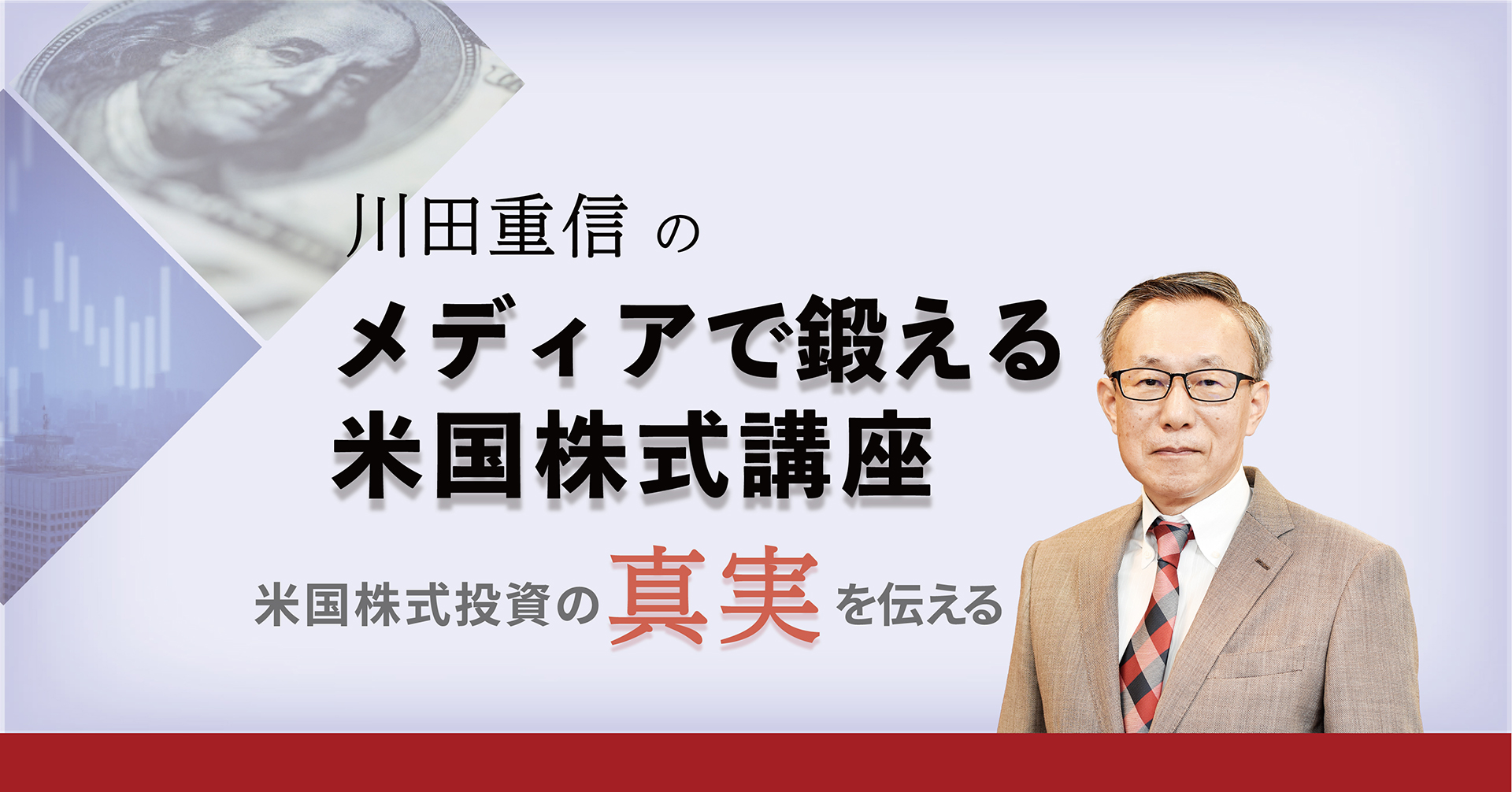
The Truth about U.S. Stock Investing, by Shigenobu Kawada, "U.S. Stock Investment Course Trained by the Media" [Vol.20] Distributed October 25, 2021
???????????????
Transmitting the Truth About U.S. Stock Investing
Shigenobu Kawada's "Training in U.S. Stocks Through the Media"
[Vol.20]Distributed October 25, 2021
??????????????
***Table of Contents***
Market Review
This Week's Straight Talk!
This Week's Featured Articles
【Is Japan a state capitalism?】【Pebbles and boulders, the name \"IFA\" fading away】【Wealth Doubling Plan for the Reiwa Era through Stock Investment】【The lure of Short-Termism Critique】【Capitalism with Markets in Mind】
Investment Tips
What I think from the good performance of university endowment portfolios
Kawada's Walk
Lunch at the Gakushi Kaikan the other day
Activity Information
Q&A
The November 29 issue will be a no-issue edition
A Trajectory to 20 Million Yen

Source: Financial Service Agency; Created by Egex Trustees Co., Ltd. based on asset management simulations
※The above figures are solely simulations and do not guarantee future investment results. Fees and taxes are not included.
How to read: assumed return and attainment age
3–4% for over 30 years: this is the case with wrap funds and balanced funds
Even 5–7% would take about 25 years: perhaps for non-U.S. stock funds
8–10% would take about 20 years: conservatively, this is how the S&P 500 might rise
S&P 500 Performance Record (dividends reinvested 1970-2021)

Reach 20 million yen early with proper risk-taking
Kawada's message is quite simple. To reach 20 million yen, have as much of your surplus funds work efficiently as possible. For that, participants must correctly understand the meaning of risk and reward. Before reading the weekly newsletter, glance at this table and confirm your correct investment posture.
Now, start the countdown to reaching 20 million yen right away!
■□■□■□■□■□■□■□■□■□■□■□■□■□■□■□■□■□■
1. Market Review (Oct 18–Oct 22)
<Major Indices>
・Dow Jones Average +1.1%
・S&P 500 Index +1.6%
・Nasdaq Composite +1.3%
= abbreviated version =
With rising interest rates in mind, Q3 earnings reports were in focus. While some stocks plunged, overall rose as earnings beat market expectations, and the S&P 500 reached a record high on Thursday and the Dow on Friday.
=A bit more detail=
Last week, attention was on corporate earnings more than interest rate hikes. With crude oil prices rising and initial jobless claims at a 1 year and 7 month low, along with statements from central bank officials hinting at policy changes, long-term yields briefly reached the high 1.7% range, levels last seen in March-April. However, investors focused on earnings, and expectations rose as results beat forecasts, pushing markets higher. Positive earnings surprises led many stocks higher, pushing the S&P 500 and Dow to new highs. Meanwhile, stocks like Snap (a social media company) and Intel, which missed expectations, fell sharply.

S&P 500 Chart – Last 1 Year

■□■□■□■□■□■□■□■□■□■□■□■□■□■□■□■□■□■
2. This Week's Straight Talk!
A segment that conveys the essential information you should know.
Earnings Rally
Last week was a typical earnings rally. Underlying investor sentiment rested on confidence in corporate earnings, with many companies reporting better-than-expected profits, meeting market expectations. Since September, concerns over supply chains, rising raw material costs, and rising labor costs weighed on markets, but earnings expectations were tempered, making outperformance easier.
Negative Surprises
Of course, some companies posted negative surprises. Notably Snap, a social media company, faced reduced effectiveness of targeting ads due to restrictions on mobile advertising, causing about a 25% drop in Snap stock. This signaled caution for online ad revenue and impacted other big social media names as well.
Another case was Intel. Profit beat expectations, but revenue missed and outlook also disappointed. The semiconductor industry faced supply shortages; even though “if you build it, they will buy” was expected to hold, revenue undershot forecasts, raising questions about Intel's strategy, though it did not spill over to other semiconductor stocks.
Are good earnings already priced in?
The gains for Snap and Intel were driven by earnings growth already priced in, and despite expectations for a challenging October, the S&P 500 hit a new high on Thursday. Earnings reports will peak this week and next, but strong earnings are already priced in, so unless there are exceptional results, stock prices may not respond much.
Short-term Interest Rates to Watch
Meanwhile, long-term rates are gradually rising, briefly surpassing 1.7% for the first time since April. Central banks outside Japan have begun signaling tighter policy, and the FOMC meets on November 2–3. If investors grow apprehensive about rising long-term rates, the earnings rally could subside. The year-to-date high for long-term rates is around 1.75% at the end of March, which may serve as a useful benchmark. Other levels to watch include approximately 1.8% (twice the 0.9% level at the start of the year) and the psychological 2.0% mark.
Bonus
On a related note, in October's issue of Barron's, there was an article about the 1929 crash. It noted that it took until 1954 to recover the prior highs before the crash, about 25 years—a shorter span than Japan's Nikkei in 30+ years. It reminded me that the stock market truly reflects society.
■□■□■□■□■□■□■□■□■□■□■□■□■□■□■□■□■□■
3. This Week's Picked Articles
A column that selects information useful for asset formation from what I have gathered, ranks them, and comments from a highly personal viewpoint.
【1】 Nikkei Newspaper Is Japan a National Capitalist Country?10/23
The fundamental problem of the Japanese economy is long-term stagnation. The dollar-based GDP has been flat for 25 years, from $5.5 trillion in 1995 to $5 trillion in 2020. If GDP does not grow, wages do not rise, which is natural.
What the Kishida administration has is a quick fix: prioritize distribution, suppress growth strategy, and expect further wage increases through tax cuts for wage-increasing companies.
To raise middle-class income, wage growth through economic growth is the only way. Yet the policy speech by Prime Minister Kishida has wiped out the word "reform."
The driving force of capitalism lies in the animal spirit through private companies' competition.
What the Kishida administration aims for is not to pursue bold structural reforms, but to listen to bureaucrats' opinions and rely on fiscal capitalism. If so, China’s “state capitalism” could be a good model.
【Kawada Comment】
I have long thought Japan has been a form of "state capitalism." Otherwise, it’s hard to believe that stock returns and prices of services like barber shops and public baths have risen at almost the same rate for a long time (as mentioned in a previous newsletter). The United States, of course, has stock returns that easily outpace these rise rates; that is the rule of capitalism.
This is precisely an example of state capitalism. So tempting an investment deal, major securities firms (Daiwa Securities was the lead this time) cannot avoid underwriting, given their position. This is what I mean by“Japanese stock investing is a donation.”. Sure it may go up after you buy, but isn’t it a deal you could skip? If the yield is attractive, a 6% annual drop would erase the dividends. How will you convince clients?
Japan Post's intro video
https://www.youtube.com/watch?v=c9sP_YQZPJk
At the time of 2017's IPO
https://www.youtube.com/watch?v=z61Jjr5Nrf8
【2】 Nikkei Virtus: Corona market's turnover brought enormous fee income; mixed quality, "IFA" reputation fading

【Kawada Comment】
In short, this article notes some IFA who chase commissions by revolving-door trading at the expense of client profits. Yet many clients chase short-term gains, and there is a lucrative business there, so I can't wholly blame IFA. I’ve heard many profitable IFAs rely on structured notes revolving trading.
My mission is to grow Japanese people's assets aggressively. Therefore, rather than turning client assets into a bonsai through structured notes or revolving stock trades, I want to nurture them into a mighty tree. That's all.
【3】 Nikkei Veritas
Tea Room: Takashi Hiroki’s Walk in the Market: The Rise of Japan's 令和 Version Income Doubling Plan through Stock Investing
Prime Minister Kishida proposed a令和版 income-doubling plan. In Japan's reality where real wages have not risen for 30 years, this is practically difficult. Yet with US stock investment, it may be possible.

Recently, revisiting the taxation on investment income is not being considered for the time being. Then please listen to the market’s call on quarterly disclosures as well.
Margaret Thatcher once said, “Even if you make the rich poorer, it does not make the poor rich.”
Thatcher's remark: “Even if you make the rich poorer...”
Indeed, following the "72 laws," if an asset doubles, it grows at about 10% annually; at 7%, it takes 10 years. This is the long-term rise rate of the S&P 500 index. In other words, the index rises about 7%, and with dividends around 10% in total. If Japanese financial assets boldly shift toward the S&P 500 index, assets could double in 10 years. To do this or not—just as Hiroki-san says!
■ “Poor people should eat barley”
It isn’t exactly how Thatcher stated it in English. Still, Thatcher is impressive. This reminds me of Ikeda’s 1950 finance minister remark. By the way, do young people know this remark? I wasn’t born yet, but it’s referenced as a controversial statement.

Collection of controversial quotes: Photo feature – Jiji Press
Finance Minister Ishida (Katsuki Ikeda) in December 7, 1950, in the House of Councillors Budget Committee stated, “I want to steer the economy toward the principle that the less affluent eat barley and the richer eat rice.” It was said this way to the public, causing backlash.
Later, Ikeda served as prime minister, but as finance minister he uttered many misstatements; on November 27, 1952, in the House, he said, “Five or ten people going bankrupt due to unjust speculation (muffled by cheers),” which was reported as “five or ten people committing suicide is acceptable,” and he resigned the next day.
If Kishida said such a thing now, would he be dismissed? In today’s Japan, who would dare to make such a bold remark? Would Mori Hideaki or Aso be next?
【4】 Nikkei Newspaper The Temptation to Criticize Short-Termism10/22

Short-termism in corporate management. This debate is resurfacing as Prime Minister Kishida announced revising the quarterly disclosure system for corporate performance.
In chasing short-term profits, are long-term gains sacrificed? The United States has faced this question more than any other country, repeatedly criticizing its own capitalism whenever it stumbles.
What matters is that when the US questions short-termism, it does so to strengthen itself. In contrast, in Japan, when short-termism is raised, people tend to argue against US failures and feel they can avoid change themselves.
“Japan's economy has been in trouble because it measured for long-term success incorrectly.” Northwestern University professor Lapaport wrote in 2011 that that should not be Japan’s model.
Short-Termism and the Capital Markets
Even while claiming to be stakeholder-focused, there is a fundamental difference between simply distributing to various parties in front of you and continuously taking steps to reward future value. The former is short-term; the latter is long-term oriented management that challenges to create new value.
【Kawada Comment】
I believe quarterly disclosures are highly desirable for a healthy market economy. They help maintain discipline, transparency, and tension in management; this frequency may be necessary.
There is resistance to quarterly disclosures in Europe as well. Do Japanese people share more with Europeans in mindset? After all, Japan is a land of history and tradition.
Japanese people do not cheat; they take pride in diligence. Yet after the high-growth era, for top-listed companies’ disclosure responsibilities and transparency may not be enough to justify frenzied work ethic; that is the honest sentiment, perhaps.
By the way, as a child who lived through the high-growth era, I believed Japanese people were by nature diligent and quietly pursue objectives.
But now I think: “That may be true, but if someone decides the objective for you, you won't move; there is some lack of tension.” That has become my sense of average Japanese at this age.
While the US progressed while chasing the American dream after the war, the moment one tries to overtake, one gets overtaken; that trauma lasted 30 years. Now people are reluctant to act or even think.
【As a digression】
■ Japanese people stopped overworking
From here, the discussion veers off. In the late 1980s, just after the peak of Japan’s high growth and just before the bubble burst, a popular commercial song circulated. Regen: Can you fight for 24 hours? The lyrics were Musashi Saburouta, Symbol of Courage ~ Re mix theme Lyrics.
Now such corporate culture would not pass, and from a work-life balance perspective, it’s unacceptable.

■ Wall Street compensation: 50 million yen per person
The discussion branches further. In the United States, those who work receive corresponding compensation. But “working” here is not about hours but productivity. By that measure, Wall Street is quite prosperous this year.
Wall Street profits soar in first half; bonuses set to rise - New York State Comptroller
New York City's securities industry secured large profits again in the first half of this year. Bankers' bonuses in 2021 were up 6.5% year over year, with total compensation including bonuses expected to rise for the third consecutive year. The average pay including bonuses was $438,450 last year.
A few years ago, a contact from Yamaichi Securities who used to handle Japanese clients at Goldman Sachs in NY said his compensation was around 50–60 million yen.
However, taxes and living costs are extremely high, so “not much left,” he lamented. To avoid envy, that is probably the standard refrain.
By the way, this person is a tireless worker who does not slack off. In Japanese firms, with age, people like him become rarer; foreign firms do not permit such work style.

【5】 Nikkei Newspaper Markets create capitalism; growth and distribution both rely on it10/20
An article related to the Kishida administration's “New Capitalism.”
Kishida’s proposal shows no consideration for markets. The talk of raising taxes on financial income caused anxiety among investors who believed in “from savings to investment.”
The market’s distributive power was argued 54 years ago by Matsushita Kono-suke, founder of Panasonic. In 1967’s paper “Mass-Stock for New Prosperity,” he advocated a national concept of “citizen ownership,” where every citizen would be a shareholder overseeing corporate management.

The ideal later drifted away. The share of individual investors in the market dropped from 42% to 22%.
In the 1990s, Hong Kong authorities dumped a large number of shares onto individuals to support the market. Market participants studied this method and several recommended it to politicians.
“BOJ ETF” transfers to individuals: insiders advocate exit strategy
The “Lost Thirty Years” is Japan’s economic defeat. For national rebirth, now is the time to return to the ideals those ancestors envisioned.
【Kawada Comment】
The idea of transferring BOJ ETFs to individuals emerged last year. In Japan, the culture of shareholders nurturing companies is not ingrained. “Nurturing” and “activism” share a root. Some call activism greed; it might be tough love to improve organizations.
In Japan, shareholders and employees & management always have opposing interests. Therefore, the soil for corporate activism to grow does not exist. (I’ll probably be scolded again.) So, even if citizens are allotted stocks, without selling restrictions they’d quickly cash out.
■□■□■□■□■□■□■□■□■□■□■□■□■□■□■□■□■□■
4. Investment Tips
A corner where we discuss not only “investment methods” and “stock picks,” but also “indicators and statements that caught my eye” and “societal and political movements.”
What I’m seeing from a portfolio with strong performance in university endowments
Barron’s Digest regularly features articles about university endowment performance (most recently October 17 issue). The source of that data, though, is chosen by me.
As of June 30 of the last fiscal year, MIT’s endowment surged 55.5%, adding $9 billion to reach $27.4 billion. Brown University rose 86.8%. Private equity and stocks led, with the latter up 58.9%, bringing the university fund to $6.9 billion for that period.
Edward E. Yale University advocates the “University Endowment Model,” which calls for increased allocation to illiquid assets like venture capital and private equity and a significant reduction in equity investments.
During the past decade of strong equity performance, increasing allocations to alternatives did not yield favorable results; endowments averaged about 7.5% annual return over the past decade vs. 14.8% for the S&P 500. About half.
■Learning from the Portfolios of America's Top Universities
Found a good article related to this.
■ Endowment Investment Intentions
From the fiscal year ending June 2020, Harvard, Yale, Princeton, Stanford, and MIT are included.
Most endowments rely on donations from alumni. Pride and gratitude toward one's alma mater are expressed as gifts.
Endowment missions are clear: preserve capital and provide steady annual distributions.
With endowment funds, universities fund scholarships (grants, not loans), recruit researchers, and fund important and unique research.
Endowment spending accounts for about 30–35% of university budgets.
Investment policy: annually spend about 4–5% of assets while seeking asset growth.
■ 5 Universities’ Endowment Sizes, Asset Allocation, and Portfolio Features
US equities: minimal. Bonds: low interest rates and very limited. A lot of hedge funds, venture capital, and buyout funds.
Imitating university endowment investment techniques at the personal level is difficult, but the philosophy and methods for constructing a portfolio are informative.

【Kawada Comment】
Imitating university endowment investment strategies isn’t bad. However, they manage enormous sums over long horizons, leveraging highly advantageous information networks.
Individually, you won’t have their scale or information advantages. In that case, balanced funds or wrap accounts are substitutes. In Japan too, some companies operate funds using endowment-style approaches for individual investors.GCI Asset Management. But their assets under management are modest, and performance isn’t particularly compelling. Below are the fund’s policy and other informationGCI Asset Management Hidetaka Yamauchi | GCI Endowment Fund. If you’re interested, take a look.
■ Afterthought: My Donation Destinations
Endowments are largely funded by alumni, families, and related corporations. I also donate regularly to the University of Rochester, and I’ve observed my daughter's high school and college fundraising activities, so I have a sense of university fundraising.
Below are my donation activities.
Toyama Chubu High School Toyama Prefectural Toyama Chubu High School

The school seldom invites us. About a year ago, they requested donations for the 100th anniversary of the Jingu Middle School and Toyama Chubu High School foundation.
There are targets by graduation year; I recall one year’s target was about 1 million yen. It felt quite modest. I was a substantial donor among them and requested anonymity. If my name were known, it could invite complications, and the funds came from “US stocks,” which might cause further trouble.
The secretariat was told to remain anonymous, but a junior committee member called. Likely my amount acted as a catalyst and the target was surpassed. Everyone has means here, yet there’s social pressure to conform.

Kobe University Kobe University (Kobe University, a national university corporation)
I donate frequently, typically 1–2万 yen, sometimes more. I also opt for anonymity in some cases.
The alumni newsletters disclose donors’ names and amounts, which makes people self-conscious. Except for a few, Kobe University, a national university, lacks exceptional talent; it seems admissions cultivate a community where people are overly mindful of status and conduct; many are overly aware of social standing.
Rochester University MBA Program Simon Business School | Simon Business School
Campaigns come often, so I contribute small amounts in installments.

Within the school, successful alumni donate generously; amounts are two orders of magnitude higher than Kobe University. I donate a modest amount comparable to Kobe University to show my gratitude.
St. Paul’s School St. Paul’s School
My daughter attended this school, which is an elite boarding school in the American upper class. Alumni and their families include celebrities and the very wealthy. Our daughter is foreign to the U.S., and a minority (Asian), and from the commoner category; she may have benefited from diversity.

Many donors give substantial amounts. Therefore, no matter how much we contribute, the school likely does not notice our insignificance. I have donated several times but recently have not. Minimum donation is $1,000, which is higher than many other universities—typical for a school that plays a role in American class society.
Dartmouth Dartmouth

Dartmouth is an Ivy League school; according to my daughter, many of the nation's top students attend, including many from public high schools, so it feels more relaxed.
It sounds like Japan’s national universities; however, being private, tuition is extremely high. Many Americans reportedly receive scholarships.
Here too, parental devotion to alma mater runs high. Some donors give 100–200 million yen at a time; 1 billion yen is common. My daughter was invited to a parents’ meeting when she was a first-year student; travel costs were our burden but the school covered lodging. I realized the attendees were ultra-wealthy families.
I was mistaken as a major donor; after that, invitations ceased. I now donate occasionally, keeping a modest profile.
My daughter worked in the school calling alumni to solicit donations. It was a strategy to inform parents about the school’s current status and appeal to loyalty.
By the way, I also attended Stanford University for six months, not a formal enrollment. Hence I receive no invitations; the university likely receives enormous gifts anyway.

Why are donations not increasing in Japan?
In America, donations are closely tied to religion. However, delving into this analysis could alienate readers of this newsletter.
In Japan, people are influenced by social expectations to donate or not donate, and even the amount is constrained by unspoken considerations. Japan is a culture where atmosphere rules.
Meanwhile, from a acquaintance, “Kuma”:
Note: “Kuma” went from Aizawa High School → Chiba University → Chicago Booth MBA. Here are his views:
To encourage donations, there are claims about religious alms-giving, tax incentives, yet at the end it requires the pleasure of spending money. In a society where extravagance is discouraged, can't say much about spending luxuriously.
Another factor is the strange conformity; you should spend money on what you love. A strong individual mindset is necessary.
In the upcoming lower house election, there are attempts to institutionalize mutual aid and support; but that alone won’t increase donations or public assistance.

If compulsion is used, one practical idea is to provide tax relief for funds pulled back to Japan for charitable purposes, though public resentment remains a challenge.
Kuma is indeed sharp. Here’s my view:
Donation money carries a “mouth.” In other words, the donor’s “intent”—hopes, opinions, complaints—accompanies the money. This is something most rulers in Japan would want to avoid. The amount of money reflects the weight of complaints, which can undermine authority and power. That’s the point.
Anyway, I donate regularly, modestly, and without drawing attention.
■□■□■□■□■□■□■□■□■□■□■□■□■□■□■□■□■□■
New Series “This is Perfect! All You Need to Know About Asset Formation Using U.S. Stocks”
Introduction
This time, I’ll start a serial that covers the basics necessary for asset formation. The overall structure will be as follows.
What era are we living in? Part I and II
Self-sufficient Japanese people and asset formation essential for independence
Is the stock market only in the United States?
Differences in stock market culture between Japan and the U.S.
What you should know about U.S. market features
What is the S&P 500?
Why is the U.S. strong?
Recommended investment strategy – Core and Satellite Investing –
Core investment strategy
Satellite investment strategy
What should I buy?
Information sources and investing
Episode 2: Self-sufficient Japanese people and asset formation essential for independence Part 2
■ The speed at which money grows makes a huge difference
Following Tom Piketty's explanation, people should let money work for them rather than sweating for money. In reality, especially in advanced economies, capitalism operates this way.
We will study in detail how taking risk with money affects growth. First, how big is the difference in growth depending on how money grows? Let’s see with concrete examples.
In June 2019, the Financial Services Agency issued a report on asset formation for a 100-year life, showing that due to increased lifespans, a couple needs to deplete about 20 million yen in financial assets to live to age 95.
From typical income and expenditure, for couples where the man is over 65 and the woman over 60, living on pension alone would result in about a monthly deficit of 50,000 yen. Living 20 years longer would require 13 million yen more; 30 years would require 20 million yen more.
In the 100-year life era, 20,000,000 yen shortfall: Financial Services Agency report
■ Slide: “How many years to save 20 million yen?”
If you invest using this method, how does the growth differ?
■ At 10% return
First, look at this table.
If monthly savings are 10,000 yen, that’s 120,000 yen per year. If you do this for 5, 10, 15 years, what will your investment principal become at 10%, at 7%, or at 4%? This comparison shows the impact of different returns on your goal achievement.

The purpose here is to make you feel concretely how much difference the investment return makes toward your goal.
Saving 10,000 yen monthly is feasible for a regular worker. Saving 50,000 yen monthly is uncertain. But if you save 30,000 yen for 5 years, that’s 360,000 yen principal, growing to 2,320,000 yen. In 10 years it would be 6,150,000 yen. In 20 years you would reach 20,000,000 yen.
Saving 50,000 yen monthly would reach 20 million yen in 15 years. Meanwhile, saving only 10,000 yen would take 30 years.
■ What happens if you don’t save? Compare with 30,000 yen monthly
For example3%: 30,000 yen invested, after 20 years you’ll have 9,850,000 yen; after 30 years 17,000,000 yen. With 4% you surpass 20 million in 30 years. With 5% you reach it in 27 years. With 6% you’ll reach it even sooner.
At 9–10%, you reach 20 million yen in 20 years. The 20- and 30-year marks matter.
For example, starting at age 30, after 20 years you’re only 50. There’s still time. But by 60 years old, given current employment systems, returns become visible. Only then do you accumulate 20 million. That is anxiety-inducing, isn’t it?
With the same 30,000 yen, the degree of risk matters greatly.

■ “Why won’t 20 million yen accumulate?”
At this point, we won’t discuss the investment targets yet. Learn that money grows when you take on risk with high-yield investments.
For you, why is the 20 million yen hurdle so high? Simply because you’re not taking money into risk. In other words, to reach 20 million, you need a larger amount of capital and a more aggressive risk-reward approach.
■ “How many years to save 200 million?”
20 million yen is certainly not enough. If your asset grows around 10% per year, the 20 million yen problem can be naturally solved over time.
But simply aiming for 20 million may not be satisfying in this long life; for many seniors it’s not enough to sustain. So, what if you increase to 300,000 yen a month, or 500,000 yen? This is what the slides show.
At 300,000 yen per month, if you maintain 10% growth for 20 years, you’ll reach 200,000,000 yen. If you only earn 3% on that 300,000 yen, you’ll only reach 72,000,000 yen.

10% vs 3%? It’s up to you. The important thing is to keep taking risk for a long period.
■ The meaning of 10% annual return
Now, when you hear 10% annual return, what comes to mind? When you hear “risk,” you might think of gambling, margin trading, real estate with high leverage, etc.
But what if the return justifies the risk at about 10%? Would you think, “Only 10%?”
To me, a 10% return is a very high yield. After all, gambling or speculation can multiply money overnight by many times, even hundreds of times, for those who gamble.
Yet, statistically, in aggregate, the money invested by all participants tends to yield a net loss for everyone else.
In that sense, looking at the world’s investment targets, if the aggregate capital grows by about 10% annually, it seems like a high-yield asset-growth machine.
If you wonder whether such a wealth growth device exists, perhaps you’ve begun to understand investing a bit.
■ Where does 10% come from?
How can you secure that 10%? This is the central theme of this video series.
There are countless ways to increase wealth. Traditionally, Japanese consider real estate investment first, then forex trading, then stock investing, then perhaps cryptocurrency, tangible assets, art, wine, whiskey, stamps, antiques, and so on—a long list.
Personally, I have little experience with gambling or speculation; nor do I have much experience in real estate investment or forex trading within the investment realm. Let me state that clearly.
These wealth-creation targets can yield significant profits within a certain period or within a limited network. However, access to such opportunities isn’t open to everyone.
■ Stocks are the best
My top pick is stock investing. Why? Because of its ease of trading and transparency, it’s a highly accessible asset-management method for almost anyone.
Stock investing is fundamentally different from gambling or speculation. It is not done in secret or among complicit partners; it is a fair return to legitimate shareholders for genuine corporate activity. Moreover, the investment return is based on widely recognized stock prices.
My mission this time is asset formation using stock investments, especially U.S. stocks. I believe this is a wealth-growth device open to everyone.
Next time, I’ll explore why this stock investing can be done and where to do it. (To be continued)
■□■□■□■□■□■□■□■□■□■□■□■□■□■□■□■□■□■
5. Kawata’s Walk
◇◇My recent favorite places◇◇

The other day I had lunch at Gakushikaikan. The host was a former high-ranking bureaucrat who once served as a diplomat in the Middle East, along with a journalist, a university professor, and me—four people.
We naturally talked about the upcoming lower house election. A reporter shared various real-time tidbits, but Japan’s system isn’t changing. Like in every country, Japan’s legacy covers the nation, and each politician defends vested interests as if with a wedge.
What will change Japan is ultimately external pressure. If so, until that external pressure arrives, let’s connect with U.S. stock investing!
For reference

“The upcoming House of Representatives election is not exciting. Kishida’s administration is not opposing the ruling party; it emphasizes differences with the previous administration. The theme behind the election is breaking away from the previous leadership.”
Would you evaluate the opposition’s policies? “Opposition is irresponsible. While cash handouts as economic measures may be understandable, tax cuts for social security funding are reckless. No explanation; this is not a reality-based policy.”
There’s no discussion of growth strategy as regulatory reform. “Japan Restoration Party” may be the only hopeful.
■□■□■□■□■□■□■□■□■□■□■□■□■□■□■□■□■□■
6. Upcoming Activities
◇ November 2 (Tue) 10:15 AM Nikkei CNBC
◇ November 10 (Wed) 11:00 AM Stock Voices
◇ November 17 (Wed) 11:00 AM Stock Voices
■□■□■□■□■□■□■□■□■□■□■□■□■□■□■□■□■□■
7. Q&A Corner
During a recent online talk (Dreams Realized Asset Formation School’s regular event), one viewer answered my question.
Question ①
Why do well-intentioned youths not switch jobs at Mizuho Bank despite ongoing scandals?
Answer
・No matter what, big firms feel stable.
・Consider family and children; don’t want to move.
・If you switch jobs too often, big firms won’t hire you.
→ I’ve heard many excellent people no longer feel lifelong employment, but mega-banks still select people who possess loyalty to the organization; after joining, they’re trained to not reflect on their position.
I think there’s a bias toward prestige. Gaining acceptance at a difficult company brings pride; brand loyalty matches the Japanese student’s mindset. I believe that remains true.
Still, I want to ask: why not take action when you see the adults around you in such disgraceful behavior? Can you endure hiding in a bad environment? Is it fear of changing jobs due to self-suggestion or family concerns?
Question ②
Do high-income families’ children perform better academically?
Answer
Many high-income families encourage their children’s study, exposing them to intellectual discussions in daily life, which stimulates curiosity.

→ Indeed. By the way, today’s “Nikkei The STYLE” My Story features Cathy Matsui, formerly Goldman Sachs’ Japan equity strategist and founder of Mpower Partners. I have seen Matsui speak at lectures and chatted briefly on occasion.
Her parents, in California’s Salinas, were highly successful strawberry farmers. They faced many hardships, and all four of her siblings went to Harvard. Since childhood, their family worked in the sun, building endurance and tenacity; they had natural intellect and studied diligently; they learned kindness toward the poor. Now, it seems she had the best possible education in such a harsh environment. Yet that challenging background was a personal asset, likely due to her parents’ character and her own efforts. I feel a connection, as I too had a similar upbringing to some extent. What Japan currently lacks is this real-world education.
Mr. Matsui’s father was an extraordinary person. If his child is Cathy Matsui, she would have heart, skill, and body to match.
Question③
Why do Japanese people not hold stocks long-term?
Answer
Because they don’t understand why stocks rise. They look at charts and think it will drop soon (my old self).
I tell myself that money supply keeps rising, so prices will continue rising; if earnings are good, short-term dips don’t matter.
→ The chart below confirms this.


Question④
Why don’t Japanese invest in stocks?
Answer
Many Japanese believe saving is risk-free and don’t realize that investing 100% of their cash into yen is the same as betting on yen appreciation. If you realize that investing 100% in yen equates to wagering on yen appreciation, your thinking may shift.
Since the Plaza Accord of 1985, USD/JPY has remained in a range.

───────────────────────────────────
★ For questions, please read the【Question Rules】 below and email
info@kawata-magazine.com.
【 Question Rules 】
◆ We cannot answer all questions. Please understand in advance.
◆ Questions may be published on our site, YouTube videos, SNS, books, etc., in a form that does not identify individuals.
◆ We will not respond to questions from non-subscribers.
◆ Clearly promotional or advertising content will be omitted.
◆ Those who post malicious questions without subscribing may face appropriate measures.
───────────────────────────────────
★ Disclaimers
◆ We do not provide stock, bond, fund, ETF recommendations in this email newsletter. Investment decisions are the responsibility of subscribers (members), and we provide no warranties.
◆ We do not guarantee the damages incurred by members using our newsletter.
◆ We do not take responsibility for any disputes arising among members or between members and third parties within this service (illegal or immoral acts, defamation, privacy invasion, threats, harassment, etc.).
◆ If the content of this service infringes on the rights of a member or a third party and a dispute arises from that infringement, we bear no responsibility for the infringement or the dispute.
◆ We do not owe any obligation to compensate for damages caused by suspension or termination of this service or changes in service content.
───────────────────────────────────
■ Publisher: Hibiya Technology & Finance Co., Ltd.
■ Shigenobu Kawata’s Thank You, America Stocks
https://www.kawataamekabu.com/
■ Twitter:https://twitter.com/ShigenobuKawata
■ For feedback, requests, or to unsubscribe, use
【Email】info@kawata-magazine.com
■ If you don’t receive the email, please check your spam folder.
───────────────────────────────────