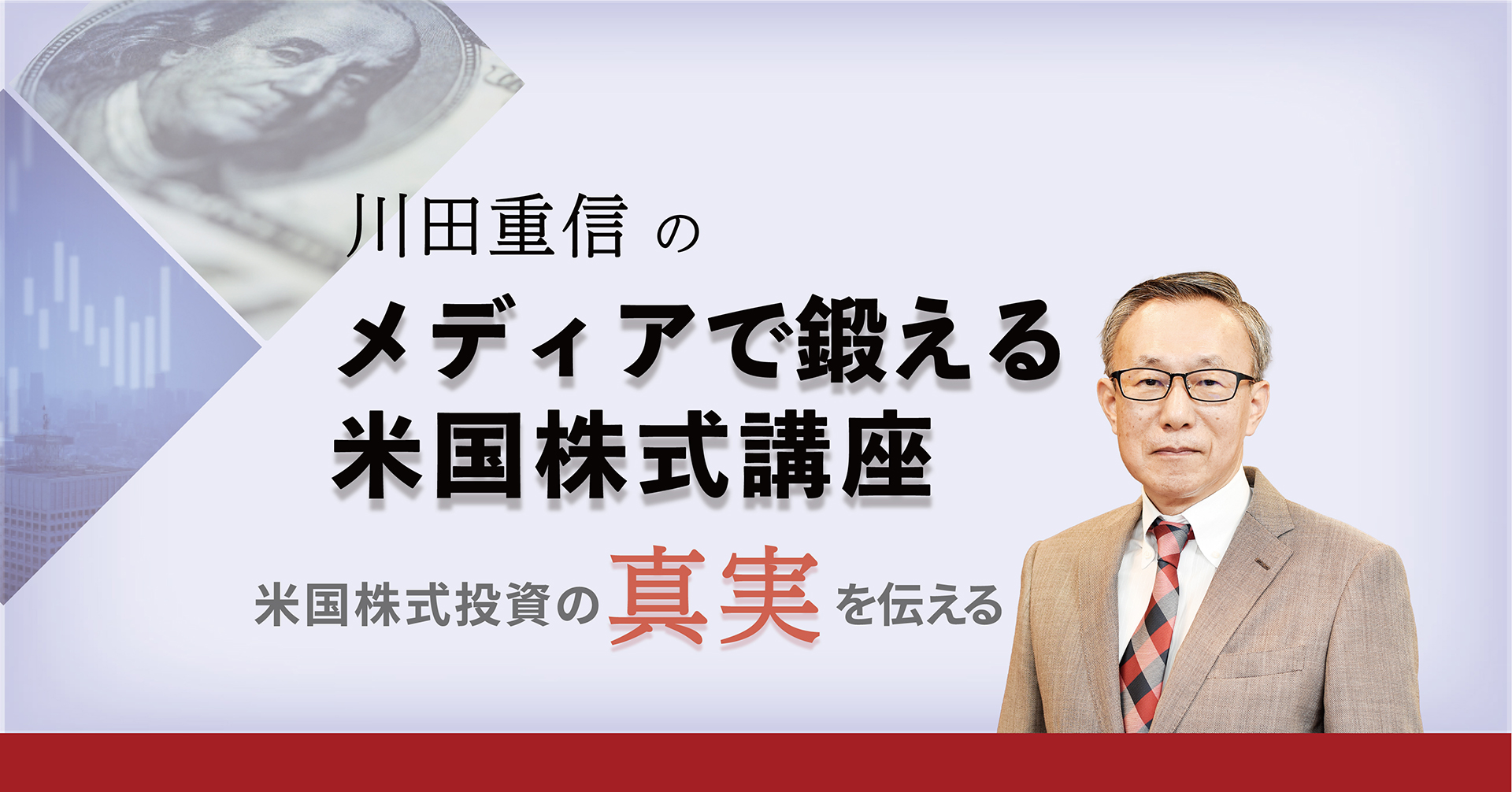
The Truth about US Stock Investment by Shigenobu Kawada: “US Stock Investment Course Trained by Media” [Vol.18] Delivered October 11, 2021
????????????????
Delivering the Truth About U.S. Stock Investing
Shigenobu Kawada's “U.S. Equity Course Trained by the Media”
[Vol.18]Distributed on October 11, 2021
????????????????
*** Table of Contents ***
Market Recap
This Week’s Straight Talk!
This Week’s Highlight Articles
【Investment Methods】【Quality Companies and Investment Performance】【U.S. Social Dynamics】【On Japanese People】
Investment Tips
Cultivate a “giant tree” with the right method, not a “bonsai”
Kawada’s Walk
“Leader’s Bookshelf: Supreme Commander of the National Personnel Authority Yuko Kawamoto—Always Expanding the World”
Activity Information
Q&A Corner
Achieving 20,000,000 yen at an accelerated pace

Source: Financial Services Agency, based on Asset Management Simulation, prepared by ExoTrust Co., Ltd.
Note: The figures above are simulations and do not guarantee future investment performance. Fees and taxes are not included.
Reading Guide: Assumed Yield and Target Year
3–4% for more than 30 years: this is what wrap funds and balanced mutual funds aim for
5–7% even then takes about 25 years: this might apply to mutual funds outside the U.S.
8–10% would take about 20 years: this is a modest expectation for the S&P 500’s rise
S&P 500 Performance Track Record (Dividends Reinvested, 1970-2021)

Achieve 20,000,000 yen early with proper risk-taking
Kawada’s message is incredibly simple: to reach 20,000,000 yen, let your surplus funds work as efficiently as possible. For that, it’s important that participants understand the meaning of risk and reward. Before reading the weekly newsletter, glance at this table and confirm the correct investment posture.
Now, start counting down to 20,000,000 yen right away!
■□■□■□■□■□■□■□■□■□■□■□■□■□■□■□■□■□■
1. Market Recap (October 4–October 8)
<Major Indices>
・Dow Jones +1.2%
・S&P 500 +0.8%
・Nasdaq Composite +0.1%
=Quick Version=
The long-term yields fell after fears of the debt ceiling and inflation eased, but rallied as the debt ceiling was raised and default fears receded. Jobs data fell short of market expectations, but the impact was limited.
=A Little More Detail=
Debt ceiling concerns persisted from the previous week, while rising oil prices and other worries pushed long-term yields higher. After improvements in business sentiment, cyclicals were favored and the market found a bottom when reports indicated a debt ceiling increase had been agreed upon in Congress, boosting investor sentiment. With inflation fears and expectations of tightening monetary policy, long-term yields rose to the 1.6% area for the first time since early June. Growth stocks remained pressured, but financials and energy, which are more sensitive to the economy, were bought, helping the market to rebound. In Friday’s September nonfarm payrolls report, payrolls rose by 194,000, below expectations of 500,000, but market impact was limited.

S&P 500 Chart: Last 1 Year

■□■□■□■□■□■□■□■□■□■□■□■□■□■□■□■□■□■
2. This Week’s Straight Talk!
A section that delivers information you should definitely know.
A rebound, but...
At the end of September, concerns were either priced in or postponed. The stock market rebounded, but the Dow rose for only the second time in six weeks, and the Nasdaq rose only slightly, so not a major move. The real economy remains strong and the outlook is not bad (just a speed adjustment), so this level of rebound is expected. The September jobs report surprised on the upside, though unemployment rate declined significantly; the interpretation is that the seasonal adjustment in nonfarm payrolls did not work as expected. Market reactions followed accordingly.
Long-Term Yields
The U.S. debt ceiling was extended six weeks into early December, but long-term yields have not stopped rising. This reflects expectations of inflation and strength in the economy, in addition to the Fed’s stance. Yields rose to 1.6%, reaching the highest level since early June. The peak this year was 1.74% at the end of March, so if yields are pricing in strong economy, this level is tolerable for the stock market. Inflation will be watched with upcoming CPI and PPI releases this week.
Earnings Announcements
Today, October 11, is Columbus Day and the U.S. bond market is closed. The stock market is open, and Q3 earnings (July–September) will ramp up from Wednesday. As usual, banks lead, with insights into lending trends to businesses and individuals that reveal macroeconomic reality to investors. Transportation stocks show logistics and travel conditions, while manufacturing reveals cost pressures such as raw materials and labor costs that affect margins. For each stock, EPS versus market expectations matters, but for market-wide considerations, reading how macro data affects the economy is crucial (in practice, investors read analyses by securities analysts).
October Decline Records
October is a month when markets often move significantly, following September. Since 1928, there have been 25 days with a daily drop of 7.5% or more, and 8 of those occurred in October (see table below). In the near term, it is unlikely that September’s concerns will reemerge to cause large declines; if any big drop occurs, it would more likely be due to geopolitical events or natural disasters rather than corporate earnings or macro data.
■S&P 500 Index 90-Year Chart

■□■□■□■□■□■□■□■□■□■□■□■□■□■□■□■□■□■
3. This Week's Picked Articles
A column that selects, ranks, and comments on information useful for asset formation from the information I have collected, with very personal opinions.
【Investment Methods】
【1】Nikkei Newspaper: Big events, small events Long-term investment, the decisive factor is patience10/6
There is a persistent view that stock investing is due to luck rather than effort, and it is often seen as casino-like.
Sages of the investment world preach that the key to success in securities investing is to commit to long-term investing.
When markets suddenly fall and anxiety tests your investment policy, a strong patience is required to adhere to it. Behind the profits investors finally reap lie the hardships and trials endured to this point. If you think this way, investment returns can hardly be considered passive income.
【Kawata's Comment】
What would have happened if you continued to hold the following Japanese stocks with “patience”? Patience is rewarded in U.S. stocks, not in Japanese stocks.
I believe that Japanese people themselves are making stocks, especially Japanese stocks, negative.
If the Japanese stock market rises steadily like the U.S. stock market, the gap between investors and non-investors would widen. The conscious and unconscious desire to avoid such a gap in “unearned income” has surely affected Japanese stock price formation.
Is this what you would call a “conspiracy theory”? Maybe. But I’m confident. I think the reason is that Japanese people do not want to see the improvement of investment attractiveness of Japanese stocks!

【Quality Companies and Investment Performance】
【2】FT: Larry Fink (BlackRock)
The ten trillion dollar man: how Larry Fink became king of Wall St

Chairman and CEO Larry Fink of BlackRock is now described as the “King of Wall Street.” This article covers his background, his career at First Boston, and the company's rise after going public and becoming independent. The company's assets under management now stand at about $10 trillion (about ¥1100 trillion). It is cruising past competitors like Vanguard and State Street in ETFs.
The company IPOed on October 1, 1999, and its stock price has since risen more than 50-fold. Its current market capitalization is about ¥14 trillion.
【Kawata's Comment】Today the company is attracting the most attention on Wall Street, and Fink is its founder, chairman, and CEO.
With significant social influence, how about as an investment target? The company went public in 1999, and its stock price has grown more than 50 times since then. Nasdaq-100 has undergone IT bubble and financial crisis, rising about 5.6 times, so BlackRock dominates.
However, since the 2009 financial crisis, Nasdaq-100’s performance has been considerably better than BlackRock’s.
Why bring up this topic? When considering BlackRock, the industry’s ruler as an investment target reveals another face. I just wanted to point out the difficulty of selecting individual stocks.
■ For Reference
BlackRock has, as a fiduciary, sent letters to corporations in recent years urging corporate behavior that reflects social demands.
Larry Fink 2021 letter to CEOs | BlackRock Japan”


【U.S. Societal Trends】
Forbes Oct 5 “The 2021 Forbes 400 List of Richest Americans”
The 40th edition of the list shows total assets of the top 400 Americans rising from $3.2 trillion to $4.5 trillion (about ¥400 trillion) in one year, a 40% increase.
The combined assets of the top 20 reach $1.8 trillion. For the first time, Jeff Bezos’s net worth reached $220 billion, up by $22 billion to $2.01 trillion. It is the first time a person’s individual assets exceeded $2 trillion on Forbes’ tally.
Second is Elon Musk with assets rising about threefold to $190.5 billion. Third is Mark Zuckerberg, boosted by Facebook’s stock price rise. Fourth is Bill Gates, who did not top the list as in the past 30 years; Gates’s divorce leading to a $57 billion split impacted him.
44 newcomers joined the list: cryptocurrency founder Sam Bankman-Fried (29, the youngest on the list) has assets of $22.5 billion.
The lower threshold to enter the top 400 rose from $2.1 billion to $2.9 billion (about ¥320 billion). Among the 400, 56 are women, the same as last year.
Of the 400, 282 built their wealth themselves rather than inheriting it. California remained the state with the most wealthy, though it declined from 100 to 89. New York State is the second with 67, followed by Texas and Florida with 37 each.
The number of people giving away more than 20% of their net worth declined from 10 to 8, while those giving away less than 1% rose from 127 to 156.
【Kawata's Comment】
American wealth is on a different scale, making it hard to evaluate. “The amount of money is a measure of respect or virtue”—a mercenary mindset that doesn’t apply in Japan. Yet, in the U.S., if wealth is used for the public good, it earns a certain level of respect.
Some may think that wealth is created by others through exploitation or extraction. Is this envy? If you have time to envy others, you should create value yourself and give back to society; that is probably the rule of capitalism.
Coincidentally, Prime Minister Kishida is proposing to discuss raising the tax rate on financial income (note). As I will discuss in the “Investment Hints” section, if your gains are taxed heavily before you can enjoy them, you may end up becoming a bonsai rather than a thriving plant. Many people want to accumulate more wealth before paying taxes.
The Forbes list is a different dimension of discussion. Therefore, the Forbes topic does not suit my taste, grumble.
(Note) Prime Minister Kishida has said he has no immediate plans to raise the tax on financial income.
【Japanese People】
【4】Nikkei Newspaper“Not returning to Japan” Nobel Prize laureate Manabe’s lessons: cooperation over competition leads to brain drain10/9

The reason for not returning to Japan is that there is no ability to live in harmony—an important lesson to prevent brain drain from Japan.
“Japanese people cooperate not to hinder each other,” while in the United States people don’t need to worry as much about what others feel. He found the U.S. to be a better fit for himself.
In 2001, his article described the difficulties of adjusting across various research institutions, staff shortages, and the burden of not speaking frankly in Japan, whereas in the U.S. researchers could freely pursue what they wanted to do with computers.
In the United States, bosses were generous and researchers could do whatever they wanted. He could use computers as much as he liked.
He pointed out that Japan’s science and technology were lacking curiosity-driven research.
Newsweek (Japanese edition) Oct 12, 2021 issue【Shohei Ohtani loved by America】

This issue highlights how astonishing Ohtani is in MLB and also how remarkable his character is.
In an article titled “He is the new era American hero,” Ohtani is highly praised. The piece argues that he is universally embraced by Americans regardless of race or nationality, supported by various examples.
As you age, you lose innocence, and you come to believe there are no true heroes. Even popular baseball stars used to use dangerous drugs. Then Ohtani appeared.
In Ichiro’s era, talent could make one a hero in the league, but due to nationality and race, he was not seen as part of American society.
What’s notable about Ohtani is that fans hardly care about his race or nationality.
In the past 60 years, American heroes have all died. But now Ohtani is here. The American myth that gives the public wonderful dreams still lives. Americans can take another step forward toward a society that no longer cares about race.
【Kawata's Comment】
What Kawamoto-sensei and Ohtani share is that their academic and baseball achievements are outstanding by objective measures. This outstandingness is obvious to all, and America openly praises such exceptional talents and heroes regardless of race or nationality, which is important to understanding America.
America is an experimental nation where Protestant settlers who sought freedom and self-governance realized their ideals. It actively welcomes talented people who share those founding ideals from around the world, across academia and sports. However, to be accepted by America, one must be exceptionally outstanding, and that is the key.
Even so, discrimination and bias based on race, nationality, and religion exist. The presence of Kawamoto-san and Ohtani eases these barriers, illustrating America’s progress. It is a complex country. Yet Americans are inclined to publicly expose and debate blemishes in their country’s past—that trait is distinctly American. Ordinary Japanese people do not possess that energy.
Now, for ordinary people trying to find a place in America, the hurdles are high. Without them, wealth would buy those rights. That is not a small amount of money.
We believe it makes sense for people from around the world to migrate to the United States to work and for Americans to benefit from their talents via US stock investments.
■ Kawata-sensei’s English is easy to understand
By the way, Kawamoto-sensei is very healthy at 90. Please watch his press conference in English. It is easy for Japanese to understand, and his vocabulary is simple. When someone achieves such outstanding scholarly work, no one finds fault with their English accent or pronunciation. Everyone listens to his English. Ohtani still has an interpreter in interviews. He does not speak English flawlessly yet, but I hope he will appear without an interpreter someday.
Kawamoto-sensei’s TV interview video
■□■□■□■□■□■□■□■□■□■□■□■□■□■□■□■□■□■
4. Investment Hints
A column that covers not only “investment methods” and “stock introductions” but also “interesting indicators and statements” and “social and political movements.”
【Portfolio Formation】
Nurture a “giant tree” with the right method, not a bonsai
Frequent trading hurts performance!
In asset formation, short-term trading seems to have more drawbacks than benefits. There are many reasons, and the tax aspect we will examine this time is one of them.

Based on disclosures from Monex Securities, I’ve been informing that people who trade short-term tend to underperform the benchmark S&P 500. Causes of underperformance include various factors, including the taxes withheld on each sale.
This time, in addition to taxes on realized gains, I’ve also looked at the impact of trading fees charged by brokerages.
■ What is a “bonsai” portfolio?
A private investor, when realizing gains, is typically taxed at 20.315% on capital gains. If you trade frequently, you convert investment funds to cash each time. If you sell and then immediately repurchase, that money keeps working without a break. However, if you hold cash for a period, that money is not working and incurs risk.

In other words, when you realize gains,
① the investment capital is reduced by the tax amount
② if you wait after realizing gains, during that interval the money is not working in the market and you miss potential profits. Of course the probability of losses reduces, but investment efficiency declines.
Thus, frequent trading reduces investment efficiency in two ways for asset formation.
Of course, if you sell at a high price and buy back at a low price, efficiency increases. But is that really how it works? Without waiting for the Monex example above, it is a fairly difficult investment method.

By the way, a “growing money” portfolio that is cut back with small prunings is like a bonsai, which I call the “bonsai portfolio.” On the other hand, long-term investing aims for a “giant tree” whose growth, once large, pays 20% taxes on the gains. The investment efficiency is high. What we should aim for in asset management is not a bonsai but a giant tree.
Be aware that some people end up turning their money into a “cactus” through a salesperson’s advice, self-destructive despair, and excessive high-frequency trading and leverage.
■ Concrete examples
Consider three cases of investing 1 million yen over 10 years: a “bonsai,” a “bonsai with fees,” and “hands-off.” In all cases, the initial principal is 1,000,000 yen, the term is 10 years, and the annual return is 10% for 10 years.
“Bonsai”: a method that trades frequently. Each year, one turnover (sell 1 million, buy 1 million). In this case the principal is reduced by 20% of the realized profits from the trades.
“Bonsai with fees”: same as “bonsai,” but the brokerage charges a 0.5% fee on the trading amount. For online brokerages, this is often below 0.5%, but for traditional brokers it is commonly around 1%. Here I set it at 0.5% for convenience.
“Hands-off”: invest the full amount (1 million) at the beginning of Year 1 and hold for 10 years. At the end of Year 10, sell and pay 20% tax on the gains.
■ 10-year investment
Bonsai 10 years: 1 million invested, one turnover per year (i.e., buy/sell the invested amount each year)

Bonsai with fees 10 years: 1 million invested, pay fees each year and turnover once

Hands-off 10 years: 1 million invested, hold for 10 years and sell

■ 20-year investment
What happens if we extend this 10-year period to 20 and 30 years?
Bonsai 20 years:

Bonsai with fees 20 years

Hands-off 20 years

■ 30-year investment
Bonsai 30 years

Bonsai with fees 30 years

Hands-off 30 years

■ Big differences in investment results between “Hands-off,” “Bonsai,” and “Bonsai with Fees”
I have compiled the results in a table below.
With an initial 1,000,000 yen and a 10% annual rate, it would double in 7 years (Rule of 72). At this pace, a hands-off 20-year investment would grow to about 5.6 times (about 5,580,000 yen). In contrast, Bonsai would reach about 4,660,000 yen, and Bonsai with Fees about 3,800,000 yen.
If the investment period is 30 years, the gap widens significantly. Hands-off would leave about 14,160,000 yen, Bonsai about 10,060,000 yen, and Bonsai with Fees about 7,400,000 yen. This is a large difference.
Next, I also calculated a scenario with an initial 10,000,000 yen. At this level, the difference is as large as that of a single apartment.
Also focus on the amount of profit and taxes. In other words, rather than repeatedly paying taxes on realized gains, it is better to realize a large gain and pay taxes appropriately, contributing more as a taxpayer.
However, the issue is the brokerage’s take. Compare the cumulative fees of “Bonsai with Fees” vs. “Hands-off.” Current brokerages cannot sustain “Hands-off” operations. This is a brokerage challenge, but a management-fee-based approach on assets under management could be the solution.
10-year investment
In “Bonsai with Fees,” the brokerage fee is 0.5% of the trading amount. The total over 10 years is about 151,000 yen, which is 15% of the original principal. The asset amount after 10 years (195,000 yen) corresponds to about 7.7% as well.
“Hands-off” yields larger gains for investors than “Bonsai” or “Bonsai with Fees,” and also yields higher taxes for the tax office. This is largely due to the tax deferral effect. In “Hands-off,” you only pay fees at the entry and exit, making the burden light. At this amount, it would not sustain brokerage operations.
20-year investment
Initial 1,000,000 yen becomes
“Bonsai” grows to 4,660,000 yen after 20 years
“Bonsai with Fees” pays 450,000 yen in brokerage fees, leaving investment funds at 3,800,000 yen. This 450,000 yen is 45% of the initial 1,000,000 yen and 12% of 3,800,000 yen.
“Hands-off” grows to 5,550,000 yen (fees excluded), with brokerage fees of only 39,000 yen, a small amount.
30-year investment
After 30 years, the differences in trading frequency and fees become even more impactful. Starting with 1,000,000 yen, after 30 years Hands-off would yield 14,160,000 yen, Bonsai would yield 10,060,000 yen, and Bonsai with Fees would yield about 7,400,000 yen. The difference is nearly double between Hands-off and Bonsai with Fees.


■ Message to Investors
Assume 1,000,000 yen is invested for 10 years at an annual rate of 10%. A 10% annual return is exactly the long-term annual return of the S&P 500. Therefore, our study is a highly realistic scenario.
■ Implications of this study
Meaningless short-term trading damages performance
Don’t be swayed by brokerages that love churn trading
Pay attention again to compounding growth of wealth over time
With 1,000,000 yen, small differences may be negligible, but with 10,000,000 yen you will be astonished, and with 100,000,000 yen you will be amazed at the magnitude
What you want from investing is personal, but if the goal is asset formation, practice “Hands-off” to grow a “giant tree,” not a bonsai.
■□■□■□■□■□■□■□■□■□■□■□■□■□■□■□■□■□■
New Series “All About Asset Formation Using U.S. Stocks”
Introduction
We are starting a serialized series covering essential content for asset formation. The overall structure will be as follows.
What kind of era are we living in?
Self-reliant Japanese people and asset formation essential for independence
Is the stock market only in the United States?
Differences between Japanese and American stock cultures
Features of the U.S. market you should know
What is the S&P 500
Why is the U.S. strong
Recommended investment strategies – Core and Satellite investments –
Core investment strategy
Satellite investment strategy
What should you buy
Sources of information and investing
Episode 1: What kind of era are we living in? (Part 2)
■ What will happen to Japanese people?
Last week (Part 1) ended with the message, “In the end, protect your own castle.”
On this occasion, I would like to share an easy-to-understand explanation that confirms the question: “What kind of era are we living in?”
■ Organizing capitalism and socialism
First, modern Japan’s economic and social system is based on capitalism. Many problems we face arise from this system. Here, I would like to recap capitalism and its opposite, socialism.
To express capitalism simply: it aims for a society where individuals are free to make money. In contrast, socialism would say, “money is owned by everyone (the state), so everyone is equal.”
Below, I used “Capitalism vs. Socialism” from the source “Capitalism and Socialism: An Easy Explanation for Elementary School Students – Page 2 / 2 – 中学受験ナビ.”
■ Features of capitalism
① Free competition spurs economic development. Competition prompts people to strive to win and to think of new things, leading to overall economic advancement.
② Winners and losers emerge, creating social disparities. In other words, inequalities in wealth inevitably arise.
■ Features of socialism
① Everything becomes everyone’s property (state-owned), so all citizens become equal.
② Removing competition often stalls economic development.

■ History of capitalism and socialism


■ Four historically significant events
Organizing the transitions between capitalism and socialism through four historical events.

① Industrial Revolution: mid-18th to 19th century, a series of industrial transformations and an energy revolution powered by coal, along with social structural changes
② Russian Revolution: 1917 two revolutions leading to the first socialist state in history
③ End of World War II: Axis vs. Allies (Anglo-American-Soviet) war
④ Collapse of the Soviet Union: December 25, 1991, the U.S. truly became the only superpower
With the end of the Cold War in 1989, the U.S. became the world’s only superpower. After that, market economy and globalization advanced, propelled dramatically by information technologies like the Internet.
■ Western capitalism that does not fit Japanese temperament
Wherever a country adopts capitalism and a market economy, unemployment and bankruptcies are common, and at the individual level there is constant pressure of wealth disparities. This is a fundamental feature of capitalism.
Capitalism was not originally present in Japan. However, opening doors to the world and embracing globalization made adopting Western economic systems almost unavoidable.
Because we are forcing an overseas system into Japan, Japan’s labor market and financial markets do not always function well.
■ Japanese people are poor at “unemployment” and “bankruptcy”
Because capitalism features unemployment and bankruptcy, optimal allocation of economic resources is promoted, and human resources are directed to meet economic needs.
Japanese people seem to struggle with these two. But continuing to grow the economy while avoiding them is not easy. That is why socialism could not catch up with capitalism in terms of economic development.
Nevertheless, after World War II, Japan effectively integrated capitalism’s key features like competition and market-based allocation of social resources. It sometimes was regarded as the most successful socialist country, aided by bureaucratic industrial policy, indirect financing led by banks, job-for-life, and seniority-based pay that were effective for a period.
This started to falter around the time when the postwar high-growth era ended and East-West Cold War concluded.
■ Forever stuck at the “root of the elephant’s trunk”
As a current Japanese mindset, extreme inequality like the U.S. is not desired, and a diverse society with unfamiliar others in communication is honestly bothersome to many people.
On the other hand, although poor, Japan is not so poor that it must drastically change today. Its biggest issue is aging population, but as people grow older, adapting to new systems becomes tiresome. How do you feel about leaving a rich future for younger generations?
Therefore, in Japan, there are few bright prospects for the future. As a result, the average worker is likely to be in the global middle class, the lagging middle class among the world’s advanced countries.
■ Japanese people are not good at increasing wealth

If Japan continues to stagnate and wages do not rise, self-protection is necessary. In other words, increase your own wealth and protect yourself.
However, Japanese people feel tremendous guilt about making money from money. I believe the media contributes to this. Now with Prime Minister Kishida’s focus on raising the tax on financial gains, this is moving in the opposite direction of “Savings to Investment.”
Japanese financial assets are officially published by the Bank of Japan.
Japanese household financial assets
Household financial asset balance at end of June was 1992 trillion yen, up 6.3% year-on-year. Increases in cash deposits and stock/mutual fund balances due to rising stock prices contributed to the record.
Among household financial assets, “cash and deposits” were up 4.0% year-on-year to 1072 trillion yen. Bonuses supported this increase. Deposit balances reached a record 870 trillion yen.

“Stocks, etc.” up 30.0% to 210 trillion yen, “Mutual funds” up 28.7% to 89 trillion yen. Mutual fund balances reached a record high.
In the United States, figures are published by the Federal Reserve Board (FRB).
U.S. household financial assets
U.S. household finances at peak, June: $141 trillion, stock surge boosts wealth
At the end of June, household financial assets (including non-profits) totaled $141 trillion (about ¥1,560 trillion), up from the end of 2021 by $5 trillion, setting a record. Wealth increased mainly among the affluent due to rising stock prices.
Wealth inequality is widening. According to FRB estimates at year-end, the top 1% own about 43% of all stock and mutual funds held by Americans.
“Japan’s investment returns on financial assets are small”
Japanese people do not actively invest, so their assets do not grow. In other words, not trying to grow money with money is the reason for this gap in financial asset growth.
Next time, after facing these harsh realities, I would like to discuss what we should do.
→ To be continued in Part 2
■□■□■□■□■□■□■□■□■□■□■□■□■□■□■□■□■□■
5. Kawata’s Walk

◇◇ Nikkei Newspaper “Leaders’ Bookshelf: Yuriko Kawamoto, President of the National Personnel Authority, always broadening the world” 10/2◇◇
In this column you can learn about the reading history of Japanese leaders, which is always interesting. Looking at her career reveals a remarkably elite path.
Kawamoto Yuko, born 1958. Graduated from the University of Tokyo in 1982, joined the Tokyo Bank (now MUFG Bank). After working at McKinsey Tokyo, and teaching at Waseda University, she has held her current role since June 2021.
This kind of prodigy’s reading history always makes me feel how fast she read from a young age. Her precocity is striking, and from an early age she showed more curiosity about society, culture, and science than many people her age.
【My Reading History】
《Books on My Side》
“The Study of Common Sense” by Yamamoto Nanpei (Bungeishunju Bunko)
→ I’ve read several books, and all are valuable.
Amazon.co.jp: Works by Yamamoto Nanpei: Author profile

《Other Recommended Books》
(1) “Escape from Freedom” by Erich Fromm, translated by Rokuro Hidaka, published by Tokyo Sogen
→ Buy used on Amazon
Escape from Freedom (New Edition) | Erich Fromm, Rokuro Hidaka | Books | Amazon
(2)→ Buy used on Amazon

Currency of Fire (Asahi Bunko) | Yoichi Funabashi | Books | Amazon
(3) “One Billion People at the Bottom” by Paul Collier, translated by Kazuo Nakatani, Nikkei BP
(4) “Finance is Wonderful Regardless” by Robert J. Shiller, translated by Hiroo Yamagata and Sakura Morioka, Toyo Keizai Shinpo
(5) “Regulatory Reform” by Akira Kawamoto, Shinchosha. In the 1990s, Japan pursued deregulation; this work shows an important perspective for considering government tasks.
(6) “What Does It Mean to Understand?” by Shigeko Yakita
(7) “A Prayer Nine Years Ago” by Masatsugu Ono, Kodansha Bunko. It confronts humanity’s pain and kindness and leaves a hopeful aftertaste.
(8) “Hot Love” by Françoise Sagan, translated by Torinobito Asabu, Shinchosha Bunko
(9) “Forest Monster” by Rieko Nakagawa, illustrated by Yoko Miyawaki, Fukuinkan Shoten
■Highlights from the article
When I was in elementary and junior high school, I read everything in the library.
In junior high, I especially loved Françoise Sagan. The translation by Tosui Asabu was beautifully written, elegant and solitary. The Parisian landscapes described were also very impressive.
→ Bought one copy.Bramsu wa Osuki (Shinchosha Bunko) | Françoise Sagan, Françoise Sagan, Tosui Asabu | Books | Amazon

I am very sensitive to titles of books and movies being changed. I love translated works, but I increasingly read the originals.
In high school, I read one paperback a day across various genres during commutes and free time.
Joyce’s Ulysses is a particularly challenging original text.
In college, I studied social psychology. Fromm’s Escape from Freedom. Since Renaissance in Europe, freedom that liberated humans from past constraints sometimes pushed people toward totalitarian ideologies like Nazism.
At Oxford University, in graduate school, I took courses that felt like a intellectual marathon, reading vast literature and writing essays. I had one-on-one discussions with the early Paul Collier during those days.
【Kawata’s Comment】
There are people for whom the thirst for knowledge never runs dry.
Kawamoto is known to have read one paperback per day. I went to a top high school in Toyama, and a friend of mine who was into mystery novels would read one per day; he later became a scholar after graduating from Tokyo University’s literature department. I remember being astonished that, at age 15, he read such difficult books daily. He didn’t seem like a studious person at all.
People who learn and process information quickly tend to be curious since childhood. Kawamoto, too, seems to have no sense of being forced to study. They are people who find it immensely enjoyable to explore the horizons of knowledge.
■ Large cognitive capacity varies by individual
Why are people like Kawamoto—keen knowledge seekers—so precocious from a young age? It’s possible that family discussions around the table fostered such thinking in childhood.
My upbringing didn’t involve study or academia. That might be why I never felt curious about world affairs, philosophy, or literature. I learned to study by memorizing and regurgitating, which can help with high school entrance exams but not university entrance exams.
Learning isn’t something you can force. There are enormous individual differences in cognitive capacity. Beyond that, what software you run on that brain—math, English, literature, philosophy, social sciences—varies by person. Kawamoto likely has a large capacity and fast processing speed.
■□■□■□■□■□■□■□■□■□■□■□■□■□■□■□■□■□■
6. Upcoming Activities
◇October 20 (Wed) 11:00 AMStock Voice
■□■□■□■□■□■□■□■□■□■□■□■□■□■□■□■□■□■
7. Q&A Corner
Questions (Summary)
How should we judge market overheating? If overheated, I want to reduce Satellite positions and risks while keeping the Core. I think major indicators are the S&P 500 P/E ratio, the U.S. 10-year yield, and U.S. money supply (M2). Your opinion?
Answer
“S&P 500 P/E, U.S. 10-year yield, U.S. money supply (M2)”—all are correct to some extent, but not absolute.
In practice, these indicators are relative (not universally valid). Whether it’s P/E or interest rates, there is no number above or below which the market will always react. Never in history has past market behavior fully repeated itself.
So what should we do? The most reliable rule is to have a stop-loss. Yet if you have a conviction, you might hold. But when markets collapse, wouldn’t that conviction shake?
If the market collapses, the economy’s fundamentals are affected, and even previously solid holdings’ earnings can be damaged, which will reflect in stock prices.
This happened in both the financial crisis and the recent COVID-19 crisis. In that sense, there is no absolute in markets, which is true across all worlds.
Therefore, specific stop-loss rules vary for each person:
① Cut losses if price falls by X% from purchase
② Force sell if below a certain amount
It’s important to place stop-loss orders in advance because there can be delays and emotions can sway you.
Selling unsettled positions after earnings surprises can be a good learning experience, but it doesn’t always work well. Try it, learn with your own body. Let’s learn together. ───────────────────────────────────
★ If you have questions, please read the 【Question Rules】 below and send to
info@kawata-magazine.com.
【 Question Rules 】
◆We cannot answer all questions. Please understand in advance.
◆Questions may be published on our site, YouTube videos, SNS, books, etc., in a non-identifiable form.
◆We will not respond to questions from non-subscribers.
◆Obviously promotional content may be omitted.
◆We will take appropriate action against those who post malicious questions without subscribing.
───────────────────────────────────
★Disclaimer
◆Our information in this newsletter does not constitute recommendations to buy or sell securities such as stocks, bonds, funds, ETFs, etc., and investment decisions are the responsibility of the subscriber; the company provides no warranty.
◆We do not guarantee compensation for damages incurred by subscribers using our newsletter.
◆We do not bear any responsibility for disputes arising between subscribers or third parties due to the content of this service.
◆We are not responsible for damages resulting from a suspension or termination of this service, or changes to its content.
───────────────────────────────────
■ Publisher: Hibiya Technology and Finance Co., Ltd.
■ Kawata Shigenobu’s Thank You American Stocks
https://www.kawataamekabu.com/
■ Twitter:https://twitter.com/ShigenobuKawata
■ For comments, requests, or to unsubscribe, contact
【Email】info@kawata-magazine.com
■ If you do not receive the email, please check your spam folder
───────────────────────────────────