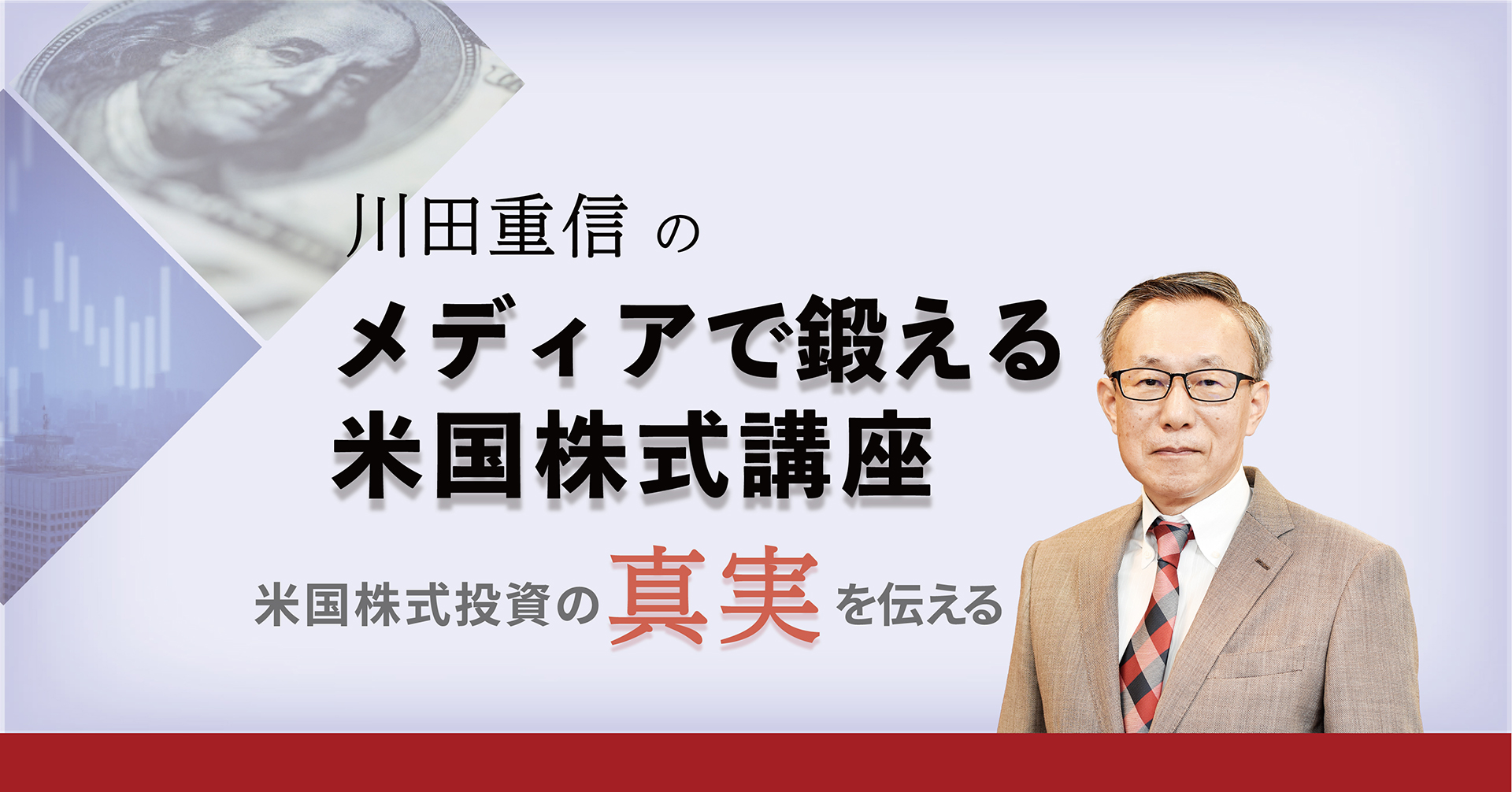
The Truth About U.S. Stock Investing from Shigenobu Kawada's "Training in U.S. Stocks through Media" [Vol.11] Distributed August 16, 2021
????????????????
The Truth About U.S. Stock Investing
Shigeno Kawada's "Training in U.S. Stocks Through the Media"
[Vol.11]Distributed August 16, 2021
????????????????
*** Table of Contents ***
Market Review
This Week's Spotlight!
This Week's Picked Articles
Investment Tips
Kawada's Walk
Activity Information
Q&A Corner
Achieving 20 Million Yen Pace Setter

Source: Financial Services Agency, based on asset management simulations prepared by ExeTrust Co., Ltd.
*The above figures are for simulation purposes only and do not guarantee future investment results. Fees and taxes are not considered.
How to Read: Expected Return and Time to Reach Target
3–4% for more than 30 years: Wrap funds and balanced funds fit here
5–7% even 25 years: perhaps for non-U.S. stock funds
8–10% about 20 years: a modest scenario for S&P 500 gains
S&P 500 Performance Record (Dividends Reinvested 1970-2021)

Aim to reach 20,000,000 yen early with proper risk-taking
Kawada's message is exceedingly simple. To achieve 20,000,000 yen, let as much of your excess funds work for you as efficiently as possible. For that, participants must correctly understand the meaning of risk and reward. Before reading the weekly newsletter, glance at this table to confirm the correct investment posture.
Now, start the countdown to 20,000,000 yen right away!
■□■□■□■□■□■□■□■□■□■□■□■□■□■□■□■□■□■
1. Market Review (Aug 9–Aug 13)
・Dow Jones +0.9%
・S&P 500 +0.7%
・Nasdaq Composite -0.1%
= Quick Version =
Following July's CPI release, inflation fears softened and earnings from individual companies were strong, lifting economically sensitive stocks modestly. The Dow and S&P 500 closed at record highs, while the Nasdaq Composite fell slightly as semiconductor shares sold off.
= More Detail =
On Monday, long-term yields rose due to inflation concerns but fell again after infrastructure bills passed on Tuesday. Despite July CPI and PPI releases on Wednesday and Thursday, inflation fears did not rise and long-term yields declined, with improving initial jobless claims helping economically sensitive stocks rise. On Friday, the preliminary University of Michigan consumer sentiment index for August dropped sharply from July, but the upside was contained, and the S&P 500 rose for the fourth day in a row to a new high; meanwhile the Nasdaq Composite declined modestly due to semiconductors after Micron Technology cited weak PC demand in its earnings call.

S&P 500 One-Year Chart

■□■□■□■□■□■□■□■□■□■□■□■□■□■□■□■□■□■
2. This Week's Spotlight!
A column delivering information you should know.
Despite concerns over the Delta variant of the coronavirus and a Michigan University Consumer Confidence Index near a 50-year low from last month, last week's market rose gradually. As they say, "sell in a quiet market," but Barron's reported that the Dow and S&P 500 reached new highs on Friday, with the day seeing the lowest trading volume of the year-to-date.
Tech stocks fell, but cyclicals were bought, indicating a successful rotation in the market. This strength largely reflects better-than-expected corporate earnings. However, behind the Nasdaq’s slight decline last week is a decline in semiconductor stocks, triggered by Micron Technology's explanation of weak PC demand at its presentation. Although semiconductor shortages are often cited, there can be a trap of "double orders" behind such supply shortages. If supply recovers, certain demand may be canceled, and the extent of such speculative demand is unclear; it may be specific to Micron. If other companies or other types of semiconductors report similarly, valuations could become a concern for high-valued sectors.
■ Market Moves This Week
This week, retail sales are released on Tuesday, the July FOMC minutes on Wednesday, and leading economic indicators on Thursday. The impact may come more via long-term yields than directly through equities, but expect a range-bound market at high levels. With futures and options settlement on Friday the 20th and the summer shutdown nearing its end, participants who took an early summer break may begin preparing for the Jackson Hole Economic Symposium from August 26–28.
Last week, a Barron's article suggested a long-term forecast of the S&P 500 reaching 6,000, but this week's Barron's interview article projected 5,000 by the end of 2022.
■ The Bullish Background of President Jardeni
The interviewee is Edward Jardeni, president of Jardeni Research. He previously worked at brokerage firms that were acquired, such as CJ Lawrence and EF Hutton, and at Deutsche Bank, which also visited Tokyo. I remember attending several of his lectures. Known for his bullish stance, he projects S&P 500 earnings at $230 for 2023, and if the multiple remains at 22 times, that implies a level of 5,000.
What you should understand here is why he is so bullish. It is due to productivity gains: if productivity increases and supports wage growth for workers, consumption rises, and everything becomes positive. Productivity gains come from applying high-tech technology, which can spill over to industries once deemed "old technology," making stocks of companies that can master these technologies particularly attractive.
Also, he emphasizes the importance of small and midsize businesses, noting that American entrepreneurship underpins the U.S. economy, and he opposes policies that would dampen entrepreneurial spirit.
Productivity gains and entrepreneurial spirit are what the Japanese market lacks and what drives the long-term rise of the U.S. stock market.
■□■□■□■□■□■□■□■□■□■□■□■□■□■□■□■□■□■
3. This Week's Featured Articles
A column that selects and ranks information useful for asset formation from what I have found, and comments from my very personal viewpoint.
【1】Bunbi Shunju September 2021 issue / "Itochu Wins Over the Zaibatsu Like This"
■ The Odd Bravado of Chairman and CEO Okamoto
Since joining in 1974, he had long been “perennial 4th place.” It is deeply moving that in the fiscal year ending March 2021 he achieved a “triple crown” in net profit, market capitalization, and stock price.
Among the five major trading houses, Itochu has the smallest number of employees (4,125 at the unit level vs. Mitsubishi Corp. 5,725) — meaning each employee's value is large.
■ Work Should Be Done in the Morning
In the 11 years since he became president in 2010, he focused single-mindedly on how to increase productivity. The most effective measure was abolishing the flextime system.
In 2012 he rewarded the highest-ever profits with a special bonus and abolished flex time. From 2013, he introduced an “朝型勤務” (morning-oriented work) system. While prohibiting work after 8 p.m. as a general rule, if you work between 5 and 9 a.m., you are paid 1.5 times the usual rate.
Abolishing flex time and introducing morning work was highly effective. Companies with many meetings and documents suffer. When superiors are free, they become anxious and hold meetings.
“Raising productivity” means making it easier for employees to work. Therefore, I set a higher goal than the “top three trading houses” by aiming to become the company that is best for its employees.
■ Kawada's Comment
→ I strongly agree with and feel that work should be done in the morning. I too start reading Nikkei around 3 a.m.
→ “When superiors are free, they get anxious and hold meetings.” This is truly true. Meetings are valuable when brainstorming ideas.
→ Do not think that “work twice as much, but pay is 1.5 times.” Doubling working hours is not realistic, so you should understand that productivity should double. Then the hourly wage becomes 1.5 times.
■ What's Wrong with High Compensation?
Now executives and employees are among the top earners.
Among 32 executives, 19 have annual income over 100 million yen, and all directors are 100 million yen players. In return, the number of executives has been reduced from 46 when I became an executive to 32. Zaibatsu groups still have nearly 50.
→ Reducing the number of executives is good. If there are too many executives, the gathering may become a ceremony praising their achievements rather than a decision-making venue.
No matter how capable someone is, if they cannot advance in a top leadership, perhaps they can shine in another organization. In that sense, labor mobility is important. I think the greatest relic of Japanese corporate society is lifetime employment in large companies.
■ Is It "Respect" Measured?
By the way, compensation is still lower than in Western companies. But Japan is structured such that even if you have money, you are not necessarily respected. In many Japanese people’s value system, money is not as important as the amount of “respect” (not just respect in the sense of honor, but a measure of respect). Is there such a thing as a “Respect Index” that can be measured?
Suppose there existed a “Societal Respect Index” (Kawada-style), with components such as “social contribution,” “tax payments,” “number of employees,” “money” (assets), and “good deeds.” In the U.S., the money factor would contribute heavily. In Japan, however, that money’s source might work negatively in raising the respect index, depending on its origin.
Japanese respect, I think, is still the honors and medals system. And among big corporate leaders, few are extremely wealthy. Big medals are targeted because top Japanese corporate leaders cannot become extremely wealthy (this digresses).
■ The Importance of Corporate Image
For employees to take pride, corporate image matters. Our corporate message, formulated in 2014, is “A single merchant, countless missions.” That one phrase allowed outsiders to feel Itochu’s character.
→ That full-page ad was impactful. 66th Nikkei Advertising Awards List (Nihon Keizai Shimbun)
■ Working with the Government? It Will Lead to a Thinking Stop
Four years ago, a magazine ranked us second as the “happiest company.” If you work closely with the government on large-scale businesses, you may lose the drive to create new businesses yourself. Resource business is a typical example.
→ Mitsui & Co. and Mitsubishi Corp. are, in some sense, government-sponsored companies. Therefore, large-scale private-sector projects can be pursued with government backing. But relying on government protection may erode the zeal to forge ahead, and it’s all too true.
By the way Are you a candidate for Itochu Shoten? It may be too late; perhaps look for the next Itochu, or better yet, start your own company to surpass Itochu.
■ Itochu (8001) stock price has risen even more dramatically than the S&P 500.
About 20 years stock price: Itochu > Mitsubishi Corp. > S&P 500 > TOPIX


【2】Nikkei Newspaper U.S. White Population Declines for the First Time Last Year; Diversity Accelerates Division8/14
America's racial composition is diversifying further.According to the 2020 census data, the white population decreased by 2.6% from ten years earlier, marking the first decrease in history. Its share of the total population dropped below 58%. Hispanics, who are becoming more prominent, accounted for 19% of the total population. Hispanics contributed 51% of the overall population increase.
The U.S. Census Bureau had predicted in 2017 that whites would become a minority by the 2040s. While Democrats tend to be positive about racial diversification, Republicans tend to be skeptical. Some argue the white discontent from losing the majority fueled the rise of former President Trump. There is little sign that U.S. society will reconcile its divisions.
■ Kawada's Comment
This issue is extremely important for the U.S. economy and, by extension, the stock market. It will also greatly affect Japanese asset formation.
Over the last 30 years after the end of the East-West Cold War, globalization accelerated. As a result, incomes for the middle class in the U.S. and other advanced economies stagnated. In the U.S., among the middle class, younger and educated people of color worked hard to gradually encroach on white people’s seats of power. The anger and fear of white people who lost jobs and pride gave rise to the monstrous Trump presidency.
But how will things progress if population composition continues on this path? Many whites still believe their status and power depend on white existence. If you live in the U.S., you’ll notice the institutional leverage that has long fixed white superiority. Will these “mechanisms” be replaced by new ones for the next beneficiaries? In this context I’m reminded of Michael Sandel’s recent topic in my seminar: "Markets and Morality: Is Meritocracy Just?"
“Mercudi:Is Meritocracy Just?”
Two-thirds of Harvard students come from families in the top 20% earnings, yet they say their admission was due to their effort and diligence—ignoring racial, gender, and origin. We have idealized a fair world where capable people succeed regardless of these factors. But now meritocracy is making elites arrogant and widening the rift with the losers. Can we transform this new class society into a truly just community?
■ My Own Fantasies
From here, my own fantasies. The U.S., as the “New World,” saw European Protestants (white people) break away from old rights and obstacles and seek new hope in a new land. They fought Britain to gain independence.
If, somehow, the U.S. could shed religious and racial shackles and allow wealth and power to compete under peaceful and free conditions, which groups would hold power in 50 or 100 years? Considering education, diligence, creativity, and power-seeking, Chinese and Indian groups might have that potential.
However, given population size, they are currently minority groups, making it a high hurdle. Yet, Chinese people have moved world history with inexhaustible energy. If you think of top U.S. IT company leaders or politicians, you can glimpse the outstanding abilities of Indians. But before that, whites will likely scramble to prevent the rise of Asians (refer to
If I begin to chase such thoughts, there is no end. But at least I’m sure it is not a Japanese. This discussion is left for another time. By the way, related to this week's newsletter is “8th Detour: Tracing the Source of the Uptrend in U.S. Stocks” Civilization: the Six Key Reasons Western Powers Dominated the World, a book – 2012/7/6 by Niall Ferguson (author), translated by Kino Senna. Please take it as a reference.
【3】日経新聞 Rice Futures, No Outlook End; Prices Determined, JA Holds the Reins8/11 [Editorial] Abolish Rice Futures Reflecting Agricultural Policy Confusion8/9
■ End of Rice Futures Trading
Rice futures trading on Osaka Dojima Exchange is to end. The news circulated in the first week of August, and last week there were many explanatory articles. I won’t debate whether rice futures should be listed, but it seems it was impossible in Japan at present.
Generally, participants in commodity futures are final buyers (consumers) and final sellers (producers), and they provide speculative demand that settles with opposite trades, regardless of delivery of the physical product. In the case of rice futures, although buyers included companies such as restaurants, there were almost no sellers, which led to a retreat.
■ What the World’s First Market Lacked
“Dojima” is sometimes described as hosting the world’s first futures market, but in the early Edo period there must have been real buyers and sellers. While I’m not sure of exact sources, broadly speaking, buyers represented end consumers (rice wholesalers), sellers were merchants who interacted with the shogunate or domains (to monetize the rice). There were also speculators who sought a quick profit.
From an economic viewpoint, prices were determined by supply and demand in a textbook-like, ordinary market. Yet, social aspects such as rice riots, looting, or family breakdowns due to futures speculation have been emphasized, giving Japan a negative image of futures markets (also affecting stock futures). This may have reinforced the argument that “speculators shouldn’t control rice prices.” The ministry of agriculture’s own manipulation to keep rice high probably prevented market development.
■ U.S. Agricultural Markets
In the U.S., commodity trading is active in Chicago and elsewhere. A wide range of products—crude oil, wheat, soybeans, livestock, timber, etc.—is traded because both demand and supply sides recognize the futures market’s role. Buyers can plan production and sales with price visibility, while sellers can sell without worrying about price drops (especially for agricultural products).
In agriculture, farms are large-scale and run like companies in many cases, so the advantages of using futures are tangible. Exchanges also work on price transparency and settlement reliability, enabling speculators to participate with confidence.
I often write about the superiority of the U.S. stock market, but in commodity futures the differences between the U.S. and Japan are far larger. There are discussions about creating a cash (spot) market instead of futures, but the desire to control rice prices persists, and a market that lacks major participants on either side will not survive.
【4】 PRESID ENT magazine September 3 issue
Kenichi Ohmae, president of Business Breakthrough University, reveals Japan’s intricacies
“Abolish the enslaving technical training system; invite immigration modeled after Germany.”
■ Are Japan’s technical interns a problem?
The U.S. State Department criticized Japan’s foreign technical intern system. About 410,000 foreign technical interns work under a maximum five-year stay, earning low wages, with unpaid overtime, long hours, and hidden industrial accidents. As Japan faces population decline and labor shortages, it is time to seriously discuss immigration.
■ For immigration, look to Germany
Germany is the example: about 3 million of its 83 million population are of Turkish origin. The first generation suffered from prejudice during the postwar boom, but about 30 years later, second and third generations who were born and raised in Germany began to thrive in society. A notable recent achievement between the two nations is the COVID-19 vaccine.
In November last year, BioNTech, which co-developed the COVID-19 vaccine with Pfizer, is a German biotech startup founded in 2008. CEO Uğur Şahin is of Turkish descent, and his wife Özlem Türeci is a second-generation immigrant. The immunology specialists met in college and advanced cancer vaccine development. In 2013 they appointed Hungarian biochemist Riccardo Katari as senior vice president. She is a Nobel Prize candidate due to this vaccine development.
■ Kawada's Comment: Remember Ohmae Kenichi!
Last week, I found that many young people don’t know Taichi Sakae. But what about Kenichi Ohmae? His thinking is American, logical, and rational. He is one of Japan’s indispensable figures in business and public discourse.
Kenichi Ohmae (born February 21, 1943)
Japanese management consultant and entrepreneur.
For my generation, it would be strange not to know him. He led McKinsey & Co. and gained attention through his books and media activities. He even ran for Tokyo governor in 1995. Yet his approach was seen as “guiding late Japan” with a condescending tone, and many felt the campaign failed.
■ We Should Implement Immigration Policy
One of Ohmae’s proposals is this: introduce a Green Card (permanent residency) system. People who graduate top of their class in their homeland or who have proper qualifications would be actively welcomed, taught Japanese language and society, and those who excel would be guaranteed permanent residency and work rights.
→ Even though we understand this is essential for Japan, politics blocks us. Don’t lose hope; consider other approaches.
I think the majority of Japanese people are comfortable with that. In other words, “Japan will slowly sink” is fine for them. They think foreigners will lose interest and stop provoking. This attitude underpins their thinking. Anyway, the Japanese people today still feel: “During the high-growth era, the U.S. seemed to be behind us, but nothing good happened. I don’t want to strive anymore.” So they feel “everything is burdensome.”
■ Recalling “Keiishi Saeki”
This lethargic backward-looking mindset reminds me of Keiichi Saeki. If you read Asahi Shimbun, you might know him. He used to say, “Business is fundamentally about profits, and those who chase after America are traitors.” I can’t recall exactly, but that seems about right. Such ideas can comfort you when exhausted at work, but in reality they’re useless to me.
Ohmae’s “Low-Desire Society” is fascinating
Ohmae argues that Japan’s fundamental problem is a “low-desire society,” where individuals hold assets totaling about 1600 trillion yen in cash and corporate reserves totaling 320 trillion yen, yet no one borrows even with interest rates below 1%, and people do not apply for 35-year fixed-rate mortgages even at 1.56%—this should be addressed.
→ Interesting. So does that mean there’s no point in me promoting “asset-building through U.S. stocks”? Does no one want to become wealthier?
Speaking of which, an elderly acquaintance recently said, “I’m 75. I don’t want to make money or do anything. I don’t want to go anywhere.” This kind of senior population may be preventing a motive to increase assets.
■ A Japanese Way of Asset Circulation
Do these seniors and wealthy people met young, ambitious people and not feel anything? No matter how suppressed their desires for goods or money are, isn’t it morally right to increase and pass assets to the next generation and provide opportunities to enthusiastic people? I think so.
However, Japan’s inheritance tax is substantial, so legally transferring assets often returns much of what has been built to the state. That wealth is redistributed by the state to others or the next generation. Thus, a country’s traditions and methods shape its outcomes. Ohmae says: “Japan is the most socialistized capitalist country in the world.” Japan has its own ways, and we should not judge Japan by foreign standards.
That’s enough for now.
■□■□■□■□■□■□■□■□■□■□■□■□■□■□■□■□■□■
4. Investment Hints
This column covers not only “investment methods” and “stock picks,” but also “indicators and statements I found notable” and “movements in society and politics.”
“I Still Won’t Buy Japanese Index Funds!” Updated Version
Below is an updated version based on my December 2019 column “Good Medicine, Even If Bitter! Still I Won’t Buy Japanese Funds,” reflecting current conditions. My fundamental view remains unchanged, and the validity of Japanese people’s asset formation has long since upgraded from “confidence” to “conviction.”
(*)Have you heard the famous remark by Matsuzaka who recently retired?
The Day Matsuzaka’s Confidence Became Conviction / 1999-05-16 – Professional Baseball
In the previous column, I proceeded in the form of answering the following question.
“Japan has many popular funds, especially so-called ‘independent funds’ perform well. Won’t it be enough to invest in Japanese funds rather than the U.S. stock index like the S&P 500?”
Until about two years ago, many investors asked this at my lectures. I pointed out the drawbacks of Japanese funds and preached the merits of passive U.S. stock investments. As a result, I believe many people have practiced proper asset formation using U.S. stocks.
But this time you still asked the question, so I would like to re-examine the performance of independent funds against the S&P 500 and Nasdaq-100 and share my thoughts.
■ Did Independent Funds “Resonate with the Philosophy!”
Let me be clear: independent funds, free from ties to specific financial institutions, position themselves as truly investor-focused. Represented by Sawakami Asset Management, Reo’s CapWorks of HIFUMI Fund, Commons Asset Management, Kamakura Asset Management, etc.
Many investors purchase these funds because they “resonate with their philosophy.” In other words, they agree with the investment principles and are swayed by the idea, telling themselves that performance is secondary.
■ Can you build wealth by “Resonating with the Philosophy”?
Reality check. The performance table for independent funds shows this. Our researcher Sasaki carefully collected the numbers. Reviewing the aims and investment policies of independent funds reveals lofty ideals and devotion to Japan and Japanese companies, which is admirable.
Yet with this performance, your assets will not grow. If assets don’t grow, you won’t feel wealth and consumption won’t rise. Company earnings won’t rise either, which means global competitiveness won’t improve.
■ Kawada Model: “Earn in U.S. stocks, and return to Japan”
So what should you do? Use money to grow in U.S. stocks and return it to Japanese society. Start with S&P 500 and Nasdaq 100 ETFs or funds. Moreover, this already completes the legitimate path to asset formation. You don’t need “philosophy” or “resonating with the philosophy.” If financial literacy is truly advanced, you’ll understand how inefficient assets are when invested through independent funds.
“Earn the money in U.S. stocks, and spend it generously (not wastefully) in Japan, and pass it to the next generation.” This has been my belief for over 30 years when I led the foreign equities division of a major securities firm, and some people call this the “Kawata Model” or “Kawata Method” (really?). Implementing the Kawata Model is essential for Japan’s revival, and it is our responsibility to practice it. In Kawata terms, Japanese stock funds are inefficient and wasteful, regardless of philosophy.
■ Why not Japanese companies? Another time
So why not invest in Japanese companies and instead in U.S. stocks? Japanese firms led in some fields up to the 1980s. Of course, people’s effort contributed to Japan’s global competitiveness, but geography and geopolitics also played a role. The end of the Cold War in 1989 changed the tide. Japan’s stock market peaked around that time, and its advantage disappeared. The metaphorical “geta” on Japanese firms wore down. I’ll leave that topic for another time.
■ How to read the tables
■ Performance: Sawakami Fund as an example
For example, Sawakami’s Sawakami Fund, established August 1999. With more than 20 years of track record, this is the only fund with such longevity. Other funds’ years of operation are in the bottom “Setup Date” of the table.
Over 20 years, Sawakami Fund’s annualized return is about 5.7% (our estimate). They also experienced the financial crisis. Japanese stocks began rising in earnest after 2012’s Abenomics. By contrast, you’ll see the 20-year annualized numbers for S&P 500 and Nasdaq-100. From autumn 2007 to March 2009, S&P 500 fell as much as 57%, but the subsequent rise followed as you know.
In terms of the past 20 years, the difference between Sawakami’s 5.7% and the S&P 500’s 7.9% compounds, how large is the gap? To understand this easily, refer to the “2000万 yen Pace Setter” table at the top of this newsletter. If you save 30,000 yen monthly in Sawakami, it would take about 27 years to reach 20 million; with S&P 500 it would be about 22 years. The gap over the last five years is significant.
■ Performance: 3 years, 5 years, 10 years
The performance gap is evident. In the short term, mid-term, and long term (over 10 years), the S&P 500 and Nasdaq-100 consistently outperform independent funds by a wide margin. As shown in the final table, this was calculated by translating 1 million yen into investments and measuring the outcome over time.
Using this method, you can compare the speed of performance between other independent funds and our S&P 500 index. The saying “philosophy over results” or “flowers over dumplings” is here. You may invest because you resonate with the philosophy, but that intangible satisfaction may be like a hypnotic trance. On the other hand, I constantly analyze why the S&P 500 can keep rising, and I’m moved by this evidence. This fact is so obvious that someone must say it, which is why I raise the issue.
By the way, hifumi fund’s performance is relatively good. Perhaps Fujino’s spirit is within the fund.
■ Sharpe Ratio
This is a bit hard to understand in the description below. It measures the efficiency of investment by risk-adjusted returns—the higher, the better. The table shows ten-year Sharpe ratios; for the S&P 500 and Nasdaq-100 both are around 1.1, while others are 1.0 or below. These index funds, lacking a fund manager, outperform active funds in both absolute performance and Sharpe ratio. Investors should pay more attention to this undeniable fact.
Ideally, active funds should be competed out by the market, but that is not how it works in practice. Is this due to marketing by the fund companies or the devotees of the “philosophy”? I don’t know.
Sharpe Ratio
Risk (standard deviation) per unit; excess return over risk-free rate; higher values indicate higher excess return for taking risk. It helps compare different investments for the same level of risk.
This Sharpe Ratio is used to evaluate risk-adjusted performance in mutual funds.

■ This column's rant ends here
This time I invited independent funds to discuss “Kawata-style” rational asset formation. I wanted to say that sometimes ideology and personal feelings (or biases) can hinder your asset formation.
Investment should be objective, not a fanfare or resonance with ideology. If you look at the era we live in calmly and objectively, you can see where strong companies exist and how they fairly return profits to shareholders, and the answer becomes clear.
To be blunt. (Oh, Kawata-san yells again!) Rather than self-satisfaction with tepid returns from Japanese stock funds, it is better to form wealth substantially in U.S. stocks and use the fruits for Japan’s future. Yes, do not be swayed by emotions or moods; examine the facts with numbers and a broad perspective (I may have gotten a bit heated again).


■ This is also interesting. Hifumi is performing well here too.
Do you understand how to read this table? It is a “what if” calculation showing how much 1 million yen would become after Y years at rate X%. If you apply the earlier independent funds’ approximate gains, you can imagine the asset growth. This is Sasaki Researcher’s steady work.
■ Grow directly and return directly to society
Especially for long-term performance, imagine the growth from the S&P 500 and Nasdaq-100. If you have time to attend investment briefings that preach “philosophy,” you would be better off directly growing your assets in U.S. stocks and using a portion to benefit the next generation and society. This improves your own satisfaction and benefits the world.


■□■□■□■□■□■□■□■□■□■□■□■□■□■□■□■□■□■
5. Kawata’s Walk
◇◇Recently Favorite Shops◇◇
Dentist visited for 38 yearsMedical Corporation Azalea Association Tokyo Nihonbashi Dental Clinic
■ 38 Years with the Same Dentist
I’ve always been the “grandma’s darling,” and as a child I had many cavities. Still, until I became a working adult, I rarely visited the dentist unless it hurt. Aren’t young people like that?
Since turning professional, I’ve had semiannual dental checkups. The most recent checkup just finished. I started visiting in 1983. Before studying abroad, I asked a senior for a dental visit to fix my teeth. Even when I worked overseas, I returned home to have regular checkups. It’s been 38 years, and the clinic has changed hands to the current head practitioner.
■ The elder master’s guidance
① The frightening thing about dental disease is not cavities but periodontitis; to prevent it, massage your gums for 17 minutes a day (was it 17 minutes?).
② Sweets are strictly forbidden; especially the sugar in canned coffee and juice hurts teeth.
③ Other dentists do not treat as conscientiously as I do! Listen to what I say!
Following the master’s instruction, I’ve diligently brushed and used interdental brushes. As a result, many of my teeth remain. I’ve had three implants. But someone with weak teeth doesn’t necessarily need implants.
Prospec Interdental Brush 2 Spare Brushes 6 pcs M Red
Now, after 38 years with this dentist, perhaps it is the master’s personality that has kept me loyal. A long time ago, if the treatment seemed sloppy, he would thunder the staff; watching that made me feel I must not neglect gum massage. I realized that to receive proper treatment, trust with the doctor is essential. I am deeply grateful to the master now.
■ If I had bought S&P 500 in May 1983 and held for 38 years
By the way, if you had invested in S&P 500 fund in May 1983 and left it untouched for 38 years, what would happen? The USD/JPY exchange rate back then was about 235 yen per dollar, so the yen would have appreciated roughly 2.15 times.
① If you received the dividends and reinvested them, it would grow at 8.9% annually, and the principal would become 26 times larger. If you had invested 1 million yen in S&P 500 then, it would be about 26 million yen, i.e., roughly 12 times after adjusting for the 2.15 exchange rate.
② With dividend reinvestment, it would have grown at about 11.5% annually, and the principal would become about 64 times larger. A 1 million yen investment would become about 64 million yen, i.e., around 30 times after adjusting for the exchange rate.
Receiving dividends right away may feel advantageous, but the effect of dividend reinvestment is enormous, so be mindful. Also, if you sell stock, capital gains tax of 20% applies, which reduces compounding, so be careful.
Interestingly, on May 1983, Nikkei average was 8,617; recently it is around 27,820, which is about 3.2 times higher.
S&P 500 Return Calculator, with Dividend Reinvestment

■□■□■□■□■□■□■□■□■□■□■□■□■□■□■□■□■□■
6. Upcoming Activities
◇Wednesday, August 18, 11:00 a.m. Stock Voice
■□■□■□■□■□■□■□■□■□■□■□■□■□■□■□■□■□■
7. Q&A Corner
Questions (Summary)
A housewife in her 70s cannot use the internet and does in-person transactions at a major securities firm. Honestly, I think she belongs to a substantial wealth class. Her home is likely worth at least 200 million yen, and there are many pieces of art around the living room. She recently sold some land she owned, and with the lump sum, she has invested in stocks as well.
Current investment is about 100 million yen; in the past she earned about 30 million, but now holds about a 20 million yen unrealized loss. The sales representative is a good person, but she does not listen to him and makes her own investment decisions. Her son, in his 40s living with her, began investing in U.S. stocks via online brokerage about a year ago and, apparently, also has about 20 million yen in losses. Both want to recover their losses.
Answer
■ What she and her son are doing is neither investing nor asset formation
From what I hear, their purpose isn’t asset formation but seeking “fans” or “stimulation”—more like entertainment.
Because, as a securities salesperson, they quickly instinctively identify customer types to maximize commissions. For example, “this client will trade on their own if you don’t tell them to; they want someone to push them to agree.”
You are trusting that salesperson even in a favorable investment environment, which is convenient for the salesperson.
Also, the son holds only one stock. This isn’t something you do with money you worked hard to earn. It’s gambling-like.
Now my mission is asset formation assistance, but if you truly want to grow wealth, I recommend shifting quickly to a core-satellite approach.
■ You should grow wealth substantially and return it to society
I would like asset owners like you to steadily grow wealth and return it to society. When I spoke with you recently you said, “How many more years will I live? Asset formation? That’s boring.” This is a typical attitude of Japan’s small-wealth class.
If you change this mindset slightly and aim to substantially increase assets and return them, it would be ideal, but that may not be realistic. For your question about “both parent and child want to recover losses,” shift to the core-satellite strategy and play with satellite picks. I may not be of much help. Sorry.
Comments
Japan’s small-wealth class lacks a concept of donation or social return. The tax system shows that, in society, individuals are allowed to move money as they wish, but there’s a broad trend to prevent this. Yet, isn’t it natural for wealth earned through one’s effort to be used to help the next generation and those who need opportunities? What do you all think?

8th Detour: “Tracing the source of the U.S. stock rise”
文明: Six reasons Western powers prevailed Book – 2012/7/6
Niall Ferguson (author), Kino Senna (translator)
Chapter 6: Labor
Why did the West dominate other regions while the others did not? Let me recap what I have proven. (omitted)
①Competition Europe was politically fragmented; whether monarchies or republics, competitive enterprises abounded.
②Scientific Revolution In 17th-century Western Europe, there were breakthroughs in mathematics, astronomy, physics, biology, etc.
③Rule of Law and representative government In English-speaking regions first, systems that seemed best for social and political order were established. The concept of private property underpinned and people with assets were elected as political representatives.
④Modern Medicine In the 19th and 20th centuries, remarkable advances in medicine suppressed many tropical diseases in Western Europe and North America.
⑤Consumer Society The Industrial Revolution driven by technology encouraged mass production and demand. Cheap, good products became supplyable, starting with textiles.
⑥Work Ethic In the West, vast labor forces were rationalized, savings increased, and capital accumulation progressed continuously.
The key to Western ascent lies in these six killer applications. The modern era began in Meiji era Japan (1868–1912), when other regions began to download these six applications. But it wasn’t smooth sailing. In Japan, because it couldn’t discern which Western culture or system was most important, it imitated everything, including clothing, hairstyles, and colonial endeavors. Unfortunately, this coincided with rising costs of empire-building (p485).
→ The British author is currently a professor at Harvard. The English original was written soon after the financial crisis. While following Max Weber, I picked up this book that had been resting at home.
The original title is “CIVILIZATION: The West and the Rest,” which literally translates to “Civilization: West vs. the Rest.” In practice, the author argues the West vs. the Rest, with a Western-centric perspective that may seem self-serving. This approach is common among Western historians who cross the Atlantic. The chapter’s other references include Paul Kennedy’s The Rise and Fall of the Great Powers and Francis Fukuyama’s The End of History. Since these are Western scholars, there’s a shared perspective. In such historical civilization debates, religion, especially Protestantism, is often discussed.
Now, comparing the six items above with Japan in mind, ① would be “Harmony First” (Wa). ③ is that Japan lacks a strong contract concept. ⑤ is “Frugality is noble” in Japan. ⑥ Japan may have a strong work standard equal to Protestantism, but does not approve of work aimed at wealth?
In the end, this author’s message is the roar of a conqueror, and the approach to discussion is heavy and may be nauseating.
───────────────────────────────────
★ If you have questions, please read the following 【Question Rules】 and send to
info@kawata-magazine.com.
【 Question Rules 】
◆ We cannot answer all questions. Please understand in advance.
◆ Questions may be published on our site, YouTube, SNS, books, etc., in a form that does not identify individuals.
◆ We will not answer questions from those who are not subscribers.
◆ Parts deemed clearly advertising will be omitted.
◆ For those who post malicious questions without subscribing, appropriate measures will be taken.
───────────────────────────────────
■ Disclaimer
◆ Our newsletter does not provide recommendations to buy or sell stocks, bonds, funds, ETFs, or sectors. Investment decisions are the subscriber’s responsibility, and we provide no guarantees.
◆ We do not guarantee damages arising from subscribers’ use of our newsletter.
◆ We are not responsible for any disputes arising among subscribers or between subscribers and third parties through this service.
◆ We do not bear responsibility for damages caused by interruption or modification of service.
───────────────────────────────────
■ Publisher: Hibiya Technology & Finance Co., Ltd.
■ Shigenobu Kawata's Thank You, American Stocks
https://www.kawataamekabu.com/
■ Twitter:https://twitter.com/ShigenobuKawata
■ For feedback, requests, or unsubscribing, click here
【Email】info@kawata-magazine.com
■ If you don’t receive emails, please check your spam folder.
───────────────────────────────────