
Artificial Intelligence, Markets, and Computers — Episode 13: Technologies of the 21st Century [Naoyuki Okumura]
Okumura Hisashi Profile

Okumura Hisashi. Graduated with a master's degree in engineering in 1987. Focus theme: AI (Artificial Intelligence). Developed numerous mathematical models at Nikko Securities. Co-developed investment models with Stanford University professor Dr. William Sharp (1990 Nobel Prize in Economic Sciences) and pioneered the network delivery of Tokyo Stock Exchange prices (a world first). Additionally, established venture companies with Israeli Mossad science advisors, commercialized AI technology, and introduced it to major airports, achieving numerous accomplishments at the intersection of finance and IT. Currently provides models that evaluate analyst ratings with AI, “MRA,” an AI-based estimation tool for near-future FX rates called “FXeye,” and a chart analysis tool that displays risk and return, “Twilight Zone.” To raise financial literacy in Japan, hosts a Financial Literacy School.
Hobbies include audio and sports. Began aerobic competition 15 years ago, NAC Master division singles champion for 9 consecutive times, 2016 Senior 2nd place, 2014–2016 Japan Championship Chiba Prefecture representative, 2017–2018 Japan Championship Master 3 runner-up. Although described as versatile in sports, actually a “clumsy” person who is not good at ball sports. Motto: “It is never too late to make any decision.”
Blog:https://okumura-toushi.com/
*This article is a reprint/edited version of an article from FX攻略.com April 2021 issue. Please note that the market information described in the main text may differ from the current market.
Will Groundbreaking Products Be Born in the Future?
In this series, the 20th century discussed so far was the era of hardware. The evolution from vacuum tube computers in the 1940s to supercomputers has benefited all industries. Space technology such as Apollo 11 (1969), Concorde, which connected Europe and America by supersonic travel (1975), the reusable manned spacecraft Space Shuttle (1981)—and transportation technologies like automobiles (20th century overall), Shinkansen (1964, image ①), jumbo jets (1970), automatic ticket gates in subways (1969)—as well as new materials like Teflon, nylon, carbon fiber, ceramics, and consumer electronics that evolved in step with electronic devices, etc.
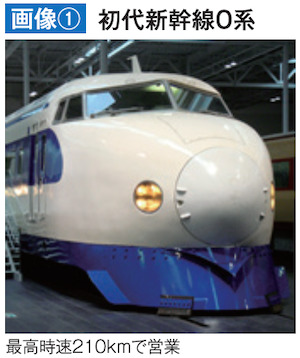
Source:Linear Railroad Museum HP
In such an era, in the world of manga and movies, AI or intelligent robots emerged, and at the beginning of the 21st century I thought such a world would be realized. In reality, not so; not even intelligent robots that can walk properly have appeared. Vehicles of the 20th century show little progress in the 21st. Shinkansen, airplanes, and automobiles, from a hardware perspective, have reached their limits, and great evolution seems unlikely.
Meanwhile, in the 21st century, the focus has shifted from hardware evolution to software and services that implement processing using AI that behaves like humans, and that can be used safely and comfortably.
However, even though two decades have passed in the 21st century, there have been no breakthrough products. The Internet's development changed our concepts of time and movement, but this is a behavioral transformation; technically, it existed 30 years ago. AI robots like “Astro Boy” and thinking computers like those in “2001: A Space Odyssey” have fallen further away. It is slow. It suggests that mimicking the human brain remains very difficult.