
【Fundamental × Technical Feature ③】Euro: European Situation
【Feature: Fundamentals × Technical】
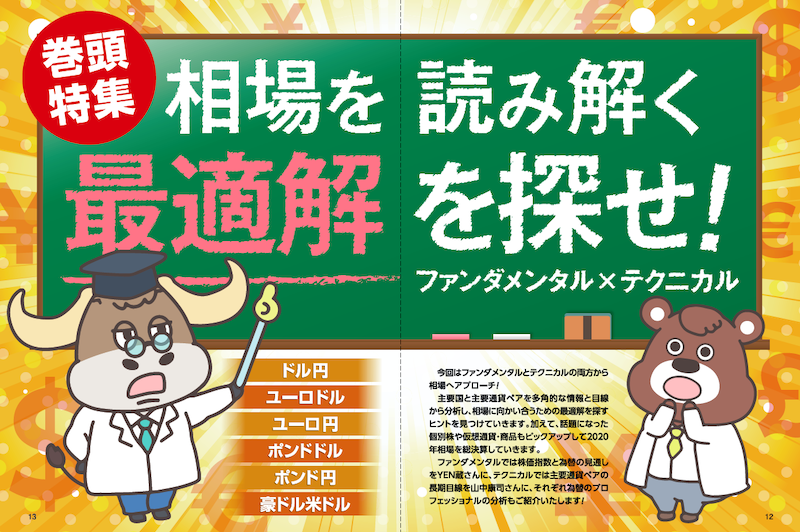
Find the optimal solution to read the market!
This time we approach the market from both fundamentals and technicals! We analyze major countries and major currency pairs from multiple perspectives with diverse information, and look for hints that lead to the best solutions when facing the market. In addition, we pick up notable individual stocks, cryptocurrencies, and commodities to provide a comprehensive wrap-up of the 2020 market.
In fundamentals, we will have Yenzo-san share forecasts for stock indices and FX, and in technicals, we will feature long-term perspectives on major currency pairs, including analyses from FX professionals.
・② Dollar: United States’ situation
・③ Euro: Europe’s situation ←This article is here
・④ Pound: United Kingdom’s situation
・⑤ Australian Dollar: Australia’s situation
・(11) AUD/USD: Chart analysis
・(12) Market beyond currency pairs (NASDAQ & GAFA, cryptocurrencies & commodities)
※This article is a reprint/edit of articles from FX攻略.com March 2021. Please note that the market information written in the main text may differ from the current market.
YEN蔵 Profile

Having worked for over 20 years as a foreign exchange dealer at American City Bank and British Standard Chartered Bank and other foreign banks, he is currently a top professional trader trading FX, the Nikkei average, Nikkei options, and individual stocks. He is the representative director of ADVANCE, a company that primarily distributes investment information.
Newsletter:YEN蔵 Real Top Trading
Blog:YEN蔵’s FX Investment Techniques - Investing in the world with dollars, yen, euros, pounds, and AUD
Twitter:https://twitter.com/YENZOU
Yasuki Yamanaka Profile

Director at Ascendant. Joined Bank of America in 1982, became Vice President in 1989, Proprietary Manager in 1993. In 1999, became Head of FX Funds at Nikko City Trust Bank. Founded Ascendant in 2002.
Official Blog:FX Information Delivery Site Provided by Ascendant/Yasuki Yamanaka
Twitter:https://twitter.com/yasujiy
The Difficulty of Economic Recovery in Europe
In the European Union (EU), the European Central Bank (ECB), which has long maintained negative interest rates, is responding to the COVID-19 shock by implementing and expanding quantitative easing through asset purchases, similar to the Bank of Japan.
With infection rates and fiscal conditions varying across European countries, the EU—without fiscal integration—struggles to avoid sovereign credit concerns and stabilize financial markets, making recovery slower than in a single economic area a risk factor. Going forward, a positive driver for economic recovery will depend on the effectiveness of the newly established European Recovery Fund, in addition to vaccine rollout, as with other countries.