
Where the Foreign Exchange Market is Heading Next Episode 128 [Tomotaro Tajima]

Tomotaro Tajima (Tomotaro Tajima) profile

Economic analyst. Alfinauts CEO. Born in 1964 in Tokyo. After graduating from Keio University, he shifted careers following a tenure at Mitsubishi UFJ Securities. He analyzes and researches a wide range from finance and economy to strategic corporate management, and even personal asset formation and fund management. He serves as lecturer at lectures, seminars, and trainings hosted by private companies, financial institutions, newspapers, local governments, and various business organizations, with about 150 lectures per year. He has contributed to numerous print media series and commentaries, including Weekly Gendai "The Rules of Net Trading," Examina "Money Maestro Training Course," and more. He also writes columns on many websites about stocks, forex, etc., and is highly regarded as a stock and foreign-exchange strategist. He has also written for the Home Economy column of the Free People’s Foundation’s "Basic Knowledge of Contemporary Terms." After regular appearances on TV (TV Asahi "Yajiuma Plus," BS Asahi "Sunday Online") and radio (MBS "Tsurutaro's Asa-ichi Radio"), he currently serves as a regular commentator on Nikkei CNBC "Market Wrap" and Daiwa Securities Information TV "Economy Marche." His notable DVDs include "Very Easy to Understand: Tomotaro Tajima's FX Introduction" and "Very Easy to Understand: Tomotaro Tajima's FX Practical Technical Analysis." His major books include "Asset Reassessment Manual" (Paru Publishing), "FX Chart 'Formula for Profit'" (Alchemix), "Why Can FX Make Your Assets Rich?" (Texts), and many more. His latest publication is "How to Profit by Riding the Rising U.S. Economy" (Free People’s Foundation).
※This article is a republished and edited version from FX攻略.com December 2020 issue. Please note that the market information written in the text may differ from the current market.
The Bearish Turn in Eurlusd Reached a Psychological Milestone
By the time you readers come across this piece, one wonders whether the resurgence of coronavirus infections in Europe and the U.S. has been curbed. Of course, if it has been curbed, it is presumed to be the result of broad use of stringent business and behavioral restrictions again, and the negative impact will eventually become evident.
At the time of writing, new infection numbers in the U.K. and France have reached record highs. Already in major cities of both countries, measures such as restricting restaurant hours have begun, which is the path that has been taken before. Naturally, concerns about the outlook for each country and region’s economy arise, and PMIs (Purchasing Managers' Indices) for both manufacturing and non-manufacturing sectors are deteriorating.
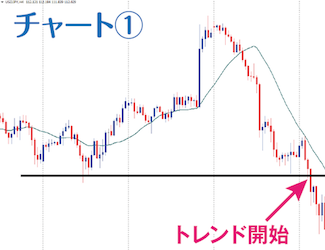
In fact, the Euro-area composite PMI for September fell 1.8 points to 50.1 from the previous month, interrupting the pace of recovery that had been seen since April. And while these realities loom, from early September up to the time of writing, the EUR/USD has shifted into a bearish trend.