
Artificial Intelligence, Markets, and Computers | Episode 5: The Emergence of Japan [Naoyuki Okumura]

Profile of Mr. Hisashi Okumura

Okumura Hisashi. Graduated from the Master’s program in Engineering in 1987. Theme: AI (Artificial Intelligence). Developed numerous mathematical models at Nikko Securities. Co-developed investment models with Stanford University professor Dr. William Sharp (Nobel Prize in Economic Sciences in 1990) and pioneered online delivery of Tokyo Stock Exchange prices (the world’s first). Also established venture companies with Israeli Mossad science advisors, commercialized AI technologies, and implemented them at major airports, achieving many accomplishments at the intersection of finance and IT. Currently provides models that evaluate analyst ratings with AI, “MRA”; AI-estimated near-future FX rates, “FXeye”; and chart analysis displaying risk and return, “Twilight Zone.” To elevate financial literacy in Japan, hosts the Financial Literacy School.
Hobbies include audio and exercise. Began aerobics competitions 15 years ago, NAC Master Division Single champion for 9 consecutive times, 2016 Senior runner-up, 2014–2016 Japan Championship Chiba Prefecture representative, 2017–2018 Japan Championship Master 3 runner-up. Often described as athletic, but in fact he is “tone-deaf” and not good at ball sports. A motto: “It is never too late to make any decision.”
Blog:https://okumura-toushi.com/
*This article is a reprint/edit of an article from FX攻略.com, August 2020 issue. Please note that the market information written in the text may differ from current market conditions.
The Gold Standard and Expansion of Free Trade
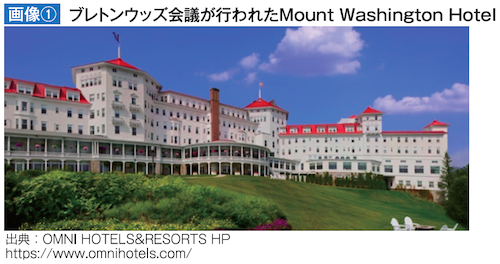
The 1960s were an era when a new international economic cooperation framework was established and global trade expanded. Exchange rates were determined within the Bretton Woods system centered on the United States, with fixed exchange ratios between each country's currency and the dollar. In addition, a settlement currency was designated as the dollar. The dollar could be exchanged for gold, which is why this system is called the Gold Standard.
Gold reserves are limited. Historically mined gold is about 184,000 tons; economically recoverable gold is about 56,000 tons, totaling around 240,000 tons. All of this is roughly the equivalent of five Olympic-sized swimming pools (as per Tanaka Precious Metals). While foreign currencies increase in circulation due to trade growth, the supply of gold cannot be increased accordingly. The amount of gold does not grow, but the amount of dollars grows in proportion to trade volume.
The Bretton Woods system is also known as the IMF–GATT framework. Thanks to U.S. economic assistance driving European recovery, European currencies recovered in 1960.
Not only for the purchase of goods but also in capital transactions, the convertibility of currencies progressed toward liberalization. Capital transactions refer to trades that increase or decrease capital, such as issuing stocks or bonds. In short, when a German company based on marks is bought by a Franc-based French company, it can be settled in francs after exchanging for marks.
That exchange rate becomes the FX rate. At this time, it should be determined by the interest rate differential between France and Germany (the currency of the country with the higher interest rate would rise in value due to interest accrual). However, the rate was fixed.
Politically too, there is a contradiction where macroeconomic policies set interest rates across borders are offset by cross-border capital movements, eliminating their intended effect.
This system, which fixed gold at 35 dollars per ounce, contained numerous contradictions: the fixed exchange rate, the United States’ balance-of-payments deficit leading to a loss of dollar confidence, and the finite gold reserves. Its resolution would await the 1971 Nixon Shock.