
The moving average period I use [Fudou Shutarou]
Moving average lines are among the oldest technical indicators, and many investors still use them today. Given that, many people may be wondering how to set the period for moving averages. This time, let's have Shuto Fudo Shuto (Fudō Shūtaro) teach us about the periods of moving averages.
※This article is a re-edited version of an article from FX Guide.com July 2020 issue. Please note that the market information stated in the body differs from the current market.
Shuto Fudō Shūtaro (Fudō Shūtaro) Profile

Currency exchange instructor and author. He has released seminar DVDs and interview CDs from publishers. He gives lectures at financial exchanges, stock exchanges, FX brokers, and mutual fund providers, in addition to writing for magazines and teaching FX and stock market courses.
Official site:Shuto Fudō Shūtaro’s “Behind the News Reporting”
Twitter:https://twitter.com/syutaro_fudo
What is a Long-Term Moving Average?
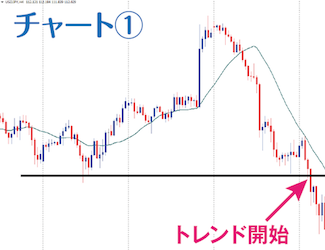
The most basic use of a moving average is that if the slope of a single moving average is upward, the market is expected to rise; if it is downward, the market is expected to fall. Using long-term moving averages makes the overall direction of the market easier to understand. When experts explain several months of price movement on daily charts for stocks or currencies, long-term charts spanning several months often use long-period moving averages such as 75 days or 200 days.

This is the official site of the only Japanese monthly FX magazine “FX Guide.com”