
Artificial Intelligence and the Market and Computers | Episode 2 The Advent of Digital Computers [Naoto Okumura]

Ogura Hisashi Profile

Okumura Hisashi. Joined the Faculty of Engineering in 1987, completing the master's program. Focus: AI (Artificial Intelligence). Developed numerous mathematical models at Nikko Securities. Co-developed an investment model with Stanford University professor Dr. William Sharpe (1990 Nobel Prize in Economics) and delivered stock prices from the Tokyo Stock Exchange online (a world first). Also founded venture companies with Israeli Mossad scientific advisors, commercialized AI technologies, and implemented them in major airports. He has many accomplishments at the intersection of finance and IT. He currently offers models that evaluate analyst ratings with AI “MRA,” AI-estimated near-future FX rates “FXeye,” and chart analysis “Twilight Zone” that displays risk and return. To improve financial literacy in Japan, he organizes a Financial Literacy School.
Hobbies: audio and sports. He has been participating in aerobics competitions for 15 years, winning NAC Master Division Singles 9 consecutive times, 2016 Senior 2nd place, represented Chiba Prefecture in the 2014–2016 Japan Championships, and was a runner-up in the 2017–2018 Japan Championships Master 3. Although he claims to be athletic, he is actually “tone-deaf” and not good at ball games. His motto is “There is never too late to make a decision.”
Blog:https://okumura-toushi.com/
Currency integration progressed from the 19th to the 20th century
The era enters the 20th century, but first let’s review the path of territorial and monetary integration in the major European powers of the 19th century.
The 19th-century Europe was a time when the three elements necessary for a modern state (territory, law, currency) were becoming established. Until then, major European countries had not formed into a single nation. In this era, centered on Europe’s so-called great powers, along with territorial unification, momentum toward monetary integration also began.
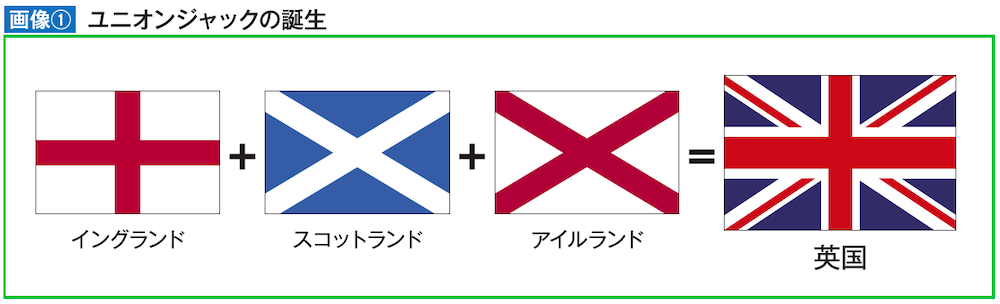
Britain achieved early industrialization through the late 18th-century Industrial Revolution (1760s). By 1707, Scotland and England had already united to form the Kingdom of Great Britain, and on January 1, 1801, Great Britain united with Ireland to form the United Kingdom of Great Britain and Ireland. The Union Jack flag’s stylish design was created at this time (Figure 1). The Victorian era (1837–1901) saw Britain dominate the world with overwhelming industrial and naval power, and it possessed vast colonies (the British Empire).
During this period, Britain expanded its influence to the Mediterranean (Gibraltar, Malta, Cyprus), North America (the United States), Central and South America (Falkland Islands), the West Indies (Jamaica), Africa (Egypt and South Africa), and Asia (India and surrounding regions). In 1840, it compelled China’s Qing Dynasty in the Opium Wars and added Hong Kong as a colony. Furthermore, it controlled dominions such as Australia, Canada, and New Zealand, making it a truly powerful empire.

The official site of FX Magazine, the only monthly FX specialty magazine in Japan, is here