
Understand Max Iwata’s "MACD" Part 2 [Max Iwata]

Max Iwamoto Profile

Keisuke Iwamoto. As the nickname “Non-graduate Certified Technical Analyst” suggests, he is a rare no-education in the analyst industry. Even in these days where the credential society remains strong, he fights daily against the FX market, which has no regard for such qualifications. With the feeling of “now that anyone can start FX easily, I want you to acquire techniques that can keep winning steadily,” he serves as a series author and seminar lecturer.
*This article is a reprint and revision of an article from FX攻略.com April 2018 issue. Please note that the market information written in the main text differs from the current market.
MACD's Greatest Advantage is Early Signal Generation
MACD tends to be the entrance to technical analysis. While it is widely used as an entry point, there is also a downside that it is not pursued deeply and has become widely known in society, which seems to have helped it establish its current position. Since it carries excellent content, it would be a waste not to understand it! So this time, I would like to break down the previous content a bit more and explain it more deeply. I would be happy if you discover new insights.
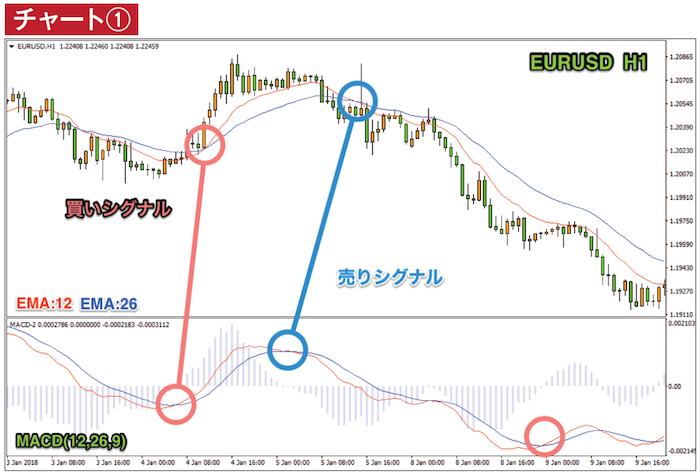
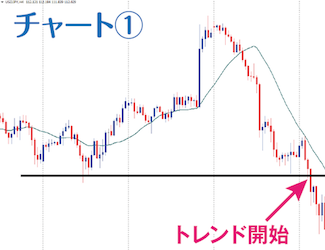
First, regarding the early signal generation, which is the most distinctive feature of MACD, when you compare the points where the moving average lines cross on Chart ① with the points where MACD and the signal line cross, you can see that MACD is faster in every situation.