
Foreign Exchange Online · Masakazu Sato’s Practical Trading Techniques | Technical and Fundamental Analysis Predicting the Future of the 3 Major Currencies [This Month’s Theme | How far will the dollar’s rally continue? Reading the July–September summer m
U.S. long-term interest rates broke through the 3% threshold, yet stocks did not fall sharply and continued to rise, and crude oil prices were also rising. In the currency markets, concerns about a sharp braking of the economy due to high interest rates faded as the yen appreciated, and the dollar continued to strengthen against the euro and yen. The summer market from July to September tends to be a turning point or inflection point in markets. Let’s look at future developments by currency with the themes “summer market” and “against the dollar.”
※This article is a reprint and editing of an article from FX攻略.com August 2018 issue. Please note that the market information stated in the main text may differ from current market conditions.
Profile of Masakazu Sato

Sato Masakazu. After working at a domestic bank, joined Paris-based Paribas Bank (now BNP Paribas Bank). Served as Interbank Chief Dealer, Head of Funding, Senior Manager, etc. Later, he became Senior Analyst at FX Online, which boasted the top annual trading volume. He has over 20 years of experience in the forex world. He has appeared on Radio NIKKEI “Live Stock Commentary! Stock Champ↑,” Stock Voice “Market Wide—Foreign Exchange Information,” and regularly provides market information on Yahoo! Finance.
Spring Market Where Dollar Strength Became Clear. What will the summer market from July to September, a potential turning point for price movement, bring?
In the currency market, dollar strength has continued since spring, supported by rising U.S. long-term interest rates. The yield on the U.S. 10-year Treasury rose above 3%, reaching a level not seen since 2011, about seven years ago.
However, if rate differentials stay high, mortgage and auto loan rates could rise further, potentially dampening robust U.S. consumer spending. The Federal Reserve has plans for another two to three rate hikes this year (including the FOMC on June 13), but the policy-rate increase may soon risk cooling the economy, requiring cautious judgment and signaling a turning point.
The euro-dollar pair has fallen the most on the back of higher U.S. interest rates. Amid negative European GDP growth and Italy’s political uncertainty, it has fallen sharply since April. While euro-dollar had been in a bottoming-out uptrend since last year, the development shifted to “this year is the year of the dollar,” contrary to expectations that this would be the euro’s year.
Typically, higher U.S. rates draw funds into U.S. Treasuries, draining assets from the stock market. In February this year, when U.S. long-term rates neared 3%, the Dow plunged by more than 1,000 points in a single day, and risk-off yen appreciation spread in the FX market. However, this spring the higher U.S. rates translated more directly into dollar strength (euro weakness, yen weakness), and the Dow did not crash, suggesting investors have become more tolerant of higher stock market rates.
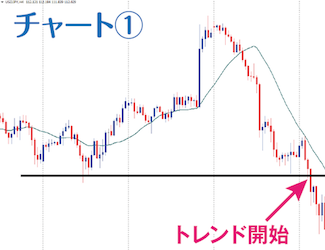
In this environment, the summer market from July to September often experiences sharp moves and turning points, and a phenomenon known as the “summer rally” frequently accelerates a risk-on yen depreciation trend. Chart ① highlights the summer market (July–September) for the dollar-yen since 2006.

The light blue shaded area on the chart shows the July–September movements over the past 12 years, illustrating that the summer market tends to be a turning point for price movements. The peaks and troughs, i.e., market reversals where price top-outs or bottom-outs occur, seem to form around 2006–2008, 2014–2016, with bottoming confirmed in 2011, 2012, trend pauses in 2013, mid-trend status in 2009–2010, and again in last year, 2017. August, often a vacation month with thin markets, nonetheless experiences quite volatile price movements.
For European and American institutional investors, November and December are earnings seasons where bonuses and priors are decided. Their desire to squeeze out one more move often leads to new trends and rapid market moves in the autumn market after September, making the summer market a prelude and testing ground for that period.
If the market moves in a trend-change manner similar to 2015 or 2016, the spring market’s gains could continue, and the price action may break fully above the Ichimoku cloud toward around 115 yen per dollar, signaling a bullish trend.
On the other hand, if, as in the summer of 2017, the market remains in a downward trend mid-trend with the cloud of the Ichimoku indicator, the rally could stop around 112–113 yen per dollar, and then fall again toward the 100 yen per dollar mark in the autumn and beyond.