
The Future of the Foreign Exchange Market: A Special Interview with Tomotaro Tajima for the 100th Installment in the Series / Let’s Imagine and Move Freely in the Foreign Exchange Market (Part 2)

Economic analyst Tomotaro Tajima’s popular series “The Future of Foreign Exchange Markets” reached its 100th installment in the August issue. As a special feature, we bring you an interview with Tomotaro Tajima. The interviewer is Tomoe Mitsui. This is the second half of an interview that delves into the essence of the market and generated substantial excitement.
Note: This article is a reprint/edit of an article from FX攻略.com September 2018 issue. Please note that the market information stated in the main text may differ from current market conditions.
Tomotaro Tajima (Tajima Tomotaro) Profile
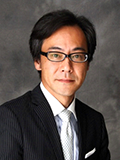
Economic analyst. President and CEO of Alphinance. Born in Tokyo in 1964. After graduating from Keio University, he shifted career from Mitsubishi UFJ Securities to other ventures. He analyzes and researches a wide range from finance and the economy to strategic corporate management, and ultimately individual asset formation and fund management. He serves as a lecturer at various conferences, seminars, and trainings hosted by private enterprises, financial institutions, newspapers, local governments, and various business associations, with around 150 speaking engagements per year. He has written serialized pieces and comments in numerous print media, such as Weekly Gendai “Rules of Net Trading,” and Igzamando “Money Maestro Training Course.” He also writes columns on many websites about stocks, foreign exchange, etc., and is highly regarded as a stock/FX strategist. He also writes for the Home Economics section of the Free National Society’s “Basic Knowledge of Contemporary Terminology.” He has regular appearances on TV (TV Asahi “Yajuuma Plus,” BS Asahi “Sunday Online”) and radio (MBS “Mecha’s Morning Radio”). He is currently a regular commentator on Nikkei CNBC “Market Wrap” and Daiwa Securities Information TV “Eco Market Marche.” His major DVDs include “Super Easy: Tomotaro Tajima’s FX Intro” and “Super Easy: Tomotaro Tajima’s FX Practical Technical Analysis.” His major books include “Wealth Revision Manual” (Paru Publishing), “FX Chart: The Formula for Profit” (Alchemix), and “Why Can FX Make You Asset Rich?” (Text) among many others. His latest publication is “How to Profit by Riding the Rising US Economy” (Free National Society).
Mitsui Tomoe Profile

Mitsui Tomoe. Fi20 Market Reporter. From Otaru, Hokkaido. Debuted on NHK Educational “Italian Conversation,” MC debut at the 2011 Tokyo Motor Show. Currently active on TV, in commercials, and stage performances. In November 2013 at Osaka Shinkyogekiza and January 2014 in Hiroshi Itsuki’s Special Performance, she played Yaetoji. Also appeared in 2013 TV Asahi “Shirokage,” “Nohime 2,” and 2014 TV Osaka “Takajin No Money Black.” Since October 2012, as a Fisco Research Reporter, she has provided stock price forecasts on Yahoo! Finance and expanded activities across TV, magazines, and the web.
In 2013, Kodansha published “Learn from the Strongest Analyst Team: A Zero-to-Stock-Investment Introduction,” and in 2015 Asuka Publishing released “Beginner’s Stock Price Chart Year One: It’s Interesting to See It Rise and Fall.” She has been a “too beautiful financial analyst” topic and excels in selecting stocks with a feminine touch and in easy-to-understand beginner-friendly explanations and seminars.
MIT Alumni Gather After Lehman Shock
Tajima: By the way, do you know who was the first to move during the Lehman crisis?
Mitsui: No, I don’t.
Tajima: The first to act during Lehman was Governor King of the Bank of England. He announced plans to quintuple the pound, distributing money widely. Hence the UK did not suffer as severely from the Lehman Shock. And, with the London Olympics in 2012, there were direct effects and a tremendous legacy that continues, so if not for the Brexit issue, the UK would have recovered the fastest. Next, as you know, the United States moved: QE1 began, followed by QE2 and QE3, and about $4.5 trillion was pumped into the economy.
Mitsui: The monetary easing in the UK and US happened quickly, didn’t it?
Tajima: The UK acted first because its economy is smaller in scale. The US moved next because of its significance. After that, Japan actually moved in April 2013 when the Bank of Japan launched its unthinkable easing. Then in 2015 the European Central Bank (ECB) implemented its so-called quantitative easing. In this way, after Lehman, actions were taken step by step, but they all connect through a common thread. The former BoE Governor King, former Fed Chairman Bernanke, and ECB President Draghi—all of them are MIT economics graduates.
Mitsui: How about the current Fed Chair Powell?
Tajima: That’s the interesting part. After finishing the one big job of monetary easing, those who sit in the role of president or chair are surprisingly not MIT-connected at all. For example, the current BoE governor is Canadian. I think the idea was to avoid a British person handling the cleanup after excessive money printing.
Mitsui: To end the era?
Tajima: Yes. For example, when a long-established company’s management falters, they bring in a foreign-born president to take responsibility. In the same way, Powell’s background is not MIT-related, and the next ECB president is said to be the head of the German Bundesbank, also not MIT-connected.
From the period after the Lehman shock, as the world strove to emerge from recession, we must consider whether the next direction will be toward dollar strength or euro strength based on the mechanisms that moved then.
Mitsui: Some readers might think financial markets are numbers-driven and mechanical, but there is a drama, a scenario. It’s been ten years since Lehman; those who took off toward recovery have completed their work, and those who take over belong to a different stream.
Tajima: We should understand that the next holders of office are people who will respond to a new era with a basic framework. In other words, the crisis-era MIT-backed unity that saved the crisis is no longer needed. The successors’ selections are such that “let each bring their own strengths and do their best.”
Mitsui: So the handling is over, and the aim is to “maintain the current favorable state.”
Tajima: Yes. Then there is the ECB issue. We have long said that the euro-dollar should be capped around 1.25 dollars for a return, yet the euro has been consistently sold against the dollar.
Mitsui: Readers have probably anticipated a downtrend.
Tajima: It was surprising that in 2017 the euro rose so much in a single year; conversely, I didn’t expect it to return to 1.25. I kept saying it should be a selling opportunity, but investors were attracted. “Can you only say ‘return to selling’?” (laughs). It rising above 1.20...
Mitsui: So this scenario was different.
Tajima: Exactly. If the horizontal and vertical flows had allowed more retracement, around 1.20 would have been the ceiling. The euro rose so quickly due to Trump and French elections in a short period that this outcome occurred. 1.25 is truly the last barrier, and since then it has fallen to around 1.19 (as of interview time). There is a basis: the level of 1.6018 hit in July 2008 was odd. A currency called the euro exists, yet there is no country called Euro; that’s odd, isn’t it?
What I’m trying to say is that a currency without sovereignty should not have currency value, and markets concluded that euro would never consolidate as a single currency with sovereignty. If the German Bundesbank governor becomes the ECB president, the euro would be even more unlikely to survive as a currency. That makes retracement selling natural. When deciding where to retrace, should one target the psychological 1.20 level, or wait for a long-term resistance line to come down? There should always be a foundational story, and when the market is only retracing, one should heading toward selling on rallies; when the dollar is being sold against yen, one should buy on dips—the ideal strategy is to buy the dip.
Mitsui: So we should trade with the story in mind.