
About myself and starting FX
Hello everyone, nice to meet you. I am Garake Trader (Hayato Igarashi)
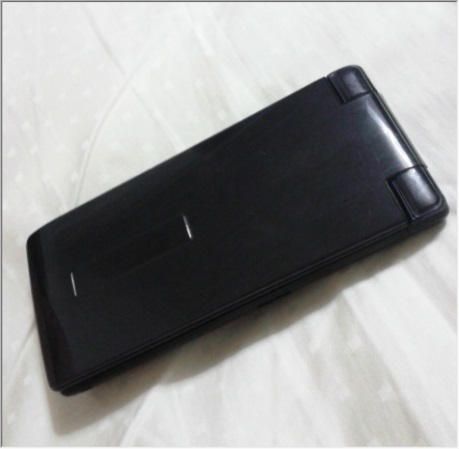
As the name suggests, I am a fan of feature phones,and I trade about 70% of my trades on my feature phone
Incidentally, this manuscript was also almost entirely written on a feature phone.
First, the reason I became a trader is thatI
Around autumn 2006, when I began considering changing jobs, I started learning about stock trading,FX trading
basics, from the ground up, about two to three times a month as casual chatsand
(In winter 2006 I passed I-証券 interview for mid-career recruitment)
While learning market basics from my mentor in a relaxed way,by the summer of 2007
From early 2008, secretly from my mentor, I started FX demo trading,and
Subsequently I barely survived the Lehman Shock, experienced a loss of 6.35 million in May 2010, and during 2010?2011 I was stagnating.
Because the feature phone could appear in media such as fx-on, the swing trade on AUD/JPY and NZD/JPY mid-to-long term “Mrs. Watane Trade” happened to ride the Abe administration’s policies and gain profits from swaps, and I also had the lucky chance to scalp/ day-trade USD/JPY, EUR/USD, and EUR/JPY.
Before being featured in media, up to 2013 I avoided swaps by shifting to high-swap currencies like AUD/JPY and NZD/JPY, and moved to the high-swap South African rand, Turkish lira, etc.
So I began scalping and day-trading the dollar pair, and did various currencies trading through trial and error. Now I have evolved into a hybrid approach of scalping in dollar crosses and cross-yen, combining day-trading and mid-to-long-term trading since around the second term of Shinzo Abe’s administration.
Current trading currencies are mainly USD/JPY, ZAR/JPY, TRY/JPY, BRL/JPY, EUR/RUB, and GBP/PLN, and as a global macro strategy I also trade Nikkei futures, stock index CFDs, commodities, and even Bitcoin (AUD/JPY and NZD/JPY are partially held).
That is my brief self-introduction.
For the first theme, I will talk about “What should you prepare when starting FX?”
First you need investment capital and a securities account.
Normally you would start with capital first, but I think it’s easier to explain securities accounts first,
so I will start with securities accounts.
How to choose a securities account depends on the type of FX trading you will participate in (the trading tools you use).
For those who are about to start FX trading or beginner traders,
it’s easier to imagine FX trading as an Olympic swimming event.
First, about the currencies to trade: imagine the swimming disciplines; USD/JPY as freestyle, EUR/JPY as breaststroke, GBP/JPY as backstroke, AUD/JPY as butterfly, etc., to form a medal-worthy, multi-currency portfolio in a relay-like imagery.
(In reality the number of tradable currencies is far more than the number of swimming events)
Next, regarding trading spans: if you compare to athletics, scalping is 100m dash, day trading is 200m-400m, swing is 800m-1500m, mid-term is 10,000m-half marathon, and long-term is half/full marathon, to give you an easier picture.
If you use a long-term, hedged double-position style aiming for swaps as a main objective (as I do), a “one-click swap” account with 365 spread is recommended by some brokers.
(Incidentally, in some situations I also perform scalping and day trading using OTC accounts.)
For those starting FX trading,or beginner traders
open several types of securities accounts, also open a demo trading account,and
and then choose a broker you will trade with.
Next, about investment capital.
Investment capital can be explained with swimming as well:
the required margin differs by trading currency (instrument).
Also, even with the same trading currency,
scalping/day trading vs mid-to-long-term trading require different levels of investment due to money management considerations.
Furthermore, for the same currency and same span, depending on trading strategy and position size, the required investment capital varies.
For these reasons, to be rough: if you trade with a minimum lot size of 1000 units, you would need about 300,000 yen. If you trade 10,000 units, the minimum investment required would be around 3,000,000 yen.
Finally, about “what should you prepare to start FX?”
I use a feature phone, but you don’t need one. A smartphone is faster and has more apps, so the smartphone is better.
For smartphone trading preparation, please refer to smart phone traders (and to the smart phone traders, nice to meet you).
That concludes the first part, and I look forward to your continued support.