
Learn Professional Exit Techniques from Doctor Iidacchi: Settlement Theory to Survive in the Currency Market | Episode 6 Practical Edition (Final Chapter)
Idacchi Sensei's Profile

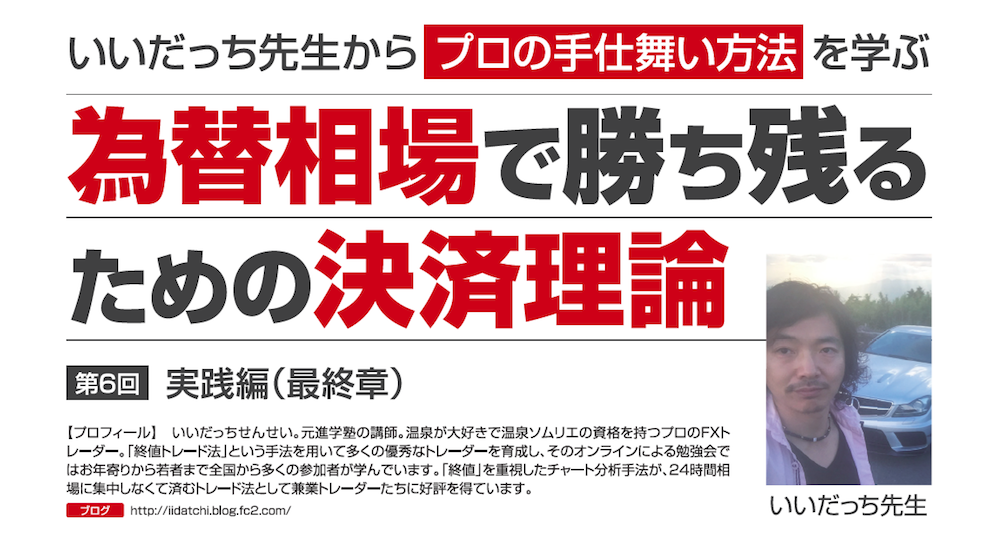
Former instructor at a prep school. Loves hot springs and holds a hot spring sommelier qualification; a professional FX trader. Using the method called “Close Price Trading Method,” he has trained many excellent traders, and his online study sessions attract participants from all over the country, from the elderly to the young. The chart analysis method that emphasizes the “close price” helps focused trading for the round-the-clock market and is popular among part-time traders.
Blog:A Great Reversal from 100,000 Yen! FX Trader Idacchi BLOG
※This article is a reprint/edit of an article from FX Guidance.com November 2019 issue. Please note that the market information written in the text may differ from the current market.
To Practice Taking Profits and Cut Losses
Hello, this is Idacchi Sensei. Until now we have shown concrete methods for taking profits and cutting losses, but this time I would like to touch on the practical part: “Can you really implement this?” and “What are the reasons you cannot?”
When a trade generates unrealized gains, the feeling arises that “if I stay a little longer, I could earn even more.” Then we get confused about where to take profits on the chart. To avoid that, Idacchi Sensei advises using the average daily range and the “Idacchi Line” as a guide for taking profits, but desires can interfere with judgment, and leaving positions to go out or sleep can cause you to miss profit opportunities.
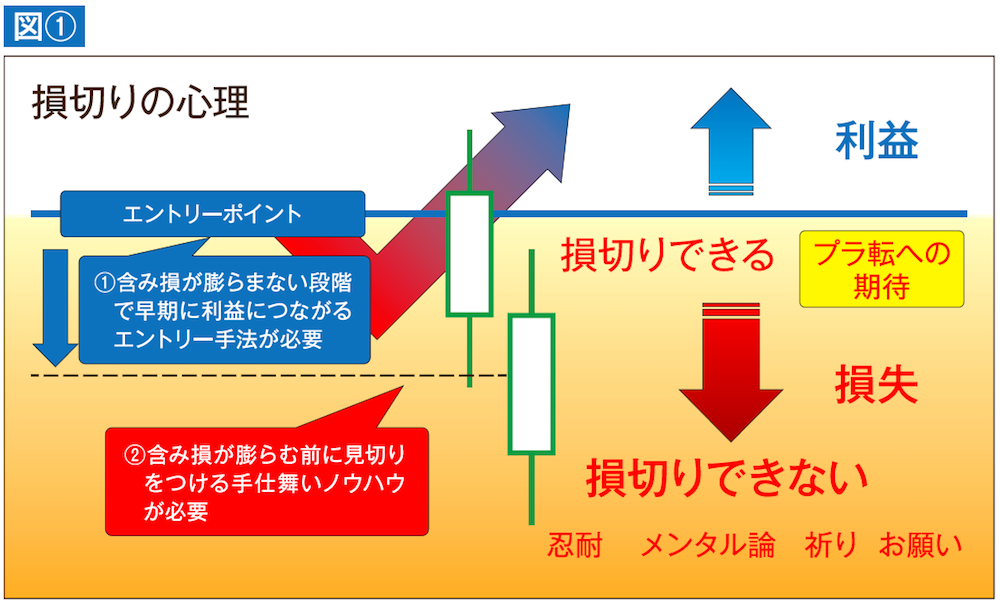
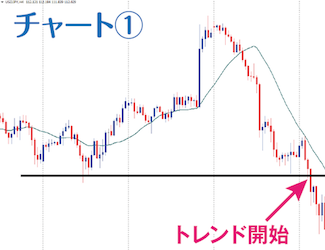
Taking profits is difficult, but especially difficult is “cutting losses.” When you’re trading to earn money, confirming a loss as a realized loss is something everyone doesn’t want to do. Everyone wants to avoid losing, and when you’re holding a loss you may wish it would become smaller and eventually you may find yourself fighting against something invisible with thoughts like “I won’t lose!” and “I’ll endure!” (Figure ①). It’s no longer trading at that point.