Aren't you misunderstanding trading? That image might be dangerous!
Hello! This is SAKU!
突然ですが、皆さんはトレードって聞いてどんなイメージを持っていますか?
Gambling? A luck-based game like roulette? A gal game in combination?
Today I would like to share my thoughts on the widespread wrong images and misunderstandings in the world!
The previous article is here→Are you properly cutting losses? ~On the extremely important topic of stop-loss~
Trading is gambling, right?
There are many who think trading is like gambling, but
Trading is neither gambling nor a game of chance!
Trading is about leveraging the experiences you’ve had, the knowledge you’ve gained, and the techniques you’ve honed through persistent effort, reading the market’s rhythm, and seeking reproducibility in a favorable direction, to leave a profit under probability.
That’s how I think!
For people who don’t know trading, it’s understandable to have the image of gambling, but as someone who pours his heart into trading, I find that image a bit sad.
Is a high win rate method better?
Not necessarily.
If a trade that happens to win once a month makes that month’s win rate 100%,
and, no matter how high the win rate, if the risk-reward is poor, a single loss can wipe out most or all profits.
A trade with 100 pips stop loss and 10 pips take profit would raise the win rate, but ten times the profit can be lost in one blow.
It’s like going all-in with zero defense.
In short, balance is important.
Isn’t it just a game of guessing up or down and predicting?
That’s not the case.
Honestly, it doesn’t matter whether prices go up or down.
We don’t make predictions.
We “assume” movements and actions to take, and when the time comes, we act in line with that assumption (taking action).
We analyze future price movements from past moves andwe anticipate many possible scenarios in advanceso that we can respond accordingly.
Not only entries and take profits, but stop losses and when to pass are also part of the scenario.
We analyze and buy if it seems to go up, and sell if it seems to go down.
We don’t buy because we want it to go up, nor sell because we want it to go down.
People who talk about “front-loading” or “back-loading” are probably focusing on superhuman future-forecasting abilities rather than trading.
(Some geniuses have senses that seemingly read market micro-movements; these people can align with market waves intuitively. But for ordinary people, trying to imitate that is dangerous.)
No matter how strong, everyone loses sometimes.
It’s not because that person is weak.It’s because the market moved that way.
No one knows the market’s ultimate direction, and individual power cannot move the massive market flows.
Can a surfer move the waves and resist them?
You decide whether a coming wave is worth riding, and when a good wave comes, you ride it with the skills you’ve developed.
However, even the best can fall from the board.
Don’t forecast, that’s all.
If you hit the top or bottom, isn’t that enough?
No.
The top or bottom turns out to be, later on, theresult of that being the top or bottom.
If you happened to enter at a top or bottom, you might think you predicted correctly, but no one can know that in advance.
It’s not your own power. It’s a result of outcomes.
Extracting one trade from many and assuming it reflects your ability is dangerous.
It’s exactlythe hot-hand fallacy.
Trading isabout using price movements to generate profit.
If you enter at a top or bottom, you’ve captured a large price move and that’s lucky.
As the market proverb says, “Let head and tail go,” you don’t need to willingly choose difficult moments; take profits when you’re in a favorable position.
If I learn from a very strong person, I’ll become strong, right?
That isn’t necessarily true.
A superior player isn’t guaranteed to be a superior teacher.
Strong individuals surely possess remarkable skills, but their feelings may be far from those who cannot yet win.
“It should be easy, so why can’t I do it?” might be the sense.
If you throw a fastball in catch-ball practice, someone without baseball experience can’t catch it, right? They might get injured.
As mentioned earlier, especially genius-type people may understand through intuition, which ordinary people may not grasp.
Even looking at Picasso or avant-garde works, ordinary people may not understand their appeal.
It seems amazing but hard to grasp.
Also, compatibility between the teacher and learner matters.
If you use the same method as strong people, you’ll win, right?
In the baseball example mentioned earlier, if you learn to throw a fastball, can your body replicate it when you aren’t conditioned to do so?
That could cause injury from awkward movement.
You’d think that’s impossible, but for some reason, people do this in trading.
So far I’ve said a lot, but essentially,build a solid foundation and keep diligent practice to develop your skills.
No one will suddenly cast a magic spell to power you up instantly.
You cast the magic yourself!
Finally, please allow me to say one thing.
I have almost no baseball experience, and I have never surfed!(Just in imagery)
That’s all for now!
The next article is here↓
What is the superiority and reproducibility of trading? ~On the investment principle of large numbers
For my trading method, see below↓
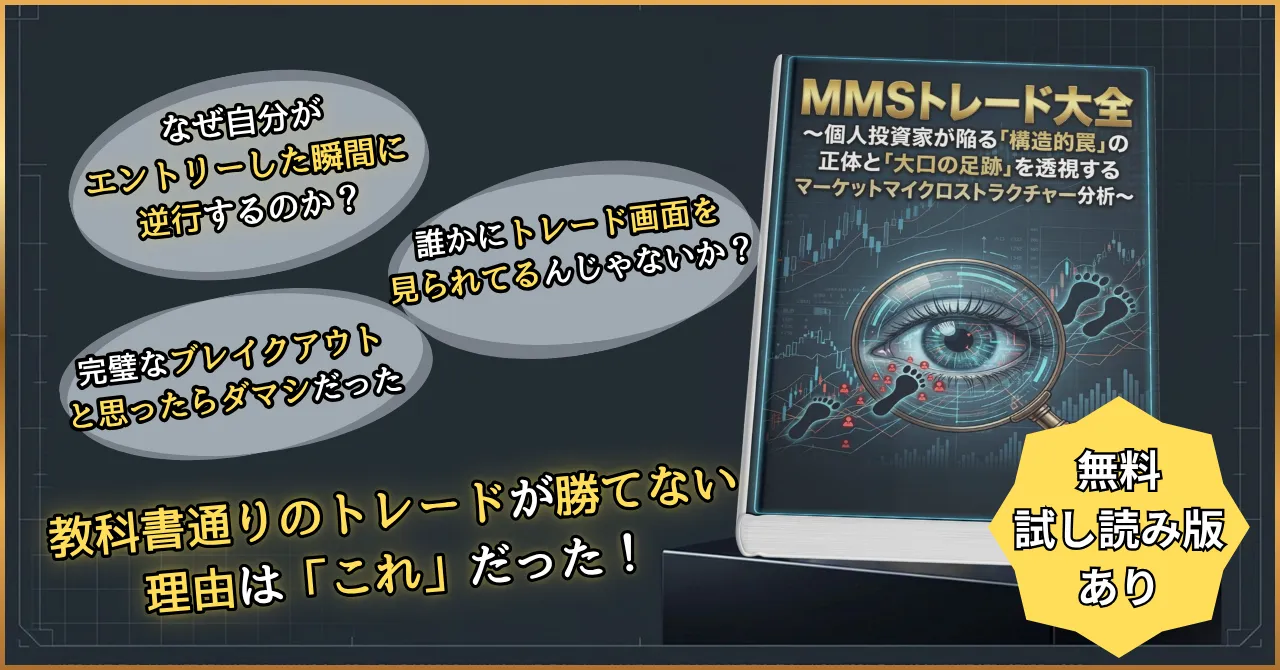
【Limited-time early access campaign!】→ MMS Trading EncyclopediaThe truth about the “structural traps” that individual investors fall into, and a market microstructure analysis that reveals the footprints of big players (There is also a free trial version)
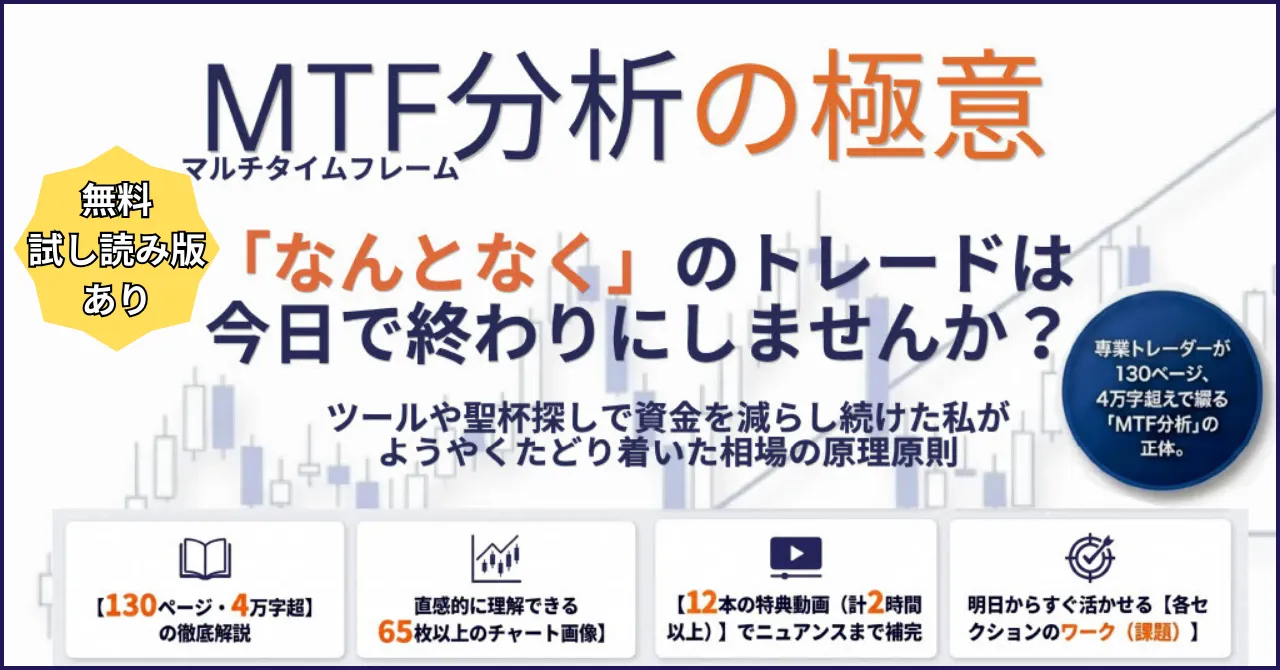
→The Art of MT Multi-Time-Frame Analysis (There is also a free trial version)