

What is the difference between Shōkinryū (Ascendant Gold Dragon) and Kurenai Ryū (Crimson Flame Dragon) — comparing the averaging (namping) type and the pyramiding type
Starting tomorrow, September 7, the new EA “Gurenryū” will begin with a 1 million yen to 100 million yen challenge. In the two previous articles I introduced Gurenryū itself, but I received questions like “What is it different from Shōkinryū?” Today, for those who already know Shōkinryū, I’ll compare the two EAs head-to-head to show their differences.
| Item | Shōkinryū | Gurenryū |
|---|---|---|
| Direction of averaging-down | Buy more as price falls (mean-reversion averaging-down) | Add more buys as the price rises (trend-following pyramid) |
| Instruments | Gold (XAUUSD) only | No matter the pair (generic design) |
| Trading direction | Buy only | Both directions independently (requires hedging account) |
| Stop-loss structure | No individual position stop-loss. Stops only for the aggregate position | Each position has an individual stop-loss |
| Performance | 11 years of backtest and live operation ongoing | No track record yet. Its live performance starts tomorrow |
| Current standing | Established core product with stable operation | In testing phase for a challenge project. Future sales being considered |
The biggest difference is which direction the positions are increased when price moves. Shōkinryū adds to buys whenever the price falls. It lowers the average entry price and aims to realize profits when the market rebounds, a classic averaging-down design.
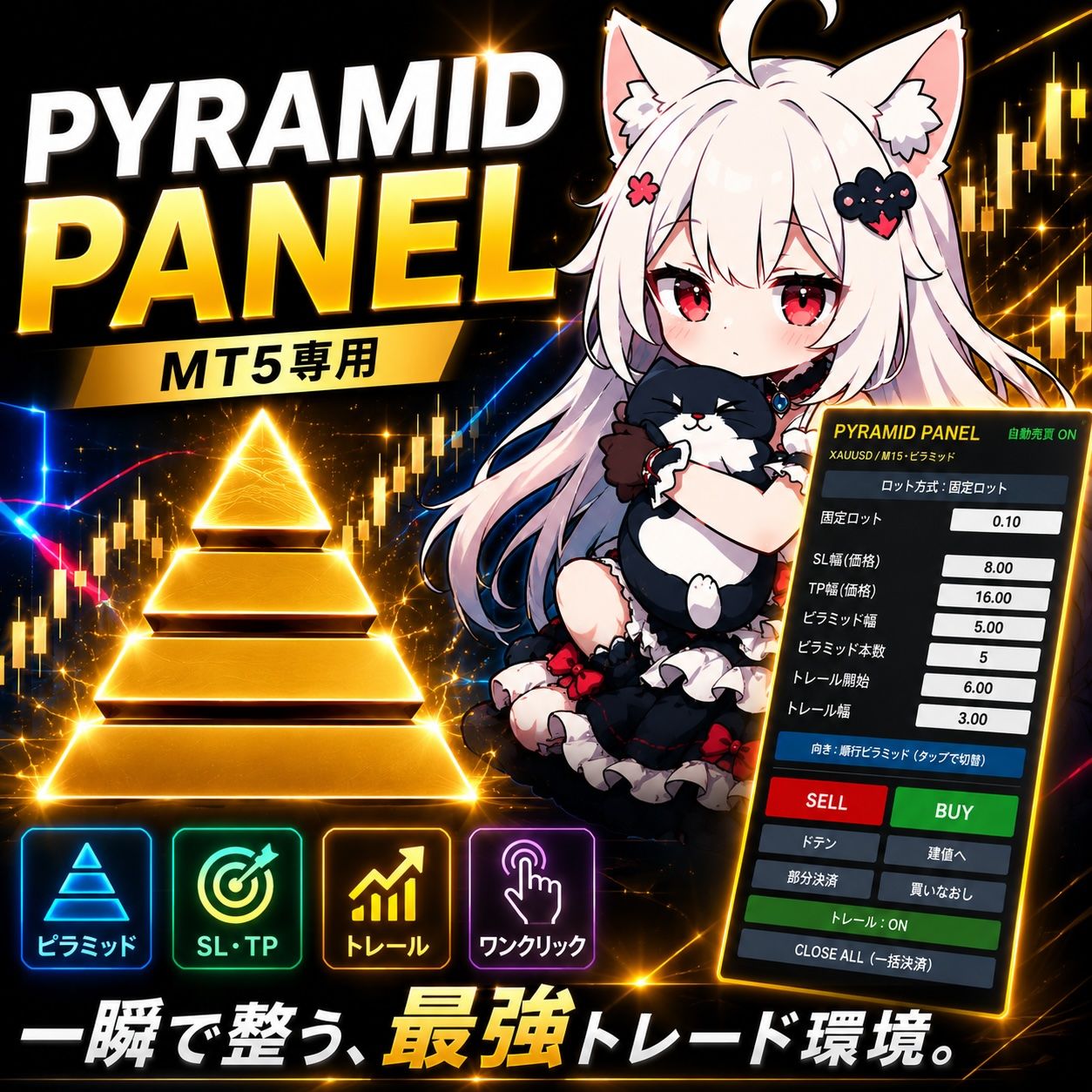
Gurenryū is the opposite. It adds to buys when the favorable direction (rising) occurs, and when prices are falling, it adds to sells under the same principle. Rather than investing more into losing (underwater) positions, it continues riding the trend with gains. Even though both are “multiple-position accumulation” EAs, the reason for accumulation is completely opposite, which clarifies the difference in risk management.
Shōkinryū does not place stop-loss on individual positions. It waits for the total profit of the position group to turn positive and then locks in profit; positions with unrealized losses are generally left to recover with the market.
Gurenryū sets individual stop-loss for each opened position. Since it only adds in favorable directions, it reduces risk by exiting early on adverse moves. It’s not about which is superior; rather, the underlying price movement assumptions are opposite, so risk control is reversed.
Shōkinryū has 11 years of backtesting and has been continuously demonstrated in actual accounts. Gurenryū has neither. We have done simple on-MT5 real-device testing in the past few days, but that does not prove many years of performance; it’s to ensure there are no operational issues.
Currently, Gurenryū is less of a proven product and more an EA in a stage of building its track record. The 1 million yen to 100 million yen challenge is itself a project to show this track record as it develops. Rather than comparing on the same footing as Shōkinryū’s accumulated results, please view it as something to watch and see what happens next.
Buy on dips with Shōkinryū versus riding the uptrend with Gurenryū. Both are made by the same developer, but their target price movements and risk controls are opposite. Watching Gurenryū from tomorrow while comparing it to Shōkinryū will help you understand each of their characteristics more clearly.


※This article is for information provision and not investment solicitation. The displayed performance results are past results and do not guarantee future profits. FX and CFD trading carry risks. Please make investment decisions at your own responsibility.